The best walks and hikes around Le Grand-Saconnex
4.4
(272)
1,624
hikers
18
hikes
Hiking trails around Le Grand-Saconnex offer a diverse range of outdoor experiences, from local green spaces to mountain vistas. The region is situated near Lake Geneva, providing opportunities for lakeside walking and views of the water. Beyond its immediate vicinity, the area benefits from its proximity to Mont Salève, known for its panoramic views, and the distant Jura Mountains. The terrain includes accessible pathways, wooded areas, and open environments.
Best hiking trails around Le Grand-Saconnex
- The most popular hiking route is Alpine Panorama Trail, a 6.7 miles (10.8 km) trail that takes 2 hours 50 minutes to complete. This moderate route offers views of Lake Geneva and the surrounding Swiss landscapes.
- Another top favourite among local hikers is Bergues Quay – Geneva Harbour loop from Genève-Aéroport, a moderate 9.1 miles (14.7 km) path. This route provides extensive lakeside walking opportunities near Geneva.
- Local hikers also love the Broken Chair Sculpture – Bains des Pâquis loop from Le Grand-Saconnex, a 5.5 miles (8.8 km) trail leading through urban and lakeside areas, often completed in about 2 hours 20 minutes.
- Hiking around Le Grand-Saconnex is defined by accessible green spaces, views of Lake Geneva, and proximity to Mont Salève. The network offers options for different ability levels, including easy strolls and moderate paths.
- The routes in Le Grand-Saconnex are highly rated by the komoot community with an average score of 4.5 stars from over 230 reviews. More than 1600 hikers have used komoot to explore Le Grand-Saconnex's varied terrain.
Last updated: July 7, 2026
3.5
(2)
6
hikers
10.8km
02:51
100m
100m
Moderate hike. Good fitness required. Easily-accessible paths. Suitable for all skill levels.
5.0
(1)
10
hikers
5.06km
01:22
70m
70m
Easy hike. Great for any fitness level. Easily-accessible paths. Suitable for all skill levels.

Sign up for free
4.0
(1)
8
hikers
3.44km
00:57
60m
60m
Easy hike. Great for any fitness level. Easily-accessible paths. Suitable for all skill levels.
3
hikers
8.14km
02:10
80m
80m
Moderate hike. Good fitness required. Easily-accessible paths. Suitable for all skill levels.
5.0
(1)
5
hikers
5.25km
01:24
60m
60m
Easy hike. Great for any fitness level. Easily-accessible paths. Suitable for all skill levels.
Get access to more routes and recommendations from other explorers.
Sign up for free
Already have an account?
Our route recommendations are based on thousands of hikes, rides, and runs completed by other people on komoot.
Start today with a free account
Your next adventure awaits.
Login or Signup
Tips from the Community

https://museemilitaire.ch, open Wednesday to Sunday from 1:30 p.m. to 5:30 p.m. Free admission.
0
0

After the Second World War, United Nations / UNO After the Second World War, when the League of Nations was dissolved and the newly founded UNO took over the palace, the complex underwent several extensions. Building K was extended by three floors between 1950 and 1952. At the same time, building D was built as the temporary headquarters of the World Health Organization (WHO). The construction of building E, which serves as a conference center, took from 1968 to 1973. The entire complex is around 600 meters long in its current state and houses 34 conference rooms and 2,800 offices. Around 9,000 meetings with up to 28,000 delegates take place here every year, including around 600 larger and large conferences. This makes the Palais des Nations one of the largest centers for diplomatic conferences anywhere. Some parts of the complex are also open for guided tours, which are widely used by the public. After all, around 100,000 visitors take advantage of this opportunity every year. The Palais des Nations is expected to be extensively renovated from 2015, with costs estimated at several hundred million euros. A proud sum, but with it the UN is acknowledging the special importance of the palace for Geneva and Switzerland as well as for its member states https://denkmalpflege-schweiz.ch/2014/06/02/das-palais-des-nations-in-genf-europaeischer-hauptsitz-der-uno/
14
0
The Palais des Nations in Geneva - European headquarters of the UN The Palais des Nations has been the European headquarters of the United Nations since 1966. After the headquarters in New York, this is the second most important location of the UN worldwide. The building complex is located on the grounds of Ariana Park in Geneva and was built between 1929 and 1936. Between 1933 and 1946 it served as the headquarters of the League of Nations, which had previously resided in the Palais Wilson, also in Geneva, since its foundation in 1920. In 1926, the officials of the League of Nations announced an international architectural competition for a new administrative center. However, despite the large number of 377 submissions, the jury was ultimately unable to decide on a winner. Therefore, its members selected five architects from among all participants to work together to develop a new design. These were Julien Flegenheimer (Switzerland), Camille Lefèvre (France), Henri-Paul Nénot (France), Carlo Broggi (Italy) and Joseph Vago (Hungary). They had previously submitted the most favored designs. The current building was finally built in the late neoclassical style on the basis of their ideas. When the foundation stone was laid on September 7, 1929, a capsule was buried that contained a list of all member states, a copy of the founding act of the League of Nations and coins from all countries. The various League of Nations sections, starting with the Secretariat, moved in in several stages from 1933 up to 1936. The materials and furniture for the interior, most of which has been preserved to this day, were also donated by the League of Nations members. Text / Source: Eenkmalpflege-Schweiz https://denkmalpflege-schweiz.ch/2014/06/02/das-palais-des-nations-in-genf-europaeischer-hauptsitz-der-uno/
14
0

The international face of Geneva, the Place des Nations challenges everyone on the diversity of nations and peace in the world. The "Broken Chair" symbolizes the fight against anti-personnel mines. The peace fresco is a huge ceramic mosaic. Water jets make the place lively and refreshing.
1
0

Close to the botanical garden and the train station.
0
0

Also called "Ariana Museum". The building is magnificent and worth the visit in itself.
0
0

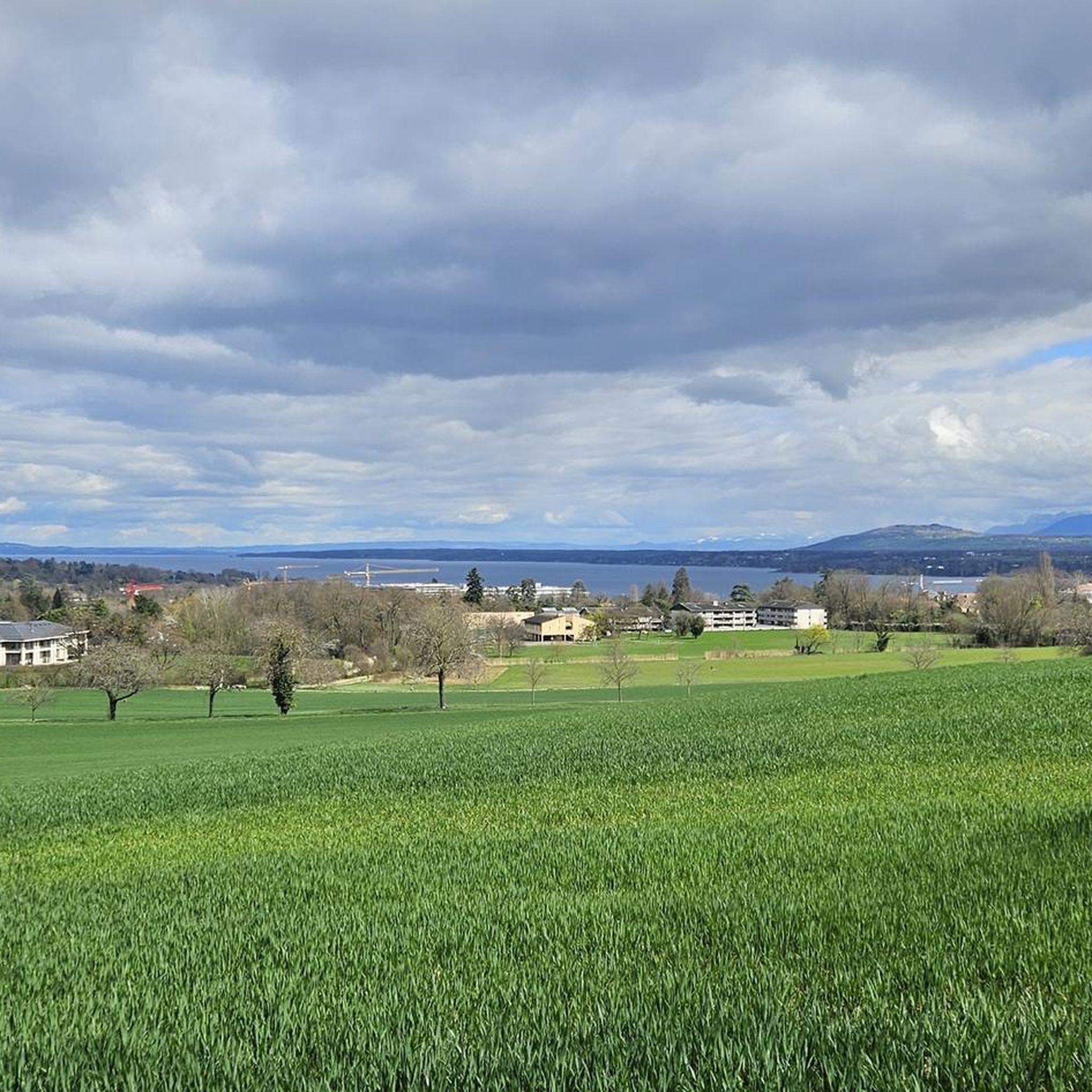
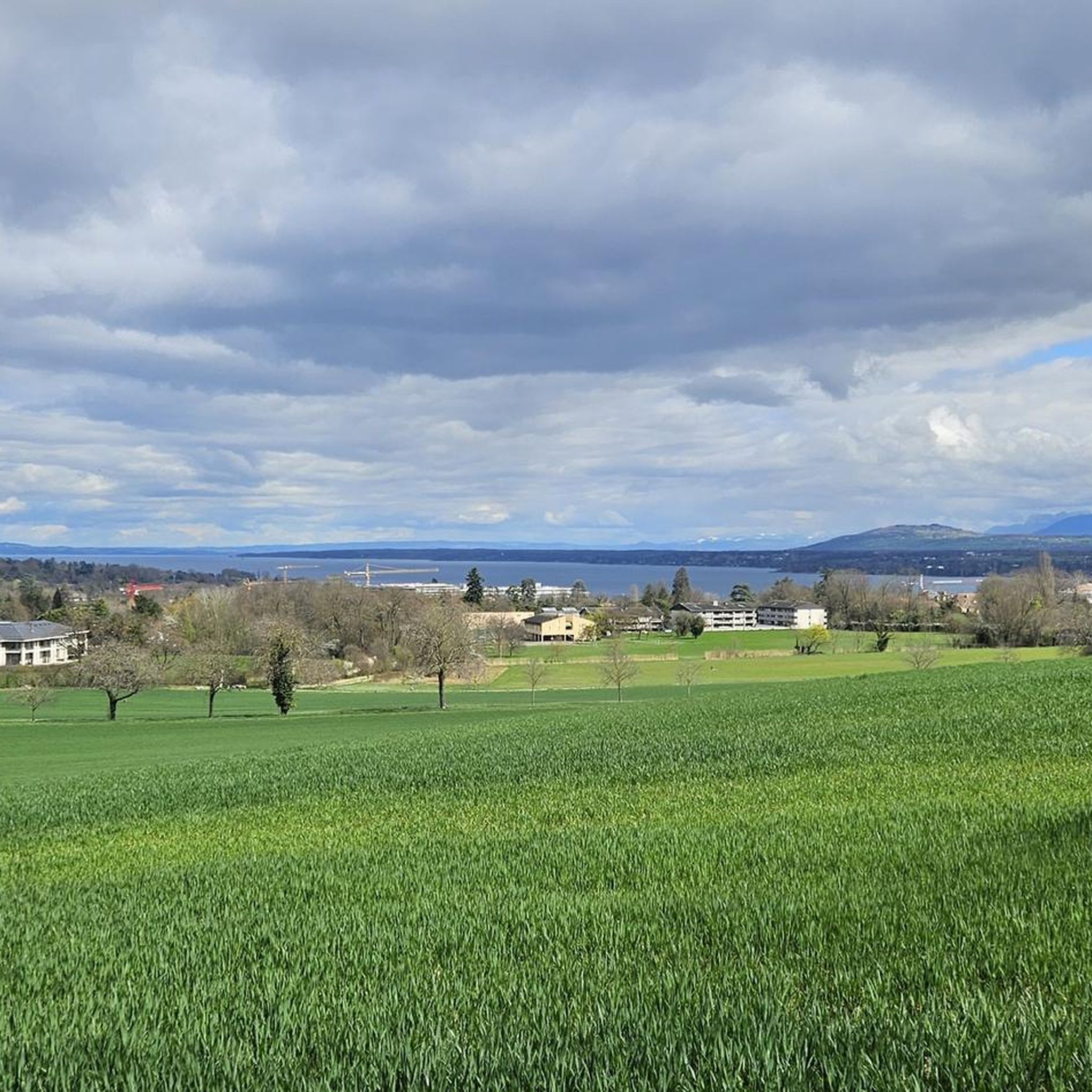
Chambésy is a commune north of Geneva. It is a quiet residential area with several foreign missions located here. From this road, you can enjoy the view of Lake Geneva and part of the neighborhood.
1
0
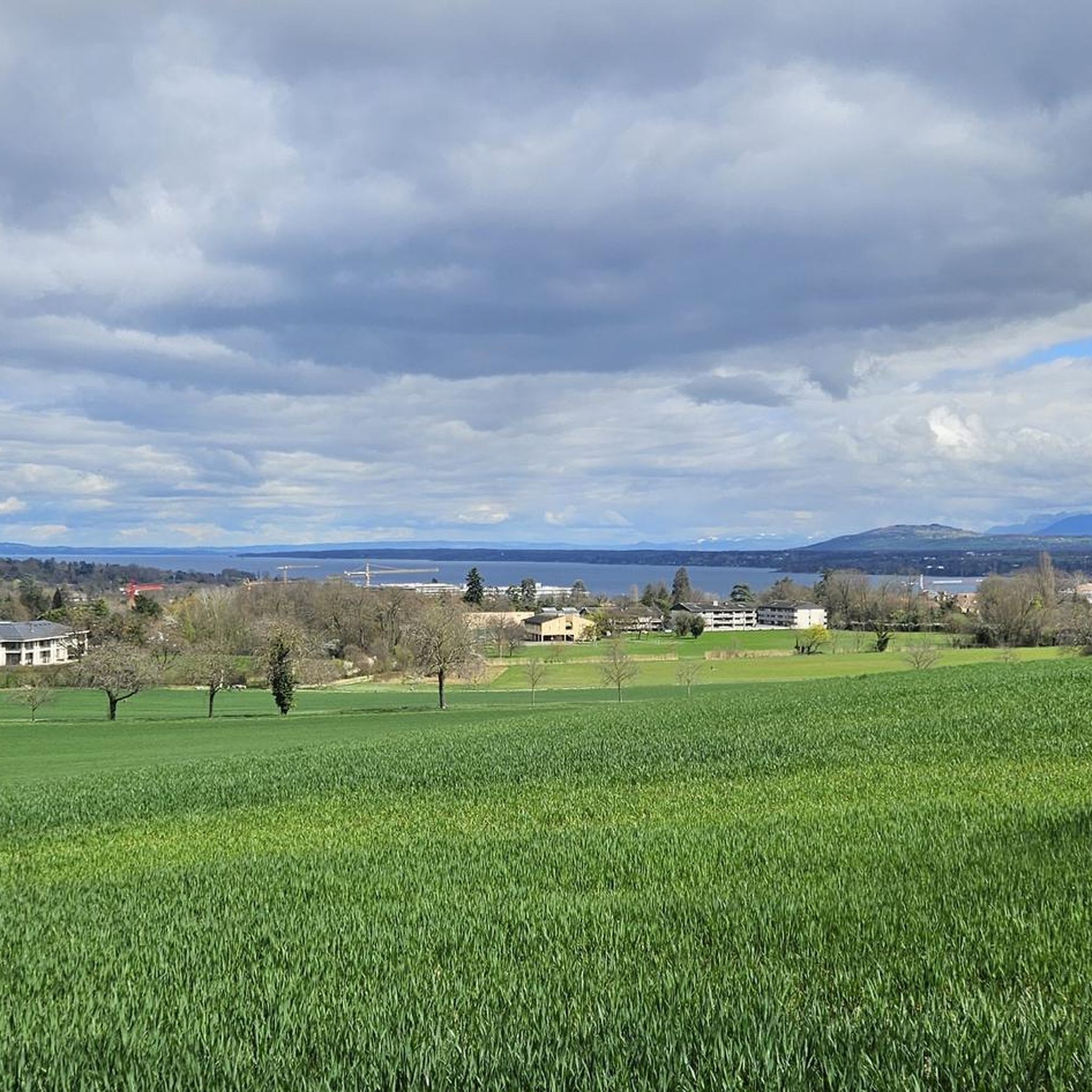
From there, you can admire a beautiful view of Lake Geneva and the north of Geneva. It is a quiet place and there are usually not many people on this path.
0
0
Frequently Asked Questions
What kind of hiking difficulty can I expect around Le Grand-Saconnex?
Le Grand-Saconnex offers a range of hiking difficulties. You'll find plenty of easy strolls, with 16 easy routes available, perfect for relaxed walks. There are also 6 moderate trails for those looking for a bit more challenge, but no difficult routes are listed, making the area accessible for most fitness levels.
Are there family-friendly hiking trails in Le Grand-Saconnex?
Yes, the region is well-suited for families. Many of the 16 easy routes are ideal for all ages, including paths through local green spaces like Campagne des Marronniers and Parc des Burgondes. Shorter loops, such as the Church – Geneva Military Museum loop from Le Grand-Saconnex, are also great options for a family outing.
Can I bring my dog on hikes near Le Grand-Saconnex?
Generally, dogs are welcome on trails around Le Grand-Saconnex, especially in the numerous green spaces and on many of the paths. It's always a good idea to keep your dog on a leash, especially in more populated areas or near wildlife, and to check local regulations for specific parks or nature reserves.
Are there any circular hiking routes available?
Yes, several routes around Le Grand-Saconnex are designed as loops, offering convenient circular walks. Examples include the Broken Chair Sculpture – Bains des Pâquis loop from Le Grand-Saconnex and the View of Lake Geneva – Church loop from Le Grand-Saconnex, allowing you to start and end at the same point.
What scenic viewpoints or natural features can I discover on hikes?
The region is rich in scenic beauty. Many trails offer views of Lake Geneva, and from higher vantage points like Mont Salève, you can enjoy panoramic vistas of the Geneva basin, the Alps, Mont Blanc, and the Jura massif. Local green spaces like Campagne du Jonc also provide serene natural settings for walks.
Are there any interesting landmarks or attractions to see while hiking?
Absolutely. While hiking, you might encounter various points of interest. For example, the Broken Chair Sculpture is a notable landmark in Geneva that can be part of a hike. The nearby Mont Salève also offers attractions like the Téléphérique du Salève, providing stunning views.
Is parking available, or can I reach trailheads by public transport?
Le Grand-Saconnex and the surrounding Geneva area are well-served by public transport, making many trailheads accessible without a car. For those driving, parking is generally available near popular starting points, though it's advisable to check specific locations beforehand, especially in urban areas.
When is the best time of year to go hiking in Le Grand-Saconnex?
The best time for hiking in Le Grand-Saconnex is typically from spring through autumn (April to October). During these months, the weather is generally mild and pleasant, and the natural landscapes are at their most vibrant. Winter hiking is also possible, especially on lower-elevation paths, but some higher trails might be affected by snow or ice.
How many hiking trails are there in total around Le Grand-Saconnex?
There are over 20 hiking trails available around Le Grand-Saconnex, offering a good variety of options for different preferences and fitness levels.
What do other hikers particularly enjoy about the trails in Le Grand-Saconnex?
The trails in Le Grand-Saconnex are highly regarded by the komoot community, boasting an average rating of 4.5 stars from over 230 reviews. Hikers often praise the diverse terrain, from accessible green spaces to routes with stunning views of Lake Geneva and the surrounding mountains, as well as the well-maintained paths.
Are there any trails that offer extensive lakeside walking opportunities?
Yes, the region's proximity to Lake Geneva provides excellent opportunities for lakeside walks. The Bergues Quay – Geneva Harbour loop from Genève-Aéroport is a moderate route that offers extensive walking along the lake, allowing you to enjoy the water views and fresh air.
Can I find trails that offer views of the Alps or Mont Blanc?
Yes, from certain vantage points, particularly from Mont Salève, you can enjoy spectacular panoramic views that include the majestic Alps and even Mont Blanc on clear days. While not directly within Le Grand-Saconnex, these iconic mountains form a stunning backdrop to the region's hiking experience.
Most popular routes around Le Grand-Saconnex
Most popular attractions around Le Grand-Saconnex

Get inspired with the komoot mobile app


Explore more
Browse the best Hikes in other regions.
