Top 4 Natural Monuments in E.C. Manning Provincial Park
Best natural monuments in E.C. Manning Provincial Park are found within British Columbia's Cascade Mountains. The park features a diverse landscape, including rugged peaks, alpine meadows, and serene lakes. Its varied terrain is influenced by the Hozameen Range and its position within the "Ring of Fire." E.C. Manning Provincial Park offers a range of natural features for exploration.
Best natural monuments in E.C. Manning Provincial Park
- The most popular natural monuments is Alpine Larch Forest on Frosty Mountain Trail,…
Last updated: August 29, 2026
Frosty Mountain junction
Highlight • Mountain Pass
Tip by

Pacific Crest Trail Northern Terminus
Highlight • Monument
Tip by
Sign up now to discover places like this
Get recommendations on the best single tracks, peaks, & plenty of other exciting outdoor places.
Sign up for free
Alpine Larch Forest on Frosty Mountain Trail
Highlight • Forest
Tip by
View of Frosty Mountain and valley
Highlight • Viewpoint
Tip by
Start today with a free account
Your next adventure awaits.
Login or Signup


Tips from the Community

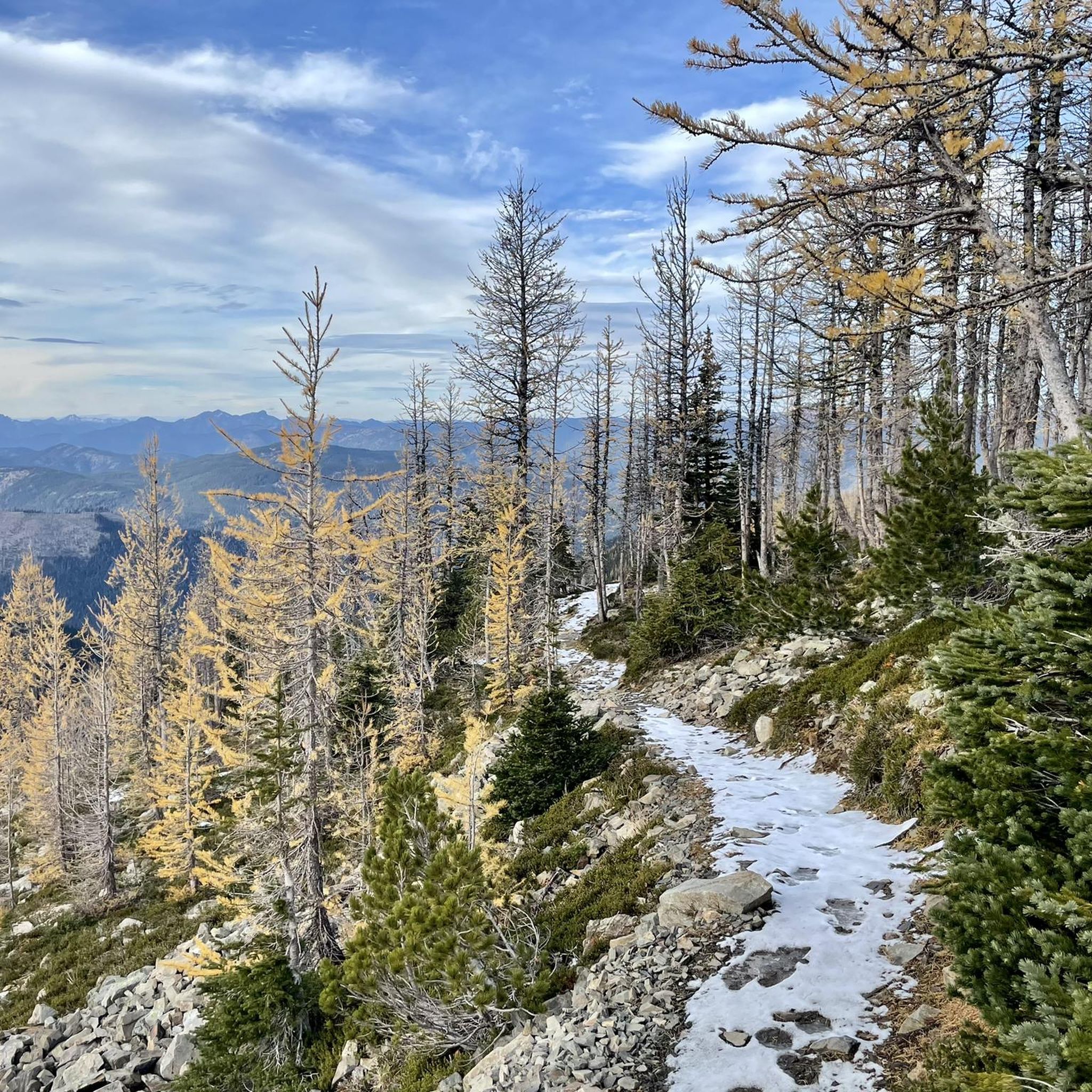
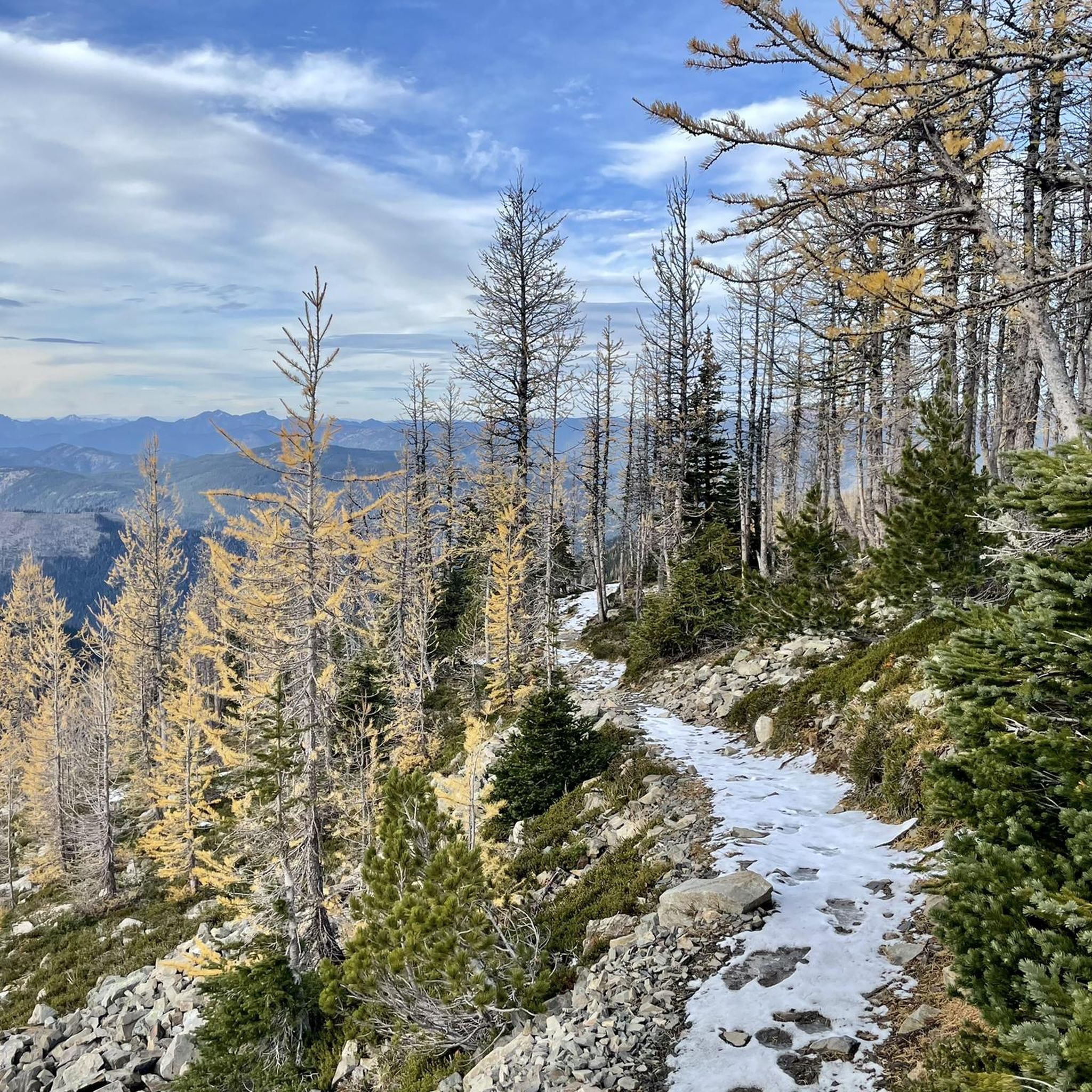
The small larch forest and the scattered larch trees on the way to Frosty Mountain attract many people here every year, especially in autumn. Also known as Mountain Monarch, you will find a very special tree species here, the alpine larch. Some larches are over 2,000 years old. They are especially beautiful to look at in the fall, when they change their green leaf dress for a bright yellow one.
4
0
At this point, a little off the main trail, a beautiful view of the valley and, of course, Frosty Mountain awaits you, that especially with a light blanket of snow to bring out all its magic.
3
0
Once you've fought your way up here, a spectacular view of Frosty Mountain and the surrounding mountain landscape awaits. Especially in the sunshine, you can stand it here for a few moments, provided you don't come here in high season, because there's not much space at this crossing. To the actual summit, it's only about 600 meters in distance. However, as it goes over the ridge, it can be dangerous in winter with snow. Then it may be enough to enjoy the view from here.
3
0
The climb from the west is not as steep and arduous as from the east and is the classic walking direction if you hike the loop. Also, you can spend a night at Frosty Creek Camp at about 1,900 meters and climb the summit at 2,400 meters the next day. To spend the night in the backcountry, you'll need a permit that costs 5 dollars a night per person. Also note: In winter and even in fall, Frosty Mountain can be snow covered. So if you are descending to the west, you should have microspikes in your backpack for this case.
0
0
If you come all the way from the Mexican border this is where your epic journey along the 2,650 miles of the Pacific Crest Trail ends. It might also be the start of your adventure if you chose to hike the National Scenic Trail southbound. It is marked with a wooden pillar monument a little south of the international boundary marker to Canada called Monument 78. As of January 25, 2025, the Pacific Crest Trail permit program to enter Canada has ended. You are only allowed to enter Canada using a designated point of entry. On the United States side, the nearest road to pick up a hiker is Hart’s Pass Road (usually passenger-vehicle accessible) which is a hike of around 30 miles south from the northern terminus. As getting to and from the northern terminus is not that easy since there are no roads, here are some helpful tipps for logistics and maps: https://www.pcta.org/discover-the-trail/backcountry-basics/pct-transportation/directions-northern-terminus-pct/
6
1

Frequently Asked Questions
What are the most prominent natural features to explore in E.C. Manning Provincial Park?
E.C. Manning Provincial Park is renowned for its diverse natural features, including rugged peaks of the Hozameen Range, expansive alpine meadows, and serene lakes. Key highlights include the Frosty Mountain Summit, offering panoramic views, and the Alpine Larch Forest on Frosty Mountain Trail, famous for its ancient golden larch trees.
When is the best time to visit E.C. Manning Provincial Park to see its natural monuments?
The best time to visit depends on what you wish to see. For vibrant wildflower displays in the alpine meadows, mid-July to mid-August is ideal. If you want to witness the spectacular golden larches, particularly at the Alpine Larch Forest on Frosty Mountain Trail, autumn is the prime season. Even in fall, Frosty Mountain can be snow-covered, so be prepared for varied conditions.
Are there family-friendly natural monuments or trails in E.C. Manning Provincial Park?
Yes, there are several family-friendly options. The Lightning Lake Chain offers a 9 km lakeside trail suitable for all skill levels, and it's a popular spot for non-motorized watersports. The Paintbrush Trail is a short 1.5 km loop known for its wildflowers, perfect for leisurely walks. Additionally, the Rhododendron Flats and Sumallo Grove Trails are easy 500-meter loops showcasing the park's plant diversity.
What kind of wildlife can I expect to see near the natural monuments in E.C. Manning Provincial Park?
E.C. Manning Provincial Park is home to over 200 bird species and various mammals, including black bears, mule deer, and marmots. Good locations for spotting wildlife, especially in the early morning, include the Beaver Pond, Rein Orchid, Lightning Lake day-use area, and the Similkameen Trail.
What geological features make E.C. Manning Provincial Park unique?
The park's geological setting within the Cascade Mountains, part of the Pacific Ocean's 'Ring of Fire,' contributes to its unique landscape. This includes the rugged Hozameen Range with its jagged, snow-capped peaks, and features like Lightning Lake, which has a rare dual drainage system, flowing in two different directions.
What outdoor activities can I do near the natural monuments in E.C. Manning Provincial Park?
Beyond exploring the natural monuments themselves, the park offers a wide range of outdoor activities. You can enjoy hiking on trails like those around Lightning Lake, or more challenging routes up to Frosty Mountain Summit. For specific hiking options, you can explore hiking guides for E.C. Manning Provincial Park. Non-motorized watersports like canoeing and kayaking are popular on Lightning Lake, and fishing for rainbow trout is also a favorite pastime.
Are there any notable waterfalls in E.C. Manning Provincial Park?
Yes, the park features several waterfalls. The Three Falls Trail leads to multiple cascades, with Nepopakan Falls being particularly impressive, offering serene and picturesque spots for hikers to appreciate the power and beauty of the park's waterways.
What is the Pacific Crest Trail Northern Terminus, and is it considered a natural monument?
The Pacific Crest Trail Northern Terminus marks the end or beginning of the epic 2,650-mile Pacific Crest Trail. While it features a wooden pillar monument, it is recognized as a significant landmark within the natural landscape of the park, offering a unique blend of human endeavor and natural beauty. It's a challenging destination, often requiring a multi-day hike to reach.
What do visitors enjoy most about the natural monuments in E.C. Manning Provincial Park?
Visitors frequently praise the stunning panoramic views from high-alpine areas like Frosty Mountain Summit, which also offers glimpses of the Canada-United States border. The vibrant golden larch trees in autumn, especially along the Alpine Larch Forest on Frosty Mountain Trail, are a major draw. The tranquility of the alpine meadows and the opportunity for wildlife viewing are also highly valued experiences.
Can I camp overnight near the natural monuments in E.C. Manning Provincial Park?
Yes, backcountry camping is possible. For instance, if you're hiking Frosty Mountain, you can spend a night at Frosty Creek Camp at about 1,900 meters before summiting. This camp also provides the closest water source. Remember that a permit is required for overnight stays in the backcountry, costing $5 per person per night.
Are there specific trails known for wildflowers in E.C. Manning Provincial Park?
Yes, the park's alpine meadows are famous for their wildflower displays. The Paintbrush Trail, a 1.5 km loop, is particularly renowned for its blooms from June through August, making it an excellent choice for experiencing the park's floral beauty.
What are the Rhododendron Flats and Sumallo Grove Trails?
Located near the park's western entrance, these are two short, accessible loop trails, each about 500 meters long. They are ideal for easy, scenic strolls and are particularly known for showcasing a rich variety of foliage, with the Rhododendron Flats specifically celebrated for its prominent rhododendron blooms.
Most popular attractions in E.C. Manning Provincial Park

Get inspired with the komoot mobile app


Explore more
Extend your search for the best caves by checking out these guides of the top ones in E.C. Manning Provincial Park:
