Top 7 Natural Monuments in Großer Wald
Best natural monuments in Großer Wald include a variety of historical and natural features. This region offers a landscape characterized by forests, natural springs, and ancient historical sites. Visitors can explore a mix of natural and man-made monuments, providing insights into the area's geology and past. The diverse terrain makes it suitable for various outdoor activities.
Best natural monuments in Großer Wald
- The most popular natural monuments is Roman Fountain, a historical site that dates back to the Roman…
Last updated: May 19, 2026
Hungerquelle Artesian Spring
Highlight • Natural Monument
Translated by Google •
Tip by

Roman Fountain
Highlight • Historical Site
Translated by Google •
Tip by

Sign up now to discover places like this
Get recommendations on the best single tracks, peaks, & plenty of other exciting outdoor places.
Sign up for free
Göbrichen–Wöschbach Ridge Route
Highlight (Segment) • Trail
The section is actually the result of the search for a route that runs on the one hand at the height, on …
Translated by Google •
Tip by

Celtic Burial Mounds (Latène Period)
Highlight • Historical Site
Translated by Google •
Tip by
Himmelsteich Biotope
Highlight • Natural
Translated by Google •
Tip by

Sign up for free to discover even more natural monuments in Großer Wald.
Sign up for free
Already have an account?
Start today with a free account
Your next adventure awaits.
Login or Signup

Other adventures in Großer Wald

Tips from the Community

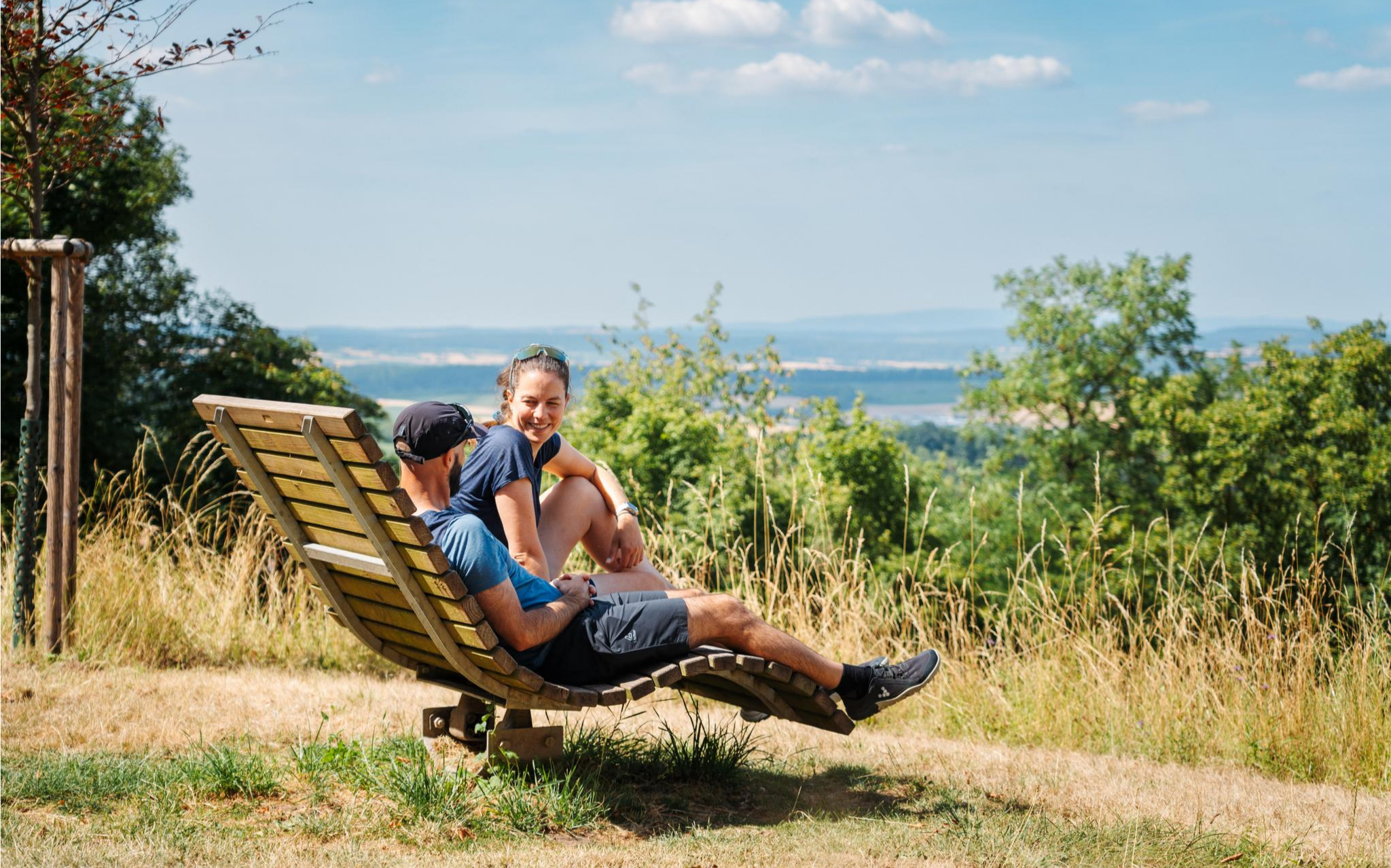
Rest and eat on 2 benches, unfortunately without a pond
0
0

The Hungerquelle spring is located in the "Wössingen Waldwiesen" nature reserve toward Stein. After years of drought, bubbling water emerges in torrents. The spring is a habitat, breeding ground, and refuge for many animals, especially newts and salamanders. The Hungerquelle is a natural monument and offers walkers an oasis of tranquility.
6
0
A group of five graves from the Celtic period. Excavated in 1893 by Privy Councillor E. Wagner. The few finds uncovered indicate that the burial mounds were constructed during the La Tén period (4th to 5th centuries BC).
5
0
A small biotope that probably only retains water after significant rainfall. As of March 2025, it was completely dry.
5
0
A grated, fairly deep forest well, accessible via a small path. Not far from the headwaters of the Walzbach stream, which gives the village its name, lies this gem from a bygone era. It is a well dating back to the Roman occupation of the Kraichgau and is certainly one of the oldest structures in the Walzbach Valley.
5
0

Walzbachtal-Wössingen Not far from the source of the Walzbach, which gives the town its name, there is a gem from a bygone era. It is a well that dates back to the Roman occupation of the Kraichgau and is certainly one of the oldest buildings in Walzbachtal. The “stone-old” body of the well is still very well preserved.
5
0

The two benches invite you to linger
3
2

At some point I'll make it and experience a water eruption. Until then, it's a really quiet place where you can take a break to recover.
4
0
Frequently Asked Questions
What natural monuments can I explore in Großer Wald?
Großer Wald offers a diverse range of natural monuments. You can visit the Hungerquelle Artesian Spring, known for its intermittent gushes and as a habitat for amphibians. Another unique spot is the Himmelsteich Biotope, an artificially created pond that serves as an amphibian habitat, fed by rainwater.
Are there historical natural monuments in Großer Wald?
Yes, Großer Wald is rich in historical sites that are also recognized as natural monuments. The Roman Fountain is a well-preserved structure dating back to the Roman occupation of the Kraichgau, making it one of the oldest buildings in Walzbachtal. Additionally, you can explore the Celtic Burial Mounds (Latène Period), a group of five ancient burial mounds from the 5th to 4th centuries BC.
What unique natural features can I find in Großer Wald?
Beyond the historical sites, Großer Wald features unique natural elements like the Hungerquelle Artesian Spring, an artesian source that rarely pours but creates a significant natural spectacle when it does. The Himmelsteich Biotope, though man-made, functions as a vital natural habitat for amphibians, showcasing the region's ecological diversity.
Are there family-friendly natural monuments in Großer Wald?
Yes, several natural monuments are suitable for families. The Hungerquelle Artesian Spring offers a quiet natural oasis, and the Himmelsteich Biotope provides an interesting spot to observe nature, particularly amphibians, making them good choices for a family outing.
What kind of hiking trails are available near the natural monuments?
The region around Großer Wald offers various hiking opportunities. You can find trails like the Göbrichen–Wöschbach Ridge Route, which provides varied scenery through fields and forests. For more hiking options, you can explore the broader selection of trails in the area, which often pass by these natural and historical sites. For detailed routes, check out the Running Trails in Großer Wald guide, which includes routes like the 'Kötzleweg loop from Königsbach-Stein'.
Can I go cycling near the natural monuments in Großer Wald?
Yes, Großer Wald is suitable for cycling. There are various routes for mountain biking and road cycling. For mountain biking, you can find trails like the 'Seewiesen springs – St. Barbara Chapel Ruins loop from Königsbach (Baden)'. Road cyclists can enjoy routes such as the 'Gondelsheim Castle – Straußenhof Gottesau loop from Bretten Rinklingen'. You can find more options in the MTB Trails in Großer Wald and Road Cycling Routes in Großer Wald guides.
Are there options for running near the natural monuments?
Yes, Großer Wald offers several running trails. You can find routes like the 'Running loop from VVG der Stadt Bretten' or the 'Kötzleweg loop from Königsbach-Stein'. These trails provide a good way to experience the natural surroundings while getting some exercise. More running options are available in the Running Trails in Großer Wald guide.
How long does it typically take to visit the natural monuments?
The time required to visit the natural monuments varies. Sites like the Roman Fountain or the Celtic Burial Mounds can be explored in a relatively short time, perhaps 30 minutes to an hour each, depending on how much you wish to delve into their history. If you combine them with a hike, such as the Göbrichen–Wöschbach Ridge Route, your visit could extend to several hours.
What is the best time of year to visit the natural monuments in Großer Wald?
The natural monuments in Großer Wald can be visited year-round, but each season offers a different experience. Spring and autumn are ideal for hiking, with pleasant temperatures and vibrant foliage. Summer allows for longer days and warmer weather, perfect for exploring the springs and biotopes. Even in winter, the forest has a unique charm, though some paths might be muddy or icy.
Are the natural monuments in Großer Wald accessible for everyone?
While many natural areas can be challenging, some sites like the Hungerquelle Artesian Spring are noted for offering a tranquil oasis that can be enjoyed by walkers. However, specific information on wheelchair accessibility for all monuments is not available. Paths to historical sites like the Roman Fountain may involve forest trails.
Can I bring my dog to the natural monuments in Großer Wald?
Generally, dogs are welcome on trails and in natural areas within Großer Wald, provided they are kept on a leash and owners clean up after them. Specific rules for each natural monument may vary, but the overall forested environment is dog-friendly for responsible owners.
Are there any circular walks around the natural monuments?
Yes, the region offers opportunities for circular walks that can incorporate the natural monuments. For instance, the Göbrichen–Wöschbach Ridge Route is a varied trail that can be part of a circular exploration. Many local hiking guides and maps provide options for circular routes that pass by the Roman Fountain, Hungerquelle, and Celtic Burial Mounds.
What do visitors particularly enjoy about the natural monuments in Großer Wald?
Visitors appreciate the blend of history and nature. The Roman Fountain is admired for its historical preservation within the forest, while the Hungerquelle Artesian Spring is valued as a tranquil natural oasis. The Celtic Burial Mounds offer a fascinating glimpse into ancient history. The overall experience of discovering these unique sites amidst the peaceful forest environment is highly rated by the komoot community.
Are there any hidden natural gems in Großer Wald?
The Hungerquelle Artesian Spring, with its rare gushes of water, is considered a hidden gem, offering a quiet and often surprising natural spectacle. Similarly, the Himmelsteich Biotope, an artificially created pond that serves as an amphibian habitat, provides a unique ecological insight that might not be immediately obvious but is rewarding to discover.
Most popular routes in Großer Wald
Most popular attractions in Großer Wald

Get inspired with the komoot mobile app


Explore more
Extend your search for the best caves by checking out these guides of the top ones in Großer Wald:
