Top 14 Natural Monuments around Ponta Delgada (São José)
Best natural monuments around Ponta Delgada (São José) are found within this civil parish on São Miguel Island, Azores. This region provides access to diverse natural wonders, shaped by volcanic activity and coastal processes. Visitors can explore geological formations, lush gardens, and unique coastal landscapes. Ponta Delgada (São José) serves as a base for experiencing the island's natural heritage.
Best natural monuments around Ponta Delgada (São José)
- The most popular natural monuments is Buraco de São Pedro, a cave…
Last updated: October 30, 2026
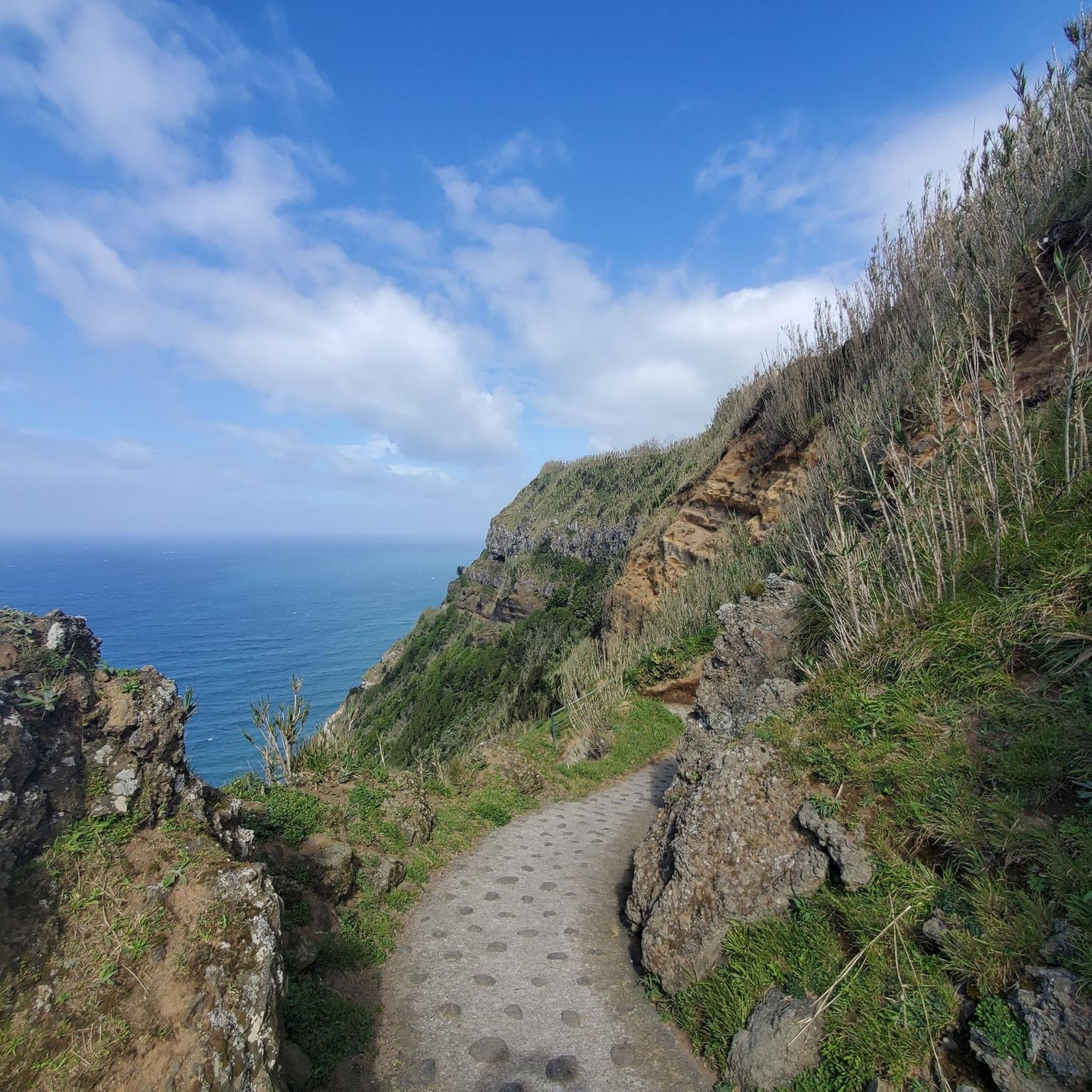
Lava Layers on PRC 20 Coastal Trail
Highlight • Natural Monument
Translated by Google •
Tip by

Buraco de São Pedro
Highlight • Natural Monument
Translated by Google •
Tip by

Sign up now to discover places like this
Get recommendations on the best single tracks, peaks, & plenty of other exciting outdoor places.
Giant tree at Jardim António Borges
Highlight • Natural Monument
Translated by Google •
Tip by

Natas Spring
Highlight • Natural Monument
Translated by Google •
Tip by

Metrosidero Tree, Campo de São Francisco
Highlight • Natural Monument
Translated by Google •
Tip by

Sign up for free to discover even more natural monuments around Ponta Delgada (São José).
Already have an account?
Start today with a free account
Your next adventure awaits.
Tips from the Community

The path to Relva may seem quite short, but the way back should not be underestimated due to the incline. We abandoned the descent to Cascalho after a few bends because it was quite slippery. The path to Relva, on the other hand, is easy to walk.
0
0
Approach and parking: After turning off the main road and the path is no longer asphalted, still carefully follow the path, at the end there is actually a large asphalted hiking parking lot with signs.
0
0

A wooden fence blocks the path to the fall protection approximately 2 meters from the edge. Crossing to the other side or looking down would only be possible by "bypassing" the fence. Still an impressive stretch of coast, but this highlight doesn't (or no longer?) live up to the pictures.
0
0

A huge ironwood tree stands in the Campo de Sao Francisco square.
1
0
The monster tree is getting old and needs to be cordoned off to ensure that no one is injured by falling branches.
1
0
A pretty little park with a playground and pond and plenty of seating. Numerous reconstructed lava caves offer the opportunity to seek shelter from rain or too much sun
1
0
Fascinating coast. I could watch the waves here for hours
2
0
Impressive place. We preferred not to cross to the other side.
2
0
Frequently Asked Questions
What are some unique geological natural monuments to visit in Ponta Delgada (São José)?
Ponta Delgada (São José) offers several fascinating geological sites. You can explore the Buraco de São Pedro, a cave and volcanic formation believed to be a lava tube or lava field collapse, showcasing impressive underground lava flow structures. Another notable site is the Gruta do Carvão, an ancient lava tube within Ponta Delgada, known for its rare volcanic formations like lava stalactites and fossilized tree trunk molds. For more details on the Gruta do Carvão, you can visit visitacity.com.
Are there any botanical gardens or peaceful natural oases in Ponta Delgada (São José)?
Yes, the region boasts beautiful green spaces. The Giant tree at Jardim António Borges is a highlight within a 19th-century garden, offering a peaceful environment with exotic plants, centuries-old trees, and a lake. Additionally, the José do Canto Botanical Garden, located nearby, spans around six hectares and features a diverse collection of plants from around the world, including specimens planted as early as 1840.
What kind of coastal natural monuments can I find near Ponta Delgada (São José)?
The coastline near Ponta Delgada (São José) offers dramatic natural monuments. The Lava Layers on PRC 20 Coastal Trail allows you to observe different layers of volcanic material along a scenic coastal path. Further along the coast, Fajã do Mar is a coastal stretch with a very particular geological formation, where you can see various rock structures and the vast Atlantic.
Are there family-friendly natural monuments around Ponta Delgada (São José)?
Absolutely. The Giant tree at Jardim António Borges is a family-friendly spot within a lush garden, perfect for relaxing walks. The Natas Spring is another accessible natural monument, often enjoyed by families for its refreshing water. The Gruta do Carvão lava tube also offers guided tours that can be an educational and exciting experience for families.
What are some of the most iconic natural monuments on São Miguel Island that are easily accessible from Ponta Delgada (São José)?
From Ponta Delgada (São José), you can easily access some of São Miguel's most iconic natural wonders. These include the breathtaking Sete Cidades Lake, a volcanic crater with striking blue and green lakes, and Lagoa do Fogo, a protected crater lake known for its clear turquoise waters. The Furnas Valley, famous for its hot springs and volcanic activity, is also a popular destination.
What outdoor activities can I do near these natural monuments?
The area around Ponta Delgada (São José) is excellent for various outdoor activities. You can find numerous cycling routes, including road cycling, touring, and mountain biking. For example, there are challenging road cycling routes like the "Ascent of Pico da Barrosa – View of Lagoa do Fogo loop from Ponta Delgada" and mountain bike trails such as the "Lake Canário – Vista do Rei viewpoint loop from Ponta Delgada." You can explore more options on the Road Cycling Routes, Cycling, and MTB Trails guides for the region.
Are there hiking trails near the natural monuments in Ponta Delgada (São José)?
Yes, there are several hiking opportunities. The Lava Layers on PRC 20 Coastal Trail is a beautiful coastal path where you can observe volcanic geology. While specific hiking routes directly linked to individual natural monuments are not detailed, the region's cycling guides often overlap with scenic areas suitable for walking. For instance, the "Vista do Rei viewpoint – Feteiras Viewpoint loop from Ponta Delgada" offers stunning views that can be enjoyed on foot or by bike.
What do visitors enjoy most about the natural monuments in Ponta Delgada (São José)?
Visitors frequently praise the unique geological formations and the serene natural beauty. Many find the Buraco de São Pedro impressive, with some noting the phenomenal views despite challenging access. The Giant tree at Jardim António Borges is appreciated for its peaceful, shady environment. The Lava Layers on PRC 20 Coastal Trail is often highlighted as the most beautiful part of its hiking route, offering stunning coastal views.
Is it possible to visit a volcanic crater with a saltwater inlet near Ponta Delgada (São José)?
Yes, the Vila Franca do Campo Islet, located about 1km off the coast, is a picturesque nature reserve that fits this description. It's a volcanic crater with a saltwater inlet, making it an excellent spot for snorkeling and observing marine biodiversity. Access to the islet is typically by boat during the summer months.
What kind of geological features are prominent in the natural monuments around Ponta Delgada (São José)?
The natural monuments in this region are heavily influenced by the island's volcanic origins. You'll encounter lava tubes and collapses, such as the Buraco de São Pedro and Gruta do Carvão, which display intricate volcanic formations. Coastal areas like Lava Layers on PRC 20 Coastal Trail and Fajã do Mar showcase different layers of lava material and unique rock structures formed by volcanic activity and coastal erosion.
Are there any natural springs or water sources among the natural monuments?
Yes, the Natas Spring is a natural monument known for its refreshing water. It's one of the many fountains on the island, and visitors often stop there to quench their thirst. While it doesn't always have water, it's a recognized natural feature.
What is the best time to visit the natural monuments around Ponta Delgada (São José)?
The Azores generally have a mild climate year-round, but the best time to visit for outdoor activities and exploring natural monuments is typically from late spring to early autumn (May to October). During these months, the weather is usually warmer and drier, making it ideal for hiking, cycling, and enjoying the coastal and volcanic sites. However, some attractions like the Vila Franca do Campo Islet are only accessible by boat during the summer months.
Most popular routes around Ponta Delgada (São José)
Most popular attractions around Ponta Delgada (São José)

Get inspired with the komoot mobile app


Explore more
Extend your search for the best caves by checking out these guides of the top ones around Ponta Delgada (São José):
