Top 11 Natural Monuments around gmina gmina gmina Myślibórz
Best natural monuments around gmina gmina gmina Myślibórz offer a glimpse into the region's natural heritage and historical significance. This area in Poland features a diverse landscape with notable natural landmarks. Visitors can explore various sites, including ancient trees and significant geological formations. The natural monuments provide opportunities for easy walking trails and appreciating the local environment.
Best natural monuments around gmina gmina gmina Myślibórz
- The most popular natural monuments is Giant Sequoia of Brwice Direction Sign, a natural…
Last updated: June 29, 2026
Giant Sequoia of Brwice Direction Sign
Highlight • Structure
The giant mammoth from Brwice is the largest, oldest and thickest in …
Translated by Google •
Tip by

Dyszno Palace Park and Memorial Stones
Highlight • Historical Site
Translated by Google •
Tip by
Sign up now to discover places like this
Get recommendations on the best single tracks, peaks, & plenty of other exciting outdoor places.
Sign up for free
St. Otto's Well in Pyrzyce
Highlight • Monument
Translated by Google •
Tip by
Wilhelm II Boulder
Highlight • Monument
Translated by Google •
Tip by

Mighty Oak (Peace Oak)
Highlight • Natural Monument
Translated by Google •
Tip by

Sign up for free to discover even more natural monuments around gmina gmina gmina Myślibórz.
Sign up for free
Already have an account?
Start today with a free account
Your next adventure awaits.
Login or Signup
Tips from the Community

In 2024, the park around the well was revitalized. Three figures were placed at the well: Bishop Otto of Bamberg, who came with a Christianization mission, Warcisław I - the Duke of Pomerania, who accepted Christianity, and Bolesław Krzywousty - the Polish prince who conquered Pomerania, made Warcisław I his vassal and sent a Christianization mission.
2
2

A forgotten boulder in the bushes on the hill. Inscription: "William II 1888-1913". Next to it there is a water tower, from the top of which you can see some of the panorama of Barlinek. At least in winter when there are no leaves.
2
0
In the park, on the occasion of the 75th anniversary of the Nature Conservation League, an erratic stone was placed with an inscription in Polish and German. The boulder commemorates the former owner of Dyszna, Alexander von Humboldt, considered the spiritual father of nature conservation.
2
1

The town of Pyrzyce can boast that it was the first Christian town in this part of Poland. It was here that centuries ago (in 1124) the Christianization mission of Bishop Otto of Bamberg began. On the orders of Bolesław Wrymouth, he set off to Western Pomerania to preach the Gospel. In the place where the well stands, Otto of Bamberg gathered the then inhabitants of Pyrzyce and performed one of the largest mass baptisms in Pomerania. On the 700th anniversary of these events, thanks to the future king of Germany, Frederick William, a monument was erected in this place. The work by Charles F. Schinkel was inspired by the ancient Baptistery of Constantine the Great in Rome. The spring was surrounded by granite slabs, and its surface was located just below a stone cross, at the base of which there is a Latin invocation: Come (hasten) to the source of life, come! Christ will baptize you and open the door of eternal salvation. The well has survived in this shape to this day. Unfortunately, there is no water in it anymore because the spring has dried up. However, this place is worth seeing, because history is still alive in this place. In 1991, the well and the park were entered into the register of monuments. In 1999-2000, for the first time since World War II, the well was renovated. Since 1991, the monument and its surroundings have belonged to the parish of Our Lady of Sorrows.
2
2
The oak was planted in 1816. Officially, it is called the Peace Oak, but it is also called the Brewers' Oak because Lipiany was once famous for its beer production.
1
2
natural monument is located on Plac Wolności, circumference at breast height 430 cm, height 28 m, age 190
2
1
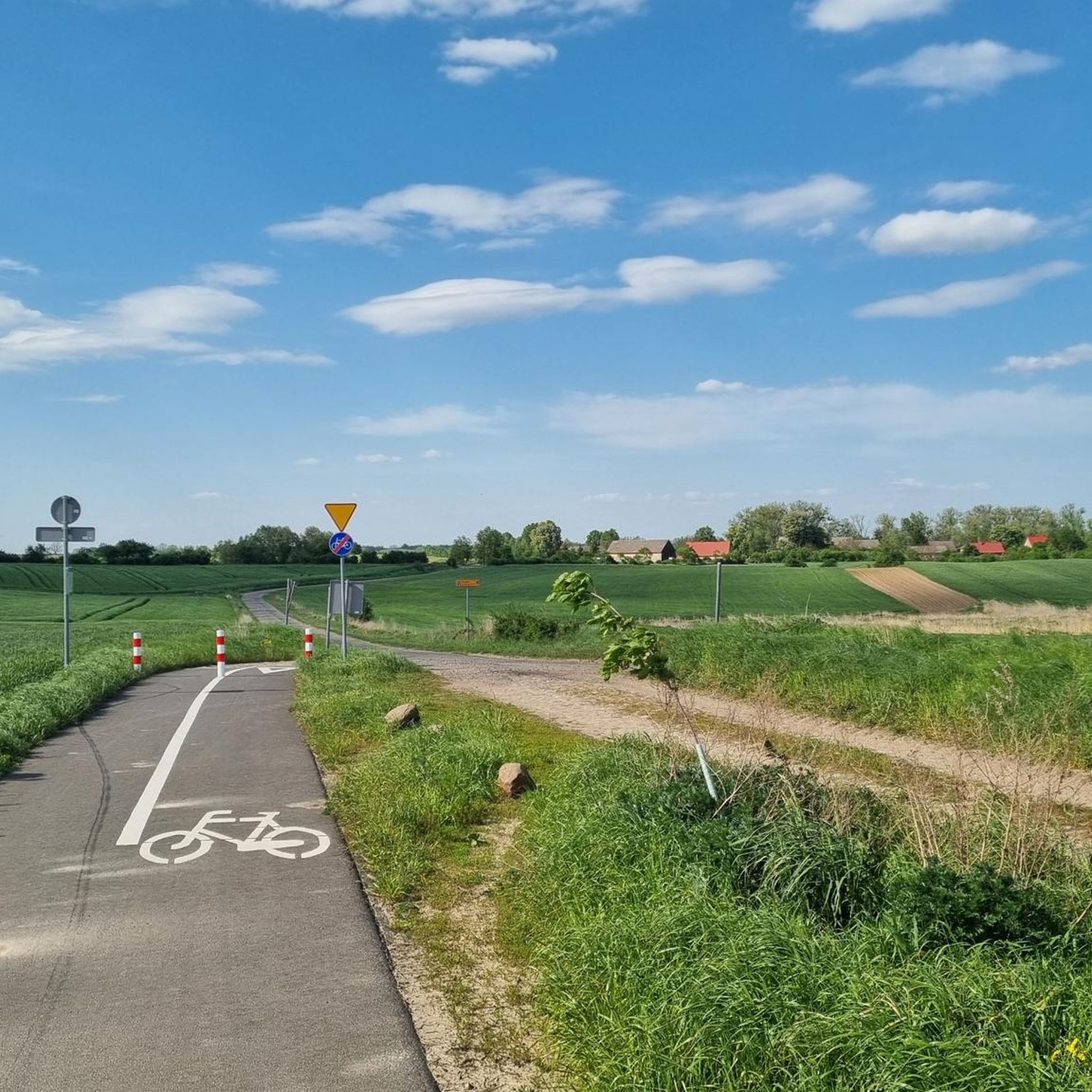
Signpost pointing to Mamutowiec Giant in Brwice - a magnificent monument of nature. Access via a dirt road. The giant mammoth from Brwice is the largest, oldest and thickest in Poland. It was probably planted in 1895 by the family of General Henning von Trescow, the organizer of several attacks on Hitler. The tree is now 27 meters high with a trunk circumference of 361 cm. It grows in the manor park.
3
1
The remains of the palace - the palace was built in the years 1830-1840, rebuilt many times. From the 1950s it belonged to the PGR Chłopowo. Demolished in the 1980s, only partial remains of the foundations are visible. Entered in the register of monuments. Landscape type park - established in the 19th century, area 8 ha; with large clearings and a park meadow, surrounded by oaks in the eastern part of the park. Preserved within its original boundaries, however, the layout of roads, quarters and park interiors is largely obliterated. In the north-west part and east. there are 2 former park ponds. A park meadow with a plantation of ancient oaks has been preserved, as well as drainage ditches constituting the boundaries of the site from the south and east. Old trees mostly preserved (about 470 trees), four conical oaks growing in a row parallel to the nonexistent palace wall and a common beech hanging variety deserve attention. Impressive monumental specimens, including groups of monumental trees of the Humboldt Lime and Humboldt Oaks - trees up to 750 cm in circumference, grow in the field areas beyond the eastern border of the park. Entered in the register of monuments.
2
0
Frequently Asked Questions
What are some unique natural monuments to visit in Gmina Myślibórz?
Gmina Myślibórz offers several unique natural monuments. You can visit the Giant Sequoia of Brwice Direction Sign, which points to Poland's largest and oldest Giant Sequoia. Another notable site is Dyszno Palace Park and Memorial Stones, featuring monumental trees and an erratic stone. Don't miss the Mighty Oak (Peace Oak), a historic tree planted in 1816.
What kind of natural features can I expect to see among the monuments?
The natural monuments in Gmina Myślibórz primarily feature impressive ancient trees, including giant sequoias, monumental oaks, lindens, and maple-leaf plane trees. You will also find significant erratic boulders, such as the "Devil's Stone" near Rościn and the Wilhelm II Boulder, which are geological remnants.
Are there any natural monuments with historical significance?
Yes, many natural monuments in Gmina Myślibórz are deeply intertwined with history. The Giant Sequoia in Brwice was planted around 1895 by the family of General Henning von Tresckow. Dyszno Palace Park and Memorial Stones includes an erratic stone commemorating Alexander von Humboldt. The Mighty Oak (Peace Oak) was planted in 1816 to commemorate a victory over Napoleon, and St. Otto's Well in Pyrzyce marks a significant historical Christianization event.
Are there family-friendly natural monuments in the area?
Yes, several natural monuments are suitable for families. Dyszno Palace Park and Memorial Stones offers a spacious park environment with old trees. St. Otto's Well in Pyrzyce is located within a revitalized park. The Mighty Oak (Peace Oak) is also considered family-friendly and is easily accessible.
Are any natural monuments wheelchair accessible?
The Mighty Oak (Peace Oak), located on Plac Wolności, is noted as wheelchair accessible, making it a good option for visitors with mobility needs.
What outdoor activities can I do near these natural monuments?
You can enjoy various outdoor activities near the natural monuments. The region offers numerous routes for cycling, hiking, and running. For mountain biking, explore trails like the "Chojna Town Hall – Myślibórz Lake loop." Hikers can enjoy routes such as the "Pyrzyce Gate loop from Myślibórz." Runners have options like the "Running loop from Moczkowo." You can find more details on these activities in the MTB Trails around gmina gmina gmina Myślibórz, Hiking around gmina gmina gmina Myślibórz, and Running Trails around gmina gmina gmina Myślibórz guides.
Are there hiking trails near the natural monuments?
Yes, there are several hiking trails in the vicinity of the natural monuments. For example, you can find easy hiking routes like the "Pyrzyce Gate loop from Myślibórz" or the "Pyritzer Gate – Nowogródzka Gate loop from Myślibórz." More moderate options include the "Soldiner Gate – Lippehner Trinkrecht Fountain loop from Lipiany." Discover more hiking opportunities in the Hiking around gmina gmina gmina Myślibórz guide.
Can I find cycling routes around the natural monuments?
Absolutely. Gmina Myślibórz offers a variety of cycling routes, including mountain biking trails, that pass near or through areas with natural monuments. Examples include the "Chojna Town Hall – Myślibórz Lake loop" and the "Nowogródzka Gate – Gertraudenkapelle loop from Myślibórz." For a comprehensive list of routes, refer to the MTB Trails around gmina gmina gmina Myślibórz guide.
What makes the Giant Sequoia in Brwice special?
The Giant Sequoia in Brwice is particularly special because it is considered the largest, oldest, and thickest of its kind in Poland. Planted around 1895, it stands at an impressive 27 meters tall with a trunk circumference of 361 cm, making it a truly magnificent and awe-inspiring natural landmark.
What can I see at Dyszno Palace Park and Memorial Stones?
At Dyszno Palace Park and Memorial Stones, you can explore a historical landscape park with over 470 old trees, including monumental specimens like Humboldt Lime and Humboldt Oaks, some with circumferences up to 750 cm. The park also features an erratic stone commemorating Alexander von Humboldt, adding to its historical and natural appeal.
Are there any hidden natural gems worth exploring in Gmina Myślibórz?
Beyond the well-known sites, the village of Rościn, about 7 km from Myślibórz, harbors a neglected park with several monumental trees, including a small-leaved linden and a majestic pedunculate oak. Nearby, you can also find the "Klickstein," or "Devil's Stone," an erratic boulder that serves as a monument of inanimate nature, offering a glimpse into the region's less-traveled natural heritage.
What is the best time of year to visit the natural monuments in Gmina Myślibórz?
The natural monuments, primarily featuring trees and geological formations, can be appreciated year-round. Spring and summer offer lush greenery and pleasant weather for walks. Autumn provides beautiful foliage, while winter, with bare trees, can highlight the impressive scale and structure of the monumental trees and boulders. Consider local weather conditions for your visit.
Most popular routes around gmina gmina gmina Myślibórz
Most popular attractions around gmina gmina gmina Myślibórz

Get inspired with the komoot mobile app


Explore more
Extend your search for the best caves by checking out these guides of the top ones around gmina gmina gmina Myślibórz:
