Top 20 Natural Monuments around gmina Czarna
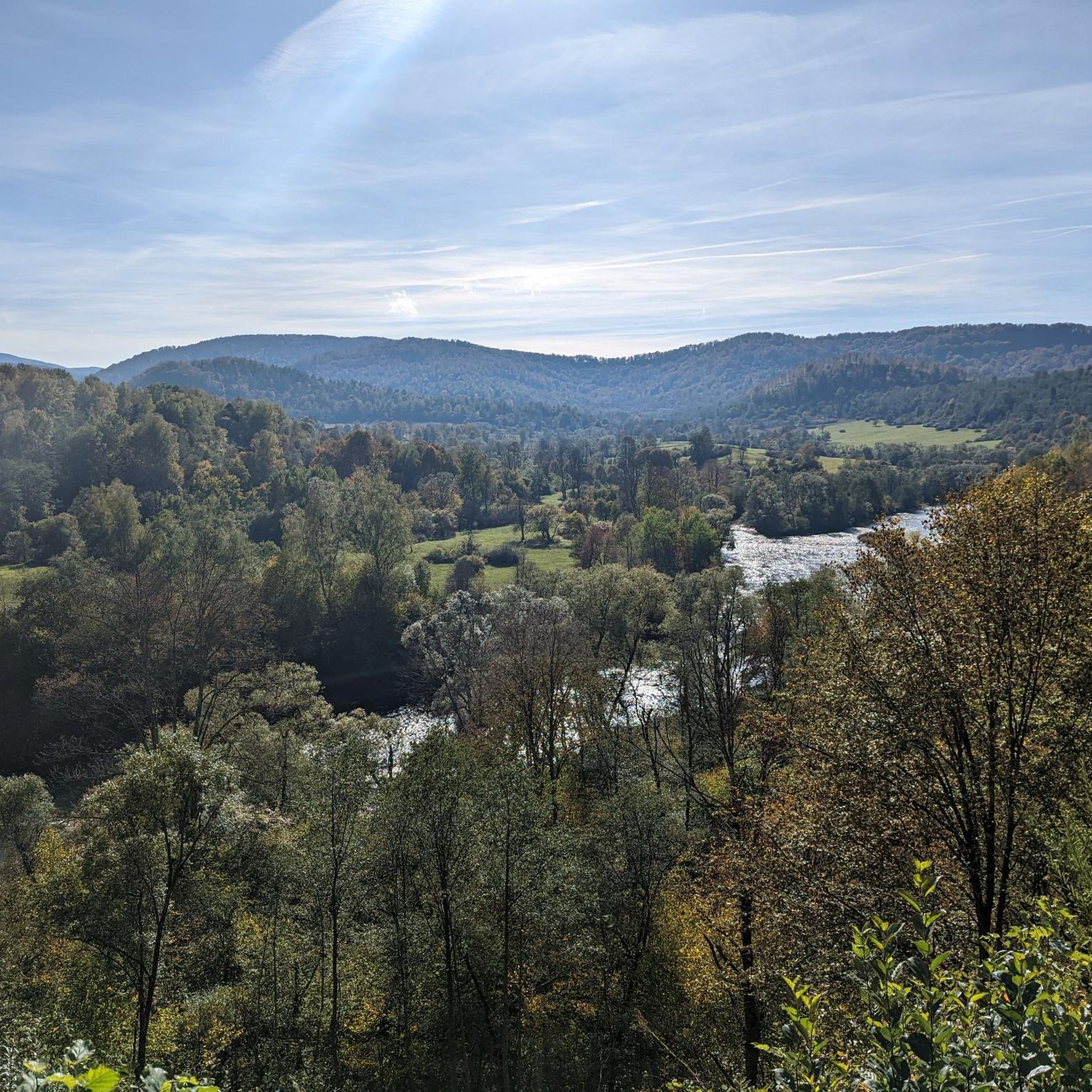
Best natural monuments around gmina Czarna are situated in a mountainous and forested region, which is part of a protected landscape. The area includes a portion of the San Valley Landscape Park and borders the buffer zone of the Bieszczady National Park. This ensures a pristine natural environment, offering diverse natural attractions for exploration.
Best natural monuments around gmina Czarna
- The most popular natural monuments is Orłowicz Pass, a mountain pass that serves as a junction for many trails.…
Last updated: May 17, 2026
Orłowicz Pass
Highlight • Mountain Pass
Translated by Google •
Tip by

Smerek
Highlight • Summit
Translated by Google •
Tip by
Sign up now to discover places like this
Get recommendations on the best single tracks, peaks, & plenty of other exciting outdoor places.
Sign up for free
Jeleni Skok Viewpoint
Highlight • Viewpoint
Translated by Google •
Tip by

Łopiennik Peak (1,069 m)
Highlight • Summit
Translated by Google •
Tip by

Osadzki Peak
Highlight • Summit
Translated by Google •
Tip by
Sign up for free to discover even more natural monuments around gmina Czarna.
Sign up for free
Already have an account?
Start today with a free account
Your next adventure awaits.
Login or Signup


Tips from the Community


One of the most popular mountain passes in the Bieszczady Mountains. It is also a branching of the trails to Smerek, Osadzki Wierch, Wetlina, Zatwranica and Jaworzec
1
0
It is one of the peaks of Połonina Wetlińska. It is the second largest point in this range (elevation: 1253), and also the highest one that can be accessed via a marked tourist trail
2
0


You can reach Łopiennik (1,069 m above sea level) by several trails: the black one from Dołżyca, the blue one from Baligród or from the village of Habkowce (northwest of Cisna on road 893) along the "Stary Majdan" nature trail.
0
0
The pass is named after Mieczysław Orłowicz, an outstanding tourist activist and founder of the first Polish Academic Tourist Club in Lviv in 1906 and the author of many tourist guides. Several trails intersect at the pass. It is one of the most frequented places in the Bieszczady Mountains.
2
0
The wooden observation tower on Mount Mochnaczka (777 m above sea level) is the first point on the blue Bieszczady Trail from Cisna. From the observation tower we can see Krzywe in the foreground, then Strzebowiska, and in the background, among others. Jasło, Fereczata, Jawornik, Kamienna, Rawki and Połonina Caryńska. The tower is equipped with a telescope (but it does not always work).
1
0
Frequently Asked Questions
What unique natural features can I explore in Gmina Czarna?
Gmina Czarna offers a diverse range of natural features. You can discover ancient trees, such as the European larch in Czarna Dolna, or impressive ash and linden trees in Rabe and Polana, often found near historical churches. The region also features unique peat bog vegetation in the "Torfy" Nature Reserve and fascinating erosional grottoes like Jaskinia w Rosolinie, carved into Carpathian flysch sandstones.
Are there specific natural monuments known for their historical significance?
Yes, several natural monuments in Gmina Czarna hold historical significance. The ancient trees, such as the European larch in Czarna Dolna and the ash and linden trees in Rabe, Michniowiec, and Polana, have stood for centuries, often near old church grounds, serving as quiet sentinels of local heritage. The area around Jaskinia w Rosolinie also carries the history of a now-defunct village, adding a layer of historical context to its natural beauty.
What kind of wildlife can I expect to see in the natural monuments area?
The "Torfy" Nature Reserve in Głowaczowa is particularly rich in wildlife. Here, you might spot rare water-marsh birds, numerous dragonflies, moor frogs, water frogs, and sand lizards. Larger mammals like wild boars, roe deer, red deer, and even moose frequently visit the area, especially within the protected landscape that borders the Bieszczady National Park.
Are there any nature reserves dedicated to protecting unique ecosystems?
Absolutely. The "Torfy" Nature Reserve in Głowaczowa is a significant natural monument established to protect unique peat bog vegetation. Its primary objective is the preservation of the insectivorous round-leaved sundew (Drosera rotundifolia) and other characteristic bog species, alongside providing nesting grounds and refuge for rare water-marsh birds.
What outdoor activities are available near the natural monuments in Gmina Czarna?
The region around Gmina Czarna is excellent for various outdoor activities. You can find numerous trails for mountain biking, running, and cycling. For instance, there are challenging MTB trails like the Mountainbike loop from Terka, scenic running routes such as the Pętla Zatwarnica - Krywe, and extensive cycling tours like the Ustrzyki Dolne loop. Many of these routes pass through or near the natural monuments, offering a chance to combine exploration with physical activity.
Are there hiking trails near these natural monuments?
Yes, hiking is a popular activity. Many natural monuments, especially the mountain passes and summits, are integral parts of hiking networks. For example, Orłowicz Pass is a junction for many trails in the Bieszczady Mountains. Smerek and Osadzki Peak are also accessible via the red GSB trail, offering beautiful views. The "Torfy" Nature Reserve also has a green educational path for visitors.
What is the best time of year to visit the natural monuments in Gmina Czarna?
The best time to visit largely depends on your preferred activities. Spring and summer are ideal for experiencing the lush vegetation of the "Torfy" Nature Reserve and enjoying the educational paths. Autumn offers stunning fall foliage, especially around the ancient trees and mountain viewpoints like Jeleni Skok Viewpoint. Winter provides a serene, snow-covered landscape for those interested in winter hiking, though some trails might be more challenging.
Are there family-friendly natural monuments or activities in Gmina Czarna?
Yes, Gmina Czarna offers options for families. The educational path through the "Torfy" Nature Reserve is suitable for families interested in learning about unique flora and fauna. The journey to Jaskinia w Rosolinie, while having a steep final descent, can be an adventurous and educational experience for older children, blending natural beauty with local history.
What are some of the most popular natural monuments for visitors?
Among the most popular natural monuments are Orłowicz Pass, known as a major trail junction in the Bieszczady Mountains, and Smerek, which offers expansive views of the Bieszczady ranges. Visitors also frequently enjoy Osadzki Peak, the second-largest point in Połonina Wetlińska accessible by a marked trail.
What kind of views can I expect from the natural monuments?
The natural monuments in Gmina Czarna offer breathtaking views, especially from the mountain summits and viewpoints. From Smerek, you can see all the important ranges of the Bieszczady Mountains. Jeleni Skok Viewpoint on Mount Mochnaczka provides panoramic vistas of Krzywe, Strzebowiska, and distant peaks like Jasło and Połonina Caryńska. Even Łopiennik Peak, at 1,069 meters, offers significant views despite some tree growth.
How difficult are the trails to reach the natural monuments?
The difficulty varies. Many trails to popular summits like Smerek and Osadzki Peak are considered intermediate, with some steep sections. The educational path in the "Torfy" Nature Reserve is generally easy. The route to Jaskinia w Rosolinie includes a final steep but secured descent. Always check specific trail descriptions for current conditions and difficulty ratings.
Are there any unique plant species to look out for?
Yes, the "Torfy" Nature Reserve is home to the unique insectivorous round-leaved sundew (Drosera rotundifolia), a fascinating plant adapted to nutrient-poor peat bog environments. Beyond the reserve, the region's ancient trees, including the European larch, broad-leaved linden, ash, and sycamore maple, are also notable for their impressive size and ecological roles.
Most popular routes around gmina Czarna
Most popular attractions around gmina Czarna

Get inspired with the komoot mobile app


Explore more
Extend your search for the best caves by checking out these guides of the top ones around gmina Czarna:
