Top 7 Natural Monuments around Walce
Best natural monuments around Walce are found within this rural gmina in Krapkowice County, Opole Voivodeship, in southern Poland. The region shares natural characteristics with the broader Opole Voivodeship, known for its diverse natural beauty. While specific named natural monuments within Walce are not widely documented, the surrounding Krapkowice County offers various natural landscapes. These areas provide opportunities to explore forests, rivers, and tranquil countryside.
Best natural monuments around Walce
- The most popular natural monuments is Amphitheater on Góra Świętej…
Last updated: May 17, 2026
Amphitheater on Góra Świętej Anny
Highlight • Monument
Translated by Google •
Tip by

Chapel on the Marshes
Highlight • Religious Site
Translated by Google •
Tip by

Sign up now to discover places like this
Get recommendations on the best single tracks, peaks, & plenty of other exciting outdoor places.
Sign up for free
Zakrzowska Szpica
Highlight • Historical Site
Translated by Google •
Tip by
Nefelinite Quarry Geosite
Highlight • Natural Monument
Translated by Google •
Tip by

Siedem Źródeł Spring
Highlight • Natural Monument
Translated by Google •
Tip by
Sign up for free to discover even more natural monuments around Walce.
Sign up for free
Already have an account?
Start today with a free account
Your next adventure awaits.
Login or Signup

Tips from the Community

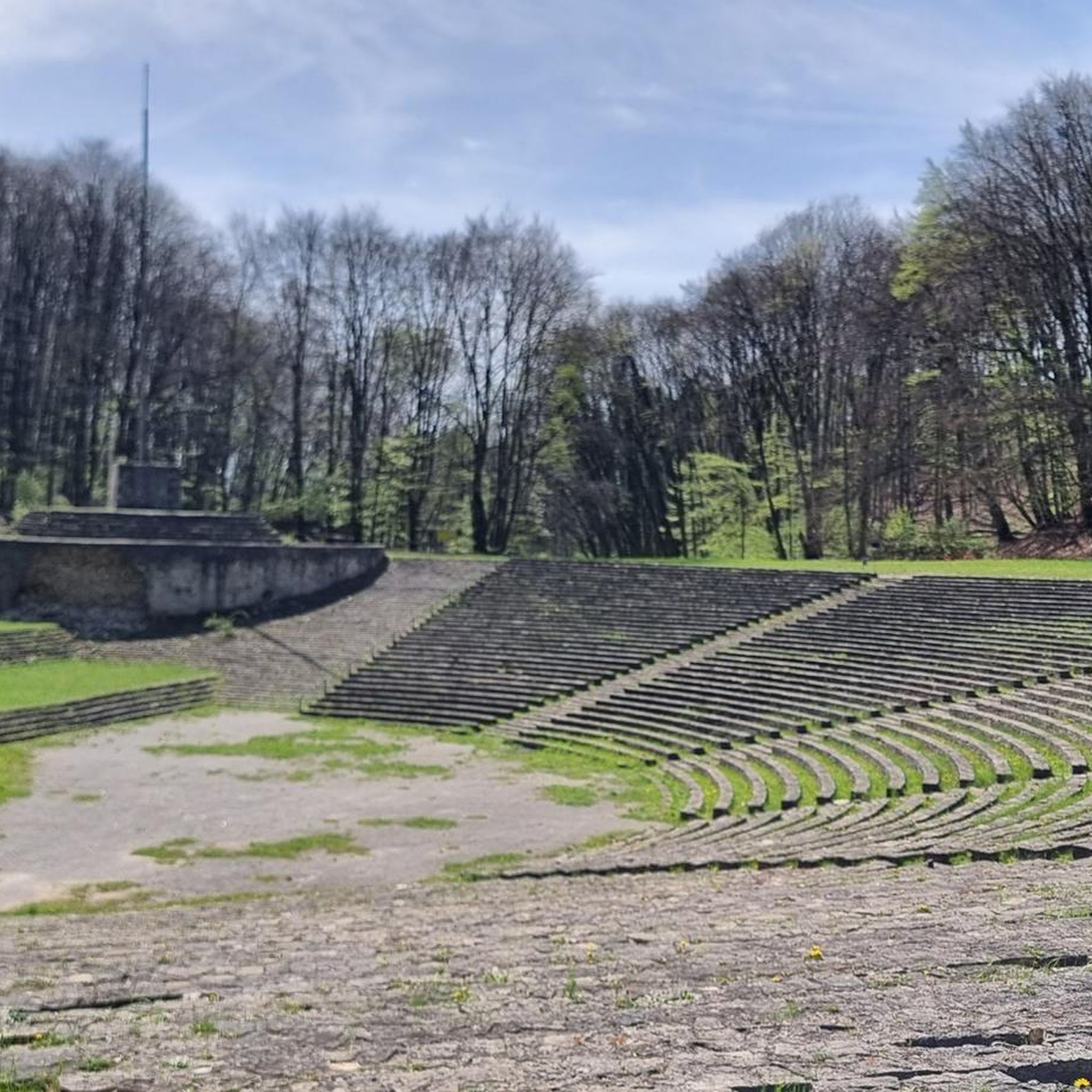
The amphitheater on St. Anne's Mountain was built in 1934–1938 on the site of a former quarry. It was designed by Franz Böhmer and Georg Petrich and could accommodate around 50,000 spectators. The stands were made of local Gogolin limestone. Above the amphitheater was a mausoleum for Germans who died in the Third Silesian Uprising, which was destroyed after the war. In 1955, the Monument to the Uprising by Xawery Dunikowski was unveiled in its place. Today, the amphitheater still attracts tourists with its monumental architecture and historical significance.
1
0

The name Seven Springs may falsely suggest that there were seven springs in this place. In fact, it is one karst outcropping that gives rise to the Anka stream. The name is related to the fact that the spring powered 7 water mills that operated below in Leśnica until World War II. The spring never freezes because the water flowing out of it has a constant temperature of 9.4 C. The spring's efficiency is estimated at 20 to 30 l/s, it flows to the surface through numerous karst channels at the foot of the limestone rock wall. Wywierzysko is located right next to the road on the northern outskirts of Leśnica, in the Góra Święta Anna Landscape Park. The water from the spring is drinkable, and a picnic table was set up near the spring, so you can also rest there
0
1
Perfectly visible from the highway, also known for the fact that for many years, every Sunday in May, Fr. prof. Joachim Piecuch celebrates Marian services there in German. A large group of residents of Gogolin, Krapkowice, the Karłubiec district, Zdzieszowice and surrounding villages gather then. The chapel, built in 1801 in the fields, is the common property of local residents. The Marian chapel was built next to a water spring that springs naturally from the ground. The water collects in a small well and is widely believed to have healing properties. According to E. Boronczyk's publication (Karłubiec 1302 - 2008, pp. 170-171), it was probably founded by the Gaszyns from Żyrowa, to commemorate the miraculous recovery of sight by the counts' child. According to oral tradition, Mary was supposed to show Countess Gaszyn this special place. During World War II, Stanisław Wojtala, as a soldier on the Eastern Front, vowed to visit the chapel every week if he returned safely from the war. Older residents remember how at any time of the year, even in winter, in the deepest snow, he would make his way to the chapel...
1
1
It is said that the stone tower is a remnant of an old castle, owned by a wealthy but very stingy and greedy ruler who led an extremely lavish lifestyle. One day there was a feast in the castle. There was singing and music all around. At that time, a wanderer-beggar passed there, or perhaps a pilgrim who was going to the birthplace of Saint. Jacek in Kamień Śląski. Tired of his journey and the heat of the day, he knocked at the castle gate, asking for meager food and shelter from the approaching storm. Not only did he not receive anything, but the poor man was also set upon with dogs. The angry beggar cursed the lord and his entire estate. Justice was soon served. That same day, during a storm, a fiery lightning bolt struck straight into the castle, which immediately collapsed into the ground. Only scattered boulders and a stone tower remained around. No one escaped alive. After some time, mysterious apparitions began to appear near the mountain - a white lady with a black dog holding two
1
1

Great place, spectacular views.
1
1

Beautiful place with great views
0
0

A large amphitheater built by the Nazis in 1936-38 for their Thingspiel productions. It is very well preserved (although nature has reclaimed the area) and is still a very impressive building with great acoustics.
4
0
Frequently Asked Questions
What types of natural monuments can I expect to find around Walce?
Around Walce, you'll discover a mix of natural and historically significant sites. These include unique geological formations like quarries, natural springs, and historical sites that have become intertwined with the natural landscape, such as the Amphitheater on Góra Świętej Anny and Zakrzowska Szpica.
Are there any historical sites that are also considered natural monuments?
Yes, several sites combine historical significance with natural elements. The Amphitheater on Góra Świętej Anny, built in the 1930s, is a man-made structure where nature has reclaimed parts of the area, creating a unique blend. Similarly, Zakrzowska Szpica is a historical site with a stone obelisk located at the top of a mountain, steeped in local legends.
Are there family-friendly natural attractions near Walce?
Many natural monuments in the area are suitable for families. The Amphitheater on Góra Świętej Anny, Chapel on the Marshes, Nefelinite Quarry Geosite, and Siedem Źródeł Spring are all categorized as family-friendly, offering accessible and engaging experiences for all ages.
Can I find natural springs or unique geological formations in the area?
Absolutely. The Chapel on the Marshes is situated by a natural water spring known for its naturally occurring water. Another notable spring is Siedem Źródeł Spring, a karst outcropping with water that maintains a constant temperature and is drinkable. For geological formations, the Nefelinite Quarry Geosite offers an interesting look at the area's geological history with well-prepared paths and viewing terraces.
What kind of outdoor activities can I do near these natural monuments?
The region around Walce offers various outdoor activities. You can enjoy cycling on routes like the 'Prudnik Town Hall – Głogówek Market Square loop' or 'Krapkowice Market Square – Upper Gate Tower loop'. For hiking, there are options ranging from easy walks such as the 'Waldhof Manor Ruins – Żyrowa Palace loop' to more moderate trails like the 'John Paul II Black Trail'. You can find more details on these activities in the cycling guide and hiking guide for Walce.
Are there hiking opportunities around the natural monuments?
Yes, there are several hiking opportunities. You can explore easy hikes like the 'Sunset by the Chapel loop from Krapkowice' which is 6.5 km, or more moderate trails such as the 'John Paul II Black Trail' which is over 9 km. These routes allow you to experience the natural beauty and reach some of the monuments. For a comprehensive list of trails, refer to the easy hikes guide and hiking guide for Walce.
What do visitors particularly enjoy about the natural monuments around Walce?
Visitors appreciate the blend of natural beauty and historical significance. The Amphitheater on Góra Świętej Anny is noted for its impressive acoustics and well-preserved structure. The Chapel on the Marshes is cherished for its serene setting by a natural spring, believed to have healing properties. The Nefelinite Quarry Geosite is praised for its interesting geological features and great views from viewing terraces.
Is there a good time of year to visit the natural monuments around Walce?
The Opole Voivodeship, where Walce is located, offers diverse natural beauty throughout the year. Spring and summer are ideal for enjoying lush greenery and outdoor activities. Autumn brings beautiful foliage, while even in winter, some sites like the Siedem Źródeł Spring, which never freezes, can be visited for a tranquil experience.
Are there any viewpoints offering scenic views of the natural landscape?
Yes, several natural monuments double as excellent viewpoints. The Amphitheater on Góra Świętej Anny, Zakrzowska Szpica, Nefelinite Quarry Geosite, and Siedem Źródeł Spring all offer opportunities to take in the surrounding natural beauty and landscapes of the Krapkowice County.
Are there any natural monuments with unique stories or legends?
Yes, Zakrzowska Szpica is particularly rich in local folklore. It's said that the stone obelisk is a remnant of an old castle, cursed by a beggar, which collapsed into the ground during a storm. Legends also tell of mysterious apparitions, including a white lady with a black dog, appearing near the mountain.
What kind of wildlife might I encounter near Walce's natural monuments?
The Krapkowice County, with its forests and rivers, provides habitats for various wildlife. While specific sightings can vary, visitors might encounter common European forest animals such as deer, wild boar, and a variety of bird species, especially around the more secluded natural areas and springs like Siedem Źródeł Spring.
How accessible are the natural monuments around Walce?
Many of the natural monuments are considered family-friendly, suggesting a degree of accessibility. For instance, the Nefelinite Quarry Geosite features well-prepared paths and viewing terraces. While specific wheelchair accessibility details for all sites are not provided, the general emphasis on tranquil walks and easy hikes indicates that many areas are suitable for a wide range of visitors.
Most popular attractions around Walce

Get inspired with the komoot mobile app


Explore more
Extend your search for the best caves by checking out these guides of the top ones around Walce:
