Top 11 Natural Monuments around gmina Jordanów Śląski
Best natural monuments around gmina Jordanów Śląski include ancient oak trees and significant geological formations. The region's landscape features several protected natural elements, recognized for their natural, scientific, and cultural value. These monuments contribute to the area's biodiversity and offer insights into its natural heritage. Visitors can explore these sites, which are often found along routes suitable for outdoor activities.
Best natural monuments around gmina Jordanów Śląski
- The most popular natural monuments is Mount Ślęża, a summit that is…
Last updated: August 22, 2026
Mount Ślęża
Highlight • Summit
Translated by Google •
Tip by

Bear and Maiden with Fish Sculptures on Mount Ślęża
Highlight • Monument
Tip by

Sign up now to discover places like this
Get recommendations on the best single tracks, peaks, & plenty of other exciting outdoor places.
Sign up for free
Mnich stone sculpture (Ślężański Landscape Park)
Highlight • Monument
Tip by
Radunia Summit
Highlight • Summit
Translated by Google •
Tip by

Skalna Perć Trail
Highlight • Trail
Translated by Google •
Tip by
Sign up for free to discover even more natural monuments around gmina Jordanów Śląski.
Sign up for free
Already have an account?
Start today with a free account
Your next adventure awaits.
Login or Signup
Popular around gmina Jordanów Śląski

Tips from the Community

Follow the little trail at the bear statue for 100 m to a viewing tower
0
0

The mountain has two archaeological trails marked with the symbol of the Ślęża bear, allowing visitors to discover the ancient stone sculptures while trekking. Despite its relatively modest elevation, Ślęża offers impressive views due to its prominent rise of over 500 meters above the surrounding lowlands.
1
0
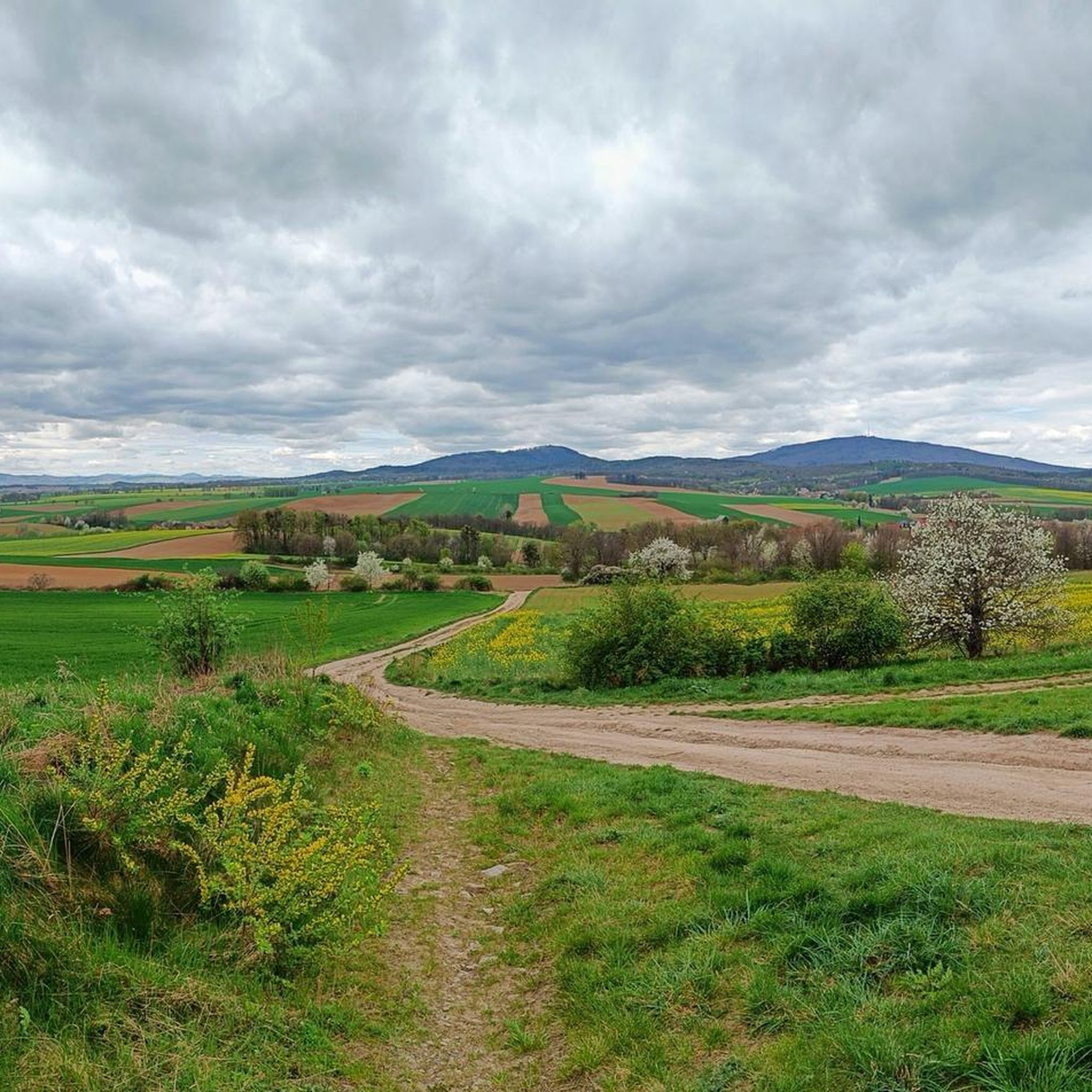
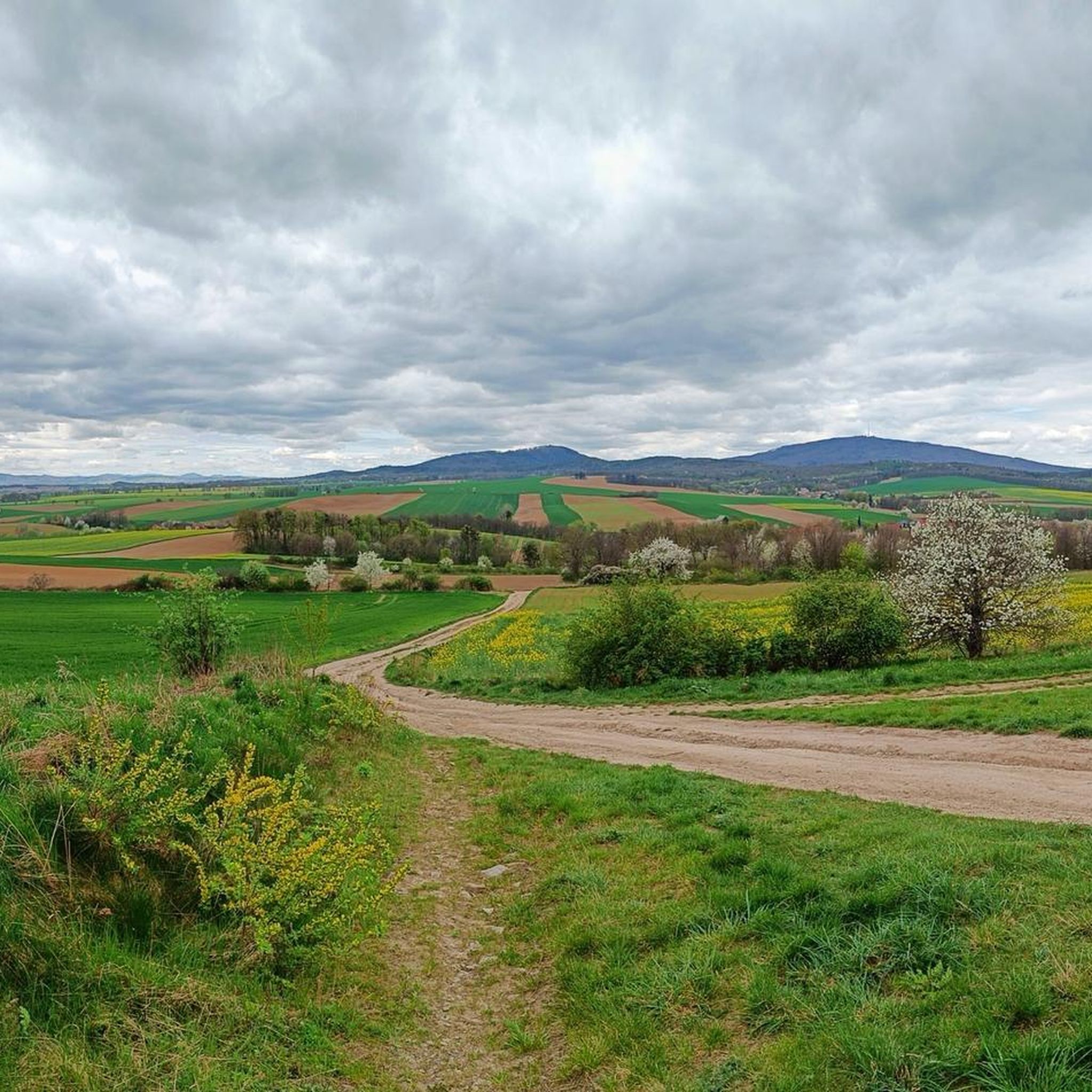
Mount Ślęża is the highest peak of the Sudeten Foothills at 717.5 meters above sea level, located near the town of Sobótka in southwestern Poland. The mountain served as a pagan solar worship center from the Bronze Age until Christianization in the 10th-11th centuries, with ancient stone sculptures including "the maiden with fish," "the monk," and "the bear" still visible today. A 12th-century church now stands on the summit alongside a concrete observation tower, while the PTTK tourist shelter provides accommodation for hikers exploring the well-marked trail network.
1
0
The "Maiden with Fish" is a Celtic cult statue from the La Tène period (circa 400-200 BCE) carved from local granodiorite and standing about 2.2 meters tall, located near the summit of Mount Ślęża in Poland. The anthropomorphic sculpture depicts a human figure holding a large fish (likely a trout or salmon) vertically against their chest, though the statue is missing its head, neck, right arm, and parts of the legs due to erosion over time. The statue was rediscovered in 1733 by Gottfried Heinrich Burghart in a rocky debris field on the northern slope of Ślęża, possibly in its original location which may have been a main cult site.
1
0
In 1937, archaeologists discovered an offering of boiled potatoes placed near the sculpture, suggesting it retained some folk religious significance well into modern times. The sculpture is carved from local Ślęża granite and features cross marks that were likely added later in its history.
2
0
Monk is a 2.5-meter tall megalithic granite sculpture located in Sobótka near Mount Ślęża in Lower Silesia, Poland, believed to date from the early medieval pre-Christian period and possibly of proto-Slavic or Celtic origin. Originally found near the village of Garncarsko, it may have served as a milestone marker between Wrocław and Świdnica, though it likely had earlier ritual or cult purposes. The monument was relocated to Sobótka in the 1950s and was registered as an archaeological monument in 1969.
2
0

There is a nature reserve on the top of the mountain. It protects the places where rare plant species adapted to specific soil and climate conditions occur. In 2014, the tourist trail leading there was closed down, which was necessary to protect nature, which was being destroyed by careless tourists, trampling valuable grasslands and lighting fires on the top of Radunia. Source: https://www.sleza.sobotka.pl/radunia/
1
0

Radunia (573m above sea level) is the second peak on the Ślęża Massif (after Ślęża itself, of course). This peak is part of the Góra Radunia Nature Reserve. From the top there are amazing views of the Sowie Mountains and Ślęża. Worth it!
2
0
Frequently Asked Questions
What are the most popular natural monuments around gmina Jordanów Śląski?
Visitors frequently enjoy exploring Mount Ślęża, the highest peak of the Ślęża Massif, known for its extensive views and historical significance. Another favorite is Radunia Summit, the second peak in the massif, which is part of a nature reserve protecting rare plant species. The Skalna Perć Trail, with its unique rock and granite steps, is also highly appreciated.
Are there any ancient trees or unique geological formations to see?
Yes, gmina Jordanów Śląski is home to several ancient pedunculate oak trees designated as natural monuments. These include an impressive oak in Karolin (Winna Góra) with a circumference of 492 cm, another in Winna Góra measuring 420 cm, and the largest in Tomice, boasting a remarkable 570 cm circumference. You can also find unique rock formations along trails like the Skalna Perć Trail.
What kind of historical or cultural sites are integrated with the natural monuments?
The region's natural monuments often have deep historical roots. Mount Ślęża was a significant pagan solar cult center dating back to the Bronze Age, with ancient stone sculptures like the Bear and Maiden with Fish Sculptures still visible. The Mnich stone sculpture in Ślężański Landscape Park is another megalithic granite sculpture believed to have pre-Christian ritual purposes.
What outdoor activities can I do near these natural monuments?
The area around gmina Jordanów Śląski offers various outdoor activities. You can explore numerous routes suitable for cycling, gravel biking, and hiking. For gravel biking, consider routes like the Tąpadła Pass loop. If you prefer easy hikes, there are options such as the Rezerwat Łąka Sulistrowicka loop. For more cycling adventures, routes like the Słupice Reservoir and Beach loop are available. You can find more details on these activities in the Gravel biking around gmina Jordanów Śląski, Easy hikes around gmina Jordanów Śląski, and Cycling around gmina Jordanów Śląski guides.
Are there family-friendly natural monuments or trails?
Yes, several natural monuments are suitable for families. Mount Ślęża is considered family-friendly, offering resting places and views. The Mnich stone sculpture is also listed as family-friendly. Many of the ancient oak trees are accessible along scenic routes that can be enjoyed by families.
What is the best time to visit the natural monuments in gmina Jordanów Śląski?
The natural monuments, especially the ancient oak trees and hiking trails, are best enjoyed during spring, summer, and early autumn when the weather is mild and the foliage is lush. This allows for comfortable hiking and cycling. While winter offers a different, serene landscape, some trails might be more challenging due to snow or ice.
What do visitors enjoy most about the natural monuments in this region?
Visitors particularly appreciate the impressive size and age of the ancient oak trees, which serve as living connections to the past. The panoramic views from summits like Mount Ślęża and Radunia Summit are also highly praised. The unique historical and cultural elements, such as the pagan sculptures and ancient cult sites, add another layer of interest to the natural beauty.
Are there any viewpoints offering scenic vistas?
Absolutely. Mount Ślęża provides extensive views from its summit, towering over the surrounding area. Radunia Summit also offers amazing views, including vistas of the Sowie Mountains and Ślęża itself. The Skalna Perć Trail also features viewpoints along its rocky path.
How long does it typically take to visit the natural monuments?
The duration of your visit can vary. Exploring a single ancient oak tree might take a short stop, while hiking to the summit of Mount Ślęża or Radunia Summit can be a half-day or full-day excursion, depending on your chosen route and pace. Many visitors combine several sites with a hike or bike ride, making it a full day of exploration.
Are there any easy walks to natural monuments in gmina Jordanów Śląski?
Yes, there are easy walking options. While some summits involve intermediate or challenging trails, you can find easier paths to appreciate the ancient oak trees. For dedicated easy hikes, consider routes like the Rezerwat Łąka Sulistrowicka loop or the Karolin Folwark – Karolin Palace loop, which are part of the Easy hikes around gmina Jordanów Śląski guide.
What is the significance of the ancient oak trees in the region?
The ancient oak trees in gmina Jordanów Śląski, such as those in Karolin and Tomice, are designated natural monuments due to their significant natural, scientific, cultural, historical, and landscape value. They are protected for their impressive size, age, and their role in maintaining the area's biodiversity and landscape character. They serve as living testaments to the region's natural heritage.
Most popular routes around gmina Jordanów Śląski
Most popular attractions around gmina Jordanów Śląski

Get inspired with the komoot mobile app


Explore more
Extend your search for the best caves by checking out these guides of the top ones around gmina Jordanów Śląski:
