Guadalupe Mountains Wilderness
Guadalupe Mountains Wilderness
Top 9 Natural Monuments in Guadalupe Mountains Wilderness
Best natural monuments in Guadalupe Mountains Wilderness are remnants of an ancient Permian fossil reef, showcasing a rugged and diverse landscape. This region, primarily within Guadalupe Mountains National Park, offers pristine scenic vistas. Its natural monuments provide insight into a tropical sea that covered the area millions of years ago. The park's isolation contributes to a rich array of flora and fauna, making its natural features compelling for visitors.
Best natural monuments in Guadalupe Mountains Wilderness
- The most popular natural…
Last updated: June 29, 2026
Devil's Hall
Highlight • Canyon
Tip by

Guadalupe Peak
Highlight • Summit
Tip by

Sign up now to discover places like this
Get recommendations on the best single tracks, peaks, & plenty of other exciting outdoor places.
Sign up for free
Smith Spring
Highlight • Natural Monument
Tip by
The Grotto
Highlight • Cave
Tip by
Permian Reef Trail (Switchback Section)
Highlight (Segment) • Trail
Tip by
Sign up for free to discover even more natural monuments in Guadalupe Mountains Wilderness.
Sign up for free
Already have an account?
Start today with a free account
Your next adventure awaits.
Login or Signup
Popular around Guadalupe Mountains Wilderness
Tips from the Community

Must do if the weather is right. Mid fall to early spring is the best time. Can take as little as 5 hours if you are reasonably fit (like 9 minute mile).
0
0

This steep section of the Permian Reef Trail takes you up to the top of Wilderness Ridge through an ancient, fossilized reef known as the Capitan Reef. The trail was designed to showcase preserved Permian age geologic and fossil features in the park; you can download a NPS guide to the marked fossils along this trail ( http://npshistory.com/brochures/gumo/permian-reef-trail.pdf ). As you ascend this challenging, but fun, section of trail you get increasingly great views of the large imposing cliff-sides that comprise the bulk of the ancient reef and down into McKittrick Canyon. As you climb, you will pass by some amazing geologic features like a free-standing natural rock pillar, numerous fossils, the striking rounded rock rim of the Wilderness Ridge, and sweeping views across the park.
1
0
Deep in McKittrick Canyon is a small, shaded spot that houses a small, unique-looking cave at the base of rounded cliff. There are a few wooden picnic tables near the Grotto, making it a great place to stop for lunch or a snack on your hike.
1
0
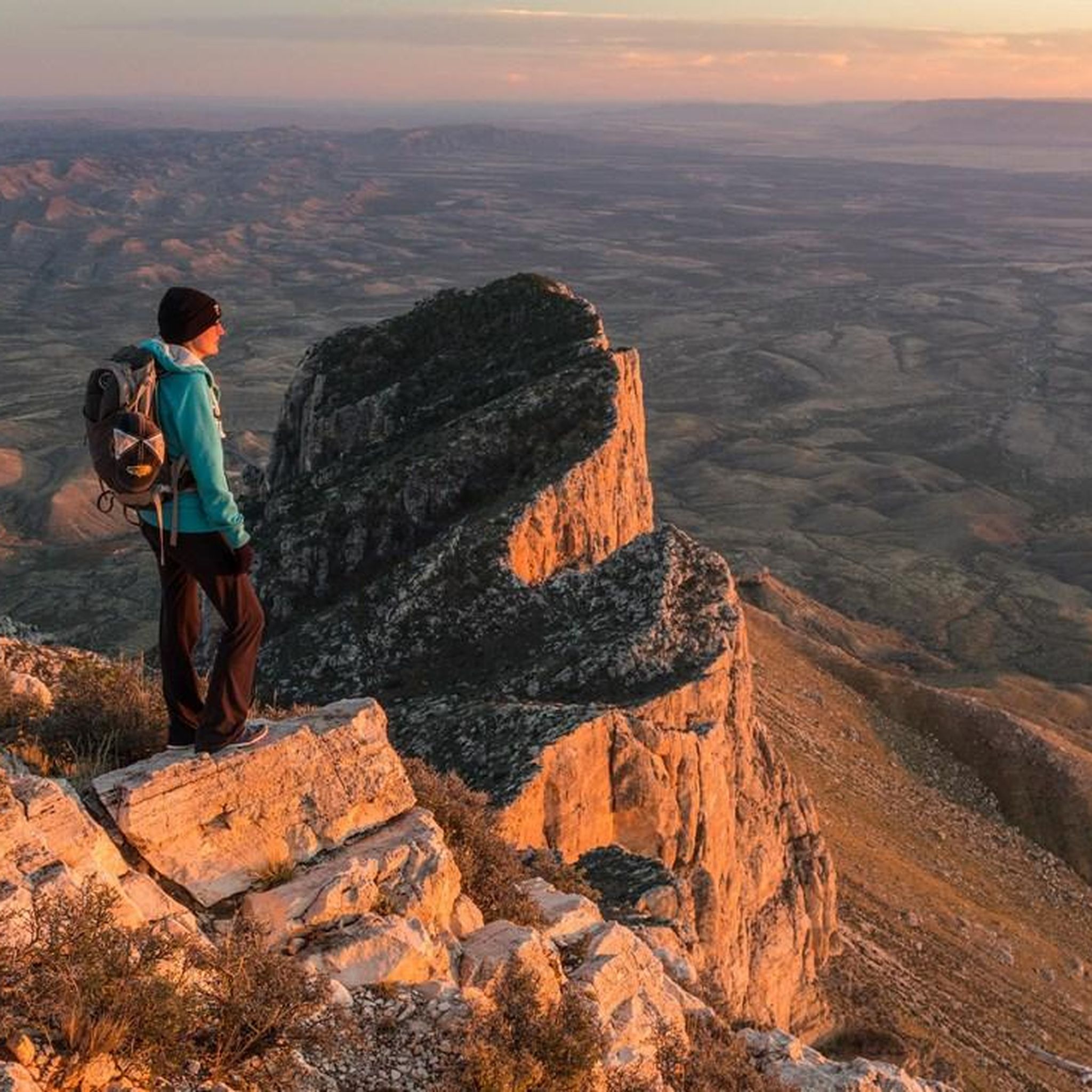
Also known as the "Top of Texas," Guadalupe Peak stands at 8,751 feet and is the highest point in the state of Texas. The summit hosts not only spectacular, panoramic views of the surrounding mountains, including the sheer cliffs of El Capitan, and the expansive desert, but it also has a monument marking its status as Texas's highest peak. This is a great place to eat a snack, snap some photographs, and relax after the strenuous hike.
1
0
Smith Spring is an oasis in the desert. Surrounded by plants, the heavily vegetated Smith Spring stands in stark contrast to the surrounding dry, rocky desert. This is a fantastic spot in the foothills of the mountains to relax in the shade, take some photographs, and be on the lookout for the many animals that rely on this important source of water in the desert.
1
0

Nice gorge, also suitable as a photo motif.
0
0

A challenging hike up the old watershed involving some scrambling. The hikers stairs are easier to go up than down. But the end is worth the hike. The Devil's Hall is a canyon that acts as a wind tunnel so will help cool you off at the end. Bring a snack to recharge for the hike back and bring plenty of water for the return.
1
0
Frequently Asked Questions
What are some of the most striking natural monuments to visit in Guadalupe Mountains Wilderness?
The Guadalupe Mountains Wilderness is home to several remarkable natural monuments. Guadalupe Peak, the highest point in Texas, offers panoramic views. Another iconic feature is El Capitan, a striking 1,000-foot-high limestone bluff, visible from afar and a historic landmark. For a unique geological experience, Devil's Hall features a narrow canyon with distinctive rock formations.
Are there any natural monuments suitable for families or less strenuous visits?
Yes, Smith Spring is an excellent option for families and those seeking a less strenuous experience. This oasis, nestled in the desert foothills, is heavily vegetated and provides a crucial water source for wildlife. A shorter, accessible loop trail leads to the spring, making it ideal for relaxation, photography, and wildlife viewing.
What kind of unique geological formations can I expect to see in the Guadalupe Mountains Wilderness?
The natural monuments in Guadalupe Mountains Wilderness are remnants of an ancient Permian fossil reef, offering a glimpse into a tropical sea that covered the region millions of years ago. You can observe towering limestone bluffs like El Capitan, and explore canyons with distinctive rock formations such as Devil's Hall. The Permian Reef Trail also showcases preserved Permian age geologic and fossil features.
What is the best time of year to visit the natural monuments in Guadalupe Mountains Wilderness?
Mid-fall to early spring is generally considered the best time to visit the Guadalupe Mountains Wilderness. During these seasons, the weather is typically more moderate, making challenging hikes like the one to Guadalupe Peak more enjoyable. McKittrick Canyon is particularly renowned for its stunning fall foliage, offering a vivid contrast to the surrounding desert.
What are some challenging hikes to natural monuments in the area?
For a challenging experience, the hike to Guadalupe Peak is an 8.5-mile round trip with over 3,000 feet of elevation gain, rewarding hikers with panoramic views. The trail to Devil's Hall is also considered moderately challenging, involving scrambling through an old wash to reach a unique slot canyon. The Permian Reef Trail also features a steep section with significant elevation gain.
Can I find opportunities for wildlife viewing near these natural monuments?
Yes, the Guadalupe Mountains Wilderness is known for its rich array of flora and fauna. Areas like Smith Spring, with its crucial water source, are excellent spots for wildlife viewing. The park's diverse ecosystems, ranging from Chihuahuan Desert scrubland to cool conifer forests, support various species, making many natural monuments potential sites for observing local wildlife.
Are there any natural monuments with historical significance?
El Capitan, a prominent limestone bluff, served as a crucial landmark for early travelers, including those on the Butterfield Overland Mail stagecoach line. While there isn't a specific highlight for El Capitan in the provided data, its historical role as a navigational beacon in the vast landscape is significant. McKittrick Canyon also features historical landmarks along its trails.
What hiking routes are available near the natural monuments?
The Guadalupe Mountains Wilderness offers a variety of hiking routes. For moderate hikes, you can explore trails like the McKittrick Canyon Trail. More challenging options include the El Capitan and Salt Basin Overlook Trail Loop or the Bush Mountain and Tejas Trail Loop. For easier walks, consider routes like the Smith & Manzanita Springs loop. You can find more details on these and other trails in the Hiking in Guadalupe Mountains Wilderness guide.
What should I wear or bring for hiking to the natural monuments?
Given the rugged and diverse landscape, it's advisable to wear sturdy hiking boots and layers of clothing suitable for varying temperatures. For challenging hikes like Guadalupe Peak or Devil's Hall, bring plenty of water, especially for the return journey, and snacks. Sun protection, such as a hat and sunscreen, is also recommended due to the desert environment.
Are there any less crowded natural monuments or trails to explore?
While popular spots like Guadalupe Peak and Devil's Hall can attract visitors, the park's isolation generally ensures a sense of wilderness. Exploring areas like McKittrick Canyon, especially on trails beyond the initial sections, or visiting during off-peak times (weekdays, early mornings) can offer a more solitary experience. The The Grotto in McKittrick Canyon offers a shaded, unique spot for a break.
What do visitors enjoy most about the natural monuments in Guadalupe Mountains Wilderness?
Visitors frequently praise the spectacular, panoramic views from summits like Guadalupe Peak, which offers vistas stretching for hundreds of miles. The unique geological features, such as the ancient fossil reef exposed at El Capitan and along the Permian Reef Trail, are also highly appreciated. Many enjoy the contrast of lush oases like Smith Spring against the dry desert, and the challenging yet rewarding hikes to places like Devil's Hall.
Most popular routes in Guadalupe Mountains Wilderness
Most popular attractions in Guadalupe Mountains Wilderness

Get inspired with the komoot mobile app


Explore more
Extend your search for the best caves by checking out these guides of the top ones in Guadalupe Mountains Wilderness:
