Organ Pipe Cactus Wilderness
Organ Pipe Cactus Wilderness
Top 10 Natural Monuments in Organ Pipe Cactus Wilderness
Best natural monuments in Organ Pipe Cactus Wilderness showcase a unique Sonoran Desert landscape, recognized as a UNESCO Biosphere Reserve. This region is characterized by its distinctive geological formations, including volcanic mountains and natural arches, alongside vast stands of rare cacti. The wilderness offers a tangible example of natural geological sculpture and holds cultural significance for indigenous communities. Its diverse ecosystems support a wide array of plant and animal species, making it a notable area for natural exploration.
Best natural…
Last updated: October 2, 2026
Victoria Mine
Highlight • Historical Site
Tip by

Natural arch
Highlight • Natural Monument
Tip by
Sign up now to discover places like this
Get recommendations on the best single tracks, peaks, & plenty of other exciting outdoor places.
Arch
Highlight • Natural Monument
Tip by
Trail Head Bull Pasture
Highlight • Trail
Tip by

Highest point of the Organ Pipe Cactus trail
Highlight • Viewpoint
Tip by
Sign up for free to discover even more natural monuments in Organ Pipe Cactus Wilderness.
Already have an account?
Start today with a free account
Your next adventure awaits.
Popular around Organ Pipe Cactus Wilderness
Tips from the Community

This is the main big arch you can see from the trailhead. To get here, follow the trail into the canyon for .6 miles to the sign labeled as „Arch Canyon Trail“. From here, you have to climb up steeply up the canyon over slick rock and a narrow rocky path. Expect some scrambling. Once you are on top, follow the cairns to a viewpoint across the arch. There is a steep path leading down for about 60 feet. Then you can hike along the ledge into the arch with breathtaking views!
3
0
This is not one of the arches you can see from the trailhead. If you want to get to the main arch, you have to climb down about 60 feet on the other side from a cliff where you can actually see the arch.
3
0
The Victoria Mine is the oldest mine in southwestern Arizona. There are some remains of the shafts that are an habitat for bats today. The mine was prospected for gold, silver, copper and lead. You can also find some scattered mining equipment around the mine.
4
0

Victoria Mine is one of many erected in this area during the gold (and silver) rush of the 1890s. During its first decade, Victoria Mine yielded a veritable fortune of silver ore to Mexican businessman Cipriano Ortega. The mine was used all the way through 1976, and while the mine shafts are closed off you can walk up to and around the ruins of the old mining building.
0
0
The trails here are an absolute gem of Organ Pipe National Monument and take you away from the potentially more crowded areas of the park. There is something for everyone regardless of whether you want flat running, vert, technical trails, or flowy singletrack. The trail around Estes Canyon and up to Bull Pasture is well maintained and not very technical. You can make a longer run up to the summit from Bull Pasture if you want an extra challenge.
0
0

Parking and toilets available. A fantastic trail to absolutely go to.
0
0
Breathtaking views really worth the vertical hike to get there. Now it is time to go down… not recommended for non-experimented hiker.
0
0
Frequently Asked Questions
What unique natural features can I expect to see in Organ Pipe Cactus Wilderness?
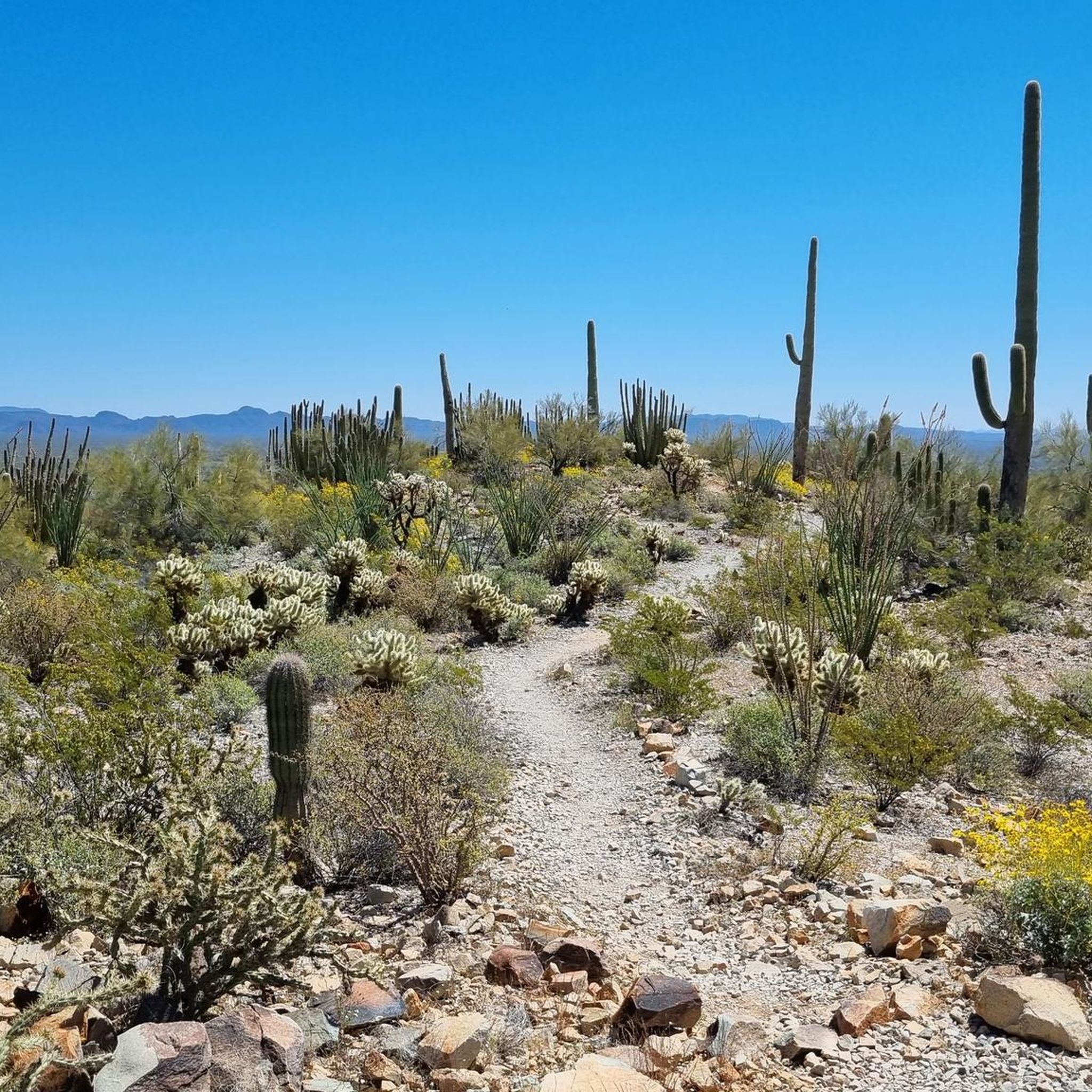
The wilderness is renowned for its vast stands of Organ Pipe Cacti, which are rare in the United States, and abundant Saguaro cacti. You'll also encounter distinctive geological formations like Arch Canyon with its unique double arch, the prominent Montezuma Head monolith, and the volcanic Ajo Mountain Range. Look out for bajadas (alluvial plains) and tinajas (natural water basins) that are crucial for desert wildlife.
Are there notable geological formations to explore in the Organ Pipe Cactus Wilderness?
Yes, the wilderness is rich in geological wonders. You can explore Natural arch in Arch Canyon, known for its distinctive 'double arch' formed from volcanic rhyolite. The striking, box-shaped Montezuma Head (I'itoi Mo'o) is another prominent monolith of layered volcanic rock. The entire Ajo Mountain Range showcases significant volcanic geology and offers challenging hikes with panoramic views.
Are there any historical sites among the natural monuments in Organ Pipe Cactus Wilderness?
Yes, the Victoria Mine is a notable historical site and natural monument. It's the oldest mine in southwestern Arizona, with remains of shafts that now serve as bat habitats and scattered mining equipment around the old building ruins. The mine was prospected for gold, silver, copper, and lead, and was active until 1976.
What kind of hiking opportunities are available near these natural monuments?
The Organ Pipe Cactus Wilderness offers a variety of hiking opportunities, from easy walks to strenuous climbs. You can find trails around Trail Head Bull Pasture, which offers well-maintained paths suitable for various skill levels. For more detailed information on routes, including easy, moderate, and difficult options, you can explore the Hiking in Organ Pipe Cactus Wilderness guide.
Are there family-friendly natural monuments or trails in the area?
While some trails can be challenging, there are options for families. The Highest point of the Organ Pipe Cactus trail is a short desert trail offering wonderful views and a chance to observe many Organ Pipe Cacti, making it accessible for many. For more easy hiking options, check out the Easy hikes in Organ Pipe Cactus Wilderness guide.
When is the best time to visit the Organ Pipe Cactus Wilderness?
The best time to visit is generally during the cooler months, from late fall to early spring (October to April), when temperatures are more moderate for hiking and exploration. The cacti bloom in late spring and early summer, offering a unique visual experience, particularly the night bloom of the organ pipe cactus.
What do visitors enjoy most about the natural monuments in Organ Pipe Cactus Wilderness?
Visitors frequently praise the breathtaking views, especially after reaching challenging viewpoints like the Arch. The unique opportunity to see vast stands of Organ Pipe Cacti, which are rare in the U.S., is also a major draw. The diverse desert flora, geological formations, and the sense of wilderness and solitude are highly appreciated.
Can I see wildlife while exploring the natural monuments?
Yes, the Organ Pipe Cactus Wilderness is a UNESCO Biosphere Reserve, home to exceptional biodiversity. You have a good chance of spotting wildlife, including 53 species of mammals, 43 species of reptiles, and over 278 species of birds. Tinajas, natural stone basins that collect water, are particularly vital for sustaining diverse wildlife in the arid landscape.
Are there any viewpoints that offer panoramic views of the wilderness?
Absolutely. The Highest point of the Organ Pipe Cactus trail offers wonderful views of the desert landscape and its unique cacti. Additionally, the Ajo Mountain Range provides challenging hikes that reward visitors with spectacular panoramic views of the Sonoran Desert.
What is the significance of Montezuma Head?
Montezuma Head, also known as I'itoi Mo'o, is a prominent, box-shaped monolith with two pinnacles. Beyond its striking geological appearance, it holds profound cultural significance as a sacred site for the Tohono O'odham and Hia-Ced O'odham people, blending natural wonder with deep cultural heritage.
Are there any loop trails available for exploring the natural monuments?
Yes, there are loop trails that allow for comprehensive exploration. For example, the Hiking in Organ Pipe Cactus Wilderness guide mentions routes like the Mount Ajo via Bull Pasture and Estes Canyon Loop, and the Baker-Milton Trail Loop, offering diverse experiences.
What are bajadas and tinajas, and why are they important?
Bajadas are gently sloping alluvial plains formed by debris washed down from mountain ranges, connecting them to valleys. Tinajas are natural stone basins that collect seasonal rainfall. Both features demonstrate the powerful forces of erosion and water in shaping the desert. Tinajas are particularly vital as crucial water sources that sustain diverse wildlife in the arid landscape.
Most popular routes in Organ Pipe Cactus Wilderness
Most popular attractions in Organ Pipe Cactus Wilderness

Get inspired with the komoot mobile app


Explore more
Extend your search for the best caves by checking out these guides of the top ones in Organ Pipe Cactus Wilderness:
