Top 20 Natural Monuments around Moab
Best natural monuments around Moab are defined by a rugged desert landscape sculpted by millions of years of erosion. This region in Utah is known for its dramatic geological formations, including sandstone arches, canyons, and towering rock pinnacles. The area offers diverse opportunities to explore unique red rock environments. It serves as a gateway to several prominent natural areas.
Best natural monuments around Moab
- The most popular natural monuments is Corona Arch, a natural monument that is a unilaterally…
Last updated: October 1, 2026
Corona Arch
Highlight • Natural Monument
Translated by Google •
Tip by

Mill Creek Waterfall
Highlight • Waterfall
Tip by

Sign up now to discover places like this
Get recommendations on the best single tracks, peaks, & plenty of other exciting outdoor places.
Moki Steps and Chain Section
Highlight • Climb
Tip by
Morning Glory Natural Bridge
Highlight • Natural Monument
Tip by
Courthouse Tower and Three Gossips Viewpoint
Highlight • Viewpoint
Tip by
Sign up for free to discover even more natural monuments around Moab.
Already have an account?
Start today with a free account
Your next adventure awaits.
Other adventures around Moab

Tips from the Community

For me, one of the most beautiful Arches in the area.
0
0

Corona Arch is an amazing natural sandstone arch located near Moab, Utah. This arch spans an impressive 140 feet across and rises 105 feet above the ground. It is a popular subject for photography and is composed of Navajo sandstone, sculpted over millions of years by wind and water erosion. Although you will most likely not be alone at Corona Arch, you can usually find a spot to enjoy it in peace.
0
0
Although the trail to Corona and Bowtie arches is generally fairly accessible across gently sloping slabs of slickrock and sandy pathways, this portion of trail is challenging with exposures and steep rock faces. To aid hikers, the BLM installed metal chains next to moki steps (small foot-holes chopped into the stone), as well as a short ladder to gain the top of a rock bench. Please be patient with other hikers and runners as they navigate this short, but more technical portion of trail. Fortunately if you are forced to wait behind others, you have amazing views of the Moab desert and can actually see Corona Arch from here.
0
0
On a hot day, the Mill Creek Waterfall and pool is the place to be for locals and visitors alike. After following narrow trails through a small stand of trees you reach the lower pool where you can cool off and swim in the water. If you are comfortable with heights and a little scrambling, you can climb up to the top of falls to jump off by following the trail up a slick rock slab. This is a great place to go swimming, take some photos, and relax in this desert oasis either as the final destination for your run, or on the way back from exploring further up Mill Creek Canyon.
0
0
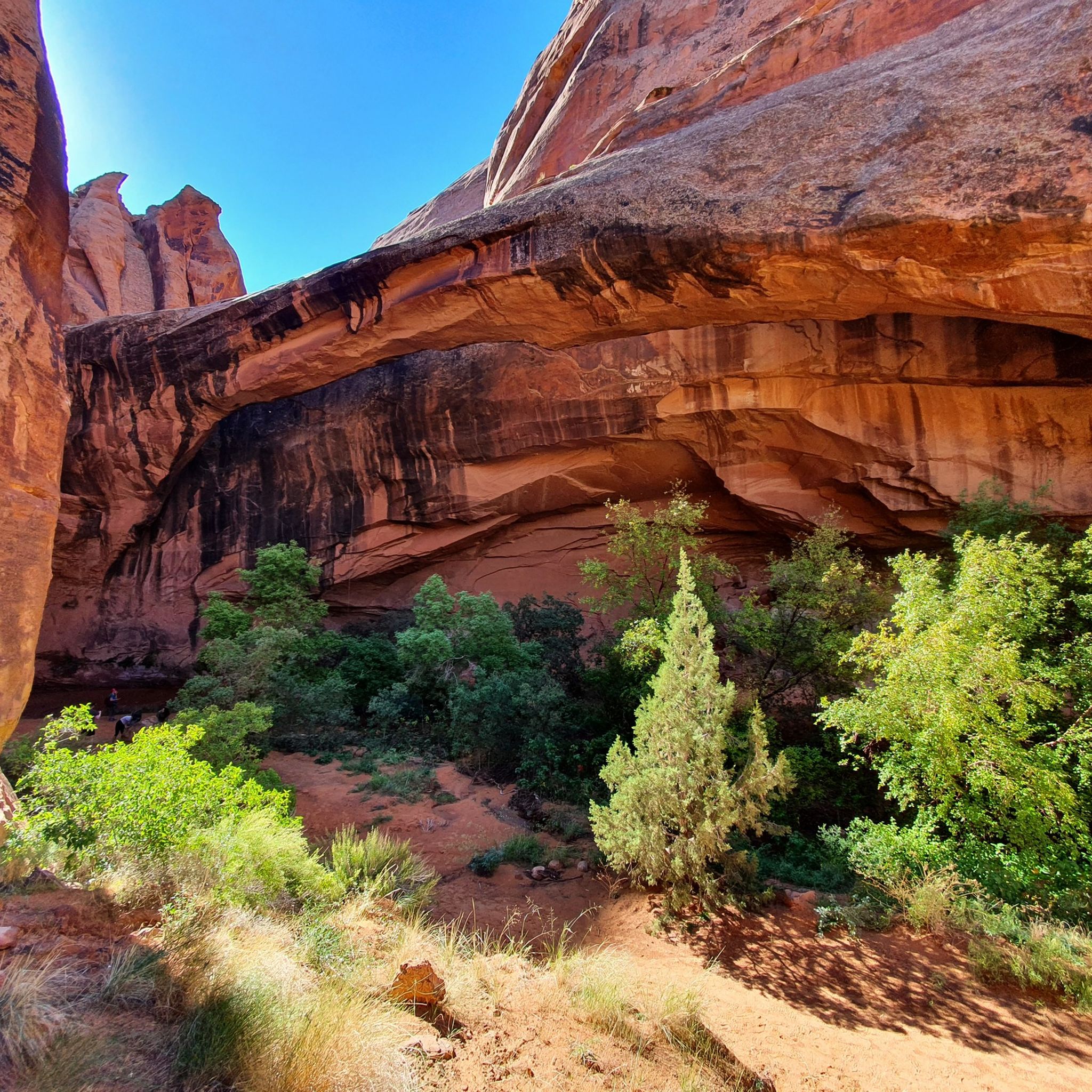
Morning Glory Natural Bridge is a huge natural bridge and an incredibly popular hiking and rappelling spot at the end of a scenic side canyon of Grandstaff Canyon. Spanning 243 feet, it is the sixth longest natural rock span in the United States, and an incredibly impressive sight. You can go beneath the bridge to marvel at its beauty and take photographs while also cooling off in the shade. There is a shallow pool of water under Morning Glory Natural Bridge, which is what makes it a bridge as opposed to an arch. This is a fantastic place to sip some water and relax before returning to the trailhead.
0
0
This viewpoint and parking area is the final destination if running the Park Avenue Trail and offers fantastic views of the famous Three Gossips formation and Courthouse Towers, including a butte that juts out from the larger Courthouse formation called "The Organ." You also can see the Tower of Babel and Sheep Rock quite well from here; in general you get panoramic views of the entire area. If you did not drop cars, and plan to run back to the Park Ave Trailhead, please go back the way you came on the trail, not the road. Although it is tempting to make it a loop with the Scenic Drive, there is not really a shoulder, the divers are often distracted by the views, and the park service prefers if you stick to the trails in this part of the park for your own safety.
0
0

At the end of the afternoon there are a lot fewer people, and very beautiful lighting on the arch. Cross it and the low sun plays with the top of the arch, for beautiful photos.
2
0
The 6th biggest natural bridge of the USA. Worth going all along the (beautiful) trail to see this beauty.
0
0
Frequently Asked Questions
What are some popular natural monuments to visit around Moab?
Beyond the well-known national parks, you can explore Corona Arch, a massive freestanding sandstone arch, or the refreshing Mill Creek Waterfall, where you can swim in the pool at its base. Another impressive sight is Morning Glory Natural Bridge, one of the longest natural rock spans in the United States.
What unique geological features can I expect to see in the Moab area?
The Moab region is renowned for its dramatic geological formations, including the world's largest concentration of natural sandstone arches in Arches National Park, deep canyons carved by the Green and Colorado Rivers in Canyonlands National Park, and towering rock pinnacles. You'll also find balanced rocks, spires, and natural bridges like Morning Glory Natural Bridge.
Are there any natural monuments suitable for families with children?
Yes, several natural monuments are great for families. Park Avenue in Arches National Park offers an easy, well-worn trail through a canyon with skyscraper-high walls. In Arches, the trails to Landscape Arch and Double Arch are also considered easy and accessible. Dead Horse Point Overlook in Dead Horse Point State Park is wheelchair accessible and provides stunning views.
What are the best times to visit the natural monuments around Moab?
Spring (April to May) and Fall (September to October) offer the most pleasant weather for exploring, with cooler temperatures ideal for hiking. Summer can be very hot, making early morning or late afternoon visits preferable. Winter offers solitude and unique photographic opportunities, though some services might be limited.
What outdoor activities can I do near these natural monuments?
The Moab area is an outdoor enthusiast's paradise. You can find numerous running trails, including the challenging Moab Rim and Pipe Dream loops, as well as road cycling routes like Potash Road. For mountain biking, popular trails include the Slickrock Trail and the Moab Brands Trail. You can find more details on these activities in our guides for Running Trails around Moab, Road Cycling Routes around Moab, and MTB Trails around Moab.
Are there challenging hikes to natural monuments in the area?
Yes, for those seeking a challenge, the hike to Corona Arch includes sections with steel cables and a ladder, particularly at the Moki Steps and Chain Section. While the overall tour to Corona Arch is considered easy, these parts require some scrambling. The Maze district of Canyonlands National Park also offers remote and challenging multi-day backpacking for experienced hikers.
Where can I go for stargazing near Moab's natural monuments?
Both Arches National Park and Dead Horse Point State Park are designated International Dark Sky Parks, offering exceptional opportunities for stargazing. Their remote locations, far from city lights, provide incredibly clear views of the night sky. Dead Horse Point's high plateau location is particularly renowned for its panoramic dark sky views.
What are the permit and entry requirements for the national parks near Moab?
Arches National Park often implements a timed entry system, especially during peak seasons. Canyonlands National Park generally does not require timed entry for its more accessible districts like Island in the Sky, but permits are needed for backcountry use in areas like the Maze. Dead Horse Point State Park requires a per-vehicle entrance fee. It's always best to check the official National Park Service website for the most current information on permits and entry requirements for Arches National Park at nps.gov/ARCH.
Are there any natural monuments where I can cool off on a hot day?
Absolutely! The Mill Creek Waterfall is a local favorite for cooling down. Visitors can swim in the pool at the base of the falls, and for the adventurous, there's an opportunity to climb up and jump off the slick rock slab. The shade provided by the massive Morning Glory Natural Bridge also offers a refreshing respite.
What are some of the best viewpoints for photography in the Moab area?
For iconic shots, Delicate Arch in Arches National Park is stunning at sunrise or sunset. Mesa Arch in Canyonlands' Island in the Sky district glows spectacularly at dawn. Dead Horse Point Overlook offers one of the most photographed scenic vistas, with dramatic views of the Colorado River. Within Arches, Park Avenue provides unique perspectives of towering sandstone formations.
Can I find any natural monuments with historical or cultural significance?
Canyonlands National Park, particularly in the Needles district, features hidden Ancestral Puebloan artwork, offering a glimpse into the region's ancient inhabitants. Dead Horse Point State Park also has a rich history tied to cowboys and wild mustangs, adding a layer of historical intrigue to its stunning natural beauty.
What is the difference between an arch and a natural bridge in this region?
In geological terms, a natural arch is typically formed by erosion through a rock fin, creating an opening. A natural bridge, like Morning Glory Natural Bridge, is specifically defined by having a watercourse (even if seasonal or shallow) flowing beneath it, which contributes to its formation and distinguishes it from an arch.
Most popular attractions around Moab

Get inspired with the komoot mobile app


Explore more
Extend your search for the best caves by checking out these guides of the top ones around Moab:
