Top 11 Natural Monuments around Hamilton
Natural monuments around Hamilton Ontario are characterized by the city's location within the Niagara Escarpment, a UNESCO World Biosphere Reserve. This geological feature contributes to a landscape rich in diverse natural beauty. Hamilton is particularly known for its numerous waterfalls and extensive conservation areas. These natural sites offer a variety of experiences for exploring the region's unique geological formations and biodiversity.
Best natural monuments around Hamilton
- The most popular natural monuments is Hilton Falls, a waterfall that showcases glacial…
Last updated: August 18, 2026
Crawford Lake
Highlight • Lake
Crawford Lake is a unique body of water referred to as the Meromictic Lake. In a meromictic lake, the water in the lower half of …
Translated by Google •
Tip by

Sherman Falls
Highlight • Waterfall
Tip by

Sign up now to discover places like this
Get recommendations on the best single tracks, peaks, & plenty of other exciting outdoor places.
Sign up for free
Canterbury Falls
Highlight • Waterfall
Tip by
Tiffany Falls
Highlight • Waterfall
Tip by
Hilton Falls
Highlight • Waterfall
Tip by

Sign up for free to discover even more natural monuments around Hamilton.
Sign up for free
Already have an account?
Start today with a free account
Your next adventure awaits.
Login or Signup

Tips from the Community

Canterbury Falls is a picturesque ribbon waterfall tucked along Canterbury Creek, where the water flows over a terraced rock face into a forested ravine. The falls are known for their layered appearance and quieter setting, and surrounded by mature forest and mossy rock, it feels like a hidden stop among the busier viewpoints in the area.
0
0
Sherman Falls is one of the tallest waterfalls in the Hamilton area, where Ancaster Creek drops about 17 metres over a wide rock ledge on the Niagara Escarpment into a wooded gorge below. Reached by a short walk through forested terrain on either side of the creek, the waterfall is known for its expansive curtain-like flow and layered rock backdrop, with water often spreading across the cliff face, especially after rain. Surrounded by mature trees and beautiful escarpment scenery, it’s a popular stop for photographers and hikers exploring Hamilton’s network of waterfalls.
0
0
Tiffany Falls is a beautiful 21-metre cascade tucked away in a steep ravine. It flows year-round, with its strongest currents in the spring and after heavy rainfall. During the winter, the falls take on a stunning transformation, creating impressive ice formations. The water cascades over layered escarpment rock, beautifully framed by a lush hardwood forest and moss-covered cliffs.
0
0


Translation of the information board Crawford Lake is a unique body of water referred to as the Meromictic Lake. In a meromictic lake, the water in the lower half of the lake does not mix with the water in the upper half. This results in a condition that preserves sediments in light and dark layers at the bottom of the lake. By examining the strata, scientists can learn about changes in climate, vegetation, human habitation, and atmospheric chemistry. Crawford Lake has garnered international attention as one of ten locations (including the Great Barrier Reef, the Baltic Sea, and the Antarctic Ice Sheet) that could be used to officially mark the end of the Holocene Epoch and the start date of the Anthropocene Epoch. This marker of change is known as the "Golden Spike".
0
0


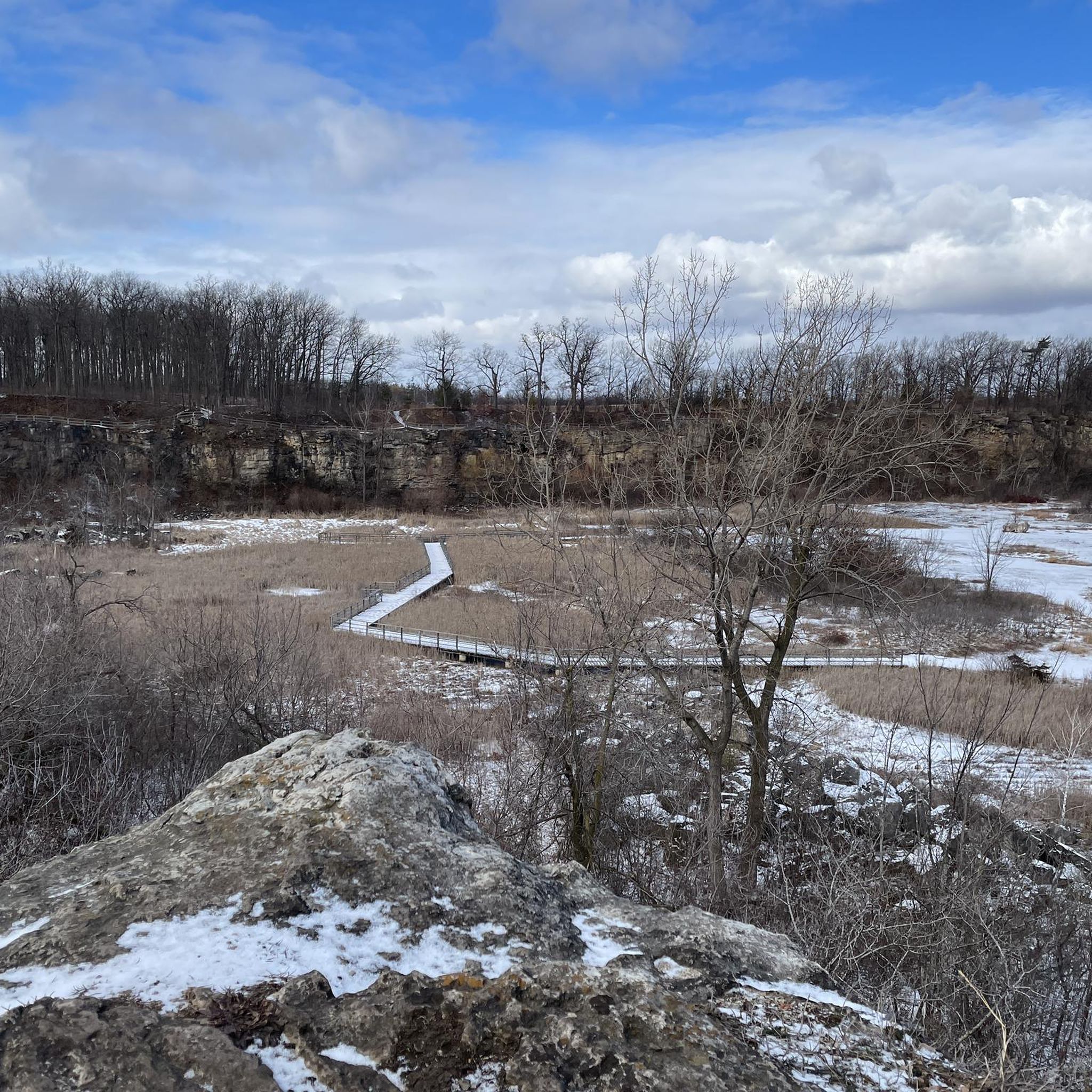
Incredible experience of glacial erosions from last ice age 50000 years ago. Very good access and viewing made by conservation authority. Washroom and picnic tables available. Enjoy and respect.
2
0
Frequently Asked Questions
What types of natural features can I explore around Hamilton?
Hamilton is renowned for its diverse natural features, primarily its numerous waterfalls and extensive conservation areas, all nestled within the Niagara Escarpment. You can explore unique geological formations like the meromictic Crawford Lake, dramatic cascades such as Hilton Falls and Webster's Falls, and vast natural spaces like the Royal Botanical Gardens and Dundas Valley Conservation Area.
Are there family-friendly natural monuments in Hamilton?
Yes, several natural monuments around Hamilton are suitable for families. Crawford Lake is a great option, offering an educational experience about its unique meromictic properties. Hilton Falls also provides good access and viewing points for all ages, with washrooms and picnic tables available. Many conservation areas, like Christie Lake, offer easy trails and amenities for a family day out.
What is the best time of year to visit Hamilton's natural monuments, especially the waterfalls?
The spring, during snowmelt, is often the best time to witness Hamilton's waterfalls at their most powerful and spectacular. However, each season offers a unique experience; autumn brings vibrant fall foliage, and winter can transform waterfalls like Hilton Falls into grandiose frozen spectacles. Always check local conditions before visiting.
Where can I find easy hiking trails near natural monuments in Hamilton?
Many of Hamilton's natural monuments offer easy trails. Tiffany Falls, for example, has an easy trail that allows you to get close to the cascading water. The Royal Botanical Gardens also feature extensive, well-maintained trails suitable for leisurely walks. For a unique geological experience, Eramosa Karst Conservation Area has over 7 kilometers of trails, boardwalks, and bridges through its distinctive karst features.
What outdoor activities can I do near these natural monuments?
Beyond exploring the monuments themselves, Hamilton offers a wide range of outdoor activities. You can find numerous running trails, mountain biking routes, and road cycling routes throughout the region. Conservation areas like Christie Lake are excellent for swimming, kayaking, paddleboarding, and birdwatching, while Dundas Valley Conservation Area is ideal for hiking and wildlife observation.
Are there any natural monuments with historical significance in Hamilton?
Yes, some natural monuments in Hamilton have historical connections. Tiffany Falls is named after Oliver Tiffany, one of Hamilton's first physicians. Webster's Falls is part of the Spencer Gorge Conservation Area, which features a beautifully restored cobblestone bridge, adding a historical element to the natural landscape. The Royal Botanical Gardens also incorporate historical elements, such as the historic Rock Garden.
Can I find challenging hikes near Hamilton's natural monuments?
For those seeking more challenging routes, the Niagara Escarpment offers several options. The hike to Tew's Falls can be combined with a climb to Dundas Peak for panoramic views. While not a traditional hike, the Appleby Line Hill Climb near Rattlesnake Point offers a challenging cycling experience with steep gradients and incredible views.
What unique geological formations can be seen in Hamilton's natural monuments?
Hamilton's location on the Niagara Escarpment provides unique geological formations. The Devil's Punchbowl Conservation Area features a distinctive bowl-shaped gorge with colorful layers of stratified rock, showcasing natural erosion. Eramosa Karst Conservation Area is home to 16 different karst features, including caves, underground streams, and unique rock formations. Crawford Lake is a rare meromictic lake, preserving sediments in distinct layers that offer insights into past climate changes.
What do visitors enjoy most about the natural monuments around Hamilton?
Visitors frequently appreciate the stunning views, the opportunity to get close to nature, and the diverse experiences offered. The impressive glacial erosions at Hilton Falls and the high, panoramic view of Albion Falls are often highlighted. The peaceful retreat into nature provided by the various conservation areas and the unique geological features like those at Eramosa Karst also receive high praise.
Are there any natural monuments that offer panoramic viewpoints?
Yes, several natural monuments provide excellent panoramic views. The Dobson-McKee lookout at Webster's Falls offers stunning gorge vistas. Tew's Falls has multiple viewing platforms for breathtaking scenery, and a hike to Dundas Peak (often combined with Tew's Falls) provides expansive scenic views. The Devil's Punchbowl Conservation Area also boasts a viewing platform with sweeping views of the gorge and the city.
Where can I observe wildlife in Hamilton's natural areas?
Hamilton's conservation areas are excellent for wildlife observation. The Royal Botanical Gardens, particularly its nature sanctuaries like Hendrie Valley and Cootes Paradise, are prime spots for birdwatching. Dundas Valley Conservation Area also offers ample opportunities for wildlife spotting along its numerous trails through forests and alongside streams.
Most popular routes around Hamilton
Most popular attractions around Hamilton

Get inspired with the komoot mobile app


Explore more
Extend your search for the best caves by checking out these guides of the top ones around Hamilton:
