Top 10 Natural Monuments around Savignac-De-Miremont
Natural monuments around Savignac-De-Miremont are concentrated in the Vézère Valley, a region known for its significant geological formations and prehistoric sites. This area features impressive limestone cliffs, natural caves, and rock shelters that have been shaped by geological processes over millennia. These natural features provided ideal conditions for early human settlement, making the region a key location for understanding human history and natural landscapes. The blend of natural beauty and historical significance offers diverse exploration opportunities.
Best natural monuments around…
Last updated: August 29, 2026
La Roque Saint-Christophe
Highlight • Historical Site
Translated by Google •
Tip by

Les Eyzies-de-Tayac
Highlight • Historical Site
Translated by Google •
Tip by
Sign up now to discover places like this
Get recommendations on the best single tracks, peaks, & plenty of other exciting outdoor places.
Sign up for free
Abri de La Madeleine
Highlight • Cave
Translated by Google •
Tip by

The Rock Shelters of the Vézère Valley
Highlight • Cave
Translated by Google •
Tip by

Cluzeaux de Campagne
Highlight • Cave
Translated by Google •
Tip by

Sign up for free to discover even more natural monuments around Savignac-De-Miremont.
Sign up for free
Already have an account?
Start today with a free account
Your next adventure awaits.
Login or Signup

Tips from the Community

This museum is certainly interesting, unfortunately we didn't have enough time
0
0
Impressive are the dwellings in the rocks and the houses from the rocks
0
0

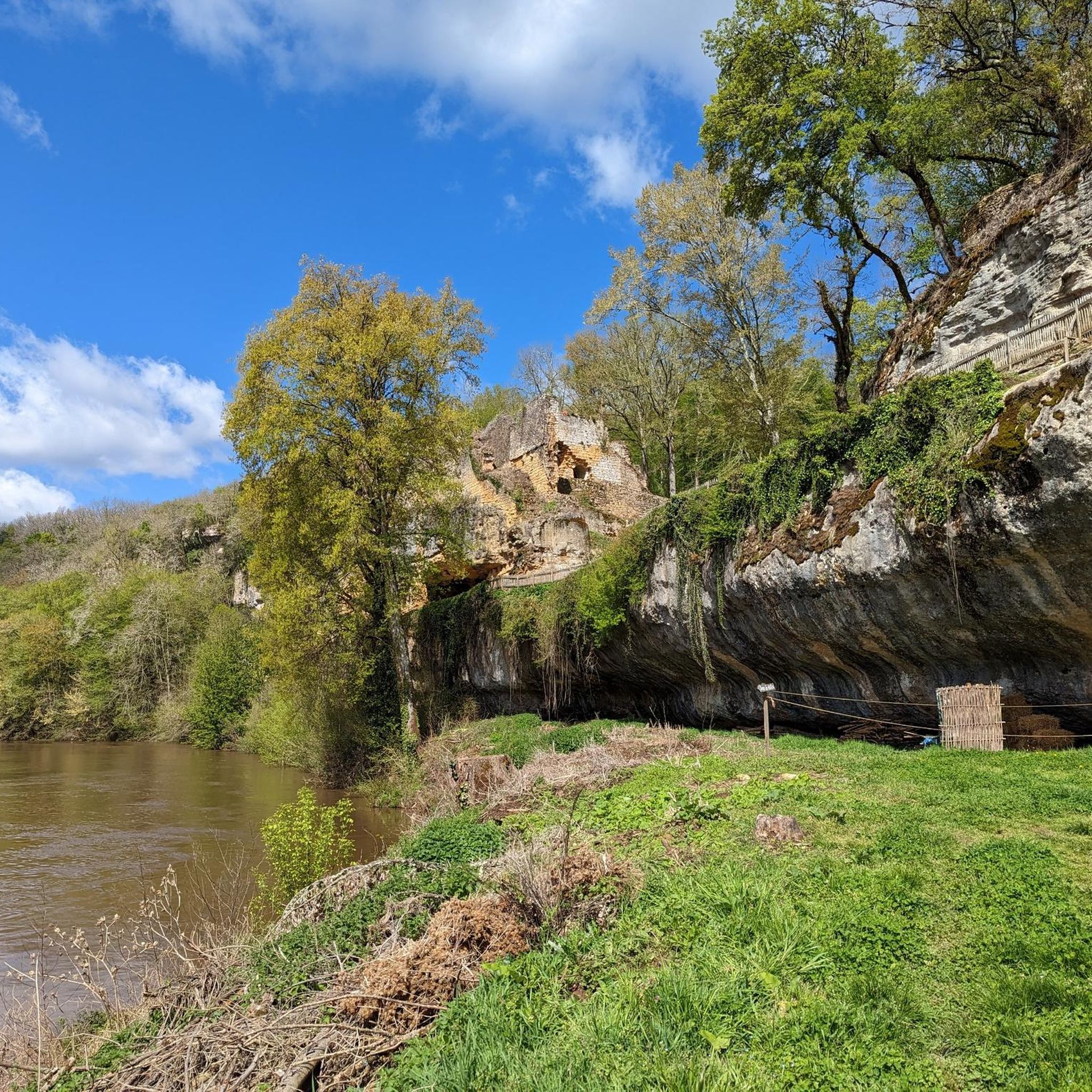
This real limestone wall, one kilometer long and eighty meters high, constantly undermined by the river and the frost, has been hollowed out with a hundred rock shelters and long aerial terraces; these natural cavities were occupied by prehistoric man and then modified to become a fort and a city from the Middle Ages until the beginning of the Renaissance.
2
0

Here we have the situation – previously completely unknown to me and therefore surprising – that MADELEINE, a Christian saint (the name is derived from the biblical "Mary Magdalene"), has become the namesake of an era from the proverbial "dim prehistory" (one to one and a half dozen millennia before the beginning of our era). To paraphrase it from Wikipedia, which can explain it better than I can: "The Magdalenian is an archaeological cultural stage in the younger part of the Upper Paleolithic in Central and Western Europe at the end of the last Ice Age. The Magdalenian was named in 1869 by Gabriel de Mortillet after the semi-cave La Madeleine in the Dordogne department. It spanned an approximate period from approximately 18,000 to 12,000 BC."
2
0

Welcome to the capital of prehistory! This is the nickname given to this modest village which follows the course of the Vézère. It must be said that the extraordinary sites that you can visit are numerous. In addition to the very richly supplied national museum, I encourage you to go to the Pôle de la préhistoire. Building entirely dedicated to this science and free. Find out about all the prehistoric marvels that can be admired in and around the town. They are not missing. It is not without reason that the Vézère valley has been nicknamed the valley of man.
2
1

Really incredibly impressive place - 50,000 years of human history on a rock face. Europe's largest settlement of this kind and also almost unique in the world - UNESCO World Heritage Site. Not to be missed! Ideal in the off-season when only a few people are out and about here.
1
0
La Madeleine is a settlement site in present-day France that was used for thousands of years up until the early modern period. It was laid out about 5 km north-east of Les Eyzies-de-Tayac-Sireuil on a narrow loop of the Vézère. For the Upper Palaeolithic period of the Magdalenian period, this important find site acts as a type locality. It is located in the lower abri (rock overhang) below the chapel dedicated to Saint Magdalene of the troglodyte village. Around 17,000 years ago, Cro-Magnon people settled in the rock shelters beneath the south-facing cliffs of La Madeleine near the River Vézère. These offered natural protection against the effects of the weather, and the southern orientation warmed the settlement site. The emergence of the troglodytic settlements on the cliffs of La Madeleine in the 8th century has been proven. (Wikipedia)
2
0

Near the grounds of the Château de Campagne, in the extension of the Ladies' Staircase, are the Cluzeaux. Dating back to the early Middle Ages, their exact purpose remains a mystery...food storage or housing?
1
0
Frequently Asked Questions
What kind of natural features can I expect to see around Savignac-De-Miremont?
The region around Savignac-De-Miremont, particularly the Vézère Valley, is rich in impressive limestone cliffs, natural caves, and rock shelters. These geological formations have been shaped over millennia by natural processes like erosion from the river and frost. You'll encounter features like the vast rock shelters at La Roque Saint-Christophe and the intricate crystalline formations within caves like the Grotte du Grand Roc.
Do these natural monuments have historical or archaeological significance?
Yes, many natural monuments in the Vézère Valley are deeply intertwined with human history. The natural rock shelters and caves provided ideal conditions for early human settlement, making the region a key location for understanding prehistory. Sites like La Roque Saint-Christophe and Abri de La Madeleine were inhabited from prehistoric times through the Middle Ages, with some even transformed into fortresses or villages.
What is the significance of the Gisement de La Ferrassie?
The Gisement de La Ferrassie, located within Savignac-De-Miremont, is a significant archaeological site. It is a natural landscape feature that provided the conditions for the preservation of crucial Neanderthal remains and artifacts, making it a natural monument for its role in archaeological discovery. You can find more information about this site at Dordogne-Périgord Tourisme.
Are there hiking or walking trails associated with these natural monuments?
Yes, the area offers numerous opportunities for hiking and walking. Many natural monuments are accessible via trails that allow you to explore the unique landscape. For example, you can find various walking paths that lead to or around sites like The Rock Shelters of the Vézère Valley. You can explore more options in the hiking guides for the region.
What are the terrain and difficulty levels of trails near the natural monuments?
The terrain around the natural monuments in the Vézère Valley can vary. While some paths are relatively easy, others might involve moderate climbs or uneven surfaces, especially when exploring cliff-side sites or cave entrances. For example, the trails around La Roque Saint-Christophe are generally considered intermediate, offering panoramic views. It's advisable to wear appropriate footwear.
Are there options for cycling or mountain biking near the natural monuments?
Absolutely. The region around Savignac-De-Miremont is popular for cycling and mountain biking, with routes that often pass by or offer views of the natural monuments. You can find a variety of routes, from easy to difficult, for different cycling types. For instance, there are cycling routes like 'Limeuil Village – Village of Limeuil loop from Les Eyzies' and MTB trails such as 'Beautiful forest crossing loop from Savignac-de-Miremont'. You can find more details in the Cycling around Savignac-De-Miremont guide or the MTB Trails around Savignac-De-Miremont guide.
Are the natural monuments and trails around Savignac-De-Miremont dog-friendly?
Many outdoor areas and trails in the Vézère Valley are dog-friendly, especially for walks in nature. However, access to specific historical sites, caves, or protected archaeological areas might have restrictions for dogs. It's always best to check the specific rules for each site you plan to visit, such as Les Eyzies-de-Tayac, before your visit.
Are there family-friendly natural monuments or activities suitable for children?
Yes, the region offers several family-friendly natural monuments. Sites like La Roque Saint-Christophe, with its impressive cliff dwellings and historical context, can be fascinating for children. Exploring the natural rock shelters and learning about prehistoric life at places like Les Eyzies-de-Tayac also provides an engaging educational experience for families.
What is the best time of year to visit the natural monuments around Savignac-De-Miremont?
The best time to visit the natural monuments around Savignac-De-Miremont is generally during the spring (April to June) and early autumn (September to October). During these periods, the weather is pleasant for outdoor activities, and the natural landscapes are vibrant. Summer can be warm, but still enjoyable, while winter might be cooler and some sites could have reduced opening hours.
Where can I find parking when visiting these natural sites?
Most major natural monuments and historical sites in the Vézère Valley, such as La Roque Saint-Christophe and Les Eyzies-de-Tayac, provide designated parking areas for visitors. For smaller or more remote natural features, you might find roadside parking or small car parks at trailheads. It's advisable to check specific site information for parking details before your trip.
How much time should I allocate to visit the natural monuments?
The time needed to visit a natural monument varies depending on the site. For a comprehensive visit to a major site like La Roque Saint-Christophe, including exploring the historical aspects and enjoying the views, you might want to allocate 2-3 hours. Smaller rock shelters or viewpoints might only require 30 minutes to an hour. If you plan to combine multiple sites or include a hike, a full day or more would be beneficial.
Are there places to eat or drink near the natural monuments?
Yes, the Vézère Valley is well-equipped with amenities for visitors. Near popular sites like Les Eyzies-de-Tayac, you'll find a selection of cafes, restaurants, and shops. Even in smaller villages or near other natural monuments, there are often options for refreshments or a meal, especially during peak tourist season.
Most popular routes around Savignac-De-Miremont
Most popular attractions around Savignac-De-Miremont

Get inspired with the komoot mobile app


Explore more
Extend your search for the best caves by checking out these guides of the top ones around Savignac-De-Miremont:
