Top 7 Natural Monuments around Beauchamps
Best natural monuments around Beauchamps are primarily found in the Somme department, characterized by its dramatic coastline and significant natural reserves. This region features chalk cliffs, extensive wetlands, and diverse ecosystems. The area offers opportunities to explore unique geological formations and rich biodiversity. Visitors can discover a variety of natural landscapes, from coastal views to inland forests and marshes.
Best natural monuments around Beauchamps
- The most popular natural monument is La Cise Cliff, a natural monument with challenging sections, beach access, and viewpoints. These white chalk cliffs overlook the Bay of Somme, offering scenic and exhilarating experiences.
- Another must-see spot is Ault Chalk Cliffs, a natural monument featuring impressive chalk formations at the edge of the Normandy Alabaster Coast. This location provides exceptional geographical views and marks the beginning of the Côte d'Opale.
- Visitors also love Cliffs of Ault, a natural monument where the Normandy cliffs begin to rise. The site is notable for its impressive scale and the vast plains of the Bay of Somme extending to the north.
- Beauchamps is known for its chalk cliffs, coastal viewpoints, and diverse natural habitats. The area offers a variety of natural monuments to see and explore, from dramatic coastlines to unique geological formations.
- The natural monuments around Beauchamps are appreciated by the komoot community, with more than 290 upvotes and over 110 photos shared.
Last updated: May 7, 2026
Ault Chalk Cliffs
Highlight • Natural Monument
france-voyage.com/frankrijk-steden/ault-31863.htm
Translated by Google •
Tip by

La Cise Cliff
Highlight • Natural Monument
Flint horizons are stratigraphic markers. On the cliffs of Ault, the regular flint band called Seven Sisters is recognizable and characterizes the boundary between the Middle Coniacian and the Upper Coniacian (around 87 million years ago). The boundary between the lower and middle Coniacian is marked by the Shoreham 2 marl level, which is more difficult to identify. These lithostratigraphic markings allow in particular the correlation of distant deposits, such as between the Normandy and Picardy coasts, or between the French and English coasts.
Translated by Google •
Tip by

Sign up now to discover places like this
Get recommendations on the best single tracks, peaks, & plenty of other exciting outdoor places.
Sign up for free
Bois de Cise
Highlight • Forest
This coastal wood was originally a wild wood which became a place for hunting with hounds. Bois de Cise was then sold in the form of lots, by a visionary who would stop at no means.
Today, it is a charming vacation spot and stroll, best discovered on foot along the small paths and wooden stairs that line the site. Very pretty villas bear witness to the prosperous years before the First World War.
Like Victor Hugo in his time, don't forget to go to the panorama. Fantastic viewpoint where you can see the Baie de Somme estuary.
Translated by Google •
Tip by

Cliffs of Ault
Highlight • Natural Monument
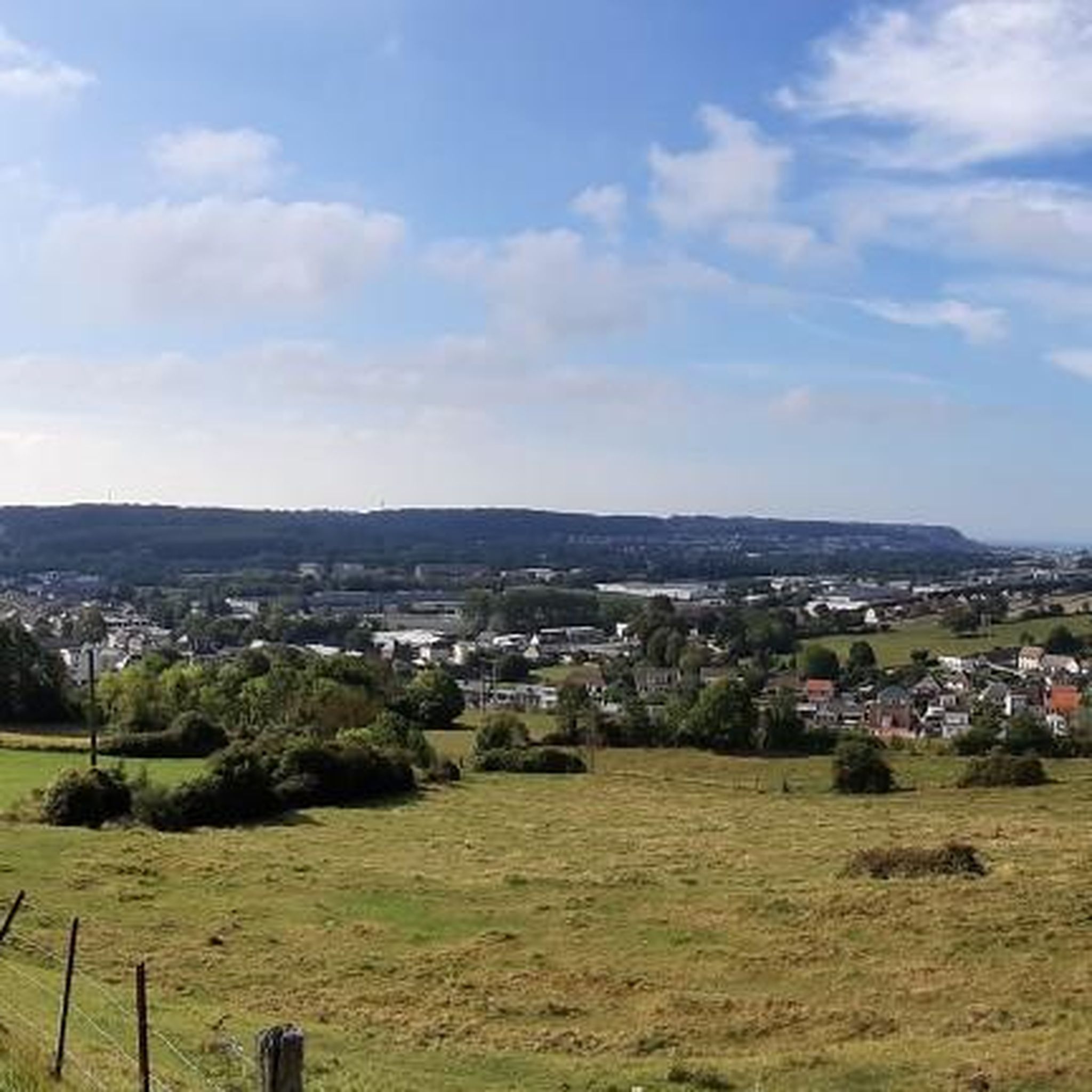
Even if the city has lost its splendor, the site is impressive, because to the north, the plain of the Bay of Somme extends, and to the west, the cliffs as far as Le Havre.
In my photo, unfortunately, I was not able to capture a beautiful light, but believe me, this is the land of exceptional lights.
Have a nice ride everyone.
Translated by Google •
Tip by

Statue of Notre-Dame de la Falaise (Mers-les-Bains)
Highlight • Monument
The base of the statue of Mary is decorated with three images of saints, these are the patron saints of the surrounding towns:
+ Saint Martin for Mers-Les-Bains
+ Saint James for Le Treport
+ Saint Lawrence (of Dublin) for Eu.
Translated by Google •
Tip by

Sign up for free to discover even more natural monuments around Beauchamps.
Sign up for free
Already have an account?
Start today with a free account
Your next adventure awaits.
Login or Signup

Tips from the Community

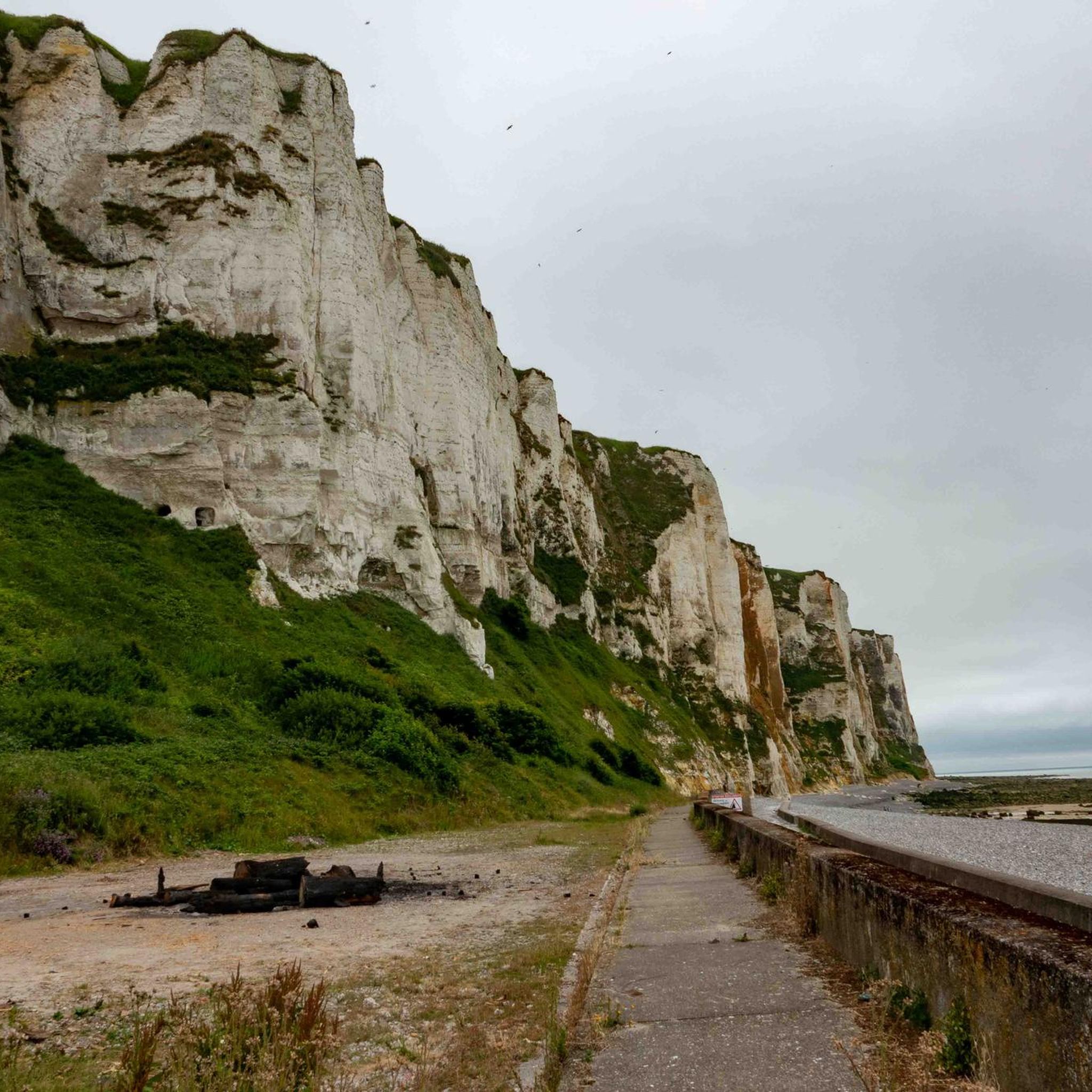
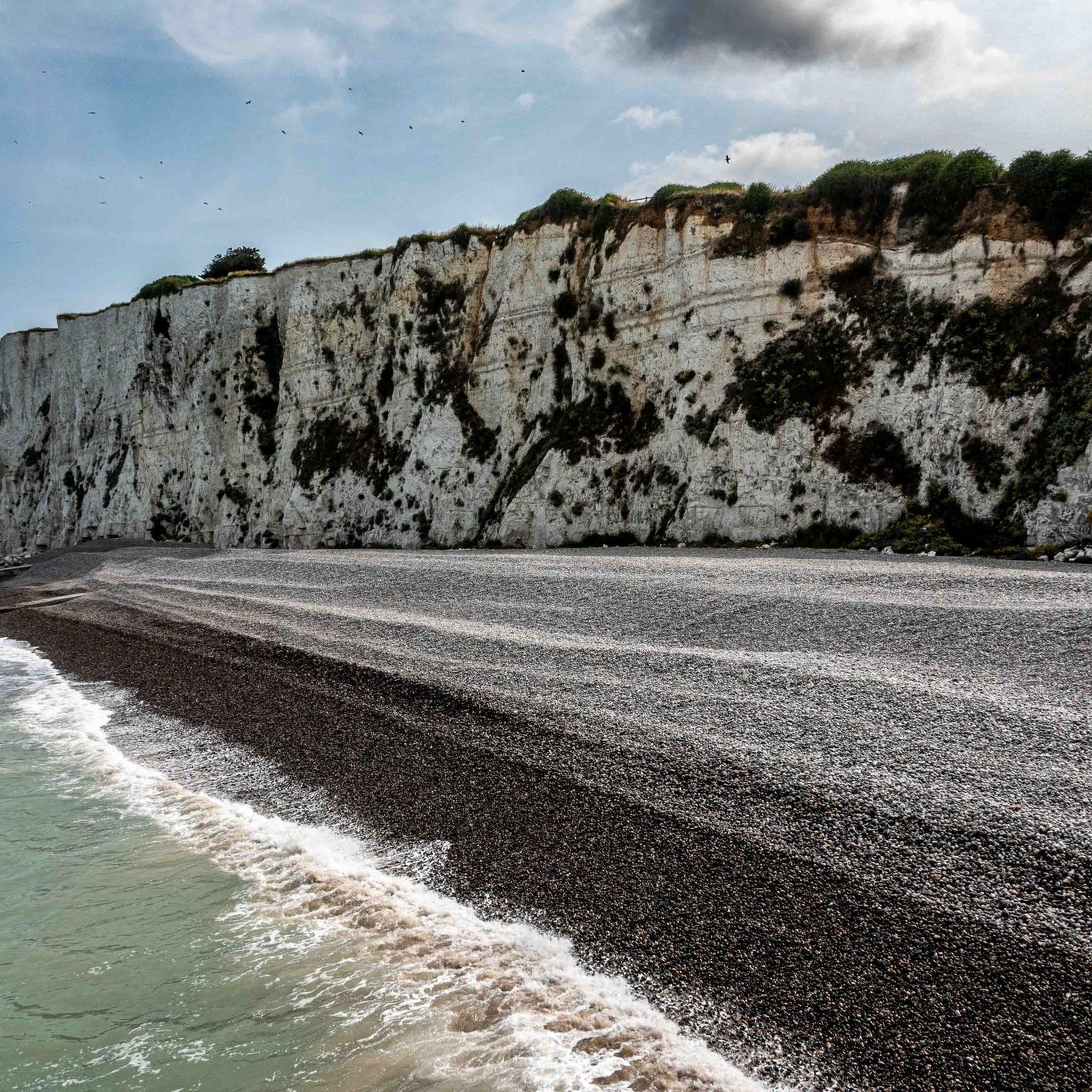
The cliffs are made of chalk and are impressive to look at.
3
0
Here in Ault begin the chalk cliffs, which stretch all the way to Normandy and repeatedly appear as enormous cliffs.
4
0


The cliffs around the beach of Ault are composed of chalk from the Upper Cretaceous, more precisely from the Turonian and Coniacian (around 83 million years ago to 90 million years ago). They are strewn with flint nodules which highlight the subhorizontal stratification planes (the formation of flint has already been discussed in Discovery of the geology of the cliffs of Étretat, presentation of an excursion from the beach of Tilleul (Antifer) to the Porte d'Amont (Étretat Nord)). The relative proportion of chalk and flint is around 90-95% chalk to 5-10% flint. Flint horizons are stratigraphic markers. On the cliffs of Ault, the regular flint band called Seven Sisters is recognizable and characterizes the boundary between the Middle Coniacian and the Upper Coniacian (around 87 million years ago). The boundary between the lower and middle Coniacian is marked by the Shoreham 2 marl level, which is more difficult to identify. These lithostratigraphic markings allow in particular the correlation of distant deposits, such as between the Normandy and Picardy coasts, or between the French and English coasts.
3
0
A green setting in the heart of the cliffs, classified as a picturesque area since 1959. The Bois de Cise is an exceptional natural area, a small natural forest, originally wild and abandoned, which became a famous seaside resort during the Belle Époque under the leadership of a visionary who stopped at nothing. This coastal forest was originally a wild forest and a hunting ground in the Middle Ages. At the end of the 19th century, the Bois de Cise was sold off in lots on the initiative of a property developer and became a famous seaside resort of the Belle Époque. Today, it is a charming holiday and walking area that is best explored on foot via the narrow paths and wooden steps that crisscross the area. Very beautiful villas bear witness to the prosperous years before the First World War. Don't forget to go to the panorama, like Victor Hugo in his time, a fantastic viewpoint from which you can see the mouth of the Bay of Somme.
0
0
The cliffs around the beach of Ault are composed of chalk from the Upper Cretaceous, more precisely from the Turonian and Coniacian (around 83 million years ago to 90 million years ago). They are strewn with flint nodules which highlight the subhorizontal stratification planes (the formation of flint has already been discussed in Discovery of the geology of the cliffs of Étretat, presentation of an excursion from the beach of Tilleul (Antifer) to the Porte d'Amont (Étretat Nord)). The relative proportion of chalk and flint is around 90-95% chalk to 5-10% flint. Flint horizons are stratigraphic markers. On the cliffs of Ault, the regular flint band called Seven Sisters is recognizable and characterizes the boundary between the Middle Coniacian and the Upper Coniacian (around 87 million years ago). The boundary between the lower and middle Coniacian is marked by the Shoreham 2 marl level, which is more difficult to identify. These lithostratigraphic markings allow in particular the correlation of distant deposits, such as between the Normandy and Picardy coasts, or between the French and English coasts.
2
0
The cliffs around the beach of Ault are composed of chalk from the Upper Cretaceous, more precisely from the Turonian and Coniacian (around 83 million years ago to 90 million years ago). They are strewn with flint nodules which highlight the subhorizontal stratification planes (the formation of flint has already been discussed in Discovery of the geology of the cliffs of Étretat, presentation of an excursion from the beach of Tilleul (Antifer) to the Porte d'Amont (Étretat Nord)). The relative proportion of chalk and flint is around 90-95% chalk to 5-10% flint. Flint horizons are stratigraphic markers. On the cliffs of Ault, the regular flint band called Seven Sisters is recognizable and characterizes the boundary between the Middle Coniacian and the Upper Coniacian (around 87 million years ago). The boundary between the lower and middle Coniacian is marked by the Shoreham 2 marl level, which is more difficult to identify. These lithostratigraphic markings allow in particular the correlation of distant deposits, such as between the Normandy and Picardy coasts, or between the French and English coasts.
3
0
Frequently Asked Questions
What unique natural features can I explore around Beauchamps?
The Beauchamps area, primarily in the Somme department, is defined by its dramatic chalk cliffs, extensive wetlands, and diverse coastal habitats. You can explore impressive formations like the Ault Chalk Cliffs, La Cise Cliff, and the Cliffs of Ault, which mark the beginning of the Normandy cliffs. Inland, the region features vast marshes, dunes, and reed beds, particularly within the Bay of the Somme Natural Reserve.
Are there family-friendly natural monuments or activities in the Beauchamps region?
Yes, several natural sites around Beauchamps are suitable for families. The View of Onival Beach and the Ault Cliffs offers accessible viewpoints and a beach at low tide for exploring. Additionally, the Site of Queen Mother Elizabeth, while a historical site, is also categorized as family-friendly with trails and forest areas to enjoy. The Bay of the Somme Natural Reserve also offers gentle walks and wildlife observation suitable for all ages.
What kind of outdoor activities can I do near the natural monuments?
The Beauchamps area offers a variety of outdoor activities. You can find numerous trails for mountain biking, cycling, and running. For instance, there are several MTB Trails around Beauchamps, Cycling routes around Beauchamps, and Running Trails around Beauchamps. The coastal cliffs also provide opportunities for scenic hikes with challenging sections, offering exhilarating experiences and panoramic views.
Where can I go for birdwatching or wildlife spotting?
For exceptional birdwatching and wildlife spotting, head to the Bay of the Somme Natural Reserve. This area is a crucial stopover for thousands of migratory birds and is home to seal colonies. Within the reserve, the Parc du Marquenterre is an ornithological park specifically designed for bird enthusiasts, hosting nearly 300 different species with observation posts and guided tours.
Are there any historical sites combined with natural beauty?
Yes, the Site of Queen Mother Elizabeth in the forest of EU combines natural beauty with historical significance. This site features the stumps of an oak and a beech tree that once symbolized Anglo-French understanding, planted for Queen Victoria in 1843. It offers walking tours and panoramic views of the Yères Valley, with facilities like information panels on flora and fauna.
What are the best viewpoints to experience the natural landscapes?
The Beauchamps area boasts several stunning viewpoints. The View of Onival Beach and the Ault Cliffs provides expansive views of the coastline. The Larris (Limestone Hillsides) offer breathtaking panoramic views of valleys, ponds, and marshes. The coastal cliffs themselves, such as La Cise Cliff, offer scenic and exhilarating perspectives over the Bay of Somme.
What is the best time of year to visit the natural monuments around Beauchamps?
The best time to visit depends on your interests. Spring and autumn are ideal for birdwatching in the Bay of the Somme Natural Reserve due to migratory patterns. Summer offers pleasant weather for coastal hikes and beach activities, though it can be busier. The unique flora of the Larris, including orchids and wild thyme, is best appreciated in spring and early summer.
Are there any unique geological formations to see?
Absolutely. The most prominent geological features are the white chalk cliffs, such as the Ault Chalk Cliffs and La Cise Cliff, which are composed of chalk from the Upper Cretaceous period. These cliffs are strewn with flint nodules, highlighting subhorizontal stratification planes. The Larris (Limestone Hillsides) also present unique geological formations with limestone-rich soil supporting distinct Mediterranean-like flora.
Can I find extensive wetland environments in the region?
Yes, the Somme Valley's Marshes and Peat Bogs constitute one of the largest peat complexes in northwestern Europe. This area is recognized as a RAMSAR site, highlighting its international importance for wetlands. It's an excellent place to experience a vast and rare wetland environment and observe specialized plant and animal life.
What are some lesser-known natural gems in the broader Beauchamps area?
Beyond the prominent coastal cliffs and the Bay of Somme, the Somme Preserves offer a glimpse into rare forest types, savannas, and open oak woodlands, showcasing unique natural communities. For those exploring the wider region, the Airou River Valley in the Manche department, a Natura 2000 site, is known for its serene landscapes and rich diversity of fauna and flora, offering tranquil nature walks along 'Les rives de l'Airou'.
What do visitors enjoy most about the natural monuments in Beauchamps?
Visitors frequently praise the impressive scale and dramatic beauty of the chalk cliffs, often noting the exceptional geographical views and the vast plains of the Bay of Somme. The scenic and exhilarating hikes along the coast, the opportunity for swimming and surfing at beaches like Onival, and the peaceful atmosphere of green oases like Bois de Cise are also highly appreciated. The komoot community has shared over 110 photos and given more than 290 upvotes for these natural monuments.
Are there any natural sites with waterfalls in the wider region?
While the immediate Beauchamps area (Somme) is known for its cliffs and wetlands, if you venture further into the Manche department, you can find the Waterfalls in Mortain. This site is home to the largest waterfalls in western France, providing a dramatic natural spectacle within the bocage countryside. It's a popular spot for hiking, cycling, and climbing.
Most popular routes around Beauchamps
Most popular attractions around Beauchamps

Get inspired with the komoot mobile app


Explore more
Extend your search for the best caves by checking out these guides of the top ones around Beauchamps:
