Top 20 Castles around Felsberg, Switzerland
Best castles around Felsberg, Switzerland are found in a region defined by its alpine landscape and significant river systems. Located in Graubünden, the area is notable for the confluence of the Vorderrhein and Hinterrhein rivers, which marks the birthplace of the Rhine. This geographical setting has historically been a strategic location, leading to the presence of various castles. The region combines natural features, such as the Rhine Gorge, with centuries of historical architecture.
Best castles around Felsberg, Switzerland
- The most…
Last updated: September 27, 2026
Confluence of the Vorderrhein and Hinterrhein
Highlight • River
Dominated by Reichenau Castle, the hamlet lies at the confluence of the Vorderrhein and Hinterrhein rivers, making it virtually the birthplace of the …
Translated by Google •
Tip by

Episcopal Court
Highlight • Castle
At the top left the square is closed off by the episcopal castle. The secular counterpart to the …
Translated by Google •
Tip by
Sign up now to discover places like this
Get recommendations on the best single tracks, peaks, & plenty of other exciting outdoor places.
Neuenburg Castle Ruins
Highlight • Castle
Translated by Google •
Tip by

Reichenau Castle
Highlight • Castle
At the confluence of the Hinterrhein and Vorderrhein, at the birthplace of the Alpine Rhine, lies the historic site of Reichenau. Reichenau already had great importance in the …
Showing Translation
Tip by
Rhäzüns Castle above the Hinterrhein
Highlight • Castle
It is not known when the plant or its predecessors were built. A castle probably existed on the site of today's palace as …
Translated by Google •
Tip by
Sign up for free to discover even more castles around Felsberg, Switzerland.
Already have an account?
Start today with a free account
Your next adventure awaits.
Popular around Felsberg, Switzerland
Tips from the Community

The RhB Reichenau train station, with parking available, is very well suited as a starting point for bike or hiking tours through the wild Vorderrhein Gorge to Sagogn or Ilanz. Along the gorge, there are small RhB train stations, at Trin, Versam-Safien, or Valendas-Sagogn, for intermediate stops or return journeys back to Reichenau.
0
0

The history of the castle continued after its purchase by the Swiss expatriate community. In 1958, Hovag Domat/Ems, under Dr. Werner Oswald, bought Rhäzüns Castle. Since 1984, it has been owned by Ems-Chemie AG, with residential rights granted to the family of Silvia and Christoph Blocher. Therefore, it is not possible to visit the castle.
0
0

A place of power in a special class
0
0

The first building was constructed after 1272, following the consecration of the cathedral. Its current appearance dates back to the Baroque redesign of 1732/33 under Bishop Joseph von Rost, a Tyrolean native (serving as Bishop of Chur as Benedikt von Rost from 1728 to 1754), who incorporated architectural ideas from his homeland into the building. The cookbook "Ein schön Kochbuch 1559" (A Beautiful Cookbook 1559) was created in the Episcopal Palace between 1559 and around 1610. It is considered the oldest cookbook in Switzerland. In 2020, the Cathedral Treasury Museum, featuring the cathedral treasury and the death pictures dated 1543, will open in the Episcopal Palace. Source: https://de.wikipedia.org/wiki/Bisch%C3%B6fliches_Schloss_(Chur)
0
0

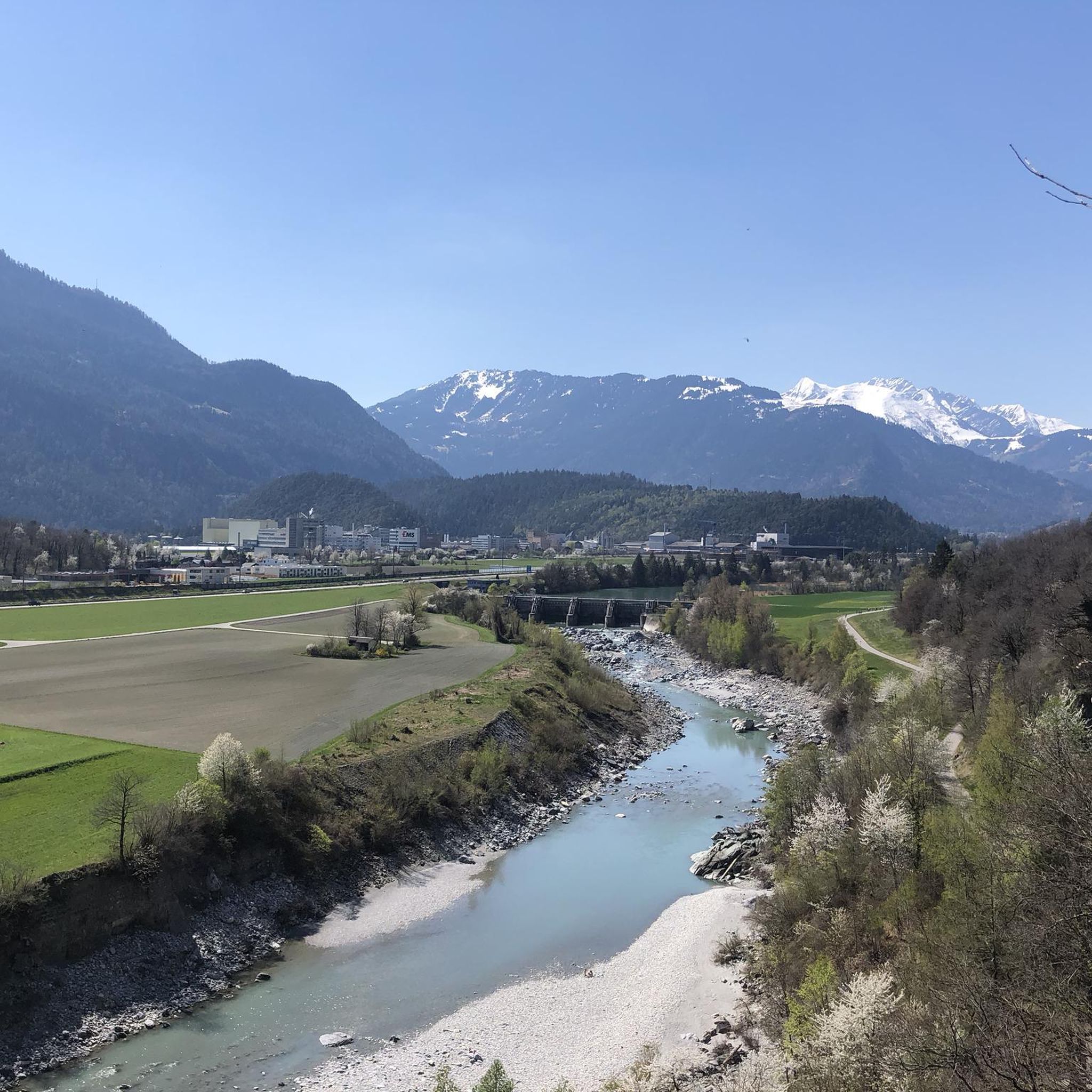
Ruinaulta Rhine Gorge The Ruinaulta, or Rhine Gorge, is a gorge of the Vorderrhein River, up to 400 meters deep and approximately 13 kilometers long, between Ilanz and the mouth of the Hinterrhein River near Reichenau in the canton of Graubünden in Switzerland. The Romansh name 'Ruinaulta' is composed of the two words ruina (scree slope, quarry) and aulta (high). The Ruinaulta was formed after the Flims Landslide almost 10,000 years ago. At that time, over 10 billion cubic meters of rock broke off between the Flimserstein and Piz Grisch, burying the Vorderrhein Valley between the present-day villages of Castrisch and Reichenau under a mass of debris several hundred meters thick. Because the Vorderrhein River could no longer drain away, a lake was dammed over a length of approximately 25 kilometers. Over time, the river cut deep into the landslide, and the resulting lake drained away completely. What remained was the Ruinaulta, with its steep limestone scree cliffs in impressive erosion formations. Text / Source: Wikipedia https://de.wikipedia.org/wiki/Ruinaulta
16
0
Schloss Reichenau At the confluence of the Hinterrhein and Vorderrhein, at the birthplace of the Alpine Rhine, lies the historic site of Reichenau. Reichenau already had great importance in the past: in the 14th century, as long-distance traffic over the Grisons Alpine passes increased significantly, two bridges and a customs house were built. Reichenau was considered a traffic hub, where all traffic could be controlled. In Reichenau, the routes of the north-south axis separate, along the Vorderrhein into the Oberland towards the Lukmanier and Oberalp passes, and along the Hinterrhein through the Domleschg via the Splügen and San Bernardino. Text / Source: Weinbau von Tscharner & Events Schloss Reichenau, Schloss Reichenau, Reichenauerstr. 59, 7015 Reichenau https://www.reichenau.ch/de/reichenau/geschichte-lage
16
0
At the confluence of the Hinterrhein and Vorderrhein, at the birthplace of the Alpine Rhine, lies Reichenau Castle. Built in the 17th century by the episcopal ministerial family Schauenstein, it looks back on a long history. The last king of France even lived here once.
15
0
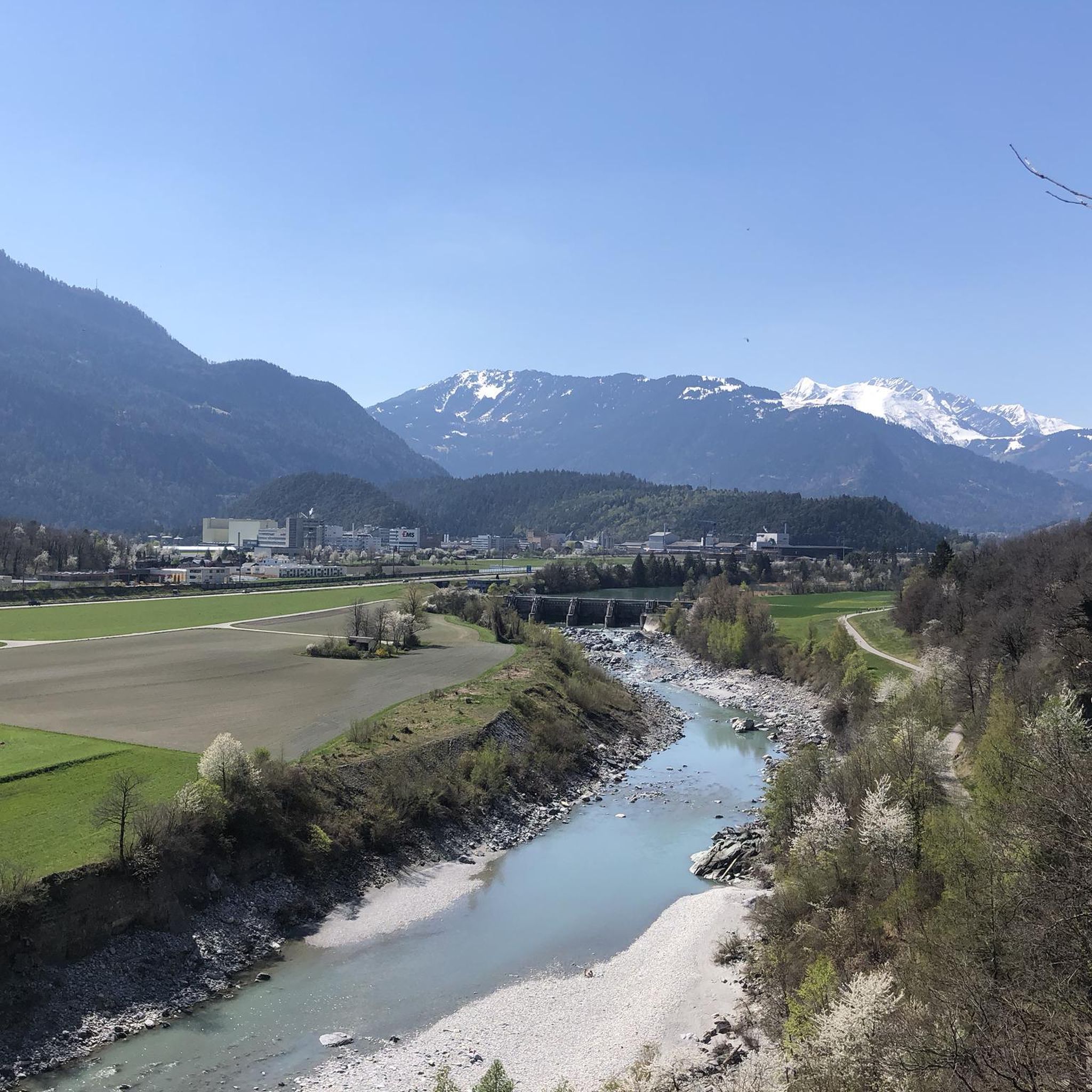
Confluence of the Vorderrhein and Hinterrhein, Reichenau Dominated by Reichenau Castle, the hamlet lies at the confluence of the Vorderrhein and Hinterrhein rivers, making it virtually the birthplace of the Rhine. It all began 10,000 years ago. Between the Flimserstein (a high plateau) and Piz Grisch, over 10,000 cubic meters of rock broke off and thundered down into the valley. Towards Reichenau, the Vorderrhein valley disappears under a gigantic mass of rubble. From there, the Rhine diligently ate its way through the rock, creating the spectacular Swiss "Grand Canyon" – the Ruinaulta. Text / Source: myswitzerland.com https://www.myswitzerland.com/de-ch/erlebnisse/route/vom-zusammenfluss-der-rheine-in-die-rheinschlucht/
16
0
Frequently Asked Questions
Are there family-friendly castles to visit around Felsberg, Switzerland?
Yes, several castles and associated sites are suitable for families. The area around the Confluence of the Vorderrhein and Hinterrhein, which is dominated by Reichenau Castle, is listed as family-friendly. Exploring castle ruins like Neuenburg Castle Ruins can also be an engaging activity for children, offering space to explore and imagine.
What is the best time of year to visit castles around Felsberg, Switzerland?
The best time to visit is generally from spring to autumn (April to October) when the weather is mild and trails are clear. This allows for comfortable exploration of both the castles and the surrounding natural landscapes. Winter visits can be picturesque, especially for those interested in snow-covered scenery, but some access roads or trails might be more challenging.
Are there any accessible castles or sites for visitors with mobility concerns?
While many castles in the region are historic and located on elevated or rocky terrain, which can limit accessibility, the Episcopal Court in Chur, being a historical complex within the city, may offer better accessibility in certain areas compared to remote ruins. For specific accessibility needs, it's advisable to check directly with the individual sites before visiting.
What outdoor activities can I do near these castles?
The Felsberg region offers a variety of outdoor activities. You can find numerous MTB Trails, Mountain Hikes, and Cycling routes. Many of these routes pass by or offer views of the historical sites and the stunning alpine landscape.
Are there good viewpoints overlooking the castles or the surrounding area?
Yes, the region is rich in viewpoints. Neuenburg Castle Ruins, situated on a steep rocky outcrop, offers excellent views of the Rhine Valley. Similarly, Rhäzüns Castle above the Hinterrhein is known for its spectacular location and views, even though the castle itself is not open for public visits.
What is the difference between castle ruins and restored castles in this region?
The Felsberg area features both. Castle ruins like Neuenburg Castle Ruins offer a glimpse into the past through their preserved foundations and walls, often requiring imagination to reconstruct their former glory. Restored or well-preserved castles, such as Reichenau Castle, provide a more complete picture of historical architecture and may house museums, wineries, or private residences.
Can I find cafes or refreshments near the castles?
While some larger sites like the Episcopal Court in Chur are located within a city with ample dining options, many castle ruins are in more remote, natural settings. Reichenau Castle, for instance, operates as a winery and offers tours with wine tasting. For other sites, especially ruins, it's best to bring your own refreshments or plan to visit nearby villages.
Are there any hidden gem castles or lesser-known historical sites worth exploring?
Beyond the more prominent sites, the region is dotted with numerous smaller ruins and historical markers. Exploring the trails around the Rhine Gorge (Ruinaulta) can lead to unexpected discoveries of historical significance, often tied to the strategic importance of the river confluence. These less-visited spots offer a quieter, more immersive historical experience.
What should I wear when visiting castles in Felsberg, Switzerland?
Given the alpine environment and the nature of castle visits, comfortable walking shoes with good grip are essential, especially for ruins or sites on rocky outcrops. Layered clothing is recommended as weather can change quickly. If you plan to hike or explore trails around the castles, appropriate outdoor gear for the season is advisable.
How long should I allocate to visit castles in the Felsberg area?
The duration depends on the castle and your interest. For a site like Neuenburg Castle Ruins, you might spend 1-2 hours including the walk to and from the site. Larger complexes like the Episcopal Court in Chur, which includes a cathedral, could take 2-3 hours. If you plan to combine a castle visit with a hike or cycling tour, allocate a half to full day.
Can I visit the castles using public transport?
Many towns and villages in the Graubünden region are well-connected by public transport, including trains and post buses. For example, Chur, where the Episcopal Court is located, is a major transport hub. For more remote castle ruins, you might need to combine public transport with a walk or hike. It's always best to check local transport schedules for specific destinations.
Are there any circular walks around the castles?
Yes, the region's network of hiking and cycling trails often includes circular routes that incorporate historical sites. For instance, you can find cycling routes that pass by the Rhine and its historical points of interest, or mountain hikes that lead to viewpoints near castle ruins. These routes allow you to experience both the history and the natural beauty of the area.
Most popular routes around Felsberg, Switzerland
Most popular attractions around Felsberg, Switzerland

Get inspired with the komoot mobile app


Explore more
Looking for the best castles somewhere else? Discover other guides around Felsberg, Switzerland:
