Top 20 Natural Monuments around Vimines
Best natural monuments around Vimines are found in the Savoie department of France, an area characterized by diverse landscapes. This region features significant geological formations, including limestone massifs and mountain passes, which contribute to its unique natural environment. The terrain offers varied opportunities for outdoor activities, set against a backdrop of natural features.
Best natural monuments around Vimines
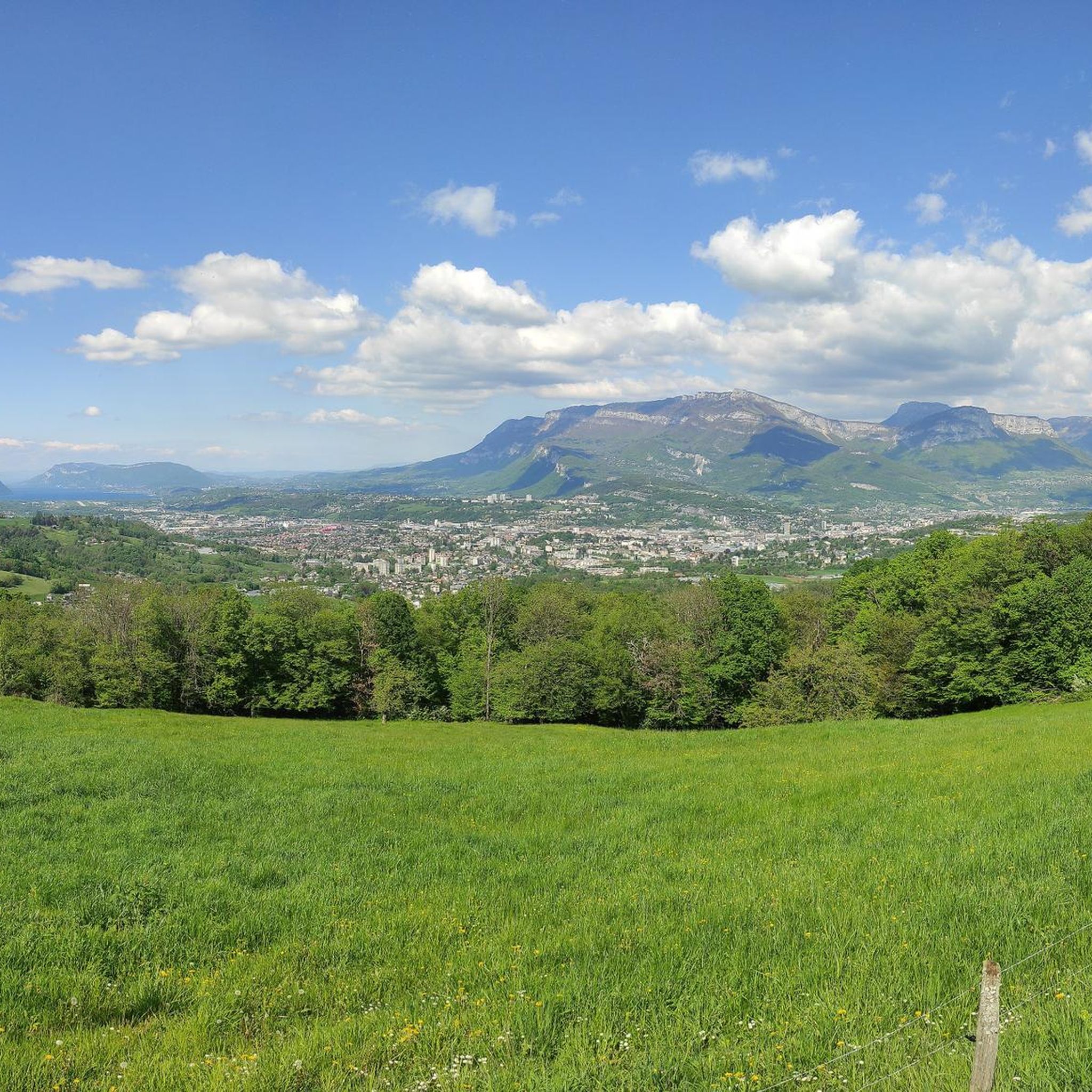
- The most popular natural monument is Nivolet Cross, a summit that is visible from afar in the Chambéry region. It offers…
Last updated: June 18, 2026
Nivolet Cross
Highlight • Summit
The view - everyone agrees - is phenomenal!
Translated by Google •
Tip by

Lac d'Aiguebelette
Highlight • Lake
Translated by Google •
Tip by

Sign up now to discover places like this
Get recommendations on the best single tracks, peaks, & plenty of other exciting outdoor places.
Sign up for free
La Cochette Cross
Highlight • Summit
Translated by Google •
Tip by

Cascade de la Doriaz
Highlight • Waterfall
Translated by Google •
Tip by
La Balme Cave in Collomb
Highlight • Cave
Translated by Google •
Tip by

Sign up for free to discover even more natural monuments around Vimines.
Sign up for free
Already have an account?
Start today with a free account
Your next adventure awaits.
Login or Signup

Tips from the Community

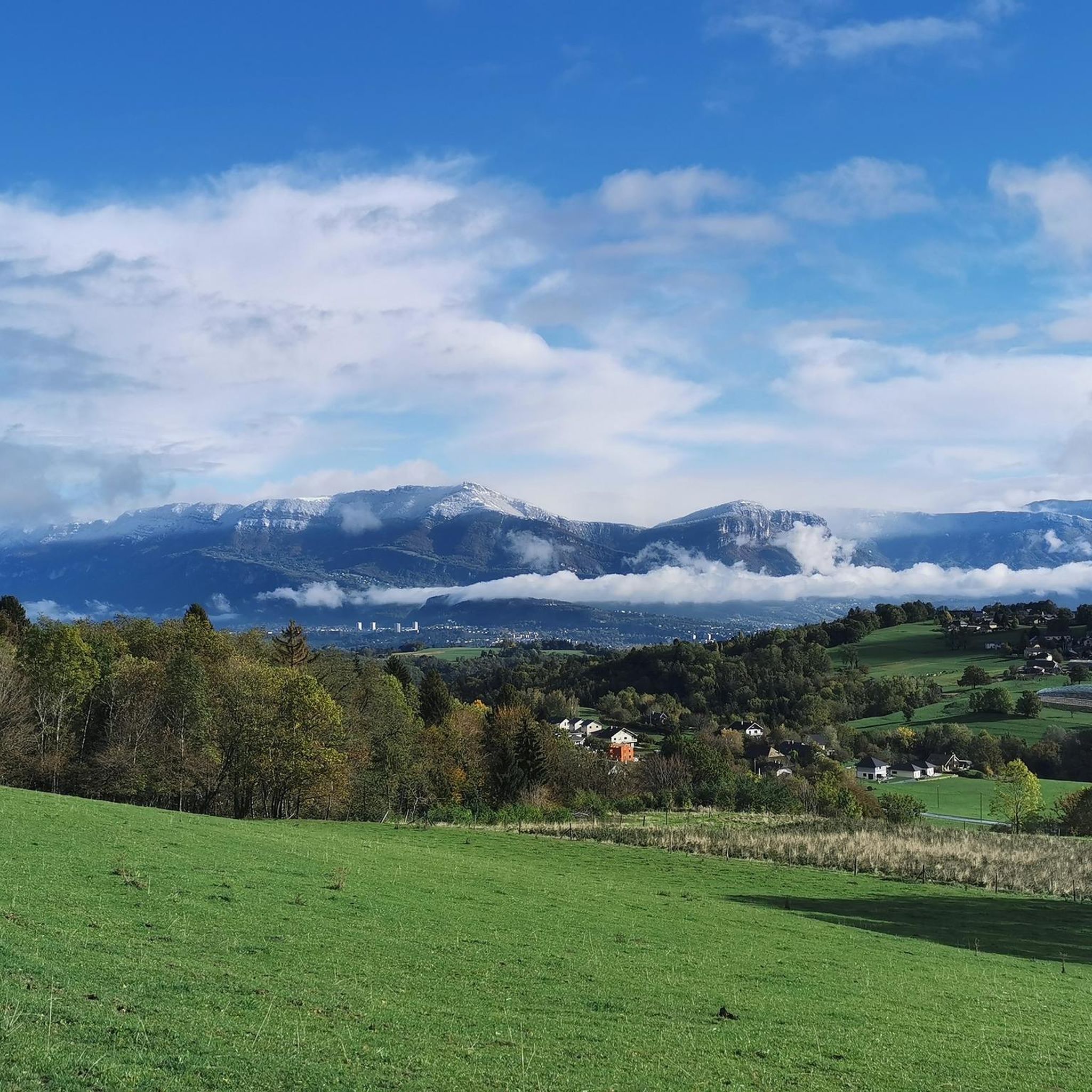
Magnificent view of the heart of the Chartreuse region, the plain of St. Laurent du Pont, and Mont Blanc in the background, seemingly within arm's reach. The access path via the ridge that connects to Outheran is very straightforward. The climb from St. Jean de Couz on the SW side is quite complicated. The path is barely visible and rather difficult to follow on a very steep face. The final section leads up a very steep couloir, through a slippery and unstable scree slope. Furthermore, the exposure to falling rocks is quite significant; extreme caution is required (helmet recommended). The final section consists of short climbing sections and very steep ascents in fairly exposed grassy terrain (fairly straightforward, but exposed).
0
0

Magnificent view of Chambéry and Lake Bourget A lovely picnic area
0
0

Don't forget that even if it's in the mid-mountains, you need to be equipped for the weather, good shoes, and good physical condition.
0
0

Magnificent viewpoint, both at the top and at the bottom. Some technical sections favor hiking rather than trail running. You'll find ibexes (and their babies), chamois, and marmots at the summit. This is one of the trails worthy of a Windows wallpaper! 👌 If you do a full tour, there are some sections that are close to climbing, so be warned. However, it's possible to turn around everywhere, with plenty of side sections, so there are always solutions! 😁
0
0

Lake Aiguebelette is a natural lake located in France in the Savoie department in the Auvergne-Rhône-Alpes region. Main lake of the Savoyard Avant-Pays, in the southern end of the Jura massif, it is located approximately 10 kilometers from Chambéry, approximately 40 kilometers from Grenoble and approximately 100 kilometers from Lyon. It has an area of 545 hectares and is as such the seventh natural French lake after Lake Geneva (in part), Lake Hourtin and Carcans, Lake Grand-Lieu, Lake Bourget, Lake Annecy and Lake Marville (at Kerguelen). Bordered to the east by the Épine chain which culminates with Mont Grelle at 1,427 meters and to the west by Mont Tournier, its maximum depth is 71 meters. At first glance, it is characterized by its often green color, whereas, in the same region, Lake Annecy is bluer and Lake Bourget is more often steel gray. Lake Aiguebelette is a private lake which belongs to the Rivérieulx de Chambost de Lépin family and Électrcité de France, who have entrusted its management to the Communauté de Communes du Lac d'Aiguebelette. Its banks are shared between five riverside municipalities: Aiguebelette-le-Lac, Lépin-le-Lac, Saint-Alban-de-Montbel, Novalaise and Nances. In the southern part of the lake there are two islands, surrounded by reed beds. In order to preserve the quality of its waters and its environment, thermal motor boats have been prohibited on the lake since a decree of 1967. It has also been the first regional freshwater nature reserve in France since March 2015. Source: Wikipedia
1
0

Very beautiful panorama of the Chartreuse seen from the north-west, with Mont-Blanc in focus to the north-east, the Belledonne massif behind the Chartreuse and the foothills of the Vercors to the south, as far as Obiou which can be seen when the weather is nice. And all after a short climb, with a few slightly steep passages however...
0
0

Magnificent lake in a mountain atmosphere, with a pretty road that goes around it, partly away from traffic. Do it clockwise.
2
0

Amazing cave, with two entrances, so we cross the mountain! Great place to take beautiful photos!
0
1
Frequently Asked Questions
Beyond the most popular spots, what other significant natural monuments can I explore near Vimines?
While Nivolet Cross and Cascade de la Doriaz are well-known, the region offers more. You can discover the majestic Mont Granier, a limestone colossus known for its dramatic northern face and extensive cave systems, or the accessible Col du Granier, a mountain pass with rich flora and superb panoramas of Les Entremonts. Another notable site is Col de l'Épine, a paved mountain pass popular with cyclists, offering varied landscapes and views of neighboring massifs.
Are there any natural monuments around Vimines that are particularly suitable for families?
Yes, several natural monuments are family-friendly. Lac d'Aiguebelette is an excellent choice, offering warm waters for swimming, supervised beaches, and non-motorized water sports like rowing and stand-up paddleboarding. The surrounding area also has cycling paths. The Col du Granier is also considered an ideal destination for families, providing an accessible alpine escape with explanatory tables about the Mont Granier collapse.
What kind of outdoor activities can I do near the natural monuments around Vimines?
The area around Vimines is perfect for various outdoor activities. You can enjoy hiking, with routes like the 'Crow Rock – Voues de l'Épine Viewpoint loop' or the 'Saint-Michel Pass – View of Lake Aiguebelette loop'. For cyclists, the Col de l'Épine and Col du Granier are legendary climbs featured in the Tour de France, offering challenging road cycling routes. Gravel biking is also popular, with options such as the 'Lake Saint-André – Granier Pass loop'. You can find more details on these activities in the hiking, road cycling, and gravel biking guides around Vimines.
What makes Lac d'Aiguebelette unique among the natural monuments?
Lac d'Aiguebelette is often called the 'emerald pearl' due to its striking green-blue waters. It's the third-largest natural lake in France and is unique for its notably warm waters, reaching up to 28°C in summer, fed by seven hot springs. It's also a protected Natura 2000 site and a Regional Nature Reserve, prohibiting motorboats to preserve its purity. The lake features two small islands and extensive reed beds, making it a significant ecological site.
Are there opportunities for wildlife spotting near the natural monuments?
Yes, particularly around Mont Granier, where challenging trails offer a chance to observe wildlife such as ibexes and chamois, especially during evening bivouacs. The Lac d'Aiguebelette, being a Regional Nature Reserve, also supports a diverse ecosystem, including 70 hectares of reed beds, which are vital habitats for various aquatic species and birds.
What are the best viewpoints for panoramic scenery around Vimines?
For breathtaking panoramic views, Nivolet Cross offers a phenomenal 360° vista of the surrounding landscape, visible from afar in the Chambéry region. La Cochette Cross, culminating at 1,621 meters, is also highly regarded for its panorama over the Chartreuse massif. Additionally, the Col du Granier provides superb panoramas of Les Entremonts, and Mont Granier itself offers 360-degree views of Mont Blanc, the Chartreuse, Bauges, and Massif de l'Épine.
Can I find any historical or geological information at these natural sites?
Yes, the region is rich in both geological and historical context. Mont Granier is renowned for its dramatic geological history, including a catastrophic collapse in 1248 that shaped the landscape and local vineyards. At the Col du Granier, you'll find explanatory tables offering insights into the history of this significant event. Additionally, Coche Pass is listed as a historical site, offering a quiet place with a beautiful panorama over the Chambérien basin.
What is the best season to visit the natural monuments around Vimines?
The best season largely depends on the activities you plan. Summer is ideal for water activities at Lac d'Aiguebelette, with its warm waters. Spring and autumn offer pleasant temperatures for hiking and cycling, with vibrant flora and foliage. The Col du Granier supports various activities throughout the year, including downhill and cross-country skiing, and snowshoeing in winter, making it a versatile destination.
Are there any challenging hikes or climbs for experienced adventurers?
Absolutely. The trails leading to Mont Granier are known for being challenging, offering rewarding experiences for experienced hikers. The Nivolet Cross also has several accesses with varying levels of difficulty, including challenging routes. For rock climbing enthusiasts, the area around Col de l'Épine provides opportunities catering to different levels of expertise.
Are dogs allowed on trails near the natural monuments?
While specific regulations can vary by site, many natural areas in France are generally dog-friendly, especially on marked trails, provided dogs are kept on a leash. It's always recommended to check local signage or specific park rules for each natural monument, particularly in protected areas like the Regional Nature Reserve of Lac d'Aiguebelette or the Hauts de Chartreuse Nature Reserve around Mont Granier.
Where can I find information about parking for these natural monuments?
Parking availability varies by location. For popular spots like Lac d'Aiguebelette, there are often designated parking areas near beaches and activity centers. For mountain passes like Col du Granier and Col de l'Épine, parking is typically available at the pass itself or at trailheads. For specific trail starting points, it's advisable to consult detailed route descriptions on komoot or local tourism websites for precise parking information.
What is the significance of the 'emerald pearl' nickname for Lac d'Aiguebelette?
The nickname 'emerald pearl' refers to Lac d'Aiguebelette's astonishing green-blue waters. This distinctive color is a result of its unique geological composition and the way light interacts with the minerals and algae in its waters. Unlike the bluer Lake Annecy or the often steel-gray Lake Bourget, Lac d'Aiguebelette stands out with its vibrant, jewel-like hue.
Most popular routes around Vimines
Most popular attractions around Vimines

Get inspired with the komoot mobile app


Explore more
Extend your search for the best caves by checking out these guides of the top ones around Vimines:
