Top 5 Natural Monuments around La Cerlangue
Best natural monuments around La Cerlangue are found within a natural environment characterized by its position at the mouth of the Seine estuary and its proximity to the Pays de Caux. This commune in Normandy, France, offers access to significant natural sites. The area features diverse landscapes, including expansive wetlands and the dramatic chalk cliffs of the nearby Côte d'Albâtre. These natural formations provide opportunities for exploring the region's geology and biodiversity.
Best natural monuments around La Cerlangue
- The most…
Last updated: July 2, 2026
Marais Vernier Viewpoint
Highlight • Viewpoint
Translated by Google •
Tip by

La Grand-Mare Observation Tower
Highlight • Viewpoint
Translated by Google •
Tip by

Sign up now to discover places like this
Get recommendations on the best single tracks, peaks, & plenty of other exciting outdoor places.
Sign up for free
Bois de Tancarville
Highlight • Forest
Translated by Google •
Tip by

Reserve Visitor Center
Highlight • Viewpoint
Here you indeed have a beautiful view of …
Translated by Google •
Tip by

Pollard Tree in Parc Naturel Régional des Boucles de la Seine Normande
Highlight • Natural Monument
Translated by Google •
Tip by

Start today with a free account
Your next adventure awaits.
Login or Signup


Tips from the Community

A pollard tree is a tree that has been heavily and regularly pruned at trunk height (out of reach of animals). This repeated pruning creates increasingly large scars and bumps on the tree. The crown is constantly renewed and full of energy on an increasingly older trunk. After many years of pruning, the tree cavities become hollow.
2
0
As you walk up the hill, you will see some pollarded ash trees on your left, an endangered heritage site…
2
0

A magnificent hike, alone in the world, with lush vegetation and plenty of wildlife. Very enjoyable!
1
0

Beautiful view of the Marais Vernier natural site. I had, when I was 18, the honor and the pleasure of working there in the company of several biologists. It is an exceptional site due to the richness of its fauna. On site live Camargue horses, Hyland cattle, Scottish sheep, gray herons and many other species. A few group visits are regularly organised. To participate, you must register in advance on the Marais Vernier nature reserve website.
1
0

The Marais-Vernier Orientation Table is a viewpoint overlooking the Marais Vernier, a vast wetland area home to a very diverse fauna and flora. The orientation table allows you to appreciate the panoramic view of the marsh and its unique agricultural plots, called courtils, by helping you to identify landmarks. You may be able to spot rare birds like osprey, heron, falcon or stork. The Marais Vernier is a natural wonder that offers a variety of landscapes and terrains for runners.
2
0
This peaceful walk in the woods, with historical and natural attractions, may be just the thing for you. This forest path will take you through the greenery of the Seine estuary, where you can admire the Château de Bellevue, a 19th century residence which houses a school of agriculture, the Vallon du Vivier, a regional nature reserve which is home to rare plants and animals. Enjoy the clean air and landscapes of this charming region!
4
1

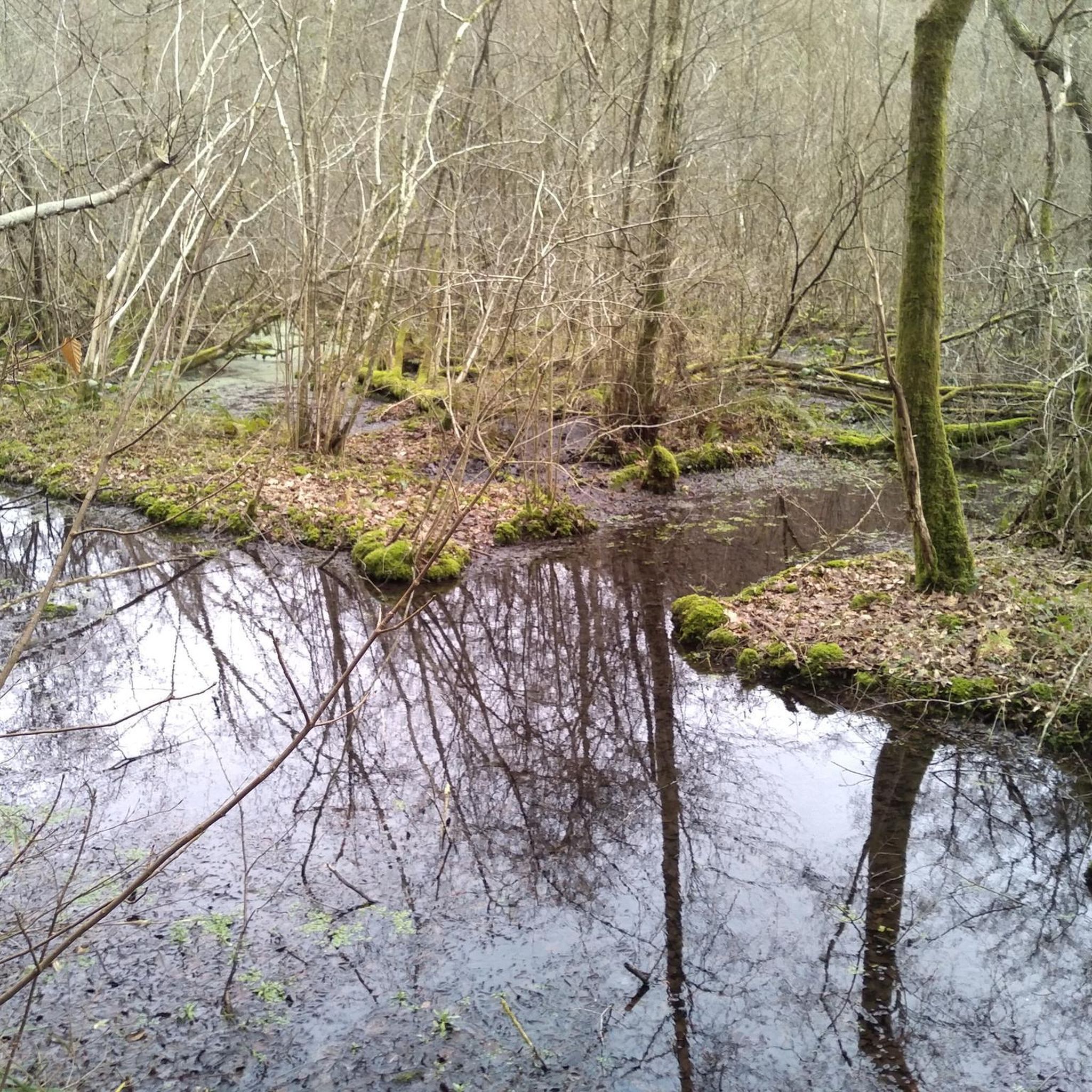
The largest of the Marais Vernier ponds
4
0
Right in the middle of the climb, a panoramic point of view.
2
0
Frequently Asked Questions
What are the most significant natural sites around La Cerlangue?
La Cerlangue is uniquely positioned near the mouth of the Seine estuary and the Pays de Caux. The most significant natural site is the Seine Estuary Nature Reserve, particularly the Marais de Cressenval, which is one of France's largest wetland reserves. Additionally, the area provides access to the dramatic chalk cliffs of the Côte d'Albâtre, part of the Pays de Caux landscape.
Are there family-friendly natural monuments to visit near La Cerlangue?
Yes, several natural monuments around La Cerlangue are suitable for families. The Marais Vernier Viewpoint offers panoramic views of a vast wetland, rich in biodiversity. The La Grand-Mare Observation Tower provides an opportunity to spot migratory birds with binoculars. Also, the Bois de Tancarville offers peaceful forest walks with historical and natural attractions.
What kind of wildlife can I expect to see in the Seine Estuary Nature Reserve?
The Seine Estuary Nature Reserve is a haven for biodiversity. It supports over 500 plant species and a rich fauna including more than 300 bird species, 70 fish species, nearly 50 mammal species, and 13 amphibian species. It's particularly renowned as a birdwatching paradise, serving as a critical stopover and breeding ground for numerous migratory birds like Bearded Reedlings and Egrets. The La Grand-Mare Observation Tower is an excellent spot to observe surface ducks and waders.
What are the geological features of the area around La Cerlangue?
The region is characterized by the dynamic Seine estuary and the edge of the Pays de Caux. The Pays de Caux features high white chalk cliffs along the Côte d'Albâtre, dramatically eroded by the sea. These cliffs are punctuated by 'valleuses,' which are steep-sided notches providing natural access to the English Channel. Inland, the plateau has a unique landscape with farms often enclosed by tall windbreaks of beech and oak trees.
Are there hiking trails near the natural monuments around La Cerlangue?
Yes, there are numerous hiking opportunities. For instance, the Bois de Tancarville features trails that offer views of the Château de Bellevue and the Vallon du Vivier regional nature reserve. You can find detailed hiking routes, including loops like 'Woods and Château de Tancarville' and 'Bois de Tancarville loop from La Cerlangue,' in the Hiking around La Cerlangue guide.
What is the best time of year to visit the natural monuments in this region?
Autumn and winter are considered optimal for birdwatching in the Seine Estuary Nature Reserve, as a wider variety of migratory bird species can be spotted during these seasons. Generally, the serene estuary views and natural landscapes can be enjoyed year-round, with each season offering a different perspective on the region's beauty.
Can I find a visitor center or facilities at the natural monuments?
Yes, there is a Reserve Visitor Center located at the estuary of the Seine. From here, you can learn about protected species and enjoy an impressive view of the Seine and its surroundings. It also offers a beautiful view of the nature reserve and a didactic pond.
What is a 'Pollard Tree' and where can I see one?
A pollard tree is a tree that has been heavily and regularly pruned at trunk height, out of reach of animals. This repeated pruning creates increasingly large scars and bumps on the tree, with the crown constantly renewing on an older trunk. You can see a Pollard Tree in Parc Naturel Régional des Boucles de la Seine Normande, which is an endangered heritage site.
Are there cycling routes near the natural monuments?
Yes, the area around La Cerlangue offers various cycling routes. You can explore options like 'Villequier – Honfleur - The Old Harbour loop' or 'Pont de Normandie – Rouelles Park loop.' For more details on routes and their difficulty, refer to the Cycling around La Cerlangue guide and the Road Cycling Routes around La Cerlangue guide.
What makes the Marais Vernier unique?
The Marais Vernier is a vast 4,500-hectare wetland known for its rich biodiversity of birds, plants, and animals. It's particularly notable for its unique circular plots, called 'courtyards,' which were created by the old meanders of the river. The Marais Vernier Viewpoint offers a spectacular panoramic view of this distinctive landscape.
Are dogs allowed on trails and in natural areas around La Cerlangue?
While many natural areas in France welcome dogs, specific rules can apply, especially in nature reserves. It's always best to check local signage or the official website of the Seine Estuary Nature Reserve for their specific dog policies to ensure a pleasant visit for everyone.
Most popular routes around La Cerlangue
Most popular attractions around La Cerlangue

Get inspired with the komoot mobile app


Explore more
Extend your search for the best caves by checking out these guides of the top ones around La Cerlangue:
