Top 14 Natural Monuments around Santa Cecília De Voltregà
Best natural monuments around Santa Cecília De Voltregà are found within a picturesque natural environment in the Osona region of Catalonia. The municipality is characterized by fields, forests, and pastures, offering opportunities for rural exploration. Notable natural features include the Riera de Sorreigs valley, which hosts significant sites. This area combines natural beauty with historical and cultural elements, including ancient rock formations and historical sites integrated into the landscape.
Best natural monuments around Santa Cecília De Voltregà
- The most popular natural monument is Sant Feliuet de Savassona Hermitage, a religious building and natural monument located on a hill overlooking the Ter river. This site features pre-Romanesque architecture and anthropomorphic graves, indicating ancient human presence.
- Another must-see spot is The Stone of Sacrifices, a historical site and natural monument. This location was used as a burial place in the Iron Age, with excavations revealing human remains and ceramics.
- Visitors also love Pedra de les Bruixes Rock Engravings, a historical site featuring a large natural stone with over 50 crosses, 9 horseshoes, and other figures. The variety of motifs suggests a broad chronological range from the Bronze Age to the medieval period.
- Santa Cecília De Voltregà is known for its ancient rock formations, historical sites, and significant trees. The area offers a variety of natural monuments to see and explore, often intertwined with local history and folklore.
- The natural monuments around Santa Cecília De Voltregà are appreciated by the komoot community, with 18 upvotes and 34 photos shared by visitors.
Last updated: May 20, 2026
Sant Feliuet de Savassona Hermitage
Highlight • Religious Site
The church was erected on the occasion of the repopulation in a place where there are signs of a very old population. This place begins to take on a more pronounced personality since it emerges from the Castle of Sant Llorenç that covered a wide territory. There is little historical news that refers to the chapel. The oldest is from 1037, when a certain Guifred donates some land in the parish of Sant Pere de Savassona and several instruments to the house of Sant Felio, later it was called Sant Felio de Roca according to a document from the year 1302 in which Pere Torrent, rector of Savassona, allocates some money to the worship of the chapel.
So from the pre-Romanesque building (apse), in the 11th century the nave had to be redone in order to make it more solid. In the 16th century, it was reformed and the western portal was built, and the southern one was temporarily cancelled.
It was later restored by the Vic Excursionist Centre, which restored it to its original appearance.
Anthropomorphic graves:
The remains found in Savassona testify to the existence of very remote habitats in this area, often taking advantage of the natural dens offered by the landscape.
These tombs and the apse of the pre-Romanesque church demonstrate the existence of a settlement prior to the 10th century. From this century the place of Savassona acquires a more pronounced personality, as it emerges from the jurisdiction of Sant Llorenç del Munt and becomes part of the heritage of the Viscounts of Osona. The settlement of the Lloc de Sant Felio, which in the 13th century was renamed Sant Felio de la Roca, continued, since in the 11th century the nave of the church was rebuilt to make it more solid and in the In the 16th century, it was reformed by adding a door to the west. Reform that shows us the existence of a nucleus of inhabitants, important given that the church of Sant Pere de Tavernolers is very close by and that if it were like that, it could have replaced it.
Translated by Google •
Tip by

Pedra de les Bruixes Rock Engravings
Highlight • Historical Site
Translated by Google •
Tip by

Sign up now to discover places like this
Get recommendations on the best single tracks, peaks, & plenty of other exciting outdoor places.
Sign up for free
Petroglyphs of the Pedra de l'Home (Pla de Savassona)
Highlight • Historical Site
Translated by Google •
Tip by

The Lady's Oak
Highlight • Natural Monument
Translated by Google •
Tip by

The Stone of Sacrifices
Highlight • Historical Site
Translated by Google •
Tip by
Sign up for free to discover even more natural monuments around Santa Cecília De Voltregà.
Sign up for free
Already have an account?
Start today with a free account
Your next adventure awaits.
Login or Signup
Popular around Santa Cecília De Voltregà

Tips from the Community

In the excavations of 1960, human remains, ceramics and arrowheads were found, which would be a NEOLITHIC pit.
0
0
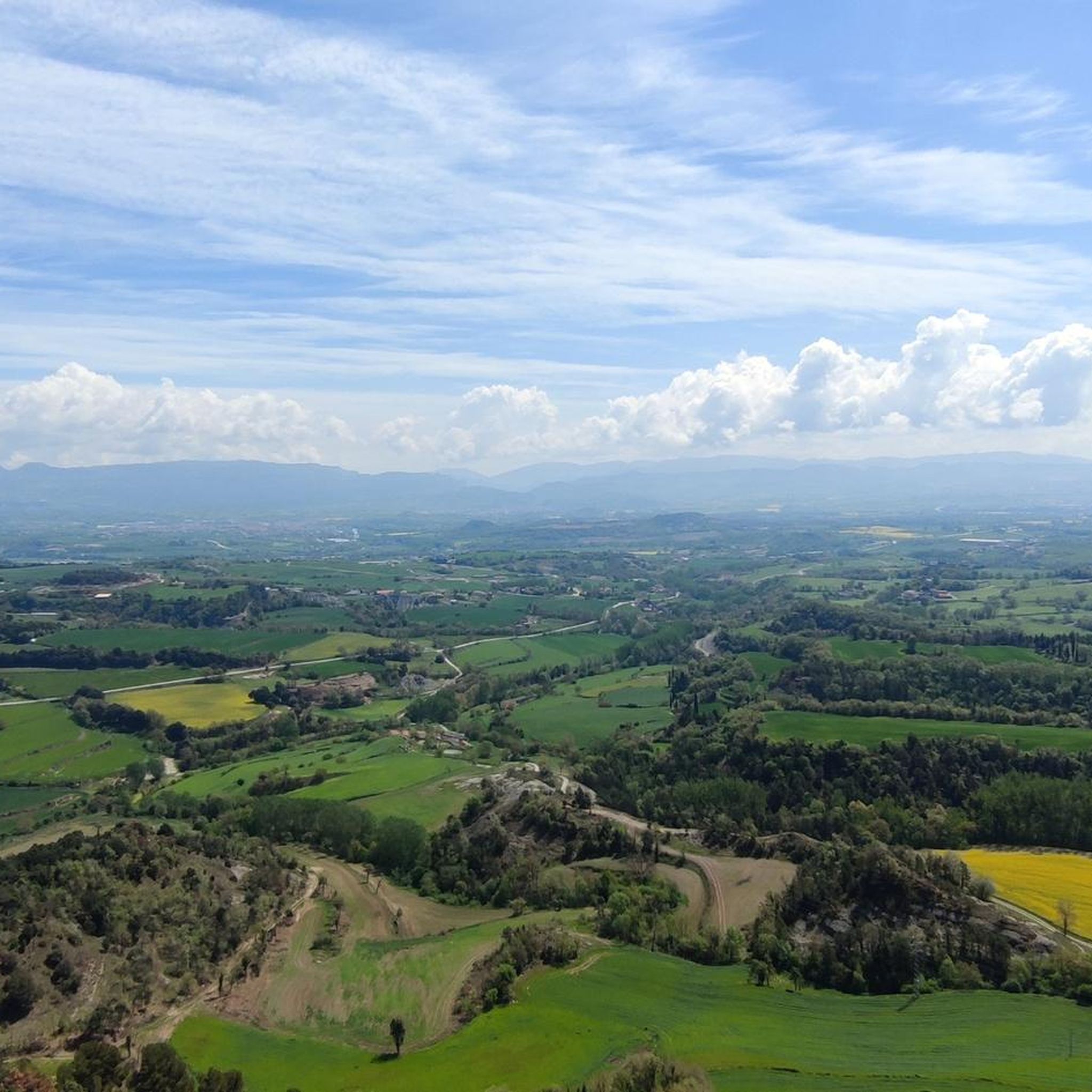
Here you can see some impressive sunsets, with specially placed benches, to enjoy some views, and incredible sunsets 🤩
0
0
On this rock we can see the figure of a man engraved, although it is a little difficult to see because of the moss that covers it.
0
0

Itinerary through the Plan de Savassona that includes the Romanesque hermitage of Sant Feliu as well as medieval remains such as anthropomorphic tombs, medieval stairs, several engraved stones used for sacrifices and magical acts: The Dau, Stone of Sacrifices, Stone of the Witches, Stone of the 'Man. https://parcs.diba.cat/documents/75109/15894265/p02d067.pdf/9ed9c436-da7a-4c78-b59a-bab3ad98e942
0
0

The Pla de Savassona, in the heart of the natural area, houses an interesting archaeological site that includes various rocks with engravings and Neolithic, Iron Age, Iberian and medieval remains. The one known as the stone of Man, for example, presents an anthropomorphic petroglyph, while the stone of the Witches presents engravings in the shape of a horseshoe and a cross. Under the Sacrifice stone, one of the largest in the site, two tombs have been found.
2
1

One of the most spectacular engravings that can be found in Plan de Savassona is that of the anthropomorphic figure on the small stone known as Pedra de l'Home or Pedra del Nen. It is a figure made with a very well-marked stroke with a very large head and incisions representing the eyes and mouth or nose. The shapes are disproportionate and simple. She seems asexual, although some studies attribute her female sex. On the same stone we see many very different marks, but a combination of elements around the human figure that wants to represent a goat or similar animal stands out. The anthropomorphic figure was particularly affected by mosses, algae and lichens. During the cleaning work carried out in the summer of 2012, it was possible to identify a red stain caused by some cremation done on the rock at some undetermined time. The Pedra de l'Home has been granted BCIN (Cultural Property of National Interest) degree of protection.
1
2
It is a large stone with a central cleft that divides it into two halves, which has a great density and diversity of engravings. There are more than a hundred representations: fifty cruciform elements dominated by the Latin cross topped with small bowls at the ends; nine horseshoes; six casseroles; several circles; and other figures among which stand out two V-shaped, two 8-shaped, and three combinations of peculiar elements. The variety of motifs and techniques used do not allow defining a single meaning or a single chronology. The most frequent chronological attributions range from the Bronze Age to the medieval period.
1
1

The Stone of the Witches is a large natural stone with a large central crack that divides it into two halves. On this stone you can see a lot of medieval engravings - more than 50 crosses, 9 horseshoes, 6 bowls, various circles and other figures. According to legend, these marks were made by witches who were at odds with the Baron of Savassona. It seems that the Baron of Savassona was connected to the Inquisition and the witches wanted to send him a warning.
1
1
Frequently Asked Questions
What natural features can I expect to see around Santa Cecília De Voltregà?
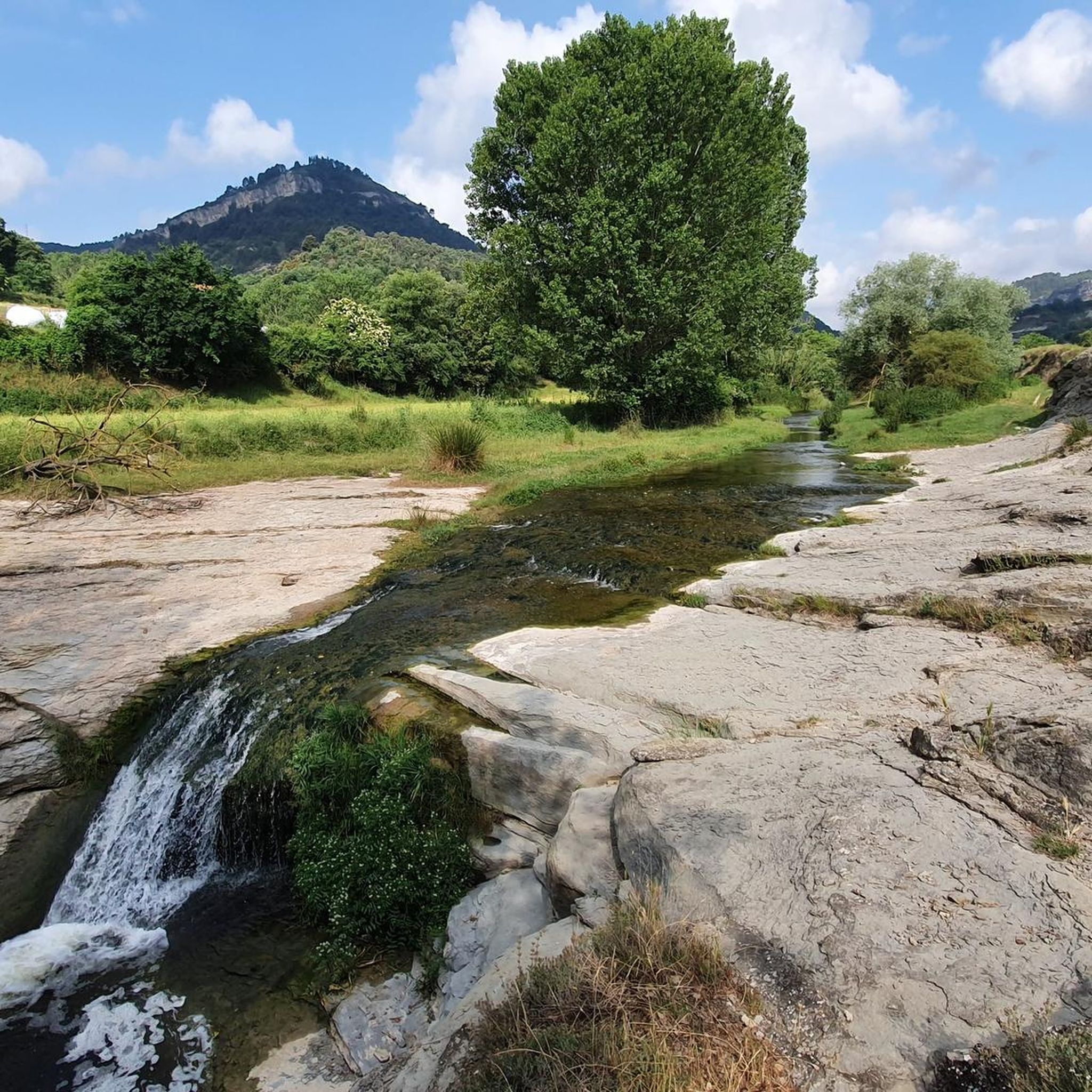
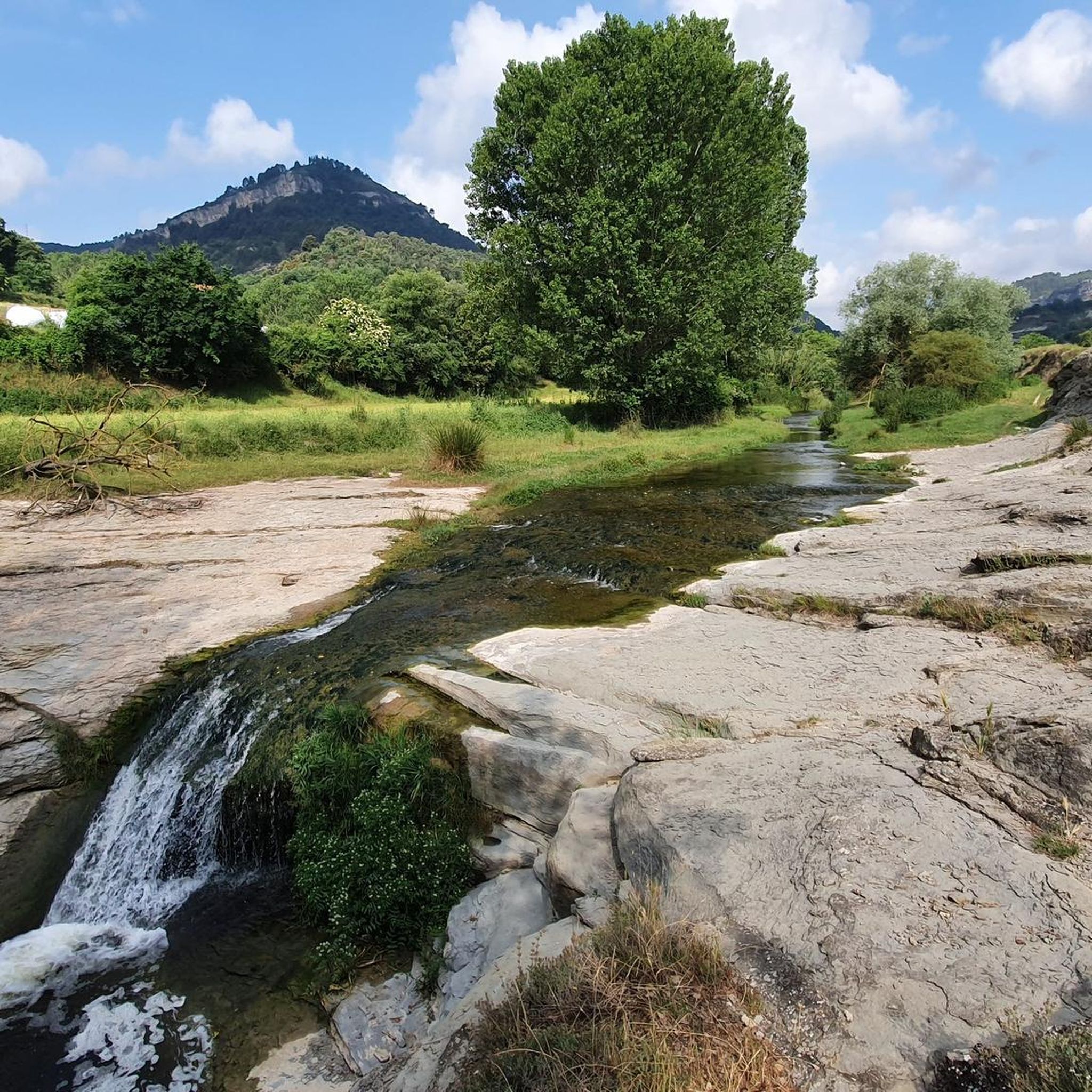
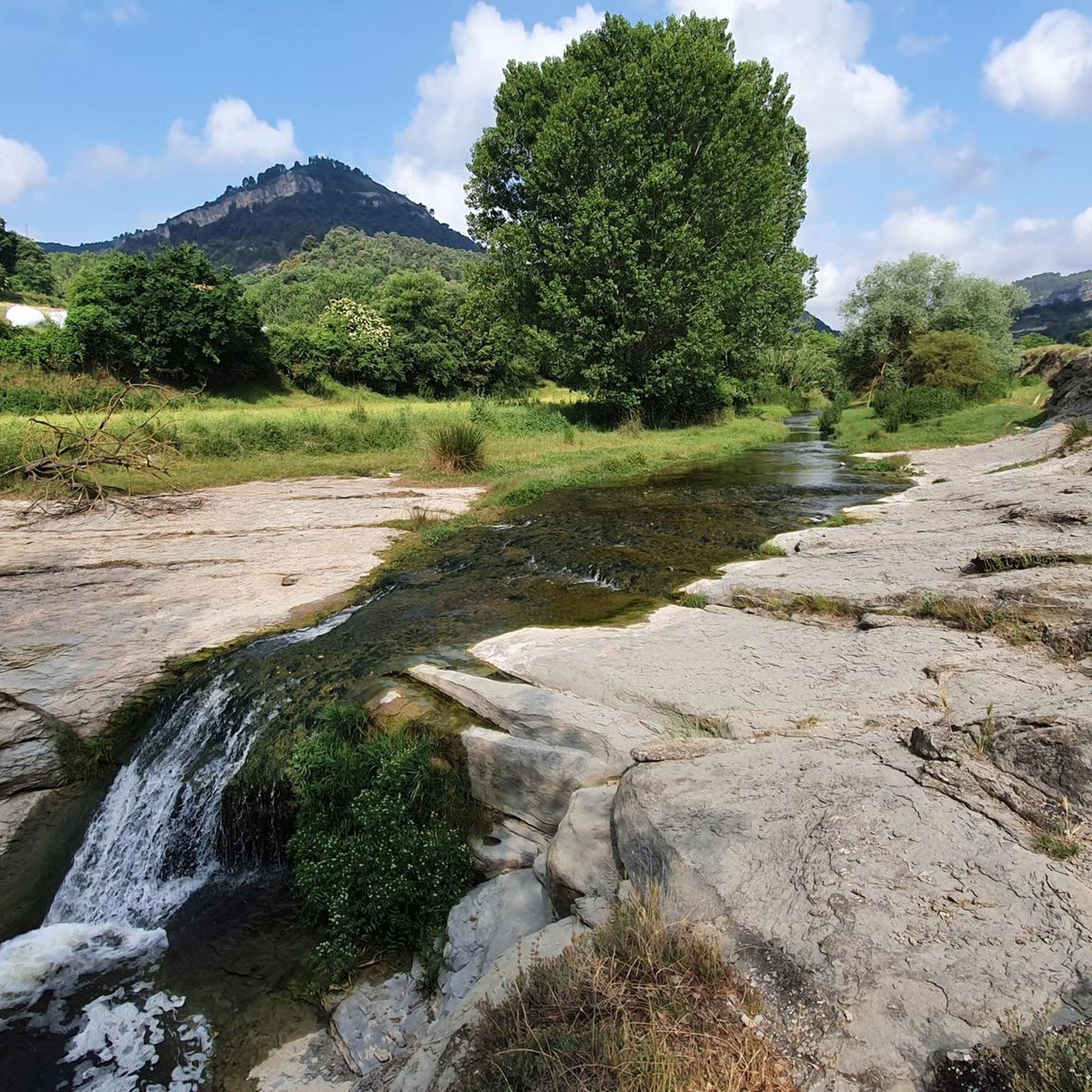
The area around Santa Cecília De Voltregà is characterized by a picturesque natural environment, including fields, forests, and pastures. The Riera de Sorreigs valley is a significant natural feature, home to the captivating Gorg Negre waterfall and pool. You'll also find ancient rock formations and notable trees, often intertwined with local history.
Are there any unique natural monuments with historical or cultural significance?
Yes, several natural monuments in the region hold significant historical and cultural value. For instance, the Sant Feliuet de Savassona Hermitage is a religious building and natural monument with pre-Romanesque architecture and anthropomorphic graves. The Stone of Sacrifices was an Iron Age burial site, and the Pedra de les Bruixes Rock Engravings features ancient markings with local legends of witches.
What makes the Gorg Negre a special natural monument?
The Gorg Negre, or Black Pool, is a striking waterfall and pool in the Riera de Sorreigs valley. It's known for its natural beauty, rugged terrain, and local folklore. Popular tradition says it was a gathering place for witches who conjured storms. A natural rock shelter, a 'balma-refugi,' with historical significance from the Spanish Civil War, is also nearby.
Are there hiking trails to natural monuments in Santa Cecília De Voltregà?
Yes, there are several hiking trails that lead to and around the natural monuments. For example, you can find routes like the 'Salt del Gorg Negre – Gorg Negre Waterfall loop' or the 'Ermita de Santa Perpetua – Salt del Gorg Negre loop' from Santa Cecília de Voltregà. You can explore more hiking options in the Hiking around Santa Cecília De Voltregà guide.
What kind of outdoor activities can I do near these natural monuments?
Beyond hiking, the area offers various outdoor activities. You can find road cycling routes, such as the 'Sant Hipòlit de Voltegrà and Sant Bartomeu del Grau – circular via the La Trona road,' or running trails like the 'Font de la Cadernera loop.' For more details, check the guides for Road Cycling Routes and Running Trails around Santa Cecília De Voltregà.
Are there any easy walks suitable for beginners or families?
While specific easy walks for beginners are not detailed in the highlights, the general environment of fields, forests, and pastures suggests many rural walks are possible. The The Lady's Oak is listed as family-friendly, indicating accessible paths in its vicinity. When planning, look for routes marked as 'easy' or 'moderate' in the hiking guides.
Can I find circular walks to explore the natural monuments?
Yes, circular walks are available. For instance, the 'Salt del Gorg Negre – Gorg Negre Waterfall loop' is a moderate circular hiking route. Many other routes in the area are designed as loops, allowing you to return to your starting point after exploring the natural monuments. Check the Hiking around Santa Cecília De Voltregà guide for more options.
What are some of the most impressive ancient rock formations in the area?
The region is rich in ancient rock formations. Besides the Pedra de les Bruixes Rock Engravings with its numerous historical markings, you can also visit the Petroglyphs of the Pedra de l'Home (Pla de Savassona), which features a distinctive anthropomorphic figure. The Stone of Sacrifices is another significant site, used as a burial place in the Iron Age.
Is there a notable tree monument to visit?
Yes, you can visit The Lady's Oak. This impressive tree, believed to be over 500 years old, is known for having one of the largest crowns in Catalonia and is listed as a monument. It's located in a tidy environment with benches, perfect for enjoying the natural surroundings.
What do visitors enjoy the most about Santa Cecília De Voltregà's natural monuments?
Visitors appreciate the blend of natural beauty and historical depth. The stunning sunsets from places like Sant Feliuet de Savassona Hermitage are a highlight. The ancient rock formations and historical sites, such as the Pedra de les Bruixes Rock Engravings, offer a unique glimpse into the past. The tranquil environment and opportunities for rural walks are also highly valued.
Are the natural monuments around Santa Cecília De Voltregà suitable for dog walking?
While specific dog-friendly designations for each monument are not provided, the general character of the region with its fields, forests, and numerous hiking trails suggests many areas are suitable for walks with dogs. It's always advisable to keep dogs on a leash and respect local regulations, especially near historical sites or protected natural areas.
What is the best time to visit the natural monuments?
The region's natural beauty can be enjoyed throughout the year. Spring and autumn offer pleasant temperatures for hiking and exploring the outdoor sites. Summer is ideal for enjoying the refreshing waters of the Gorg Negre. Even in winter, the landscapes can be beautiful, though some trails might be more challenging. Consider visiting during sunset at viewpoints like Sant Feliuet de Savassona Hermitage for particularly impressive views.
Most popular routes around Santa Cecília De Voltregà
Most popular attractions around Santa Cecília De Voltregà

Get inspired with the komoot mobile app


Explore more
Extend your search for the best caves by checking out these guides of the top ones around Santa Cecília De Voltregà:
