Top 16 Natural Monuments around Ourense
Best natural monuments around Ourense include a diverse array of geological formations, river canyons, and thermal springs. The province of Ourense, located in Galicia, Spain, features a landscape shaped by rivers like the Miño and Sil, creating deep gorges and valleys. This region is characterized by its natural parks, unique rock formations, and thermal water sources. Visitors can explore areas with rich biodiversity and significant natural features.
Best natural monuments around Ourense
- The most popular natural monument is Outariz Hot…
Last updated: August 25, 2026
Outariz Hot Springs
Highlight • Natural Monument
The price is affordable and if you have time, it is worth stopping to enjoy its hot waters.
Translated by Google •
Tip by

As Burgas Roman Baths
Highlight • Historical Site
Translated by Google •
Tip by

Sign up now to discover places like this
Get recommendations on the best single tracks, peaks, & plenty of other exciting outdoor places.
Sign up for free
Monastery of San Pedro de Rocas
Highlight • Religious Site
Translated by Google •
Tip by

Outariz Thermal Pools
Highlight • Natural Monument
Showing Translation
Tip by

Barbantiño Waterfall
Highlight • Waterfall
In times of heavy rains, this waterfall, 15 …
Translated by Google •
Tip by
Sign up for free to discover even more natural monuments around Ourense.
Sign up for free
Already have an account?
Start today with a free account
Your next adventure awaits.
Login or Signup
Other adventures around Ourense

Tips from the Community

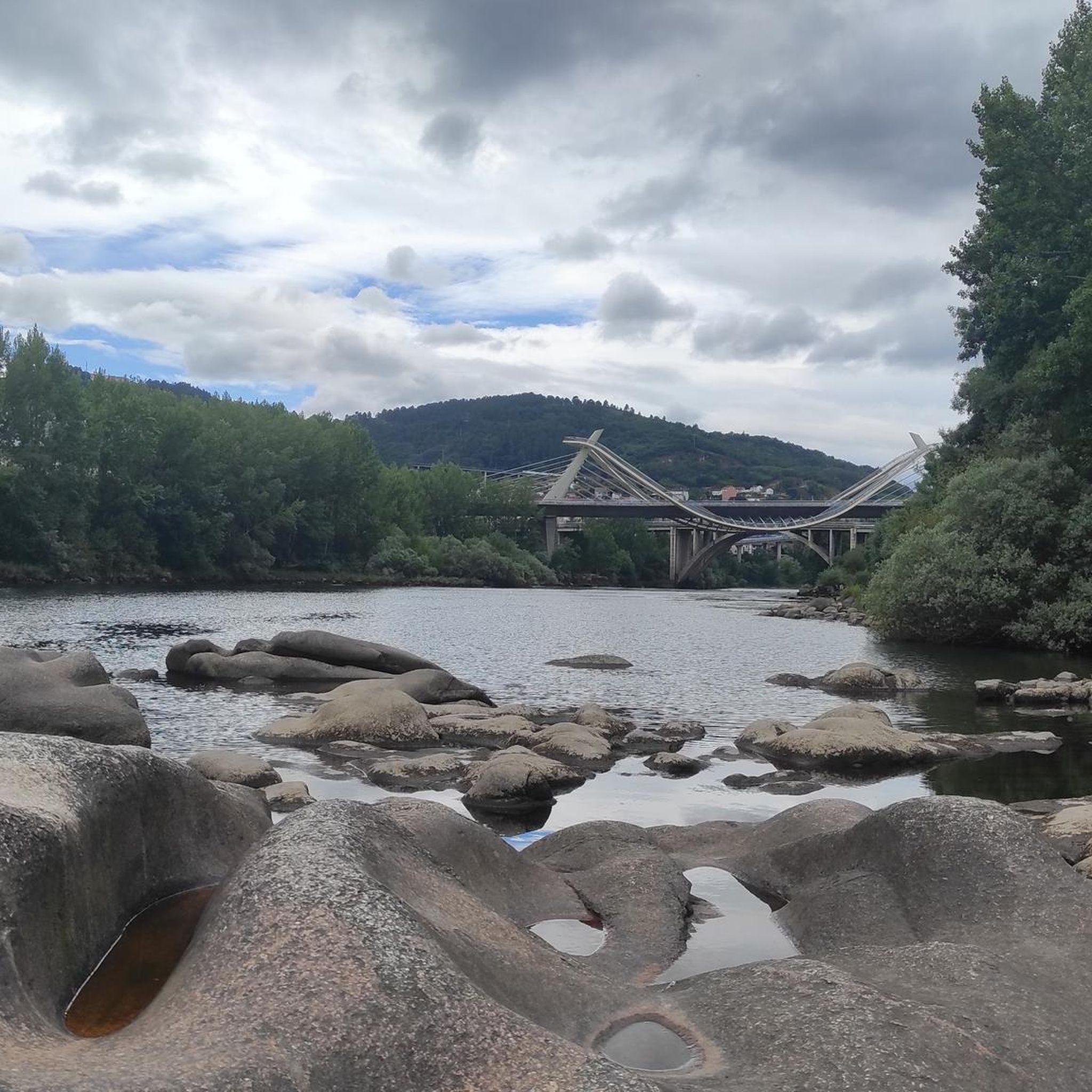
Facility with masonry pools with (probably only temporarily) warm/hot water, catering and sanitary facilities, plus a rest area with several benches and tables. In the direction of the Miño river, amidst the round rocks near the bank, there is a hot spring whose water is channeled into a nicely built small pool. Further west, under the pedestrian bridge, there is an extensive complete facility with larger masonry pools with hot and cold water, sanitary facilities, sunbathing lawns and lifeguard supervision, which is freely accessible so far. From the pedestrian bridge, all (larger facility to the west; facility with pools and rest area as well as small pool in the rocks to the east) are clearly visible.
1
0

Located on the banks of the Miño River, in the Outariz area, west of Ourense, right on the city's "Thermal Promenade." Parking: The Outariz/Reza parking lot (on the opposite bank) is available, as the Muiño da Veiga parking lot is closed for renovations. Public transport: City bus line 5; the unique Thermal Train, which stops at the facility.
1
0
The Monastery of San Pedro de Rocas is one of the oldest and most unique monasteries in Galicia, located in the municipality of Esgos, in the province of Ourense. This monastery stands out for being partially excavated in the rock, which gives it a unique and mysterious character. The foundation of the monastery dates back to the 6th century, although most of the structures visible today date from the 9th and 10th centuries. The monastery church is composed of three naves excavated in the rock, with a series of anthropomorphic tombs also carved in the stone. Outside, you can see a bell tower that was added in the 15th century. San Pedro de Rocas is known not only for its architecture, but also for its natural environment, surrounded by forests and mountains, making it a place of great beauty and tranquility. The monastery has been declared a Historic-Artistic Monument and is an important tourist and pilgrimage destination.
6
2


It is a beautiful waterfall located on the Barbantiño River, in the province of Ourense, Galicia. With a waterfall of about 20 meters, it is one of the most impressive natural landscapes in the area. Surrounded by a lush and green environment, the waterfall is ideal for those who enjoy hiking and contact with nature.
1
0
They are one of the most popular thermal complexes in the city. These open-air thermal baths have several natural hot water pools, with temperatures around 38-41ºC, known for their therapeutic and relaxing properties thanks to their high mineral content. The complex is inspired by Japanese baths, and offers both free access in public areas and a private paid area. The Termas de Outariz are part of the thermal circuit of Ourense, famous for its tradition of spas and hot springs, making them an ideal destination for well-being and relaxation.
0
0

The Fervenza do Barbantiño jump overcomes a difference in height of about 15 meters above the rocky ground and in the rainy season it becomes a true spectacle. However, its course is subject to the rules of a mini hydroelectric plant from the late 1990s that reduces its flow during certain times of the year. To get to this beautiful fervenza, just follow the Barbantiño Natural Trail downstream. From the OU-524 bridge over the river you can take the route, since this is the shortest way to get there, with a distance of only 1.7 km. In any case, it is advisable to start the route from the thermal springs in O Bañiño, in A Forxa, and travel the more than 7 km of beautiful and incomparable path, until you reach the San Fiz bridge.
2
0

Muiño da Veiga is currently in ruins and abandoned, that is because of the AI of the council that prefers to throw the thermal water into the river before the people of Ourens can take advantage of it. This is a scam in conjunction with the Xunta de Galicia. Scammers Ourense thermal does not exist, it is a great scam in the face of the Ourens@nos
0
1
Frequently Asked Questions
What are some unique natural features to explore around Ourense?
Ourense province offers a diverse range of natural features. You can experience the dramatic Barbantiño Waterfall, a 15-meter high cascade particularly impressive after heavy rains. The region is also famous for its thermal springs, such as the Japanese-inspired Outariz Hot Springs and the historic As Burgas Roman Baths, known for their mineral-rich waters. Beyond these, the deep canyons of the Ribeira Sacra, carved by the Sil River, offer breathtaking fjord-like views and terraced vineyards.
Are there family-friendly natural monuments or activities in Ourense?
Yes, several natural sites around Ourense are suitable for families. The Outariz Hot Springs and the Outariz and Burga de Canedo Thermal Baths offer relaxing pools for all ages. For a more active outing, the Pozas and Cascadas de Tourón (Pozas de Melón) provide natural pools for swimming during summer and scenic walks along wooden walkways to view waterfalls.
What kind of outdoor activities can I do near the natural monuments in Ourense?
The natural monuments around Ourense are excellent starting points for various outdoor activities. You can find numerous routes for mountain biking, gravel biking, and hiking. For example, there are MTB trails like 'Ourense - return of the Miño River' and 'Miño and Lonia Rivers Loop', and gravel biking options such as 'Circular gravel through Ourense and Castrelo do Miño'. You can explore more routes and guides on MTB Trails around Ourense and Gravel biking around Ourense.
Are there any historical or cultural sites integrated with the natural landscapes?
Absolutely. The As Burgas Roman Baths are a prime example, offering a unique blend of ancient history and natural thermal waters. Another significant site is the Monastery of San Pedro de Rocas, an ancient cult building partially excavated into the natural rock near Esgos, surrounded by forests and mountains. The Ribeira Sacra region also features a rich historical and artistic heritage with numerous monasteries clinging to the steep canyon slopes.
What is the best time of year to visit the natural monuments around Ourense?
The best time to visit depends on your interests. For swimming in natural pools like Pozas de Melón, summer is ideal. To see waterfalls like Barbantiño Waterfall at their most spectacular, visit during times of heavy rains, typically in autumn or spring. The terraced vineyards of Ribeira Sacra are beautiful year-round, but harvest season in autumn offers a unique cultural experience. For hiking and wildlife spotting in the natural parks, spring and autumn provide pleasant temperatures and lush scenery.
Are there any natural parks in Ourense province known for diverse wildlife?
Yes, Ourense is home to several natural parks with rich biodiversity. O Invernadeiro Natural Park is a true wilderness sanctuary, home to wolves, wild boars, deer, and the largest concentration of raptors in Galicia. Baixa Limia-Serra do Xurés Natural Park, the largest in Galicia, boasts golden eagles, roe deer, and mountain goats amidst its granite formations. Serra da Enciña da Lastra Natural Park is notable for its diverse flora, including 25 types of orchids, and numerous caves housing bats.
What are the options for accommodation near the natural monuments?
While specific accommodations are not listed for every monument, the natural parks and regions like Ribeira Sacra offer various options. You can find rural guesthouses, hotels, and campsites in towns and villages surrounding areas like Baixa Limia-Serra do Xurés, Serra da Enciña da Lastra, and within the Ribeira Sacra. For the thermal springs in Ourense city, there are numerous hotels and guesthouses readily available.
Are permits required to visit any of the natural parks or monuments?
Access to O Invernadeiro Natural Park, a true wilderness destination, requires a permit due to its protected status and lack of human population. For other natural parks like Baixa Limia-Serra do Xurés and Serra da Enciña da Lastra, general access for hiking and exploration is usually free, but it's always advisable to check official park websites for any specific regulations or guided tour requirements, especially for sensitive areas or during certain seasons.
Can I bring my dog to the natural monuments and parks in Ourense?
Many natural areas and trails in Ourense are dog-friendly, but regulations can vary by specific location and natural park. Generally, dogs are welcome on trails if kept on a leash. However, certain protected areas, especially those with sensitive wildlife like O Invernadeiro Natural Park, may have stricter rules or prohibit dogs. Always check local signage or park guidelines before visiting with your pet.
What geological features are prominent in Ourense's natural monuments?
Ourense's natural monuments showcase fascinating geology. The Ribeira Sacra features dramatic river canyons carved into deep gorges. Serra da Enciña da Lastra is characterized by limestone geological formations, ravines, and caves. Baixa Limia-Serra do Xurés is known for its impressive granite boulders of glacial origin. Even the Pozas and Cascadas de Tourón highlight how the Cerbes River has carved granite slopes to create natural pools and waterfalls.
What do visitors enjoy most about the natural monuments around Ourense?
Visitors particularly enjoy the unique blend of relaxation and natural beauty. The thermal baths like Outariz Hot Springs are praised for their affordability and relaxing hot waters. The Barbantiño Waterfall is highly recommended for its natural spectacle, especially after rains. The historical significance combined with natural thermal waters at As Burgas Roman Baths also offers a unique experience. Overall, the appeal lies in the diverse opportunities for exploration, appreciation of geology, and tranquil immersion in nature.
Are there any areas known for unique plant life in Ourense?
Yes, the Serra da Enciña da Lastra Natural Park is particularly notable for its diverse flora. It features Mediterranean plant species such as holm oaks (enciñas), oregano, and thyme, and is home to a remarkable 25 different types of orchids. The Val do río Navea also boasts significant arboreal richness, particularly its extensive chestnut groves ('soutos').
How long should I plan for a visit to the natural monuments?
The duration of your visit can vary greatly. For a relaxing soak at the thermal springs like Outariz, a couple of hours might suffice. Exploring a specific waterfall like Barbantiño could be a short hike of 1-2 hours. However, to truly experience the vastness and diversity of areas like Ribeira Sacra or the natural parks (Serra da Enciña da Lastra, Baixa Limia-Serra do Xurés), you might want to dedicate a full day or even several days, especially if you plan to hike multiple trails or take a catamaran tour.
Most popular attractions around Ourense

Get inspired with the komoot mobile app


Explore more
Extend your search for the best caves by checking out these guides of the top ones around Ourense:
