Top 13 Natural Monuments around Idmiston
Best natural monuments around Idmiston are characterized by their unique blend of prehistoric human endeavor and significant natural geological features. The area is situated near the Stonehenge and Avebury World Heritage Site, where ancient monuments incorporate naturally occurring Sarsen stones. These sites offer insights into both early human history and the natural landscape of Wiltshire. Visitors can explore a variety of natural monuments that showcase the region's rich heritage.
Best natural monuments around Idmiston
- The most popular natural monuments is Stonehenge, a natural monument featuring massive Sarsen standing stones. This iconic British landmark is famously aligned with the summer and winter solstices, highlighting its astronomical significance and the impressive scale of its natural stone components.
- Another must-see spot is Woodhenge, a natural monument that was originally a Neolithic timber circle. Today, concrete pillars mark the positions of the original wooden posts, offering a tranquil experience to visualize its ancient layout and connection to the landscape.
- Visitors also love Sarsen Stone at Stonehenge Visitor Centre, a natural monument showcasing the large sandstone blocks used in prehistoric construction. Observing these natural geological formations provides insight into the raw materials utilized by ancient builders.
- Idmiston is known for prehistoric sites incorporating natural Sarsen stones, ancient burial mounds, and unique geological formations. The area offers a variety of natural monuments to see and explore, connecting visitors with both human history and the natural environment.
- The natural monuments around Idmiston are appreciated by the komoot community, with more than 360 upvotes and over 400 photos shared.
Last updated: July 1, 2026
Stonehenge
Highlight • Historical Site
Tip by

Sarsen Stone at Stonehenge Visitor Centre
Highlight • Monument
Translated by Google •
Tip by

Sign up now to discover places like this
Get recommendations on the best single tracks, peaks, & plenty of other exciting outdoor places.
Sign up for free
Woodhenge
Highlight • Monument
The site is managed by English Heritage and free to visit. You can visit anytime during daylight hours. More information: english-heritage.org.uk/visit/places/woodhenge
Tip by

Cursus Barrows
Highlight • Natural Monument
Translated by Google •
Tip by
Cuckoo Stone
Highlight • Monument
Tip by

Sign up for free to discover even more natural monuments around Idmiston.
Sign up for free
Already have an account?
Start today with a free account
Your next adventure awaits.
Login or Signup

Tips from the Community


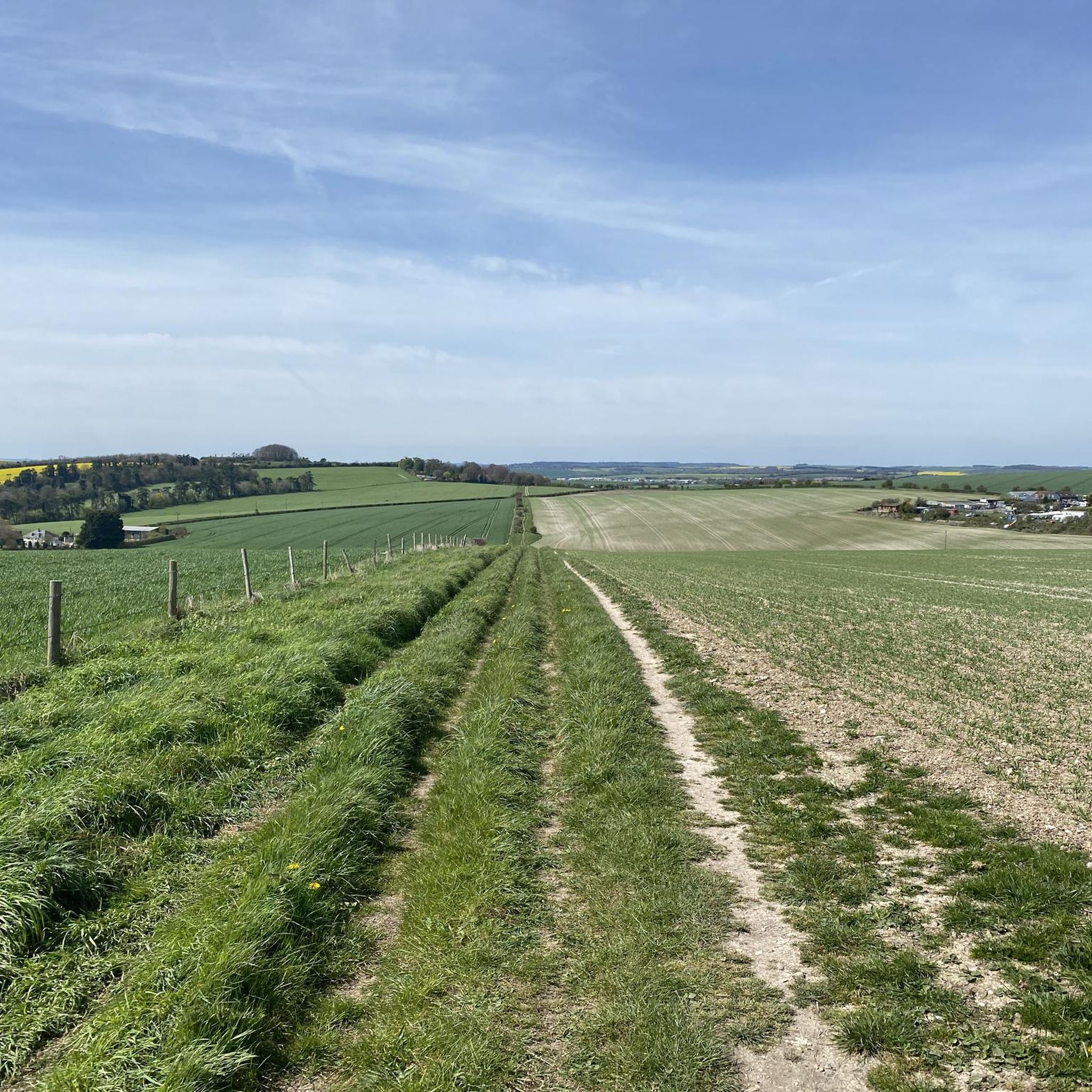
Why exactly there? Archaeologists suspect several reasons: Line of sight From the mounds, there is a direct view of Stonehenge. Sacred landscape The entire plain was a ritual area with paths, graves, and ceremonial sites. Status symbol Important people were buried near the famous sanctuary. Interesting fact There are over 300 burial mounds in the vicinity of Stonehenge – one of the largest prehistoric burial landscapes in Europe.
0
0
Here is a simple overview map explaining the landscape south of Stonehenge and why the burial mounds are located there. Landscape south of Stonehenge The most important range of mounds is called Normanton Down Barrows. It lies about 1 km south of Stonehenge. There are over 40 burial mounds there, dating from 2600–1600 BC. The mounds are situated on a long ridge that faces directly towards Stonehenge. Simplified diagram of the location North ↑ Stonehenge ○ | | approx. 1 km | ───────────────── Hill ridge with many burial mounds (Normanton Down) ○ ○ ○ ○ ○ ○ ○ ○ ○ ○ ↓ South Important hills there One particularly famous burial mound is Bush Barrow A richly furnished grave of a Bronze Age prince, containing gold objects and weapons, was found there.
0
0

It's unbelievable what people have achieved and built in the past (without any technology) - it's simply impressive and breathtaking
2
0

Can someone please be happy/laughing with me that Google Translate turns Amy's "henge and timber monument" into "Denkmal für Hühner 🐔" in German? - Great 😂😂😂
0
0

Location signage, that is, how to locate the cuckoo stone, is non-existent! Once you pass through the gate next to Woodhenge you’ll see the National Trust sign. The stone lies way off to your right at about 3 o’clock direction from the sign. If the grass is long it won’t be visible!
2
0


Like the larger megaliths that make up the outer ring of Stonehenge, the Cuckoo Stone is a sarsen stone and was once a standing stone. It has since fallen but is still a familiar landmark and is part of the wider Stonehenge Landscape. It's believed that the Cuckoo Stone was the ceremonial centrepiece for several burials around 2000 BC.
3
0
Frequently Asked Questions
What types of natural monuments can I explore around Idmiston?
The natural monuments around Idmiston are primarily prehistoric sites that incorporate significant natural geological features, particularly the large Sarsen stones. You can explore iconic sites like Stonehenge, the more tranquil Woodhenge, and ancient burial mounds such as the Cursus Barrows. These sites offer a unique blend of human history and the natural environment.
Are there family-friendly natural monuments near Idmiston?
Yes, several natural monuments around Idmiston are suitable for families. Stonehenge offers a visitor centre with exhibitions and Neolithic houses, making it engaging for all ages. Woodhenge and the Sarsen Stone at Stonehenge Visitor Centre are also listed as family-friendly, providing open spaces and historical context.
What natural features are prominent at these monuments?
The most prominent natural features are the Sarsen stones. These are naturally occurring silicified sandstone blocks, which were used extensively in the construction of monuments like Stonehenge and Avebury. You can see these massive stones in their monumental context, or observe a raw example at the Sarsen Stone at Stonehenge Visitor Centre, providing insight into the raw materials ancient builders utilized.
What is the best time of year to visit the natural monuments around Idmiston?
While the monuments can be visited year-round, spring and autumn offer pleasant weather for exploring the outdoor sites without the peak summer crowds. Visiting during the summer solstice can be a unique experience at Stonehenge and Woodhenge due to their astronomical alignments, but expect larger crowds.
Are there any less crowded natural monuments to visit near Idmiston?
If you prefer a more tranquil experience away from the crowds of Stonehenge, Woodhenge offers a peaceful setting to connect with ancient history. You can also explore the Cursus Barrows or the Cuckoo Stone, which are part of the wider Stonehenge landscape but generally less frequented.
What outdoor activities can I do near these natural monuments?
The area around Idmiston offers various outdoor activities. You can find numerous cycling routes, including touring, road, and gravel biking. For example, there are moderate cycling routes like the 'Historic Amesbury – Old Sarum Ruins loop' or gravel biking options such as the 'Stonehenge – Stonehenge loop from Salisbury'. You can find more details on these routes in the Cycling around Idmiston, Road Cycling Routes around Idmiston, and Gravel biking around Idmiston guides.
Is public transport available to reach natural monuments like Stonehenge and Woodhenge?
Yes, public transport options are available. There are shuttle buses from the Stonehenge Visitor Centre to the stone circle itself. For detailed information on public transport routes and schedules to Stonehenge and Woodhenge, it is advisable to check local transport services or the official English Heritage website for the latest information: English Heritage - Stonehenge.
Are there any wheelchair-accessible natural monuments in the Idmiston area?
The Sarsen Stone at Stonehenge Visitor Centre is listed as wheelchair accessible, providing an opportunity to experience a key natural element of the region's monuments. The Stonehenge Visitor Centre itself is designed to be accessible, and shuttle buses to the monument are also accessible. It's recommended to check the official site for specific accessibility details for the monument grounds.
What should I wear for walks around the natural monuments, especially in winter?
For walks around the natural monuments, especially in winter, it's essential to dress in layers. The area can be exposed to wind and rain. Wear waterproof and windproof outer layers, warm inner layers, and sturdy, waterproof walking boots. Remember that there is very little shade on a hot day, so sun protection is also important during warmer months.
Where can I find pubs or cafes near the natural monuments?
The Stonehenge Visitor Centre has a café. For pubs and other amenities, you would typically find them in nearby towns and villages such as Amesbury or Salisbury. While Woodhenge itself doesn't have facilities, there are often rest areas nearby for picnics.
Can I visit the natural monuments with my dog?
Many outdoor natural monument sites, like Woodhenge, are generally dog-friendly, often allowing dogs on leads. However, specific rules may apply at managed sites like Stonehenge. It's always best to check the individual site's visitor information regarding dog policies before your visit.
What makes the Sarsen stones so significant to the natural monuments in this region?
Sarsen stones are crucial because they are the natural geological formations that form the fundamental building blocks of many prehistoric monuments in the region, including Stonehenge and Avebury. These hard, silicified sandstone blocks were sourced locally and transported by ancient peoples, demonstrating a powerful connection between human ingenuity and the natural resources of the landscape.
Most popular routes around Idmiston
Most popular attractions around Idmiston

Get inspired with the komoot mobile app


Explore more
Extend your search for the best caves by checking out these guides of the top ones around Idmiston:
