Top 5 Natural Monuments around Napton on the Hill CP
Best natural monuments around Napton on the Hill CP include diverse natural features. The village of Napton on the Hill is situated on a hill over 150 meters above sea level, providing panoramic views of the surrounding countryside. The Oxford Canal, a contour canal, meanders around the area, offering picturesque routes. Napton Reservoir and the Shuckburgh Hills further define the landscape, featuring rolling terrain and varied flora and fauna.
Best natural monuments around Napton on the Hill CP
- The most…
Last updated: May 18, 2026
Draycote Water
Highlight • Lake
Translated by Google •
Tip by

Holy Well, Southam
Highlight • Natural Monument
Tip by

Sign up now to discover places like this
Get recommendations on the best single tracks, peaks, & plenty of other exciting outdoor places.
Sign up for free
Bishops Bowl Lakes
Highlight • Natural Monument
Tip by

Harts Hill
Highlight • Natural Monument
Tip by
Green-Winged Orchids at Draycote Meadows
Highlight • Natural Monument
Translated by Google •
Tip by
Sign up for free to discover even more natural monuments around Napton on the Hill CP.
Sign up for free
Already have an account?
Start today with a free account
Your next adventure awaits.
Login or Signup

Tips from the Community

It is an unusual half-moon stone structure holding the water, with three strange heads out of whose mouths the water flows down to the river.
0
0

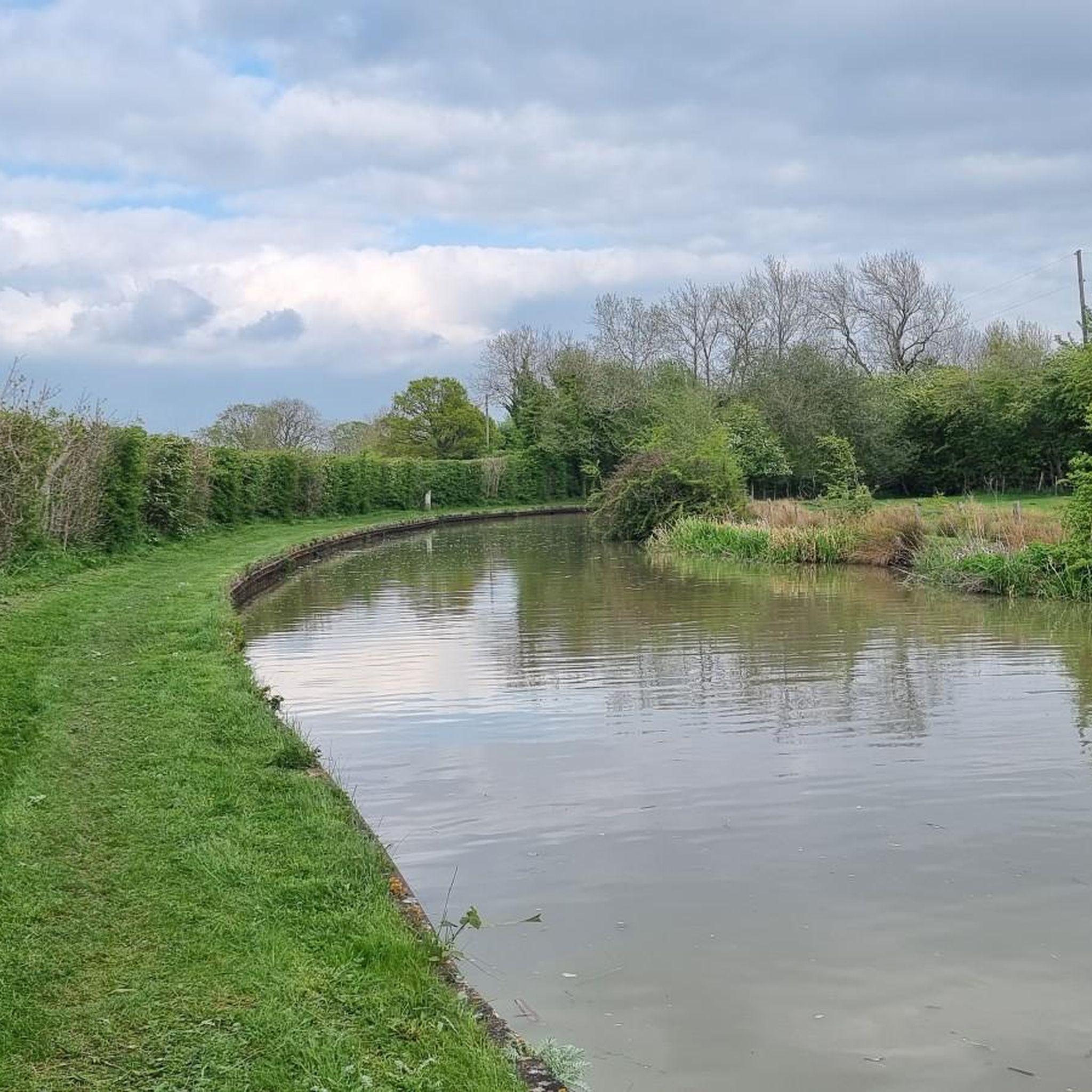
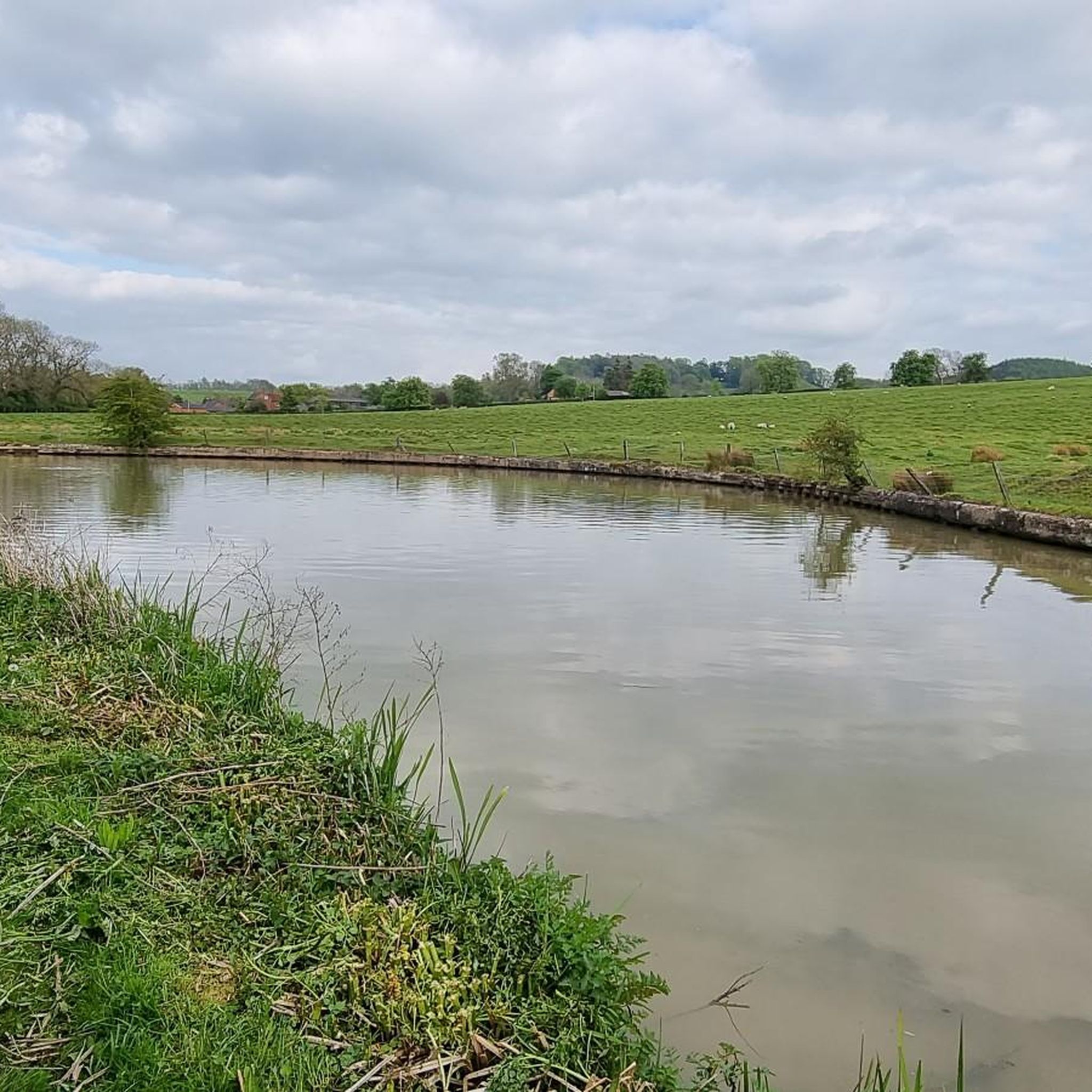
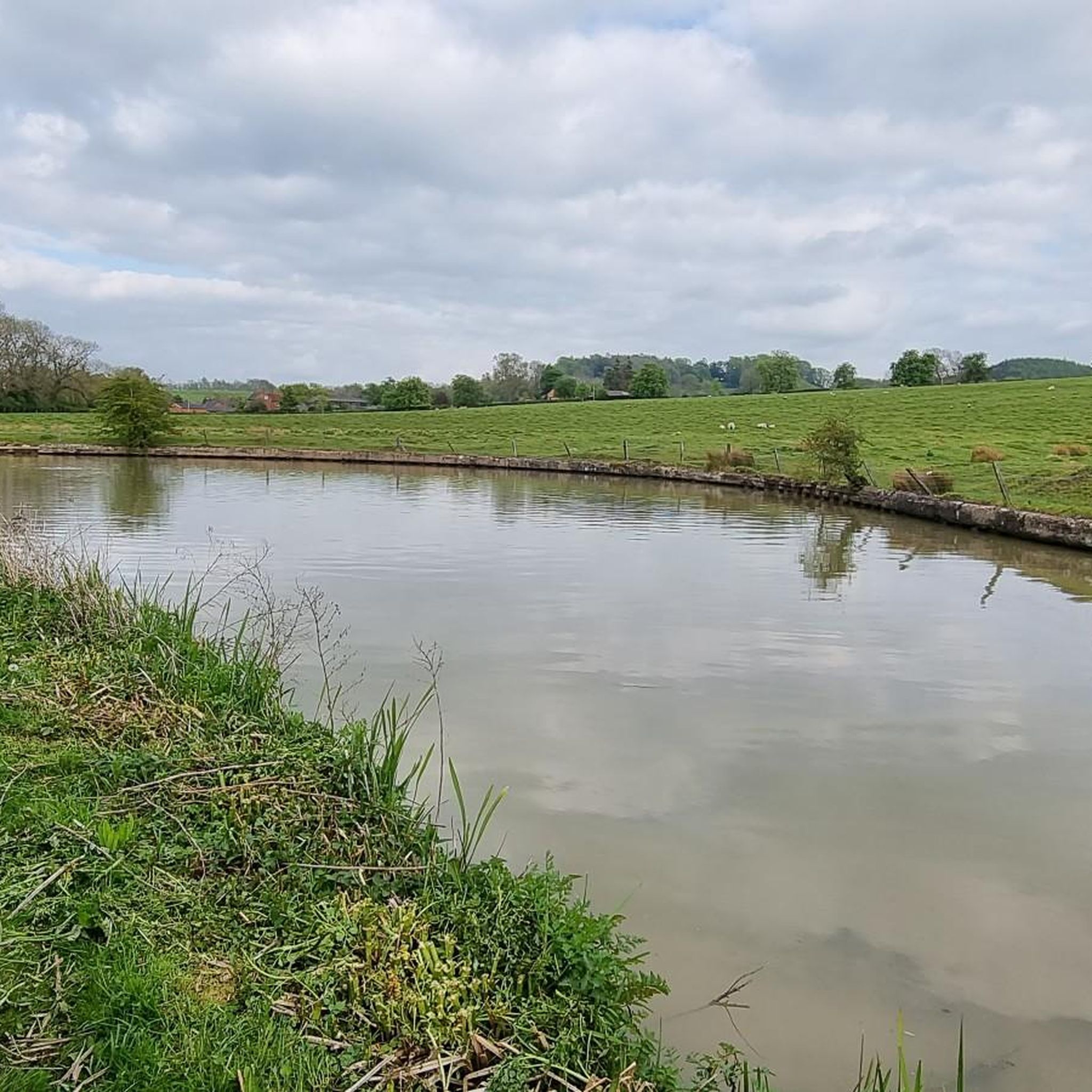
We had to double back on ourselves slightly to see the lakes, as they were hidden behind a hedge
0
1

If you follow the beautiful trail that departs from Southam heading east and runs alongside the River Stowe, you will come across The Holy Well, believed to be the oldest recorded Holy Well in England. It has been there for over a thousand years, with its most recent renovation taking place almost twenty years ago.
1
0

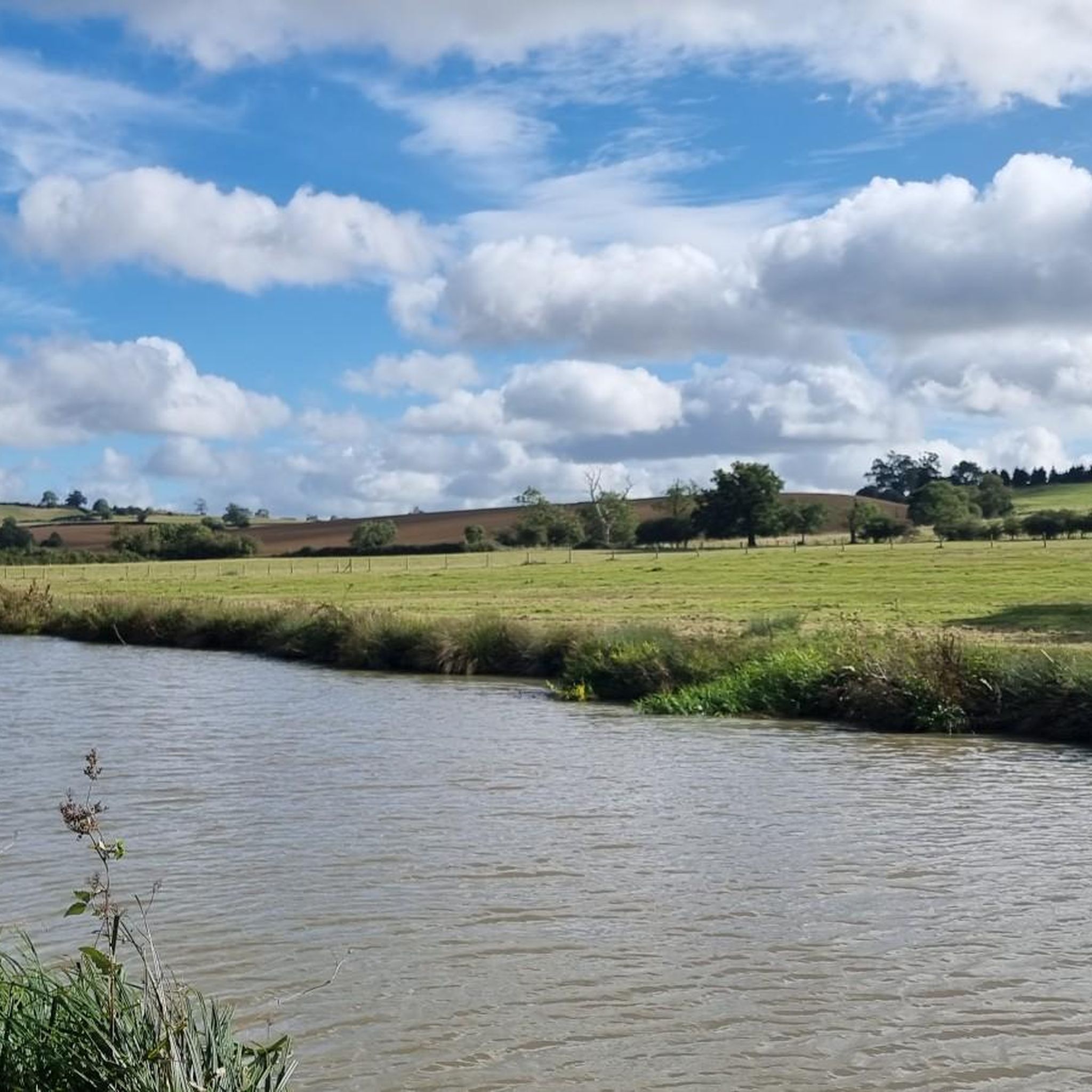
Draycote Water is an artificial reservoir (23 million m3), which was completed in 1969. In addition to its function as a water reserve, it is a leisure park u.a. for anglers, sailors, hikers. The rich bird life invites also to observations. Swimming is not allowed in the lake.
1
0


A circular earthwork is clearly visible on the ground on Harts Hill. It measures approximately 15m internal diameter, the ditch is 2m wide and the entrance (facing SE) is 2.5m across.
0
0
The site of a holy well which dates to the Medieval period, though the stone work surrounding the well dates to the Imperial period. Further restoration has taken place in the 20th century. It is situated 800m west of the church, Southam. Oldest recorded holy well in England? The first mention of the well is apparently 998, when it is mentioned in a charter to Leofwine by King Ethelred the Unready as a consequence as the term holy well per se derives from Old English halig this is probably the oldest recorded. However, it does not appear to be specifically mentioned as such. However in a Feet of Fines there is a notice in 1206 of a: “half acre land at Hallewellcul to the north” Over the next 800 years there then appear to be regular references to the well. By the 18th century there is reference to some sort of protective structure, although the date of the current structure cannot perhaps be gauged from these references. By 1701 a record notes that the Rector was exempted from keeping the well and fencing in repair: “one footway of the breadth of three feet leading from a certain stile at the bottom of an ancient enclosed ground called Bury Orchard towards Ufton by the Brook to the said well called Holy Well.” By 1760, a public footpath to the well was made permanent in an Act of Parliament and the enclosures act noting: “it is hereby further enacted and declared, That the said Well, called Holy Well, in the said Open Fields of Southam aforesaid, shall not be allotted to any of the said Proprietors, but shall be inclosed round with Posts and Rails, Three Yards at least distant from the Stone-work of the said Well, by, and at, the Expence of all the said Proprietors, and shall be kept for the Benefit of all the Inhabitants of the Parish of Southam aforesaid; and which said Posts and Rails shall, forever thereafter, be repaired and kept in Repair by, and at, the Expence of the Inhabitants of Southam aforesaid; and that the said Commissioners, or their Successors, or any three or more of them, shall assign, or lay out, a Footway from the Town of Southam aforesaid, to the said Well..” Healing eye water The main two properties, other than a possibly being better than beer, is that it was very cold but never froze and that it was good for eyes. Indeed, its powers in restoring eyes lead to a Henry Lilley-Smith establishing in 1818 an eye and ear hospital not far. Local remedies also recall how to make a tincture with the well water for eyes. The well of St Fremund? One of the possible reasons for the site being a holy well is that it was associated with the Mercian saint Fremund. The Life and Death of the Most Holy Fremund, King and Martyr by Burghard, 12th century (tr. from text in Nova Legenda Anglie ) tells how St Fremund, having been beheaded: “stood up as if nothing had happened, picked his head up off the ground, and set out with the head in his hands. The crowd were amazed at this miracle and followed in his tracks, praising God. He made his way to a spot between Itchington and Harbury, and when he got there he took a stand and thrust the point of his sword in the ground. He prayed to God for a little water to wash his head and body, and what he sought, he gained. For a spring welled up at this very spot, flowing in an unfailing stream and proving the merits of this famous martyr before all the world. He drank of its waters, he washed his wounds, he gave honour to that God in whom all live and have their being. Then turning his head to the east, he sank dead to the ground”. The Metrical Life of St Fremund by William of Ramsay, 1194×1220 (tr. from text in Pinchbeck Register 1925) repeats the story from Burghard, detailing how ‘No sooner had he wished for water than a spring appeared/ Purer than dew, clearer than crystal, finer/ Than gold, and scattering silver sands’. Later, the Life of Sts. Edmund and Fremund by John Lydgate, 1434 tells how “there sprong up a welle/ With crystal watrys the stremys gan up welle;/ And wessh away the blood that was so red,/ Which doun disttillyd from his hooly hed”. egend has it that Fremund was a son of Kind Offa of Mercia. After his death, a great battle ensued at Radford Semele against the invading Vikings in which Fremund was completely victorious. However as Fremund knelt in prayer of thanksgiving one of his own men envious of his success struck off his head. However the legend suggests that the well was not at Southam. For when his corpse stood up, picking up his head and walking away; he stopped somewhere between Harbury and Whitton, possibly Whitnash and there a miraculous well sprung up at his feet, in the water of which he washed his head then lay down and died. This would go against the view that the Southam well is the same. Well preserved fabric The first description of the site is Carlisle (1812) ‘Observations on the positions of the alien cell of Begare, and of Halywell upon Watling Street’ who describes: “a well of very fine clear water, called Holywell, or Halywell, which has always been reputed salubrious. It is… perpetually overflowing, without much variation from the seasons. It is a basin on the declivity of a rising ground. Its form is the larger section of a circle; the bottom is paved with smooth stones; and the sides are walled with the same, a little higher than the water stands, which is about two feet deep. It was formerly nearly encompassed with another wall, and upon a stone, at the mouth of the well, the words Utere, sed non abutere were inscribed.” However it was apparently in decline by the 1850s as an article written on the 6th October 1855 in the Warwickshire Advertiser describes: “on the foot road from Southam to Stoney-Thorpe, the residence of H T Chamberlain Esq., is an Ancient Well called ‘Holy Well’ now in a dilapidated condition; but even in its present state, the massive stone work, with curious and not very elegant carved head shews it to have been at one time an object of interest. Its earlier history is not clear, some asserting that it was the source from which Stoney Thorpe was supplied with water when used as a Priory ……it is a large semi-circular well about five feet deep embanked with massive stone masonry, and is supplied by a powerful spring of the Purest Water. It lies at a lower level than the Town, otherwise it might without much expense, be made most valuable for domestic and sanitary purposes. Tradition says it formally had a stone seat placed round it; was furnished with drinking vessels, and covered by an Arched Stone Roof; thus affording refreshment to the Traveller, and a pleasant resort to the health seeker. It is now proposed to restore by a public subscription, this beautiful relic of antiquity, and a considerable sum has already been promised.” This restoration is described by Freton (1890) in his The Warwickshire Feldon: a sketch of its hills and valleys, waters, famous trees, and other physical features in the Proceedings of Warwickshire Naturalists’ & Archaeologists’ Field Club, states that around 40 years ago: “I and a few enthusiastic friends undertook to clear out this old well, in the hopes that it might lead to its ultimate restoration. Our efforts as amateur navvies excited little sympathy among the rough labouring lads of the neighbourhood, who seemed to look upon us as having a slate off, and we invariably found our labour of one evening fruitless the next, so after a week’s hard work we gave it in.” Certainly when Richardson (1928) found it as: “a semicircular recess in the bank. A low retaining wall – recently renovated – prevents the bank from slipping down into it. At its foot is a flagged path along the curved margin of the semicircular well. Impounding the water in the well… is low two buttressed stonework. The stonework is much mutilated, the water flowing over the two broken and worn ends; but the central portion is higher and has three faces sculptured on it from orifices below which the water spouts out. Two flights of steps– that on the left with three steps, that on the right with four – lead down to a “trough” below the stonework”. The most curious facet of the well are the well worn, and hence presumably ancient carved heads. What is their origin? Thoughts have ranged from effigies of sun gods to the recycled remains from a priory or church. I certainly favour the later and they were probably gargoyles and incorporated in the fabric in the 18th century. This may explain why they look more worn than would be expected if was last constructed in that century. However, it seems odd to have incorporated them and it may have been an attempt to produce a folly for a local lord. Well restored However, despite Richardson’s favourable visit, not everything was positive. In 1925 the water was diverted into a reservoir and the provision of mains water artesian wells in the 1930s took their toll on the flow, an article in a local newspaper noting that: “the Holy Well itself a few yards away has been partly emptied, and no water now flows into its basin in dry weather.” By 1981, Brian Townsend noted in Southam Through the Centuries III notes it was little more than a trickle but a year after clearing out and restoration by the Community Enterprise Programme restored the flow through the heads. Yet by 1991 it was dry again, possibly as the result of quarrying and work on a by-pass. This is what it was like when I first visited…filled with rain water and polluted by crab apples. Through the 1990s restoration was planned but due to various reasons it was never attempted until the early 2000s. By 2005 the water supply was relocated and it could be restored, a Holy Well community was established an Heritage Lottery Fund money of £102,500 was successfully obtained. By 2005-7 the site was splendidly restored with seats and a palisade fence with delightful well related carvings on the posts…a fantastic return to the glory..the crowning of that glory the fact the water flows as profusely as ever. A delightful site and a holy well must.
0
0

There is one problem with this side of Draycote water and that's the bugs. The wind blows across the lake and you get a face of bugs. But the views are good and it's always a good section of a ride, always busy when the weather is good...
0
0
Frequently Asked Questions
What are some of the most notable natural features around Napton on the Hill CP?
Beyond the formally designated natural monuments, the area boasts several significant natural features. These include Napton Hill itself, offering panoramic views, the tranquil Napton Reservoir, the rolling landscapes of the Shuckburgh Hills, and the picturesque Oxford Canal with its meandering towpaths.
Are there any historical natural monuments to visit in the area?
Yes, you can visit Holy Well, Southam, which is believed to be one of England's oldest recorded holy wells. It features a unique half-moon stone structure with water flowing from three carved heads, and has a rich history dating back over a thousand years.
Where can I find geological points of interest or unique natural formations?
For geological interest, explore Bishops Bowl Lakes. This site is a former limestone quarry recognized for its geological significance, having yielded marine fossils including an ichthyosaur and a plesiosaur skeleton now housed in the Natural History Museum, London.
What kind of views can I expect from the natural monuments around Napton on the Hill CP?
The region offers several excellent viewpoints. Napton Hill provides expansive vistas where you can see up to seven counties on a clear day. Additionally, Harts Hill is a natural monument and viewpoint with a visible circular earthwork, and Hensborough Hill Trig Point offers great views from 113m above sea level, just a short walk from the visitor centre.
Are there family-friendly natural monuments or walks suitable for children?
Several natural monuments are considered family-friendly. Holy Well, Southam offers an interesting historical stop. Green-Winged Orchids at Draycote Meadows is a great spot for nature observation, and Hensborough Hill Trig Point is an easy walk with rewarding views.
What outdoor activities can I do near these natural monuments?
The area around Napton on the Hill CP is excellent for outdoor activities. You can enjoy hiking along the Oxford Canal towpaths or through the Shuckburgh Hills. There are also road cycling routes available. For more detailed hiking options, explore the Hiking around Napton on the Hill CP guide, or for cycling, check the Road Cycling Routes around Napton on the Hill CP guide.
Are there specific hiking trails near the natural monuments?
Yes, there are numerous hiking trails. For example, you can find easy loops like the 'Napton Bottom Lock – The Folly at Tatenhill loop' or the 'Napton Windmill – Napton Junction Marina loop'. More moderate options include the 'Napton Windmill – Napton Junction loop'. You can find more routes in the Hiking around Napton on the Hill CP guide.
Where can I go for wildlife spotting and nature observation?
Napton Reservoir is a serene body of water known for diverse bird species, including herons, kingfishers, and various waterfowl, making it a popular spot for birdwatching. The Shuckburgh Hills are also rich in biodiversity, with opportunities to spot deer, foxes, badgers, and red kites, alongside wildflowers like bluebells and primroses.
What is the best time of year to visit the natural monuments and features?
Spring and summer are particularly rewarding for experiencing the natural beauty. In spring, the Shuckburgh Hills showcase wildflowers like bluebells and primroses. The warmer months are also ideal for walking along the Oxford Canal and enjoying the views from Napton Hill. Birdwatching at Napton Reservoir is good year-round, but migratory species are more prevalent in spring and autumn.
What makes the Oxford Canal a unique natural feature in this area?
The Oxford Canal is a 'contour canal' that gracefully sweeps around Napton on three sides, following the natural contours of the land. This creates a pleasant, meandering route with picturesque towpaths ideal for walking and cycling. The historic Napton Junction, where it meets the Grand Union Canal, features a notable set of eight locks, adding to its charm and historical significance.
What do visitors enjoy most about the natural monuments and features in Napton on the Hill CP?
Visitors frequently appreciate the stunning panoramic views from elevated points like Napton Hill and Hensborough Hill Trig Point. The tranquility of Napton Reservoir for birdwatching and the historical intrigue of Holy Well, Southam are also highly valued. The diverse landscapes, from rolling hills to canal paths, offer varied experiences for nature lovers and hikers.
Most popular routes around Napton on the Hill CP
Most popular attractions around Napton on the Hill CP

Get inspired with the komoot mobile app


Explore more
Extend your search for the best caves by checking out these guides of the top ones around Napton on the Hill CP:
