Top 20 Natural Monuments around Huy
Natural monuments around Huy, Belgium, offer diverse landscapes for exploration, from river valleys and woodlands to nature parks. The region is characterized by significant natural beauty and geological features. These areas provide opportunities to observe unique ecosystems and formations. The town of Huy serves as a central point for accessing these natural attractions.
Best natural monuments around Huy
- The most popular natural monuments is Lovely distant view of the Sy rocks, a natural monument that provides views of the…
Last updated: October 2, 2026
Sy Rocks
Highlight • Natural Monument
Translated by Google •
Tip by

Modave Castle
Highlight • Castle
Translated by Google •
Tip by
Sign up now to discover places like this
Get recommendations on the best single tracks, peaks, & plenty of other exciting outdoor places.
Moha Castle
Highlight • Castle
Translated by Google •
Tip by

Rock of the Virgin
Highlight • Natural Monument
Translated by Google •
Tip by

Poudingue d'Ombret Trail
Highlight • Trail
At this location, 395 million years ago, the delta of a river flowed into the sea. The sediments brought by the waters were deposited at the bottom. The …
Translated by Google •
Tip by

Lac La Gravière
Highlight • Lake
Translated by Google •
Tip by

Trou Manto
Highlight • Cave
Translated by Google •
Tip by

Larbois Sand Quarry
Highlight • Natural Monument
Translated by Google •
Tip by
View of Famelette Castle
Highlight • Viewpoint
Translated by Google •
Tip by

La Neuville Fish Pass
Highlight • Structure
Showing Translation
Tip by

Sign up for free to discover even more natural monuments around Huy.
Already have an account?
Start today with a free account
Your next adventure awaits.
Popular around Huy
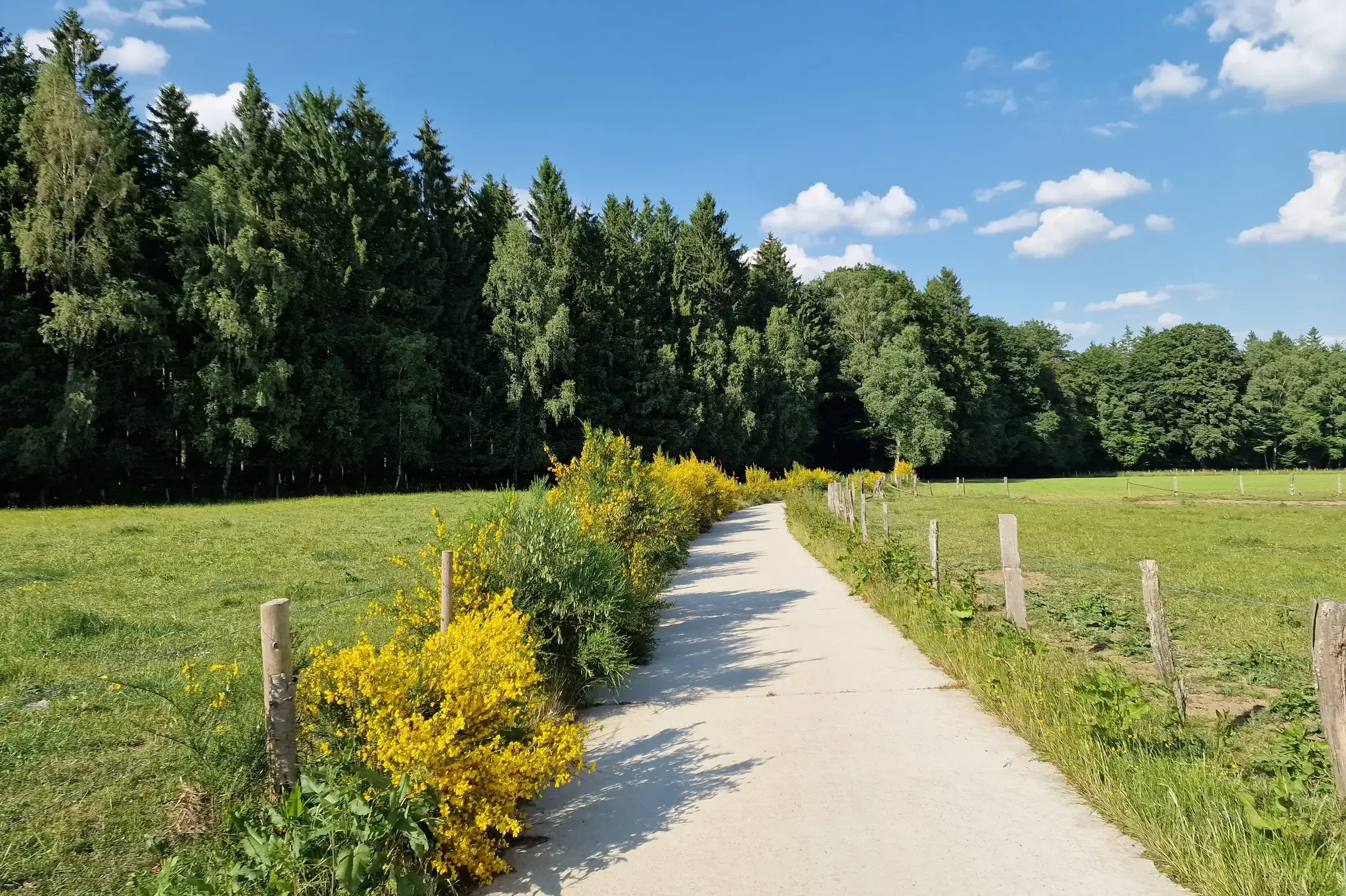
RAVeL W7 — On the road of the Ardennes
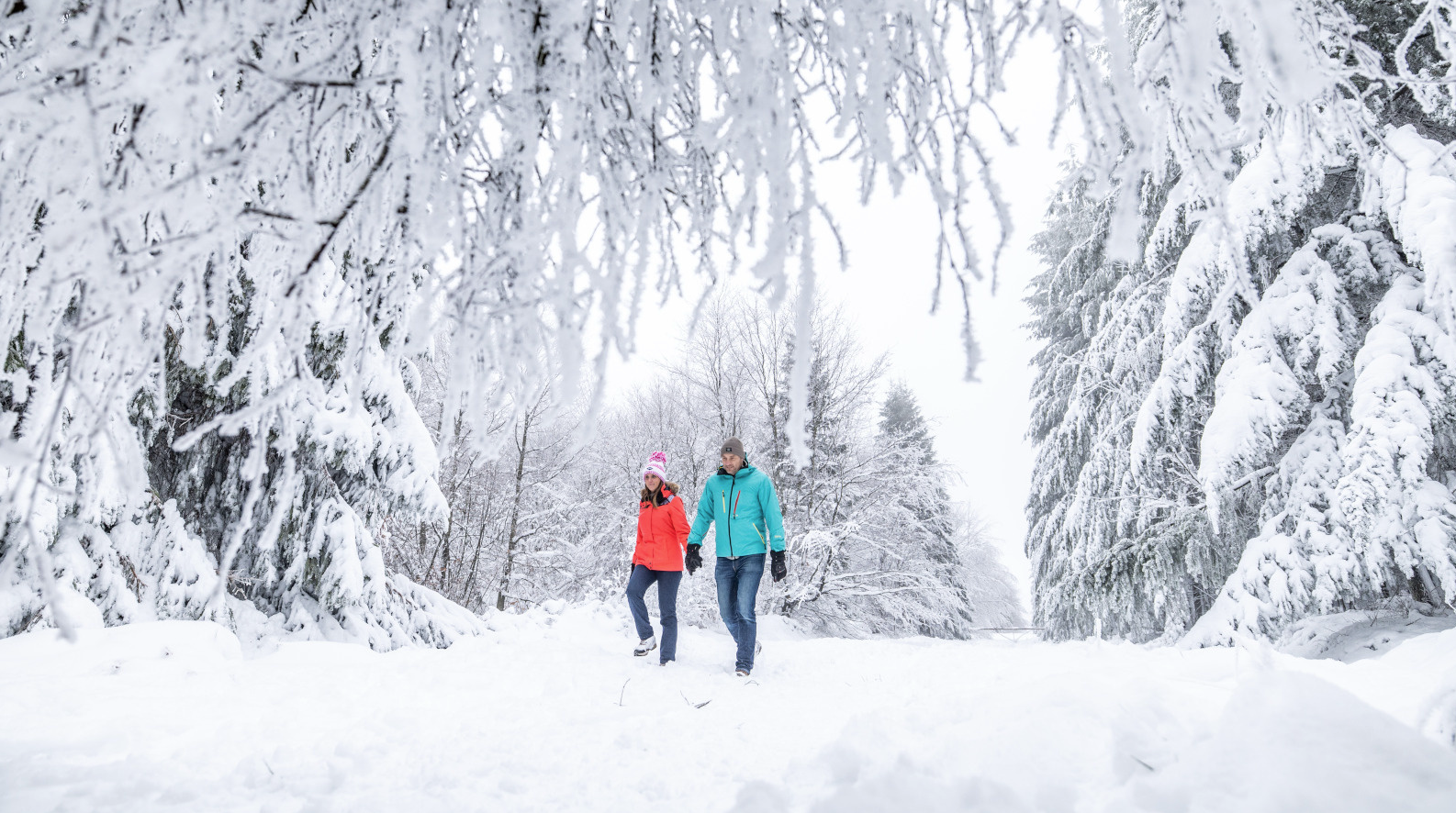
Belgian Ballads – winter hiking in the Belgian Ardennes
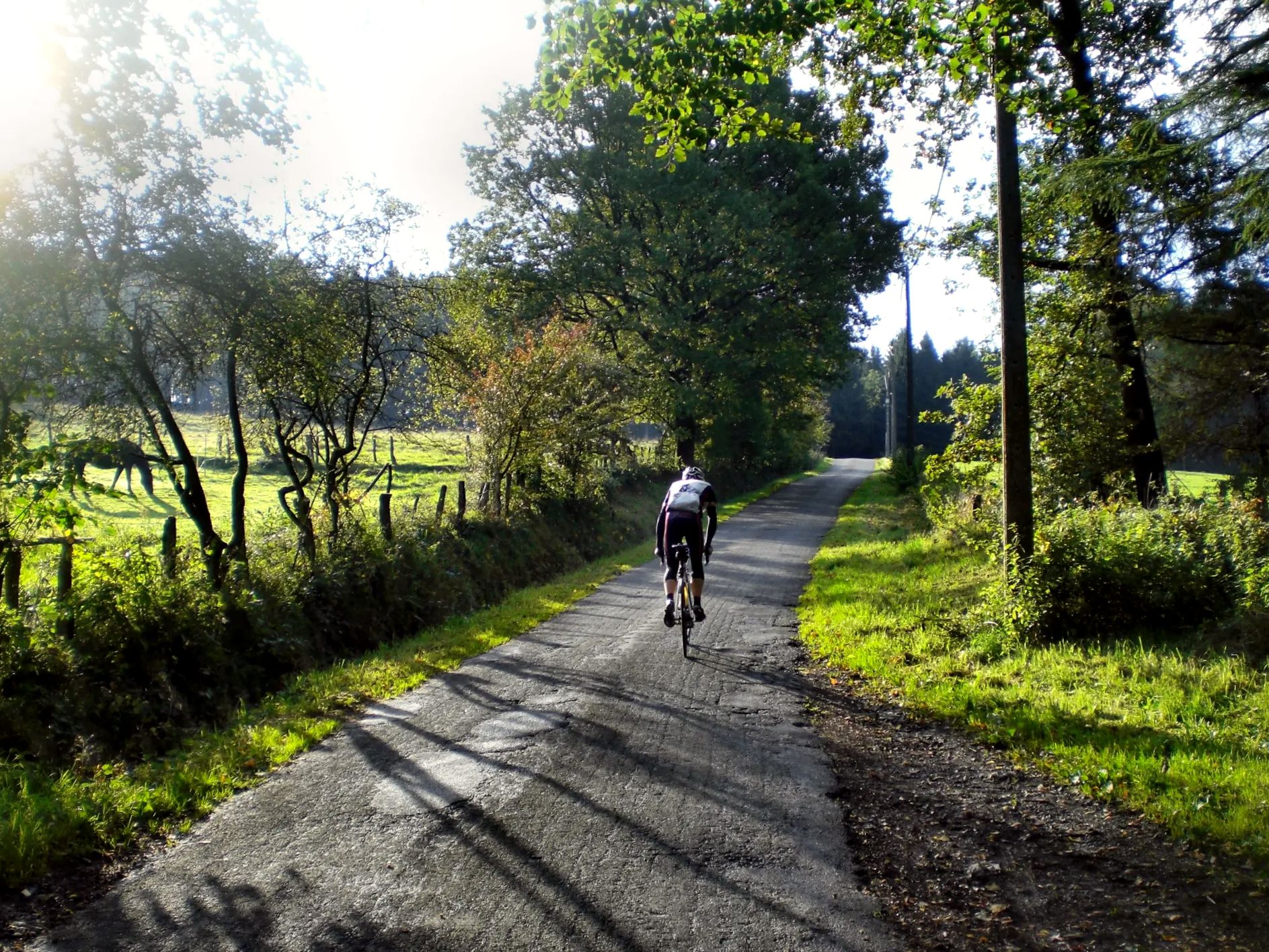
Belgium’s hardest ultra cycling race – the Ardennes Monster
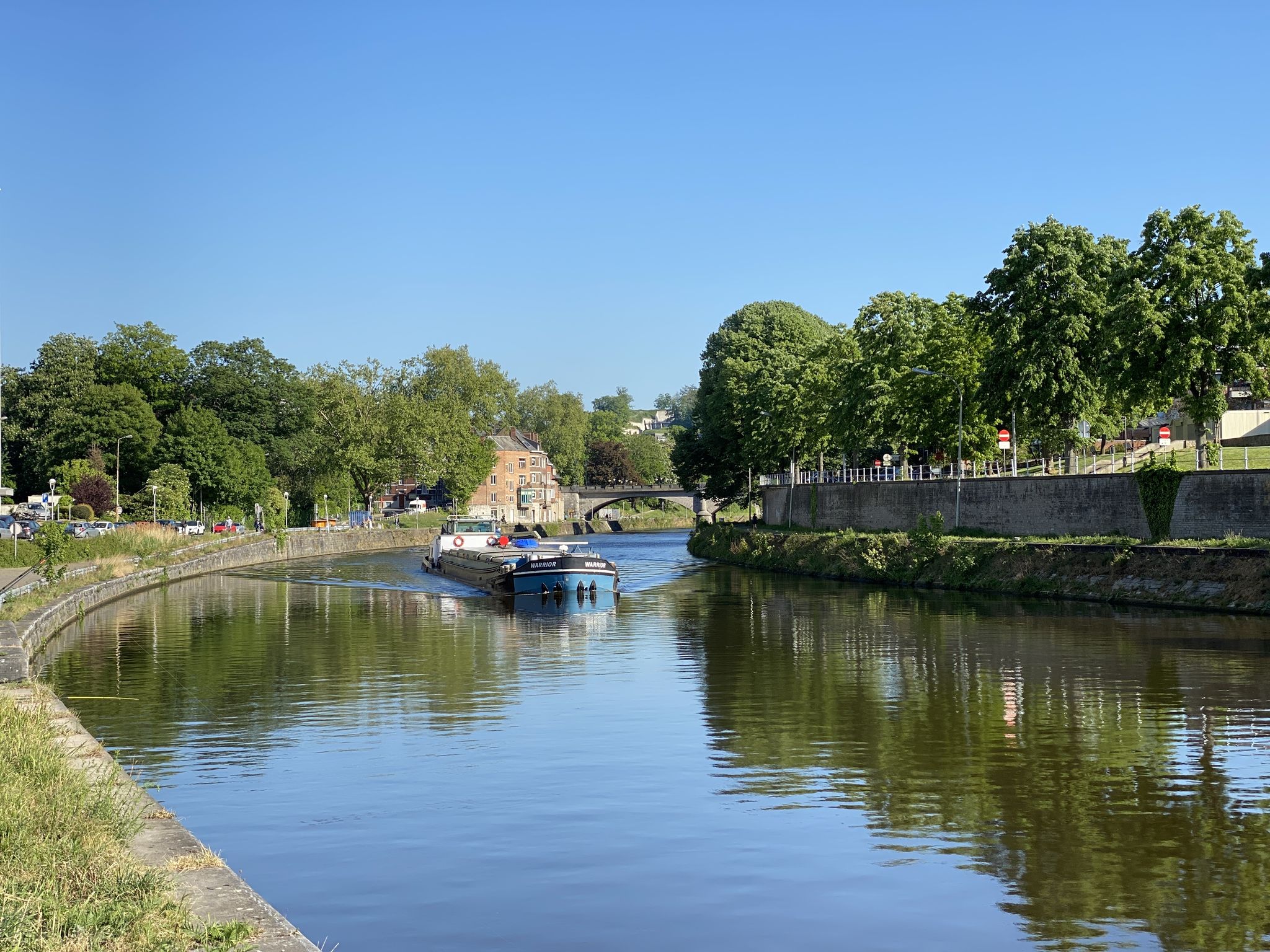
Entre Sambre et Meuse — A Walloon crossroads
The wild rivers Ourthe, Vesdre and Amblève in the Belgian Ardennes
Cycling on Belgium’s most beautiful bike paths — 10 boucles à vélo
Exploring Belgium’s Wallonia — 8 hikes from station to station
The Conquest of the Ardennes — a bike adventure to remember
Belgische Balladen - charmante Kurzwanderungen in den belgischen Ardennen
Hiking around Huy
Other adventures around Huy


Tips from the Community

The first descriptions of this Trou Manto date back to 1833. The name refers to the prophetess Manto, daughter of Tiresias of Thebes, who was brought to Delphi after her birthplace was conquered by the Epigoni. From there she traveled to Asia Minor, where she married the Cretan Rhacius, with whom she had Mopsus, and founded a temple of Apollo in Claros. According to legend, she spent her last days in Italy. What the link between this cave and the legend from Greek antiquity is, is unclear. It is a fossil cave. In 1964, a narrow passage was made to the adjacent 'Grotte Sint-Etienne'. This junction is called the "birth" by speleologists. It is, along with the 10m deep shaft, the most difficult segment of the cave. The cave is not accessible to the public and has never been developed for tourism. Only with a membership card of the Belgian Speleological Union and a key can you access the limestone passages. To protect the site, it was decided to close the entrances with massive doors equipped with padlocks. However, as bats had been regularly present during their hibernation since 1970, the entrances to the two caves were only screened in 1990 to facilitate their entry and exit. Observations of these small mammals by NATAGORA led to the identification of several regionally endangered species, such as the lesser horseshoe bat and the Bechstein's bat. Vincent Poitier, a pioneer of the 4th Baden Powell unit of the Collegiate Church of Huy, organized several visits to the cave system together with scout leader Jean-Louis Cuvelier. Some entered through the Trou-Manto cave, while others, the more adventurous, went directly through the Trou St-Etienne cave. source: wikihuy.be
2
1

It's pleasant to walk around there with the new infrastructure put in place for the fish and the new walkways.
2
0
A new fish ladder – the largest in Wallonia! – a veritable artificial river, allows aquatic wildlife to bypass the dam. The footbridge connecting the municipalities of Amay and Huy has been replaced and extended to span the main road. More information: https://construirelawallonie.be/nouvelles/le-site-eclusier-dampsin-neuville-est-equipe-de-la-plus-longue-passe-a-poissons-de-wallonie/
1
0

The gravel pit is a very rich site for photo enthusiasts or for walkers who wish to walk on maintained paths and observe birds in complete tranquility. Site recommended for walkers and photographers. Please, can you respect the rules such as keeping your dog on a leash (even if some people think they won't do any harm by letting their dog off the leash, know that you have animals with predator instincts which could scare away some species of birds that nest on the ground, like the kingfisher) and not swimming so as not to disturb the birds that are there. Thank you to all those who will respect the rules and I wish you a good hike or a good photo outing 🙏.
1
0
Excavations are conducted year-round at Moha Castle, making it unique in Belgium. When I visited, two archaeologists were uncovering a wall that runs beneath the visible castle and likely dates back to the 12th century.
2
0
The castle is free to visit. At the foot of the rock, there's a visitor center where you can pick up a badge to open the gate. For €4, you can also get a brochure with information about the most important points. The castle is only open to visitors starting in April, but the friendly man at the visitor center let me in on February 27th... as far as you can even call it "inside" at this ruin ;-)
2
0

The third busiest lock in Wallonia, it's a vital link for inland shipping to Liège, Flanders, and the Netherlands. Recent work has enabled a loading capacity of 9,000 tons since 2024 (previously 2,000 tons).
2
0

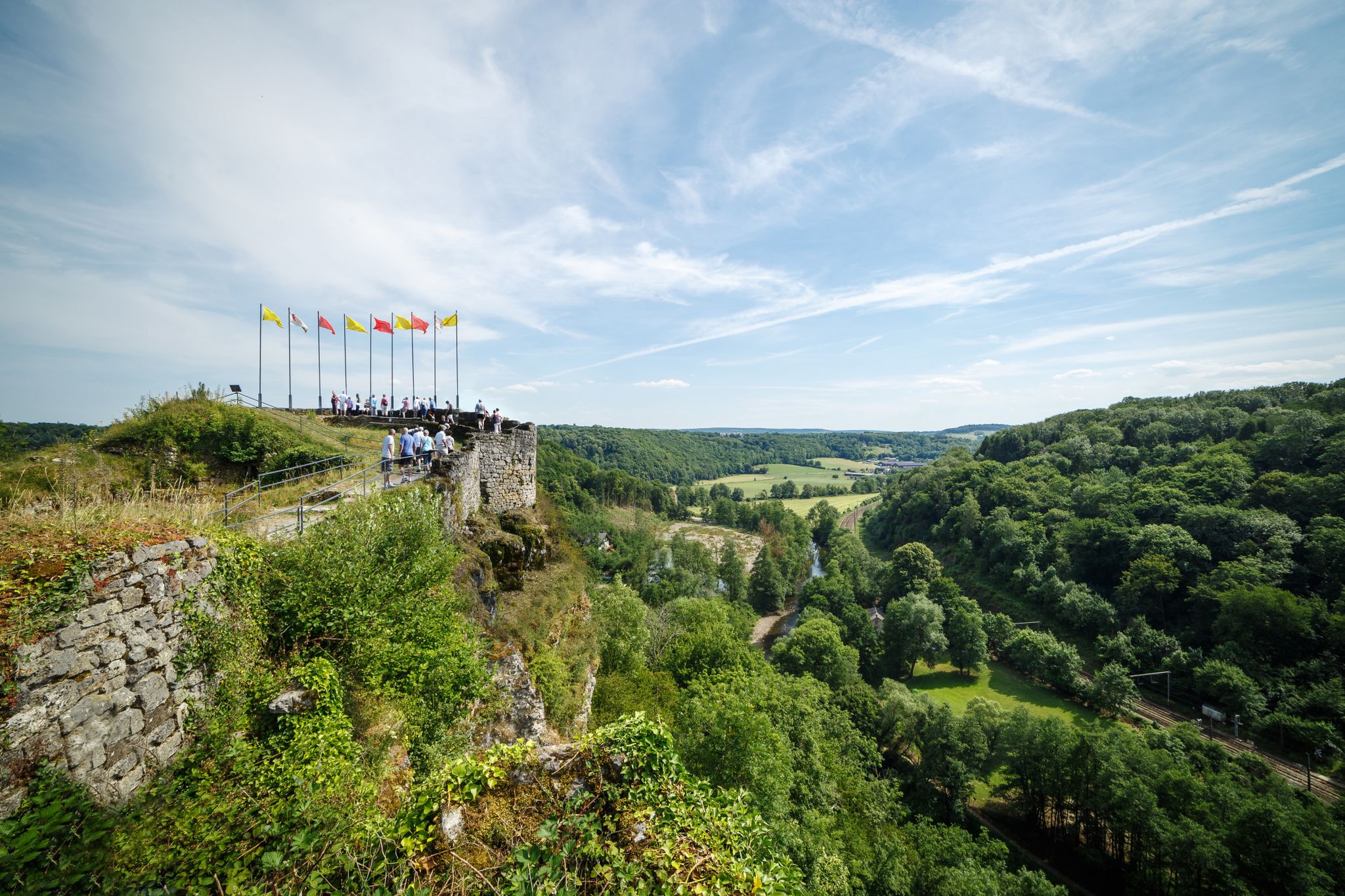
The exact origins of the medieval County of Moha remain unknown. It is likely that the county was formed during the fragmentation of the Carolingian Empire and the Hesbaye region at the end of the 9th century. The first known count, Albert of Moha, is mentioned in a document dated 1026 or 1028. The first defensive stone walls also date from the first half of the 11th century. Having no male heir, Albert of Moha married his daughter to Henry I of Dasbourg around 1050, thus linking the county's destiny to that of this powerful family of Alsatian origin. Initially, it is highly unlikely that the Counts of Dasbourg regularly resided in Moha, entrusting the county's administration to trusted men and a small garrison. However, the situation changed with Hugh II (1130-1180) and his son Albert II (d. 1212), who decided to become more involved in the region's politics. Albert II, in particular, chose to align his interests with those of his nephew, Duke Henry I of Brabant, whose policies he would follow until the end of the 12th century. In 1204, Count Albert III, having lost hope of having a son, chose the Prince-Bishop of Liège as his heir. But the late birth of his daughter Gertrude would jeopardize these agreements. Quickly betrothed to Thibaut of Lorraine, who died in 1219, she then married Thibaut of Champagne, who repudiated her, and subsequently Simon of Linange. At 19, she died childless. On March 19, 1225, the Prince-Bishop of Liège, Hugues de Pierrepont, took possession of Moha. Under the Prince-Bishops, Moha became a prison for political prisoners and a fortification tasked with controlling the city of Huy and blockading merchants. This policy was deeply unpopular and led to reprisals: the people of Huy besieged Moha in 1255. The fortress of Moha was considered impregnable. It was therefore through trickery that the people of Huy, taking advantage of a request for a truce, seized the castle on May 6, 1376. After the attack on the castle, the site's history is largely unknown. Mass is still celebrated twice a year in the castle chapel. During the 18th century, the ruins served as a refuge for a hermit. The castle's stones were gradually plundered, notably to build the surrounding houses. In 1889, the ruins of the castle were purchased by the Belgian state. Source: https://chateaumoha.be/histoire
6
0
Frequently Asked Questions
What unique geological features can I explore near Huy?
The region around Huy offers several interesting geological sites. You can visit the Moha Quarry within the Burdinale-Mehaigne Natural Park, known for its 350-million-year-old marine limestone and an educational 'Promenade de la Pierre'. Another fascinating site is the Poudingue d'Ombret Trail, where you can observe ancient river delta sediments and quartz pebbles that formed a natural concrete. Further afield, in the German Huy ridge, you can find Daneil's Cave, a natural cave adding a geological point of interest to the forested landscape.
Are there family-friendly natural monuments around Huy?
Yes, several natural monuments near Huy are suitable for families. Modave Castle, set within a nature reserve, offers a historical site with natural surroundings that can be enjoyed by all ages. The Amay Gravel Pit is another family-friendly natural monument, providing a lake and nature reserve environment for exploration. The Burdinale-Mehaigne Nature Park, with its diverse landscapes, also offers many accessible areas for family outings.
What kind of nature trails can I find around Huy?
Huy is surrounded by diverse nature trails. The Solières Valley offers picturesque scenery ideal for walks along the Solières river. Tihange Wood provides magnificent woodlands for strolls. Within the Burdinale-Mehaigne Nature Park, you can explore areas like Champia Wood, a nature reserve with rich biodiversity across forests, hedges, and meadows. For more structured routes, you can find various running trails around Huy, including the Trou Manto – Solières Stream loop.
Where can I go for wildlife spotting near Huy?
For wildlife spotting, the Burdinale-Mehaigne Nature Park is an excellent choice, particularly Champia Wood, which is a site of great biological interest known for its diverse plants, birds, and special bee species. The protected marshy meadows around the Hosdent Frog Fountain are crucial wetlands supporting typical flora and fauna. Additionally, the wetland of recognized botanical interest near the Meuse, originating from former clay pits, is a significant site for numerous dragonfly species and features an alluvial forest.
What are some less-known natural gems around Huy?
Beyond the popular spots, you can discover hidden gems like the Trou Manto, a cave located in a forest, offering a more challenging and secluded natural experience. The Larbois Sand Quarry, though a former quarry, has transformed into a natural monument with a lake, providing a unique blend of historical and natural interest. The Hoyoux River, known as Belgium's fastest, offers walks with opportunities to see many beautiful waterfalls, which are often less frequented.
What outdoor activities can I do near these natural monuments?
The area around Huy is perfect for various outdoor activities. You can enjoy road cycling on routes like the Côte de Niaster Climb – Côte de La Redoute Climb loop. For more leisurely cycling, explore routes like the Ourthe Valley. Hiking and running are also popular, with trails such as the Wanze Bas-Oha Trail. Many natural monuments, like the Sy Rocks, also offer opportunities for climbing.
Are there any natural monuments with historical significance near Huy?
Yes, several natural monuments around Huy are intertwined with history. Moha Castle, a medieval feudal castle built on a rock at the confluence of rivers, is a prime example where natural geology provided strategic importance for a historical site. The Modave Castle also sits in the heart of a nature reserve, dominating the Hoyoux valley, showcasing a historical structure within a significant natural setting.
What is the best time of year to visit the natural monuments around Huy?
The natural monuments around Huy offer beauty throughout the year. Spring and autumn are particularly pleasant for hiking and exploring, with mild temperatures and vibrant foliage or blooming flora. The Solières Valley, for instance, offers picturesque scenery throughout all four seasons. Summer is ideal for longer days and enjoying outdoor activities, while winter can offer a serene, snow-covered landscape, especially in areas like the Huywald in Germany, which is one of Central Europe's largest beech forests.
Are there any viewpoints offering panoramic views of the natural landscape?
Absolutely. The Lovely distant view of the Sy rocks provides a spectacular perspective of the limestone rock faces from the opposite bank of the Ourthe river. The Sy Rocks themselves offer natural trails with breathtaking views. The Rock of the Virgin is another natural monument known for its viewpoint. Additionally, the Buchenberg, the highest point of the Huy ridge in Germany, offers elevated views of the surrounding area.
What do visitors enjoy most about the natural monuments around Huy?
Visitors frequently praise the spectacular views and the raw, untouched nature of the region. Many enjoy the challenging yet rewarding trails, especially those with dizzying heights like the Sy Rocks. The blend of natural beauty with historical sites, such as Modave Castle, is also highly appreciated. The komoot community has shown significant engagement, sharing over 210 photos and giving more than 450 upvotes, highlighting the diverse appeal of these natural attractions.
Are there natural monuments suitable for dog walking near Huy?
Many natural areas around Huy are suitable for dog walking, offering open spaces and trails. The extensive woodlands of Tihange Wood and the various paths within the Burdinale-Mehaigne Nature Park are generally dog-friendly. Always ensure your dog is under control and check for any specific local regulations regarding pets in nature reserves or protected areas.
What kind of river-related natural monuments can I find?
The region is rich in river-related natural monuments. The Solières Valley follows the Solières river, offering picturesque walks. The Hoyoux River is known for being Belgium's fastest, and walks along its course near Huy provide opportunities to see many beautiful waterfalls. The Ourthe river is central to the experience of the Sy Rocks and the Lovely distant view of the Sy rocks, where you can admire the rock faces from its banks. There's also a wetland of recognized botanical interest near the Meuse, featuring an alluvial forest characteristic of marshy areas.
Most popular routes around Huy
Most popular attractions around Huy

Get inspired with the komoot mobile app


Didn’t find what you were looking for?
Find even more amazing natural monuments around Huy by checking out the top Highlights region by region:
Explore more
Extend your search for the best caves by checking out these guides of the top ones around Huy:
