Top 7 Natural Monuments around Bolòtana/Bolotana
Best natural monuments around Bolòtana/Bolotana are found within the Marghine mountain range in central Sardinia. This region features dense forests, scenic peaks, and waterfalls. The landscape offers diverse experiences, from tranquil walks to panoramic vistas. Bolòtana/Bolotana provides a variety of natural features for exploration.
Best natural monuments around Bolòtana/Bolotana
- The most popular natural monuments is Punta Palai, a summit that offers spectacular panoramic views. A hike to this peak is highly worthwhile for its vistas.
- Another must-see spot is…
Last updated: May 16, 2026
Punta Palai
Highlight • Summit
Translated by Google •
Tip by

Sacred Spring of Su Lumarzu
Highlight • Historical Site
The paved rectangular atrium …
Translated by Google •
Tip by

Sign up now to discover places like this
Get recommendations on the best single tracks, peaks, & plenty of other exciting outdoor places.
Sign up for free
Riu Ilde Waterfall
Highlight • Waterfall
Translated by Google •
Tip by

Domus de Janas of Sant'Andrea Priu
Highlight • Historical Site
The once 20 Domus de Janas (rock tombs) of Sant' Andria Priu (Italian: Ipogeo S. Andrea Priu) are located in a 10-meter-high trachyte wall on the southern edge …
Translated by Google •
Tip by

Shepherds' Huts and Archaeological Area of Ortachis
Highlight • Historical Site
Translated by Google •
Tip by

Sign up for free to discover even more natural monuments around Bolòtana/Bolotana.
Sign up for free
Already have an account?
Start today with a free account
Your next adventure awaits.
Login or Signup
Popular around Bolòtana/Bolotana
Tips from the Community

Here the Riu Ilde rushes and gurgles wonderfully.
1
0
A short walk through the wonderfully green forest leads to this pretty waterfall. It gurgles and splashes wonderfully. The Riu Ilde is relatively easy to cross at a slightly higher elevation, allowing you to get even closer to the waterfall.
1
0
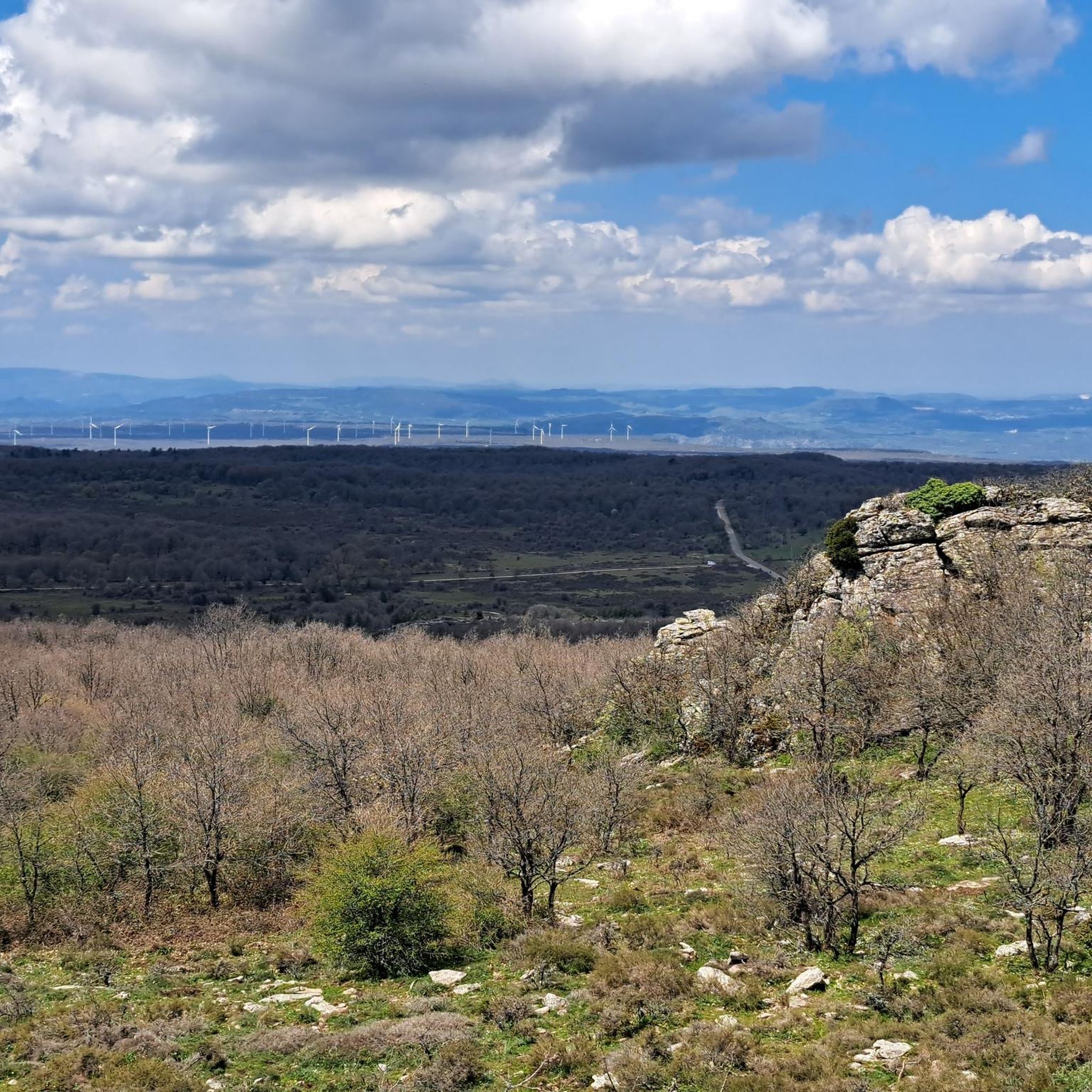
A hike to Punta Palai is highly worthwhile. In good weather, the views are spectacular.
1
0

Visible from the road, accessible through a gate (or by climbing over the low wall) you can see the ruins of old shepherds' huts, old houses and the remains of megalithic constructions (such as the base of an unusually built nuraghe resting on a rock face).
2
0

from Wikipedia: The once 20 Domus de Janas (rock tombs) of Sant' Andria Priu (Italian: Ipogeo S. Andrea Priu) are located in a 10-meter-high trachyte wall on the southern edge of the Campeda plateau near Bonorva in the metropolitan city of Sassari on Sardinia. The 15 preserved structures date from the Ozieri culture (around 3000 BC).
0
0


Very nice little walk with the reward of a pretty waterfall and a park with table and barbecue
1
0
The monument, a small cult spring from the Nuragic period, consists of an atrium and a small cell where the vein of the spring is collected. The paved rectangular atrium (5.15 x 1.80 m) has seating along the walls (height 0.30 m; width 0.40 m) and a small alcove. The masonry (height 2 m; width 3 m) consists of regular rows of carefully squared basalt blocks. From the atrium one enters the small cell through an entrance with a trapezoidal light (0.65 m wide; 0.64 m high) obtained in a monolithic slab. The small room (diameter 0.97 m; height 1.60 m), built of roughly worked but carefully joined blocks of basalt, has a "tholos" roof closed by a large horizontal slab. In Christian times, a Latin cross was engraved on the underside of the end plate. The water flows through a channel carved into the sill of the entrance to the spring to a drainage channel built under the floor of the atrium itself. The settlement of the place lasted until late antiquity, as evidenced by coins from the fourth century. AD Found in the time of Taramelli while clearing the porch. Source: http://www.sardegnacultura.it/j/v/253?v=2&c=2488&t=1&s=21393
0
0
Frequently Asked Questions
What natural features can I explore around Bolotana?
The Bolotana area, nestled in the Marghine mountain range, offers a variety of natural features. You can discover dense forests like Badde Salighes and Ortachis Forest, scenic peaks such as Punta Palai, and captivating waterfalls like Riu Ilde Waterfall and Mularza Noa Waterfall. The region provides diverse experiences, from tranquil walks to panoramic vistas.
Where can I find panoramic views in the Bolotana area?
For spectacular panoramic views, a hike to Punta Palai is highly recommended. Reaching elevations between 700 and over 1,000 meters, it offers expansive vistas, especially on clear days, providing a wonderfully quiet and peaceful experience.
Are there any notable forests to visit near Bolotana?
Yes, the region boasts beautiful forests. Badde Salighes Forest is known for its dense holm oak trees and cooler mountain air, offering a contrast to coastal landscapes. Within it, you can find the Agora dei Tassi, home to ancient yew trees. Another significant forest is Ortachis Forest, characterized by holm oaks and cork trees, where nature and traditional rural life coexist.
Are there waterfalls to see around Bolotana?
Absolutely. You can visit the Riu Ilde Waterfall, a pretty waterfall located within a wonderfully green forest, accessible via a short walk. Another beautiful, albeit small, waterfall is Mularza Noa Waterfall, fed by the Biralotta River and also accessible via hiking trails.
Are there historical or archaeological natural monuments in the region?
Yes, the area is rich in historical natural monuments. The Sacred Spring of Su Lumarzu is a Nuragic-period cult spring with a perpetually active water vein. You can also explore the Domus de Janas of Sant'Andrea Priu, ancient rock tombs carved into a trachyte wall. Additionally, the Santuario Nuragico di Janna 'e Pruna and Su Notante features an ancient temple and a sacred spring dedicated to the cult of water. More information on this site can be found on the Italian Ministry of Culture website: cultura.gov.it.
Are there family-friendly natural monuments around Bolotana?
Yes, the Riu Ilde Waterfall is considered family-friendly. It involves a short, pleasant walk through a green forest, leading to a charming waterfall, and often has picnic facilities nearby, making it suitable for families.
What outdoor activities can I do near these natural monuments?
The Bolotana area offers various outdoor activities. You can find numerous hiking trails, including a moderate loop connecting Punta Palai and Riu Ilde Waterfall. There are also road cycling and mountain biking routes available. For detailed routes and options, you can explore the hiking guide, road cycling guide, and MTB trails guide for Bolotana.
Are there hiking trails near these natural monuments?
Yes, there are several hiking trails. For example, you can take a moderate 8.5 km loop trail that includes both Punta Palai and Riu Ilde Waterfall. An easier 6.6 km loop connects Mularza Noa Waterfall with Riu Ilde Waterfall. More hiking options can be found in the hiking guide for Bolotana.
What is the best time of year to visit the natural monuments around Bolotana?
The spring and summer months are ideal for visiting the natural monuments, especially for places like Badde Salighes Forest, where the cool mountain air provides a pleasant escape. Autumn is also highly recommended for Ortachis Forest, known for its vibrant fall foliage. For hiking to peaks like Punta Palai, good weather is key for enjoying the spectacular views.
What do visitors enjoy most about the natural monuments in Bolotana?
Visitors particularly enjoy the spectacular views from summits like Punta Palai and the peaceful experience it offers. The Riu Ilde Waterfall is appreciated for being a rewarding destination after a short, pleasant walk through a green forest. The historical sites, such as the Sacred Spring of Su Lumarzu, are valued for their ancient significance and unique construction.
Are there any ancient yew trees to see in the Bolotana area?
Yes, within the Badde Salighes Forest, you can find the Agora dei Tassi, an area renowned for its ancient, even millennial, yew trees (tassi). Their broad, contorted trunks and unique branch formations create a distinctive, fairytale-like atmosphere.
Can I find archaeological remains related to traditional pastoral life?
Yes, the Shepherds' Huts and Archaeological Area of Ortachis offers a glimpse into the region's past. Here, you can see the ruins of old shepherds' huts, ancient houses, and remains of megalithic constructions, including the base of an unusually built nuraghe, showcasing the long history of human interaction with the natural landscape.
Most popular routes around Bolòtana/Bolotana
Most popular attractions around Bolòtana/Bolotana

Get inspired with the komoot mobile app


Explore more
Extend your search for the best caves by checking out these guides of the top ones around Bolòtana/Bolotana:
