Top 12 Natural Monuments around Scopa
Natural monuments around Scopa offer a diverse landscape for exploration, situated within the broader Valsesia region. This area features prominent mountain summits and serene lakes, providing various natural attractions. The terrain includes challenging mountain ascents and accessible natural features. Scopa's natural environment is characterized by its mountainous topography and water bodies.
Best natural monuments around Scopa
- The most popular natural monuments is Summit of Monte Barone, a summit that reaches a height of 2044 m in the Biella Alps.…
Last updated: June 28, 2026
Summit of Monte Barone
Highlight • Summit
Translated by Google •
Tip by

Labirinto di Stavello
Highlight • Structure
Translated by Google •
Tip by

Sign up now to discover places like this
Get recommendations on the best single tracks, peaks, & plenty of other exciting outdoor places.
Sign up for free
Monte Tre Croci (919 m)
Highlight • Summit
Translated by Google •
Tip by

Monte Bo in Valsesia
Highlight • Summit
Translated by Google •
Tip by

Picnic Area in the Forest
Highlight • Rest Area
Translated by Google •
Tip by

Sign up for free to discover even more natural monuments around Scopa.
Sign up for free
Already have an account?
Start today with a free account
Your next adventure awaits.
Login or Signup

Tips from the Community

Summit.... Breathtaking view
0
0

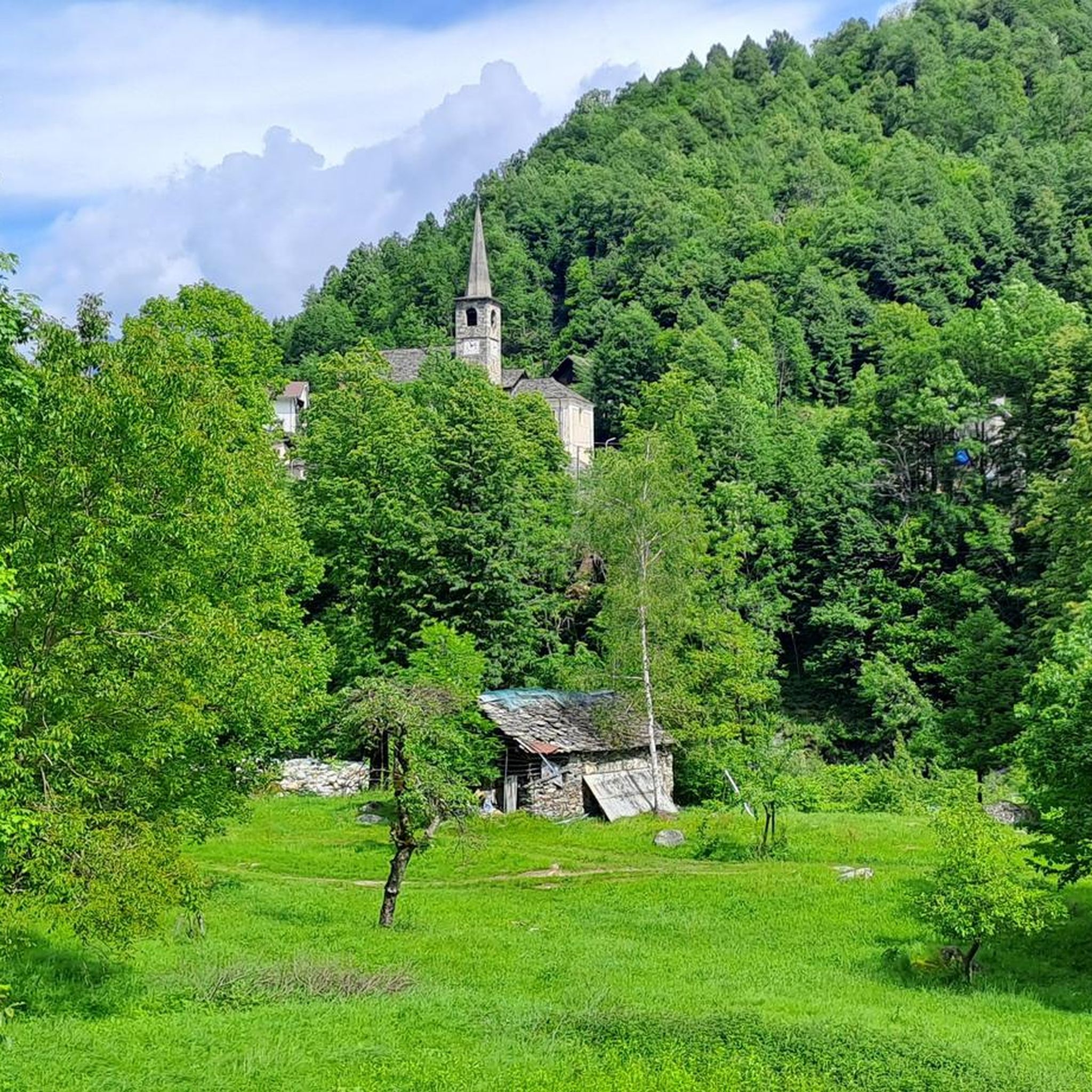
Not just one cross greets the (mountain) hiker up here, but a group of three crosses – as the name "Monte TRE CROCI" suggests – we find on this mountain. A wayside cross or summit cross commemorates Jesus Christ, and always the one in the center. The two slightly smaller crosses standing to the sides were not erected here without reason: According to biblical tradition, Jesus Christ was not condemned to death by crucifixion and executed alone, but together with two criminals (see, for example, the Evangelist Luke 22:33): + "They came to the place called the Place of the Skull, and there they crucified him and the criminals, one on his right and the other on his left." +
0
0

The Stavello Labyrinth is one of the attractions of the Oasi Zegna, located in Bocchetta di Stavello in the municipality of Valdilana (BI). Built in 2021 on an area previously occupied by bowling greens, the labyrinth is a large stone spiral with a diameter of 29 meters, inspired by the Cretan model with 11 spirals. The path, over 480 meters long, was built using local stones of various shapes and sizes. Designed as a meditative path, the labyrinth invites visitors to an experience of introspection and awareness. Its unicursal path, which recalls the shape of a brain, symbolizes the inner journey of the human being. Walking through the labyrinth slowly and in silence allows you to reflect on yourself, promoting a deep connection with the surrounding nature and with your own interiority. It is an experience accessible to everyone, without technical difficulties, ideal for those looking for a moment of pause and reflection immersed in the greenery of the Oasi Zegna.
1
0


Of this mountain, after well over a hundred climbs, I know all the sides, it's a shame that some of the slopes inside the Val Sessera, e.g. the one for Rattarun and then Alpe Boscoso then climbing to Navagli and Alpe Campo and Cima ... are, for some stretches in the lower valley, a bit swallowed up by vegetation. The normal route from Ciota to the refuge is very popular, but for example the descent via Spelonca-Cascinetta still offers a nice ring that is more "wild" and very little frequented.
1
0

Monte Bo on the ridge that divides Val Sorba from the Meggiana basin, panorama towards the Monte Rosa group and the main groove of Valsesia.
1
0

Monte Bo di Valsesia is located at 2072 meters. Monte Bo is located on the watershed crest that divides Val Sorba from the Meggiana basin. The ridge originates from the Testone delle Tre Alpi, from which the Bo is separated by a collar called Colma Colora or Bocchetta del Bo (2,023 m). From the summit you can admire the Monte Rosa group and Valsesia. On the top, in addition to a statue of the Madonna, there is the trigonometric geodetic point of the IGM called Monte Bo di Valsesia.
1
0

This, 300 meters long, 50 meters wide, 3 to 5 meters deep, is surrounded by stony ground and is characteristic for the gathering and mating of toads in the weeks leading up to Easter. With no surface outlet, it splits in two in periods of drought, while in the event of heavy rain it tends to overflow.
0
0
Frequently Asked Questions
What kind of natural monuments can I explore around Scopa?
The area around Scopa, situated within the broader Valsesia region, offers a diverse landscape. You can explore prominent mountain summits, serene lakes, and unique natural features. The terrain includes challenging mountain ascents and more accessible natural attractions.
Are there any natural monuments suitable for families or those seeking an accessible experience?
Yes, the Labirinto di Stavello is a unique natural monument that is wheelchair accessible. It's a large stone spiral designed as a meditative path, offering an experience accessible to everyone without technical difficulties.
What are some notable viewpoints among the natural monuments?
Several natural monuments offer extensive views. From the Summit of Monte Barone, you can see across the Sessera valley and the Strona di Postua valley. Monte Bo in Valsesia provides views of the Monte Rosa group and the main groove of Valsesia. Additionally, Monte Tre Croci (919 m) is a viewpoint with religious significance.
Are there any lakes considered natural monuments in the area?
Yes, Sant’Agostino Lake is recognized as a natural monument. It's an area of significant scientific-naturalistic interest, known for its role as a breeding place for various toads.
What outdoor activities can I do near these natural monuments?
The Valsesia region around Scopa is excellent for various outdoor activities. You can find numerous routes for cycling, running, and mountain biking. For cycling, explore routes like the 'Val Sermenza Cycle Route to Carcoforo' or 'Rima from Balmuccia Cycle Route'. Running enthusiasts might enjoy the 'Alpe Seccio Art Trail' or loops in the Alta Valsesia and Alta Val Strona Natural Park. Mountain bikers can tackle routes such as 'Tour tra Valsesia e Val Sorba'. You can find more details on these activities in the Cycling around Scopa, Running Trails around Scopa, and MTB Trails around Scopa guides.
What are the difficulty levels for exploring the natural monuments and nearby trails?
The natural monuments and surrounding trails offer a range of difficulty levels. Summits like Monte Barone and Monte Bo in Valsesia are categorized as challenging. Other trails, such as those around Monte Tre Croci (919 m) or Sant’Agostino Lake, are considered intermediate. The Labirinto di Stavello is accessible to everyone.
What is the best time of year to visit the natural monuments around Scopa?
While specific seasonal details are not provided, the mountainous topography suggests that late spring, summer, and early autumn would generally offer the most favorable weather conditions for exploring summits and trails. Winter conditions could make some higher-altitude natural monuments challenging or inaccessible due to snow and ice.
Are there any tips for visiting Monte Barone?
Visitors to Monte Barone often note that while the normal route from Ciota to the refuge is popular, descending via Spelonca-Cascinetta offers a more 'wild' and less frequented ring. It's advisable to check current conditions, especially in colder months, as some areas might have ice, though crampons are not always needed.
What makes Monte Tre Croci a unique natural monument?
Monte Tre Croci (919 m) is unique because it features a group of three crosses at its summit, not just one. This site holds religious significance, commemorating Jesus Christ and the two criminals crucified with him, as suggested by its name and biblical tradition.
What can I expect to see at Monte Bo in Valsesia?
From the summit of Monte Bo in Valsesia, located at 2072 meters, you can admire panoramic views of the Monte Rosa group and the main groove of Valsesia. The top also features a statue of the Madonna and a trigonometric geodetic point.
Are there any specific natural parks or protected areas near Scopa that feature natural monuments?
The natural monuments around Scopa are situated within the broader Valsesia region. Many of the running and hiking routes mentioned, such as those from Pila to Alpe Casarolo or Boccioleto, are located within the Alta Valsesia and Alta Val Strona Natural Park, indicating that the area benefits from protected natural environments.
Most popular attractions around Scopa

Get inspired with the komoot mobile app


Explore more
Extend your search for the best caves by checking out these guides of the top ones around Scopa:
