Top 10 Natural Monuments around Larciano
Natural monuments around Larciano offer diverse natural attractions within the province of Pistoia. The region features significant geological formations, expansive marshlands, and historical sites integrated with natural landscapes. These areas provide opportunities to explore unique natural features and observe local flora and fauna.
Best natural monuments around Larciano
- The most popular natural monuments is Devil’s Rock (Pietramarina), a natural monument consisting of a large, isolated sandstone monolith. Steps carved into the stone allow visitors to climb to the top,…
Last updated: May 16, 2026
Devil’s Rock (Pietramarina)
Highlight • Natural Monument
Translated by Google •
Tip by

Faltognano Holm Oak
Highlight • Natural Monument
Translated by Google •
Tip by

Sign up now to discover places like this
Get recommendations on the best single tracks, peaks, & plenty of other exciting outdoor places.
Sign up for free
Pietramarina Archaeological Area
Highlight • Historical Site
Translated by Google •
Tip by
Etruscan Source
Highlight • Natural Monument
Tip by

Sasso di Pietra
Highlight • Natural Monument
Translated by Google •
Tip by

Sign up for free to discover even more natural monuments around Larciano.
Sign up for free
Already have an account?
Start today with a free account
Your next adventure awaits.
Login or Signup

Tips from the Community

The holm oak of Faltognano is a monumental tree that is over a century old and is located near the church of Santa Maria Assunta in Faltognano, in the municipality of Vinci in the province of Florence. It is a specimen of holm oak (Quercus ilex) that has a trunk circumference of 4.60 m, is 11 m tall and dates back to before 1750 according to the inventory of monumental trees of Tuscany (progressive n°47). Over time it has undergone numerous prunings and interventions that have partially reduced its size and grandeur and altered its shape, which was once more dome-shaped. The plant has suffered from fungal attacks in recent decades and requires periodic care; at the moment various safety systems have been installed such as ropes, supports and a railing around the trunk to prevent branches from falling and limit access. In 2007 it received the Touring Club Award, an award announced by the TCI consuls of Tuscany for monumental trees. It is the symbol of the community of Faltognano and is located a short distance from the birthplace of Leonardo Da Vinci and the center of the city of Vinci; a center that can be seen inside the wonderful panoramic view that can be enjoyed from the foot of the tree.
1
0

From the main path, a track branches off to the southwest that is easily accessible by bike (signs) and quickly leads to this large erratic boulder.
2
0

It is a beautiful and quite technical tour, especially the single trek Mario but also the Merlino asks... to be done in the sense that I did it. Otherwise I find it very difficult uphill..
0
0

Devil's Boulder. It is a particular monolith located on the edge of a plateau surrounded by centenary holm oaks, similar - with smaller dimensions - to the so-called Etruscan Pyramid of Bomarzo. On the boulder there are writings that probably date back to a couple of centuries ago and indecipherable signs but what is most striking are the deep grooves perhaps due to uses and rituals that are lost in the mists of time. It is called "The Devil's Boulder" and is surrounded by centuries-old holm oaks in the Pietramarina woods, one of the most mysterious environments of Montalbano. The boulder is located near an area occupied by an Etruscan settlement, perhaps a sacrificial altar renamed "of the devil" by Christians to exorcise its pagan affiliation or, as a legend has it, "of the devil" because the devil left the the imprint of his hoof. However, the “Masso di Pietramarina” makes this corner of Montalbano suggestive and mysterious. It was also in a strategic position, given that from the top it is possible to see the sea.
0
0
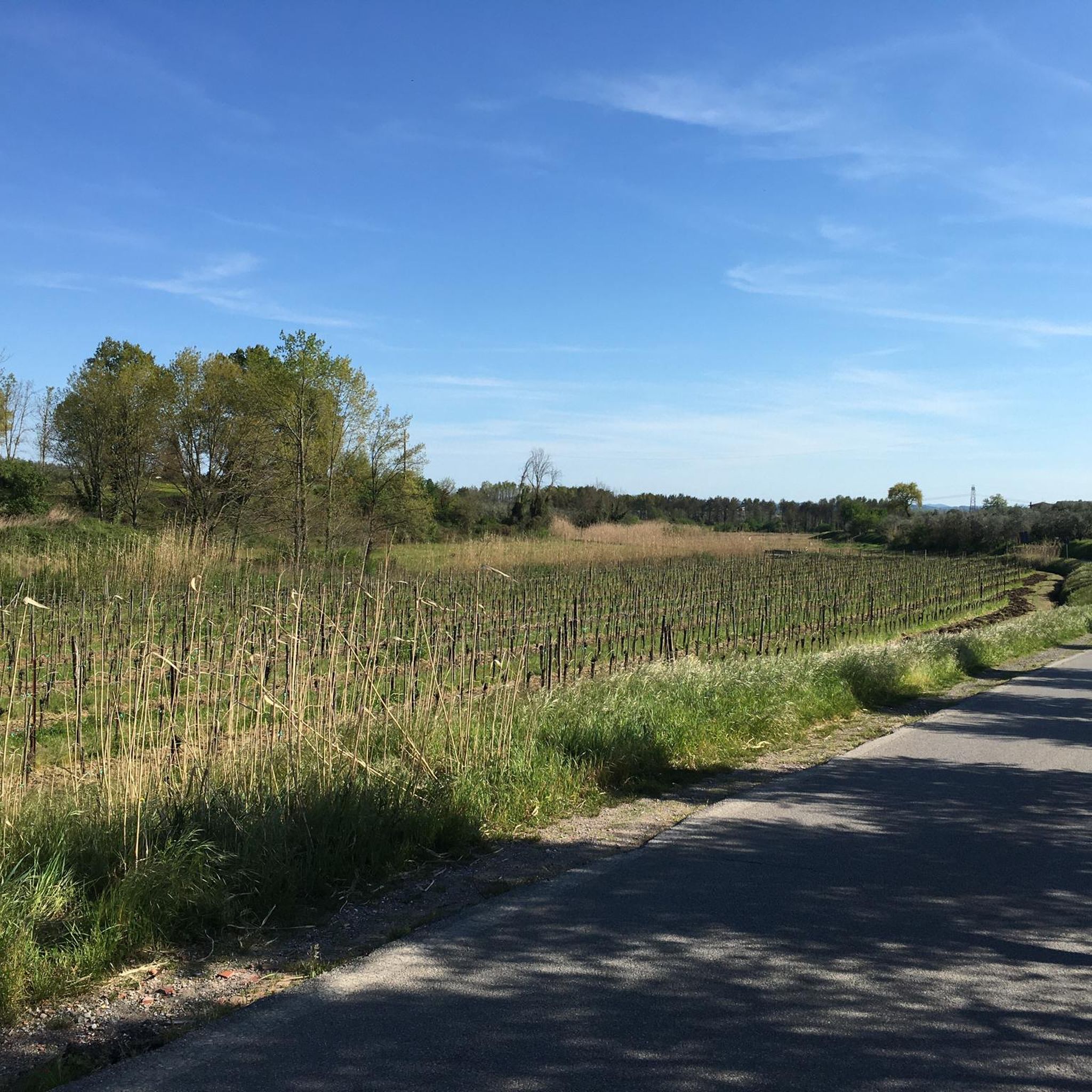
It is truly a beautiful place nestled in the woods and where there is a bit of history with the monumental vineyard.
0
0


Today 9/9/2023 not a drop of water came out 🥵
0
0

This small space in Montalbano is a real treasure that enriches the wonderful trails in the area. It is easily accessible and is located in a small square surrounded by nature. You can climb the rock to breathe deeply and admire the evocative atmosphere that envelops the place from its top. There are also a couple of chairs and a small table, perfect for a break. If you are passing by the mountain, I highly recommend you pay a visit.
1
0
Frequently Asked Questions
What unique natural formations can I explore near Larciano?
Near Larciano, you can explore the fascinating Devil’s Rock (Pietramarina), a large, isolated sandstone monolith within a holm oak forest. Local lore suggests an ancient engraving on the rock, and steps carved into the stone allow visitors to climb to the top for historical views.
Are there any significant wetlands or marshlands to visit for nature observation?
Yes, the Fucecchio Marshes (Padule di Fucecchio) are a major natural highlight near Larciano. This expansive freshwater marshland is one of Italy's largest, boasting a rich variety of plant life and approximately 200 species of birds, making it ideal for nature enthusiasts and birdwatchers, especially in the spring.
What historical natural sites are there around Larciano?
The Pietramarina Archaeological Area is a significant historical site integrated with the natural landscape, located on a strategic hilltop. Additionally, the Etruscan Source is a natural feature with historical significance, known as a starting point for trails and featuring remains of an Etruscan village nearby.
Are there any monumental trees or ancient flora to see?
Absolutely. The Faltognano Holm Oak is a beautiful monumental tree, aged around 200 years, located near the church of Santa Maria Assunta in Faltognano. It stands about 15 meters high and offers a beautiful panoramic view from its base.
What kind of views can I expect from the natural monuments?
Many natural monuments offer stunning views. From the top of Devil’s Rock (Pietramarina), historical accounts mention expansive views stretching to the sea and the distant island of Gorgona. The Pinone Climb (Vitolini–Montalbano) also provides a beautiful view of the valley, with the city of Florence visible in the distance.
What outdoor activities can I do near these natural monuments?
Near Larciano's natural monuments, you can enjoy various cycling activities. There are numerous road cycling routes, touring bicycle routes, and gravel biking trails. The 'La Fortezza' Trail on the southern slopes of Monte Pietramarina is particularly popular for mountain biking.
Are there family-friendly natural monuments around Larciano?
Yes, both the Faltognano Holm Oak and the Etruscan Source are considered family-friendly highlights, offering accessible natural beauty and historical interest suitable for all ages.
When is the best time to visit the natural areas around Larciano?
The Fucecchio Marshes are particularly rewarding for nature observation and birdwatching in the spring, when plant life is vibrant and many bird species are active. Generally, spring and autumn offer pleasant temperatures for exploring the outdoor natural monuments.
What do visitors enjoy most about the natural monuments in Larciano?
Visitors frequently appreciate the tranquility and suggestive atmosphere of places like Devil’s Rock, finding peace of mind upon reaching its summit. The beautiful panoramic views from spots like the Faltognano Holm Oak and the historical significance of sites like the Etruscan Source are also highly valued.
Can I find trails suitable for different difficulty levels near Larciano's natural monuments?
Yes, the area offers trails of varying difficulty. For instance, the Devil’s Rock and Etruscan Source are associated with intermediate trails, while the Pinone Climb is also considered intermediate. The 'La Fortezza' Trail is particularly suitable for mountain biking, often tackled downhill, suggesting a more challenging experience.
Are there opportunities for wildlife spotting in the natural areas?
The Fucecchio Marshes are a prime location for wildlife spotting, especially for birdwatching. The marshland is home to approximately 200 species of birds, including herons and cranes, making it a significant habitat for avian wildlife.
Most popular routes around Larciano
Most popular attractions around Larciano

Get inspired with the komoot mobile app


Explore more
Extend your search for the best caves by checking out these guides of the top ones around Larciano:
