Top 20 Natural Monuments around Carpineto Romano
Best natural monuments around Carpineto Romano are found within a landscape rich in karstic formations, caves, and chasms. Situated on the eastern slopes of the Lepini Mountains, the area's unique geology has shaped its natural features. This region offers a variety of natural landmarks for exploration, from mountain peaks to subterranean wonders.
Best natural monuments around Carpineto Romano
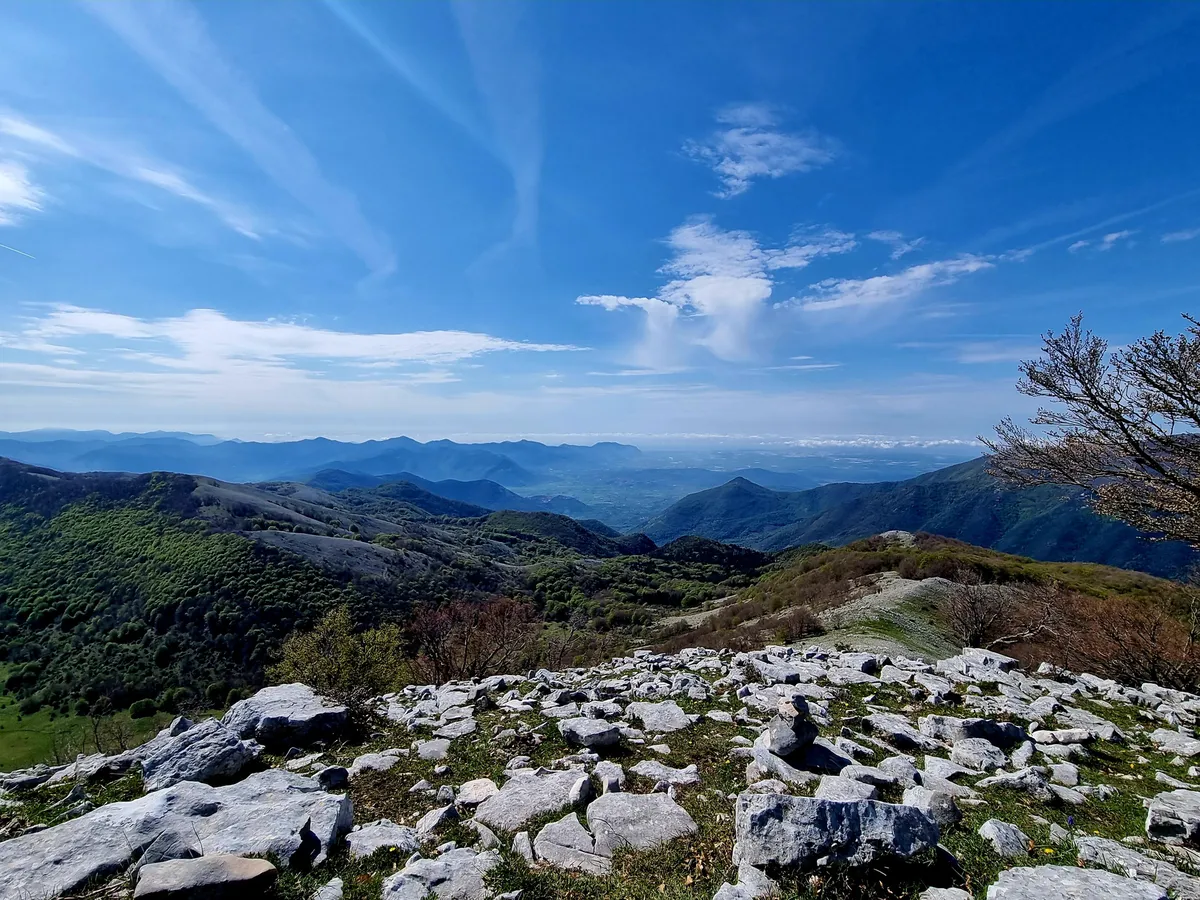
- The most popular natural monument is Monte Semprevisa (Daniele Nardi Peak), a summit that is the highest peak of the Lepini…
Last updated: August 21, 2026
Monte Semprevisa (Daniele Nardi Peak)
Highlight • Summit
Translated by Google •
Tip by

Giardini di Ninfa
Highlight • Natural Monument
Translated by Google •
Tip by

Sign up now to discover places like this
Get recommendations on the best single tracks, peaks, & plenty of other exciting outdoor places.
Sign up for free
Ninfa Gardens and Medieval Tower
Highlight • Historical Site
Translated by Google •
Tip by

Ouso di Passo Pratiglio Cave
Highlight • Cave
Translated by Google •
Tip by

Monte Malaina Summit
Highlight • Summit
Translated by Google •
Tip by
Sign up for free to discover even more natural monuments around Carpineto Romano.
Sign up for free
Already have an account?
Start today with a free account
Your next adventure awaits.
Login or Signup
Other adventures around Carpineto Romano

Tips from the Community

Beautiful made on Saturday 13th September by Bassiano 🤙
0
0

Very beautiful places and absolutely worth seeing ❤️
0
0

The Ouso di Passo Pratiglio is a cave that opens at an altitude of 1,360 meters on the south-east side of Mount Malaina. Discovered in 1976, it was explored in 1996 to a depth of -299 meters. Today it is the deepest cave in Lazio, with a depth of about 840 meters. ⚠️ Be very careful when approaching!
0
0

Highest peak of the Lepini.
0
0

For visits, consult the website of the Caetani foundation or the LIPU of Latina.
0
0

Beautiful place, I passed there along the southern Via Francigena
0
0

With its 1,480 meters of height, Mount Malaina is the second peak of the Lepini massif. The paths that climb to the summit from Gorga, Supino or Morolo are among the most solitary and wild of the mountain complex.
4
0
Mount Sempervisa is the highest peak of the Lepini mountains. Since 2019 it has been dedicated to the great local mountaineer Daniele Nardi, who trained here before making his expeditions to the Himalayas. This mountain has a unique view of the sea and the nearby Mount Circeo.
6
0
Frequently Asked Questions
What makes the natural monuments around Carpineto Romano unique?
The natural monuments around Carpineto Romano are unique due to their rich karstic formations, including numerous caves, chasms, and sinkholes. This geological landscape, nestled on the eastern slopes of the Lepini Mountains, offers a diverse range of features from towering peaks to subterranean wonders, showcasing significant biodiversity and ancient human history.
Which natural monuments offer the best panoramic views?
For breathtaking panoramic views, you should visit Monte Semprevisa (Daniele Nardi Peak), the highest point of the Lepini Mountains. From its summit, you can see the Tyrrhenian Sea and the distant Mount Circeo. Monte Malaina Summit also offers spectacular views from its 1,480-meter height.
Are there any family-friendly natural monuments to visit?
Yes, the Ninfa Gardens and Medieval Tower is an excellent family-friendly option. It's a natural oasis with diverse plant species set among medieval ruins, offering a unique blend of nature and history. Visitors can enjoy a guided tour showcasing carefully maintained natural habitats.
What kind of outdoor activities can I do near these natural monuments?
The area around Carpineto Romano's natural monuments is ideal for various outdoor activities. Hiking is very popular, with trails leading to peaks like Monte Semprevisa and Monte Capreo. Speleology is also a significant activity, especially for exploring deep chasms like Abisso Consolini and caves like Ouso di Passo Pratiglio Cave. You can find more hiking routes in the area on the Hiking around Carpineto Romano guide.
Are there specific hiking trails recommended for exploring the natural monuments?
Absolutely. For Monte Semprevisa, popular routes include the 'Monte Semprevisa Ring Trail from Pian della Faggeta' and the 'Loop of Mount Semprevisa from Carpineto Romano'. For Monte Capreo, consider the 'Anello di Monte Capreo da Pian della Faggeta'. These trails offer varying difficulties and immersive experiences in the Lepini Mountains. You can explore more options in the Hiking around Carpineto Romano guide.
What is the best time of year to visit the natural monuments around Carpineto Romano?
The best time to visit is generally during spring (April-June) and autumn (September-October) when the weather is mild and pleasant for hiking and exploring. Summer can be hot, especially for mountain ascents, while winter may bring snow to the higher peaks, making some trails more challenging or inaccessible.
What geological features are prominent in the region?
The region is characterized by its significant karstic geology. This includes numerous dolines (sinkholes), abysses, and extensive cave systems. Sites like Monte Capreo and Abisso Consolini exemplify these features, with the latter being one of the deepest chasms in Lazio, reaching approximately 600 meters.
Are there any historical or cultural aspects tied to these natural sites?
Yes, the area has a rich history. The unique geology has revealed Palaeolithic stone tools, indicating ancient human settlement. Monte Semprevisa was dedicated to local mountaineer Daniele Nardi, who trained there for his Himalayan expeditions. The Ninfa Gardens are built around the ruins of a medieval village, blending natural beauty with historical architecture.
What kind of wildlife can I expect to see in the Lepini Mountains?
The Lepini Mountains, particularly areas like Monte Capreo, are known for their rich biodiversity. Monte Capreo alone is home to a diverse avian population with 70 species of nesting birds. The lush beech forests mixed with yews and hollies provide a vibrant habitat for various flora and fauna.
How long should I plan for exploring the natural monuments?
The duration depends on the specific monument and your activity. A visit to Ninfa Gardens typically involves a guided tour. Hiking to the summit of Monte Semprevisa or Monte Capreo can be a full-day excursion, while exploring caves like Ouso di Passo Pratiglio Cave requires specialized equipment and significant time. Plan at least half a day for individual sites, and multiple days to explore several.
Are there opportunities for cycling or mountain biking near the natural monuments?
Yes, the region offers opportunities for cycling. You can find gravel biking routes in the area, such as the 'Ferrone-Forma Water Fountain – Torre dei Piscoli loop from Colleferro'. For mountain biking, trails like 'Salita al Monte Arrestino — Giro ad anello' are available. More details can be found in the Gravel biking around Carpineto Romano guide and the MTB Trails around Carpineto Romano guide.
What are some of the deeper chasms or caves in the area for experienced explorers?
For experienced speleologists, the region offers significant challenges. Abisso Consolini (Ouso Cerasolo), located in Pian della Faggeta, is a major speleological site and one of the deepest chasms in Lazio, reaching approximately 600 meters. The Ouso di Passo Pratiglio Cave is another notable site, known as the deepest cave in Lazio, with a depth of about 840 meters. These sites require extreme caution and specialized equipment.
Most popular routes around Carpineto Romano
Most popular attractions around Carpineto Romano

Get inspired with the komoot mobile app


Explore more
Extend your search for the best caves by checking out these guides of the top ones around Carpineto Romano:
