Top 20 Natural Monuments around Colledara
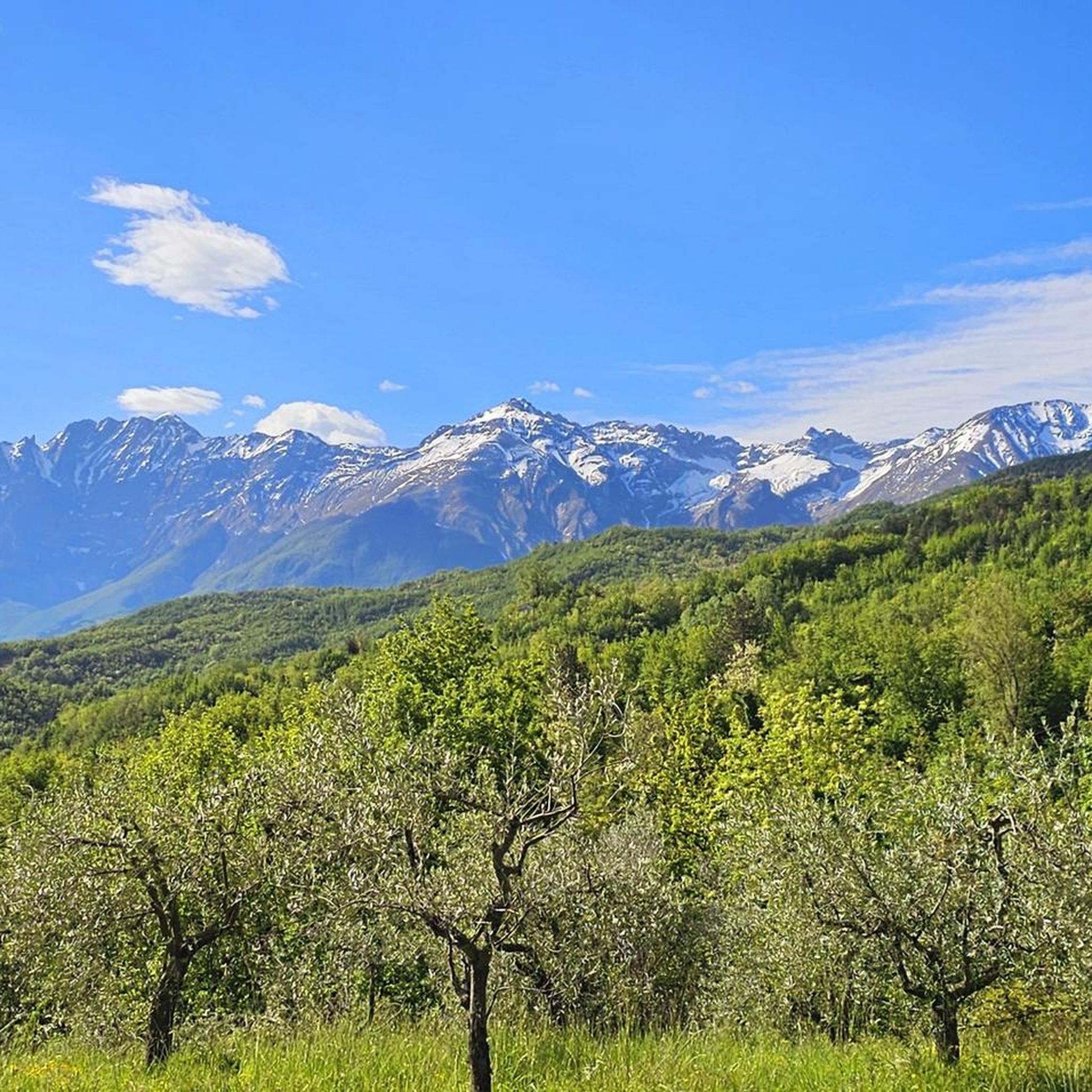
Best natural monuments around Colledara are found within a landscape characterized by rolling hills and views of the Gran Sasso massif. This region in the province of Teramo, Italy, offers access to the vast Gran Sasso and Monti della Laga National Park. The area provides diverse natural wonders, including high-altitude peaks, plateaus, and a regional nature reserve. It is an ideal destination for those seeking to explore significant geological features and varied natural environments.
Best natural monuments around Colledara
- The…
Last updated: May 15, 2026
Corno Grande Western Summit
Highlight • Summit
Tip by

Monte Aquila Summit
Highlight • Summit
The top characterized by a metallic red cross offers a breathtaking panoramic view.
Translated by Google •
Tip by

Sign up now to discover places like this
Get recommendations on the best single tracks, peaks, & plenty of other exciting outdoor places.
Sign up for free
The Madonnina (Gran Sasso)
Highlight • Viewpoint
Tip by

Corno Pass
Highlight • Mountain Pass
Translated by Google •
Tip by

Incredible view of Corno Piccolo
Highlight • Viewpoint
Translated by Google •
Tip by

Sign up for free to discover even more natural monuments around Colledara.
Sign up for free
Already have an account?
Start today with a free account
Your next adventure awaits.
Login or Signup
Tips from the Community

The Normal Route is a fairly simple route, except for the last 400 meters, the gully and the ridge, which, being EEA grade (expert equipped hikers), require considerable physical strength and technique. Mountaineering boots are also required, and a helmet is recommended. Since the ridge is also quite technical, it is absolutely not suitable for those with a fear of heights, the elderly, children, or anyone without mountaineering experience.
2
0

A Classic from Campo Imperatore, I recommend excursions even for those who are new to the area, beautiful panorama
0
0

We tried to walk around Corno Piccolo, but that is not possible without gear. Halfway we had te go back and then walked up to the Refugio. Very nice view and very nice walk.
0
0

The Madonnina is the point of reference for those who frequent the Gran Sasso. The cable car that goes up from Prati di Tivo arrives here. It is the starting point of the path that leads to the Franchetti refuge and the various summit paths. The path that goes up to the Madonnina from Prati di Tivo is however a beautiful excursion suitable for anyone.
2
1

From this point you have a beautiful view of the Corno Piccolo. Further west you can see Lake Campotosto. The rocky scenery is a real spectacle. The terrain up here is interesting and technical, but be careful where you step.
1
0

Mount Aquila (2,495 m) stands between Campo Imperatore and the Corno Grande. From his cross you can admire the valley of hell and also the Adriatic Sea.
0
0
The Western Peak, with its 2,912 meters, is the highest of the Gran Sasso massif and also the highest peak of the Apennines. It is part of the larger peak of Corno Grande which includes: Eastern Vetta (reachable with the fun Ricci ferrata from the Franchetti refuge), Torrione Cambi, Central Vetta and the simpler and more popular Western Vetta. The view from the top is spectacular, on clear winter days you can admire both seas!
4
2

The Corno Grande with its 2,912 meters above sea level it is the highest peak of the Apennines. It can be reached via the Via Normale or the Direttissima. Both trails require some attention.
3
1
Frequently Asked Questions
What are the most popular natural monuments to visit near Colledara?
The region around Colledara offers several highly-rated natural monuments. Among the most popular are Monte Aquila Summit, known for its panoramic views of the Gran Sasso area, and Corno Grande Western Summit, the highest peak in the Apennines offering extensive vistas. Visitors also appreciate The Madonnina (Gran Sasso), a viewpoint and religious site at 2050 meters.
Are there family-friendly natural monuments or walks around Colledara?
Yes, the area offers options suitable for families. While some high-altitude trails can be challenging, the path leading up to The Madonnina (Gran Sasso) from Prati di Tivo is considered a beautiful excursion suitable for many. The Gran Sasso and Monti della Laga National Park, accessible from Colledara, also has diverse landscapes where you can find less strenuous walks, though specific 'family-friendly' designations vary by trail.
What kind of geological features can I expect to see in the natural monuments near Colledara?
The natural monuments around Colledara are primarily characterized by the impressive geological formations of the Gran Sasso massif. You'll encounter high-altitude peaks like Corno Grande, vast plateaus such as Campo Imperatore, and rugged mountain passes like Corno Pass. These areas showcase dramatic alpine environments, scree slopes, and unique rock formations shaped by millennia of geological activity.
What is the best time of year to visit the natural monuments around Colledara?
The best time to visit largely depends on your desired activity. For hiking and exploring the high-altitude natural monuments like Corno Grande and Monte Aquila, the late spring, summer, and early autumn months (June to September) offer the most favorable weather conditions. During winter, these areas are often covered in snow, making them suitable for winter sports but requiring specialized equipment and experience. The temperate climate of the lower areas encourages lush vegetation, making them pleasant for trekking throughout much of the year.
What outdoor activities can I do near these natural monuments?
The region around Colledara, particularly within the Gran Sasso and Monti della Laga National Park, is excellent for various outdoor activities. You can enjoy extensive hiking, from moderate trails to challenging ascents like those leading to Corno Grande. There are also opportunities for mountain biking and road cycling, with routes traversing diverse landscapes from valleys to high plateaus.
Are there any easy hiking trails or beginner-friendly options near Colledara's natural monuments?
While many of the prominent natural monuments involve intermediate to challenging hikes, the area does offer some easier options. For instance, the path to The Madonnina (Gran Sasso) from Prati di Tivo is considered a beautiful and accessible excursion. Additionally, within the Regional Nature Reserve along the Fiume Fiumetto torrent, you can find guided tours that allow for immersion in unspoiled nature without extreme difficulty.
What are some of the best viewpoints in the natural monument areas?
The region is rich in spectacular viewpoints. Monte Aquila Summit offers a breathtaking panoramic view, marked by a metallic red cross. From Corno Grande Western Summit, you can experience truly spectacular panoramic views, sometimes even reaching both seas on clear winter days. Corno Pass also provides a wonderful view of the Gran Sasso massif.
What should I wear for hiking in the natural monuments around Colledara?
Given the varied terrain and altitudes, it's advisable to dress in layers. For high-altitude areas like the Gran Sasso peaks, sturdy hiking boots, waterproof and windproof outer layers, and warm clothing are essential, even in summer, as weather can change rapidly. For lower-altitude walks, comfortable hiking shoes and breathable clothing are suitable. Always check the weather forecast before heading out.
Where can I find cafes or refreshments near the natural monuments?
While the high-altitude natural monuments themselves may not have cafes directly on the summits, areas like Campo Imperatore and Prati di Tivo, which serve as starting points for many excursions, offer facilities. For example, Rifugio Carlo Franchetti, located at 2,433 meters, provides services and accommodations during the summer months. You'll find more options for cafes and restaurants in the towns and villages surrounding the national park, such as Colledara itself or Isola del Gran Sasso d'Italia.
Are there any specific natural monuments that are particularly challenging for experienced hikers?
Experienced hikers seeking a challenge will find it at Corno Grande Western Summit. As the highest peak in the Apennines, it involves a challenging climb on steep paths, with routes like the 'direttissima' requiring attention. Mount Brancastello, part of the Sentiero del Centenario, also offers a demanding experience for those looking to traverse the eastern crest of the Gran Sasso massif.
What makes the Gran Sasso and Monti della Laga National Park significant for natural monuments?
The Gran Sasso and Monti della Laga National Park, easily accessible from Colledara, is one of Italy's largest and most significant natural areas. It encompasses a diverse range of natural wonders, from the highest peaks of the Apennines like Corno Grande to the unique alpine environments of Campo Imperatore, which hosts Europe's second-highest alpine botanical garden. The park's rich biodiversity, including species like the golden eagle, and its vast, unspoiled landscapes make it a crucial area for conservation and outdoor exploration.
Can I find circular walks among the natural monuments near Colledara?
Yes, many hiking routes in the Gran Sasso area can be planned as circular walks. For instance, the ascent to Corno Grande can be done as a loop, following different trails up and down. The komoot community often shares routes that form circular paths, allowing you to experience diverse scenery without retracing your steps. You can explore various hiking guides for specific circular trail suggestions.
Most popular attractions around Colledara

Get inspired with the komoot mobile app


Explore more
Extend your search for the best caves by checking out these guides of the top ones around Colledara:
