Top 20 Natural Monuments around Český ráj
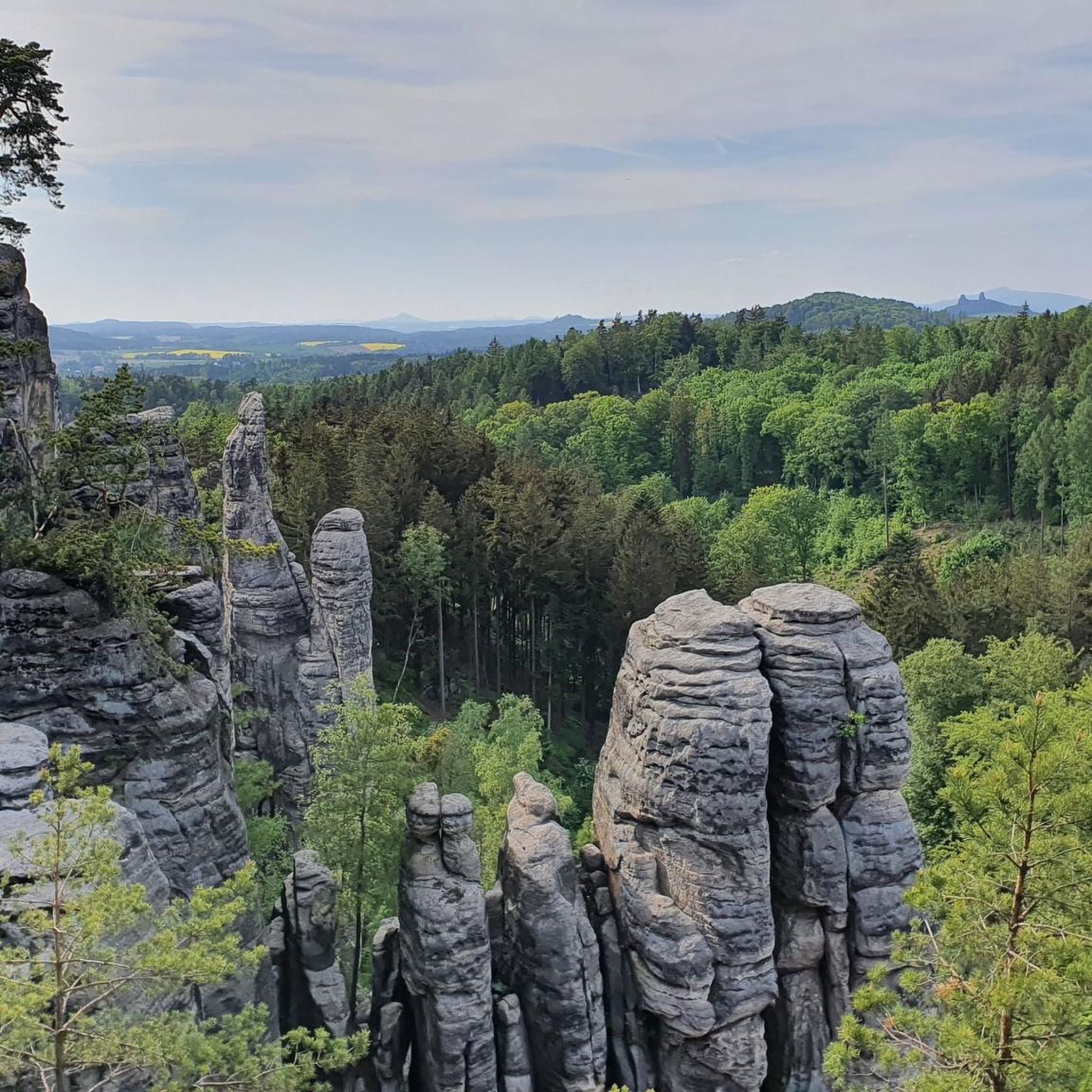
Best natural monuments around Český ráj, also known as Bohemian Paradise, is a UNESCO Global Geopark recognized for its unique sandstone rock formations. These geological features, shaped by millions of years of erosion, create a distinctive landscape of rock cities, gorges, and caves. The region offers a variety of natural features for exploration, including dramatic rock pillars and extensive cave systems.
Best natural monuments around Český ráj
- The most popular natural monument is Prachovské Rocks, a natural reserve featuring…
Last updated: May 14, 2026
Prachovské Rocks
Highlight • Natural Monument
Various routes and viewpoints.
More information: prachovskeskaly.com/en and de.wikipedia.org/wiki/Prachovsk%C3%A9_sk%C3%A1ly
Translated by Google •
Tip by

Narrow passages and steps in Prachovské Skály (Prachovské Rocks)
Highlight (Segment) • Gorge
Tip by

Sign up now to discover places like this
Get recommendations on the best single tracks, peaks, & plenty of other exciting outdoor places.
Sign up for free
Trosky Castle
Highlight • Castle
Visitation costs, but inexpensive.
More information: hrad-trosky.eu/en
Translated by Google •
Tip by
Hruboskalsko Rock Labyrinth
Highlight • Gorge
Translated by Google •
Tip by

Stairway Through the Rock Crevice
Highlight • Gorge
Translated by Google •
Tip by
Sign up for free to discover even more natural monuments around Český ráj.
Sign up for free
Already have an account?
Start today with a free account
Your next adventure awaits.
Login or Signup

Tips from the Community

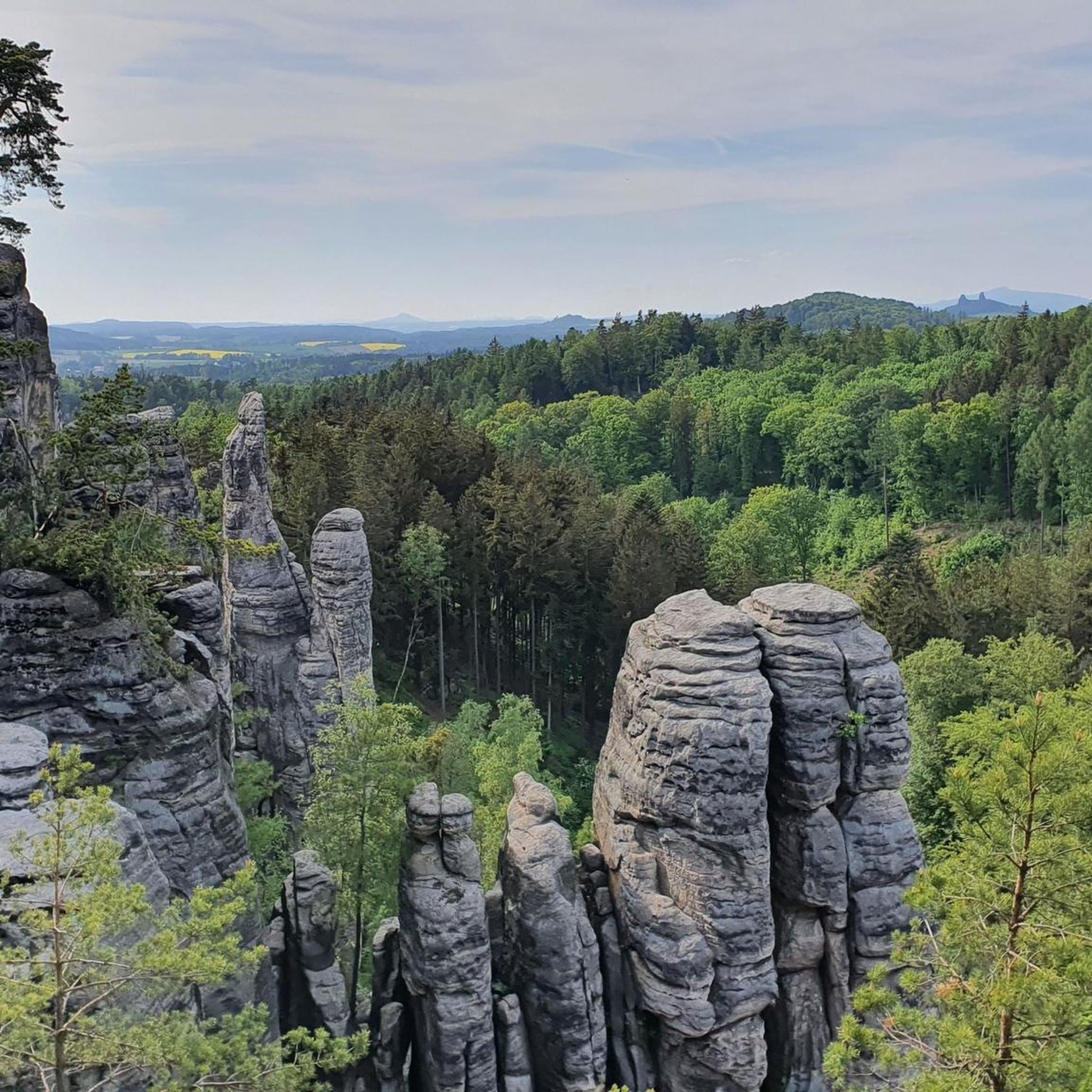
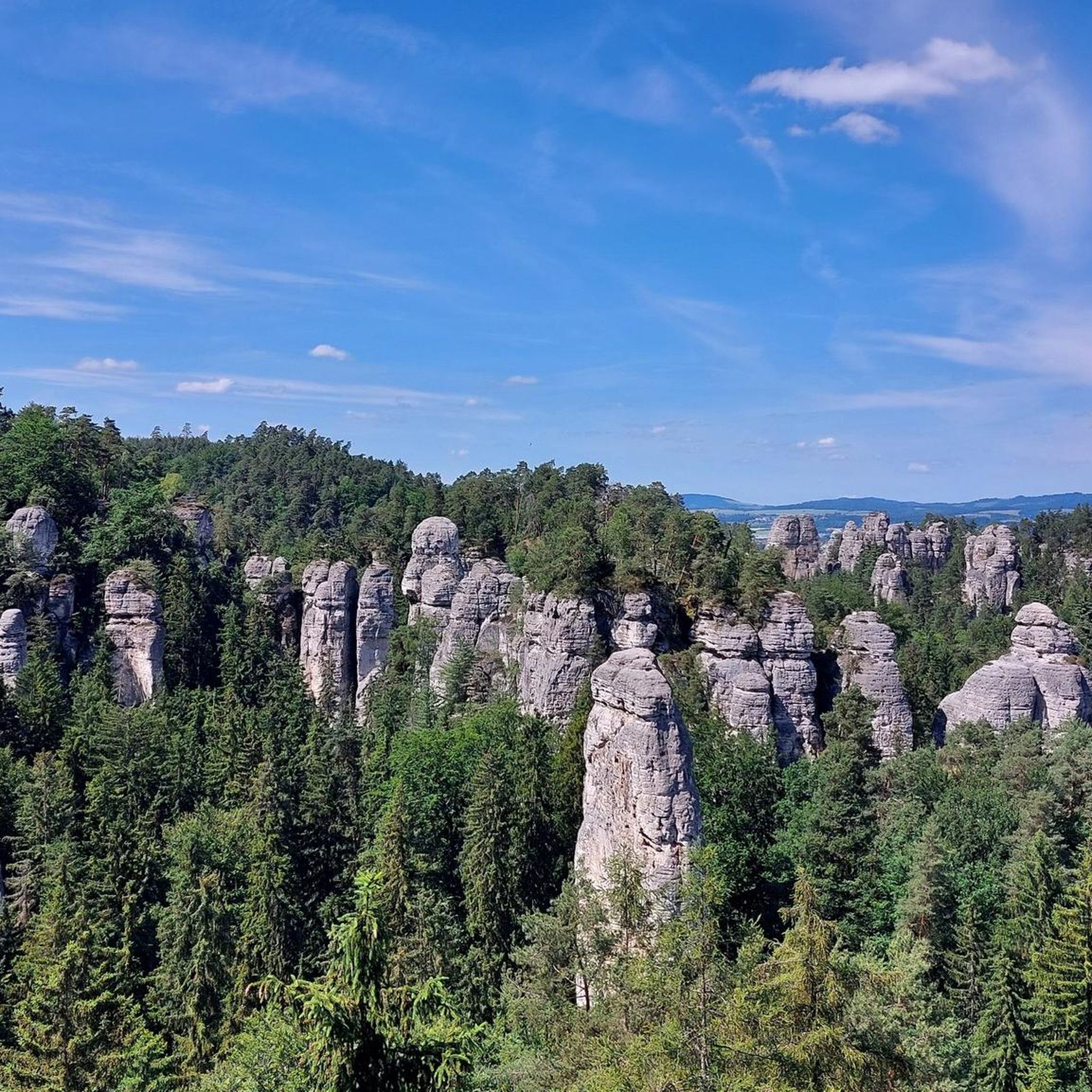
Hruboskalsko is a nature reserve declared on April 22, 1998. With an area of 219.2 ha, it is among the largest rock towns in the Protected Landscape Area Český ráj. The reason for protection is an extensive rock town with preserved relic pine forests. The Hruboskalsko rock town includes hundreds of rock massifs and independent towers, reaching heights of up to 60 m. Due to the low resistance of sandstone and the constant effect of various influences, the rocks are rich in the most diverse shapes and forms (honeycombs, windows, gates).
1
0
Hrubá Skála is a picturesque village in the heart of Bohemian Paradise, near Turnov. The dominant feature here is Hrubá Skála Castle, built on a sandstone rock massif as early as the 14th century. The village has a rich history, first mentioned in writing in 1360, and offers an ideal starting point for discovering the beauty of the surrounding nature.
1
0

The Böhnische Paradies (Böhnian Paradise) is one of the most beautiful hikes we've done in recent years! Some sections really test your sense of balance! Everything is very well marked and described – top marks!
0
0
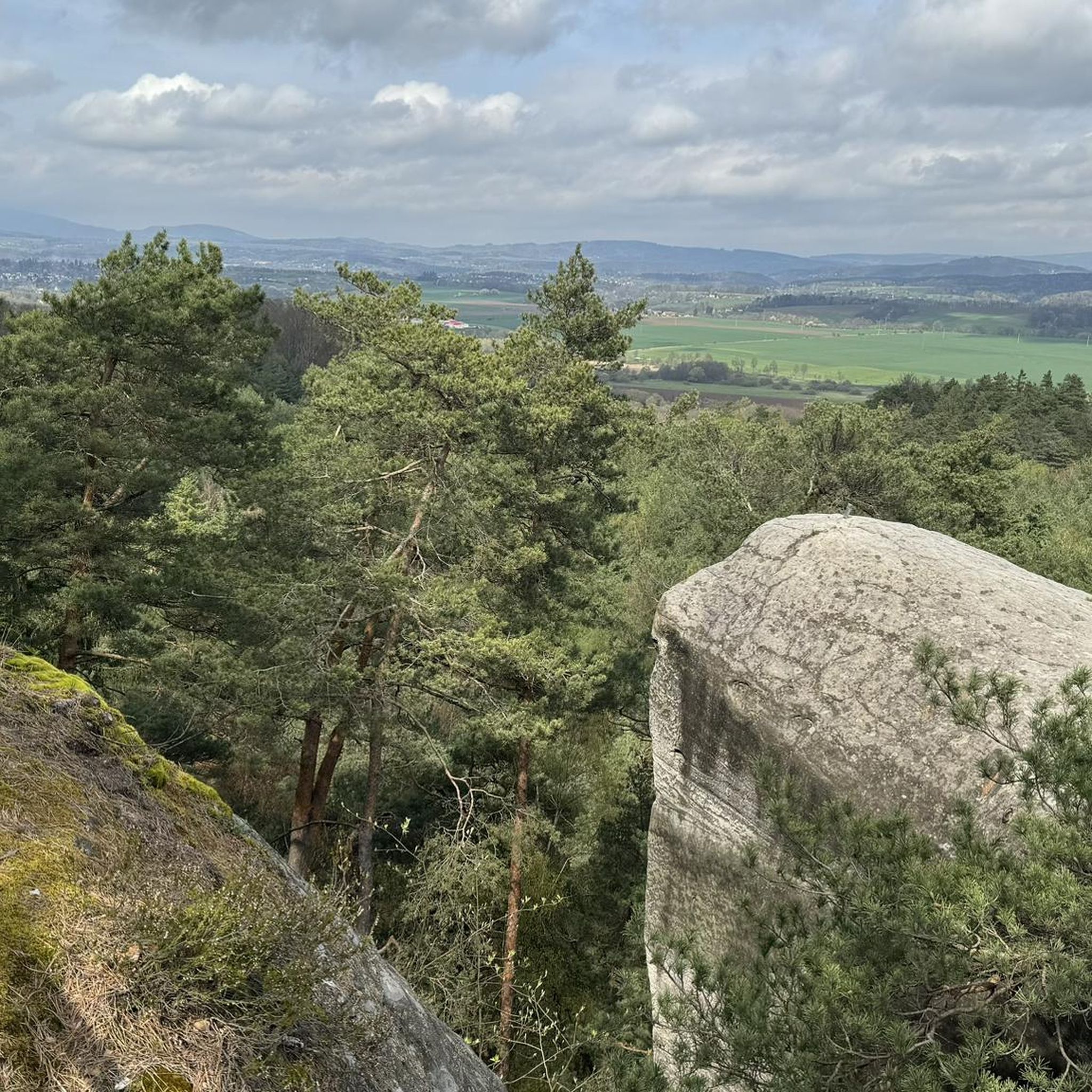
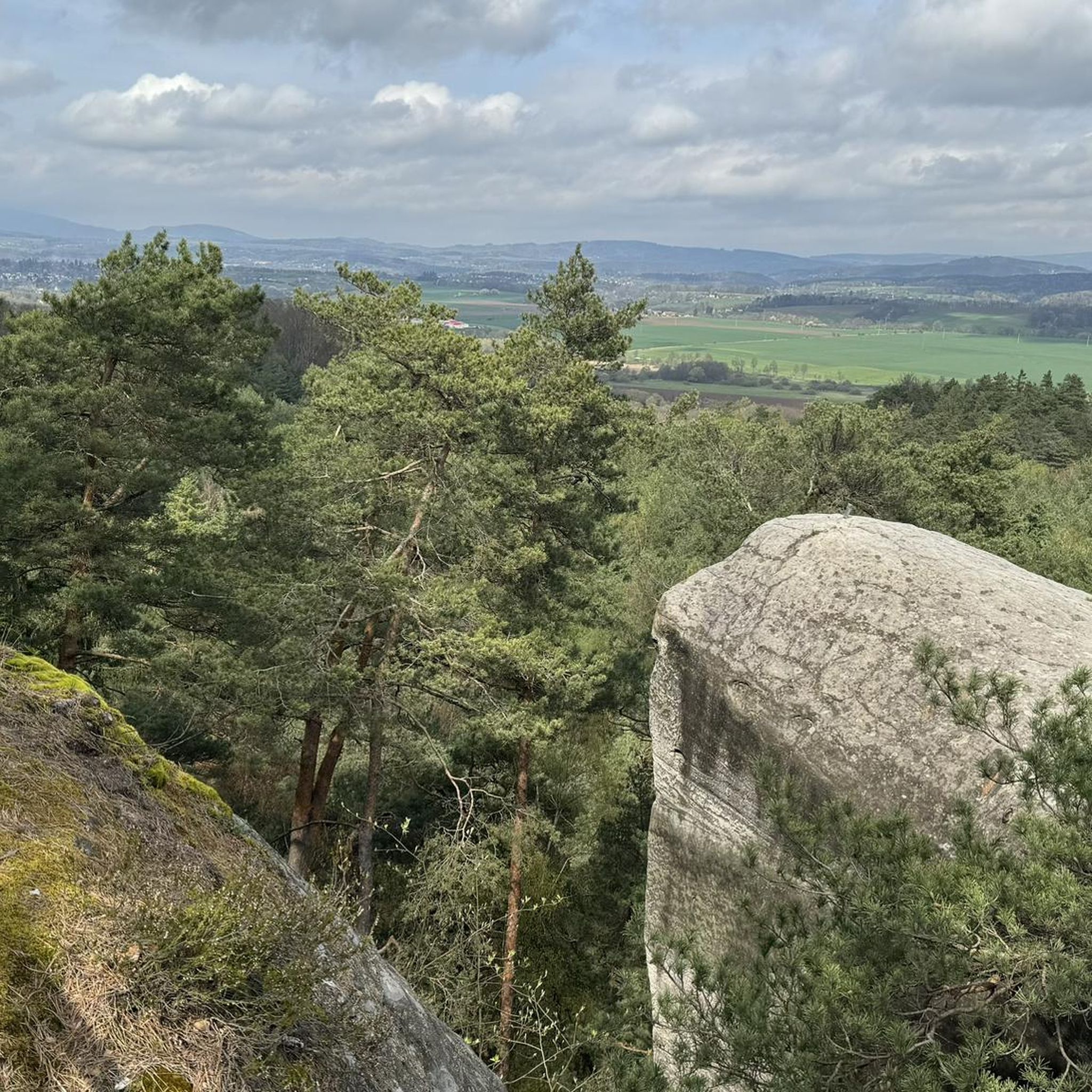
Prachovské Rocks are popular with climbers and tourists. The most interesting formations are accessible along designated hiking trails. Prachovské Rocks are a state nature reserve and have been protected since 1933. Prachovské Rocks has two main circuits The small circuit is 1.5 km long and you will see the Imperial Corridor and two viewpoints. This circuit is intended for less demanding tourists. The second route - the large circuit will take you to many attractive places in the area, you will see eight of the thirteen viewpoints. Get ready for more steep climbs and descents. Look forward to a viewing paradise The first viewpoint in Prachovské Rocks after your entrance is called the Křižkovského sboru viewpoint and you can reach it after passing through Branka. From the height you will see, for example, Kumburk, the recreational area of Jinolické rybníky, the Tábor hill, Kozlov, Kozákov or Trosky. The Leaning Tower lookout is 422 m high and you will find the Vítkovu vyhlídka (Vítek's Lookout), which can be reached by stairs carved into the rock. In the center of the Prachovské Rocks is the Míru Lookout. The Hlaholská Lookout is located at a height of 460 m and is named after the Prague singing association Hlahol. On the Přivýšina hill you will find the Václav Čtvrtek Lookout and a magnificent view of the Tábor ridge, Zebín, Čeřovka, Velíšský ridge, Ostružno and Prachov.
1
0

Partly not suitable for broad shoulders
1
0

very beautiful section of the hike
0
0

Simply incredibly beautiful and well worth seeing 👍!
5
0
Some crevasses are quite narrow, and it's easy to bump into them with a large backpack. It's best to hike with a small pack.
6
0
Frequently Asked Questions
What are the most popular natural monuments to visit in Český ráj?
Among the most popular natural monuments are the Prachov Rocks, known for their labyrinthine sandstone formations and numerous viewpoints. Another must-see is the Hruboskalsko Rock Labyrinth, featuring dramatic volcanic sandstone pillars and extensive hiking opportunities.
What makes the geology of Český ráj unique?
Český ráj, a UNESCO Global Geopark, is renowned for its unique sandstone rock formations. These geological wonders have been sculpted by millions of years of erosion by wind and rain, creating distinctive rock cities, narrow gorges, and towering pillars. The region also features pseudokarst caves and dolomite caves, showcasing a diverse geological history.
Are there family-friendly natural monuments or activities in Český ráj?
Yes, several areas are suitable for families. The Prachov Rocks offer two carefully marked circuits, including a shorter 45-minute route (Malý okruh) that leads through the Imperial Corridor and to the Czech Paradise Lookout, making it ideal for families. The Hrubá Skála Castle area is also family-friendly with its arboretum and accessible grounds.
What natural features can I explore beyond the famous rock formations?
Beyond the iconic rock cities, Český ráj offers diverse natural features. You can explore the Prachov Rocks with its narrow gorges and ravines. The Klokočské skály area features a narrow rock gorge, the Klokočské průchody, and the Postojná Cave, the largest pseudokarst cave in Český ráj. Additionally, the Bozkov Dolomite Caves offer a unique underground experience with stalactites, stalagmites, and Bohemia's largest underground lake.
What historical or cultural sites are integrated with the natural monuments?
Many natural monuments in Český ráj have historical significance. Trosky Castle, a dominant landmark, is situated on two striking volcanic cones. The Hrubá Skála Castle is perched magnificently on one of the rock pillars in the Hruboskalsko area. The Klokočské skály also feature the romantic ruins of Rotštejn Castle on the edge of the reserve, and the Prachov Rocks have evidence of Bronze Age settlements.
When is the best time to visit the natural monuments in Český ráj?
The natural monuments in Český ráj are generally accessible year-round. However, spring and autumn offer pleasant temperatures for hiking and fewer crowds. Summer is popular but can be warmer. The Bozkov Dolomite Caves maintain a constant temperature of around 8°C, making them an ideal visit during hot or rainy weather, though the Postojná Cave in Klokočské skály closes in winter for bats.
Are there any lesser-known or 'hidden gem' natural attractions in Bohemian Paradise?
While the Prachov Rocks and Hrubá Skála are well-known, the Suché skály (Dry Rocks) offer a striking natural monument often referred to as the 'Czech Dolomites' due to its unique, uplifted sandstone ridge resembling organ pipes. The Klokočské skály, with its extensive cave systems and cliff-edge views towards Kozákov, also provides a less crowded but equally impressive experience.
What outdoor activities can I do near these natural monuments?
The region around Český ráj offers a variety of outdoor activities. You can find numerous MTB trails, including routes like the 'Rock Caves in Český Ráj – View of Hrad Trosky loop from Hrubá Skála'. There are also challenging running trails, such as the 'Hruboskalsko Rock Labyrinth – Cestník [Turnov-Mašov] loop'. For hikers, waterfall hikes are available, like the 'Frýdštejn Castle Ruins – Besedice Rock Labyrinth loop'.
Are there specific hiking trails within the natural monument areas?
Yes, within the natural monument areas, there are well-marked hiking trails. For instance, the Prachov Rocks offer two main circuits: the Malý okruh (45 minutes) and a larger 5 km circuit (about 2 hours) that introduces visitors to numerous viewpoints and impressive rock formations. The Hruboskalsko Rock Labyrinth also provides extensive hiking opportunities with many lookouts.
What do visitors enjoy most about the natural monuments in Český ráj?
Visitors frequently praise the breathtaking landscapes and unique rock formations. Many highlight the sense of adventure when navigating the narrow passages and winding trails, especially in areas like the Prachov Rocks. The panoramic views from various lookouts, such as those in Hruboskalsko, are also a major draw, offering stunning photo opportunities and a feeling of silent respect for the sculpted rocks.
Do I need to pay an entrance fee to access the natural monuments?
Access policies vary by location. For the Hruboskalsko Rock Labyrinth, the grounds are freely accessible year-round with no entrance fees. However, historical sites like Trosky Castle have visitation costs. The Prachov Rocks, as a nature reserve, typically have an entrance fee for the protected area.
Can I go rock climbing at these natural monuments?
Yes, Český ráj is a renowned destination for rock climbing. The Suché skály (Dry Rocks) are particularly popular among climbers due to their hard sandstone, which even allows climbing in winter or after rain. The Prachov Rocks are also a paradise for climbers, with numerous towers and formations.
Most popular routes around Český ráj
Most popular attractions around Český ráj

Get inspired with the komoot mobile app


