Top 20 Natural Monuments around Parc del Montnegre i el Corredor
Natural monuments around Parc del Montnegre i el Corredor are characterized by diverse forest ecosystems, significant peaks, and ancient megalithic structures. The park features extensive forests, including pine, holm oak, and cork oak, with notable beech groves at higher elevations. Its varied topography creates numerous viewpoints offering panoramic vistas of the Maresme coast and surrounding landscapes. The region also integrates historical significance through ancient dolmens situated within its natural setting.
Best natural monuments around Parc del Montnegre i el Corredor
- The most popular natural monuments is Dolmen de Pedra Gentil, a historical site that is a megalithic tomb estimated to be around 5,000 years old. It is formed by 7 vertical megaliths supporting a large horizontal block.
- Another must-see spot is Dolmen de Ca l'Arenes, a historical site and natural monument. This megalithic tomb is approximately 5,000 years old and was discovered in 1997.
- Visitors also love Montalt, a summit and natural monument. This peak is part of the Catalan coastal range and offers views of the Maresme coast.
- Parc del Montnegre i el Corredor is known for its diverse forest ecosystems, significant peaks like Turó Gros, and ancient dolmens. The park offers a variety of natural monuments to see and explore, from wetlands to geological formations.
- The natural monuments around Parc del Montnegre i el Corredor are appreciated by the komoot community, with 85 upvotes and 38 photos shared by visitors.
Last updated: June 26, 2026
Les Llobateres Bird Observatory
Highlight • Viewpoint
The Llobateres wetland is the result of the operation and restoration of a gravel pit located within the municipality of Sant Celoni. This natural space has created an exceptional riverside landscape and an interesting observation point for flora and fauna of aquatic environments in the Tordera alluvial plain.
The vegetation on the banks of the Llobateres is made up of tree formations of willows, cattails, ash trees, elms and alder trees. There are also helophytic communities such as bogar and reed beds. The presence of a wetland of this size allows many water birds, such as the mallard duck, the kingfisher, the coot or the moorhen, among others, to find favorable habitats to feed. there
Among them we can find the sable, a species considered vulnerable as a result of the destruction of spaces linked to bodies of water. In space
Translated by Google •
Tip by

Dolmen de Pedra Gentil
Highlight • Historical Site
Translated by Google •
Tip by

Sign up now to discover places like this
Get recommendations on the best single tracks, peaks, & plenty of other exciting outdoor places.
Sign up for free
Dolmen de Ca l'Arenes
Highlight • Historical Site
Translated by Google •
Tip by

Montalt
Highlight • Summit
Montalt is a mountain that belongs to the Catalan coastal range, within the Corredor mountain range and the protected natural area where it is included.
A few kilometers from the coast, the peak is surrounded by forest. A common point to face the final meters of ascent is the Coll de la Ferradura, a hill located in the northeast. It is a junction of different forest trails and tracks, and from this point the path to the top is narrow and has a very steep slope.
The northern slope goes completely into the natural park, with different plateaus, other peaks and the Creu de Rupit, a prominent cross in the middle of the path. To the northeast is the sanctuary of the Corredor, with a parking lot and a tourist office. From this point, through forest tracks,
To the south we find two towns, Sant Andreu de Llavaneres and Sant Vicenç de Montalt, well connected by tracks and trails. In the same way possible starting points for the ascent, to the west there is the municipality of Dosrius and the population center of Canyamars, while to the east is the town of Arenys de Munt.
On the other hand, the first stage of the northern route, or GR 83 long-distance trail, which starts in the town of Mataró, passes very close, on its northern side.
Its summit houses a geodesic vertex and a mailbox, offering magnificent views of the entire Maresme coast, despite the increasingly exuberant vegetation limiting them as time goes by.
Translated by Google •
Tip by

Horseshoe Stone
Highlight • Natural Monument
Translated by Google •
Tip by
Sign up for free to discover even more natural monuments around Parc del Montnegre i el Corredor.
Sign up for free
Already have an account?
Start today with a free account
Your next adventure awaits.
Login or Signup
Popular around Parc del Montnegre i el Corredor
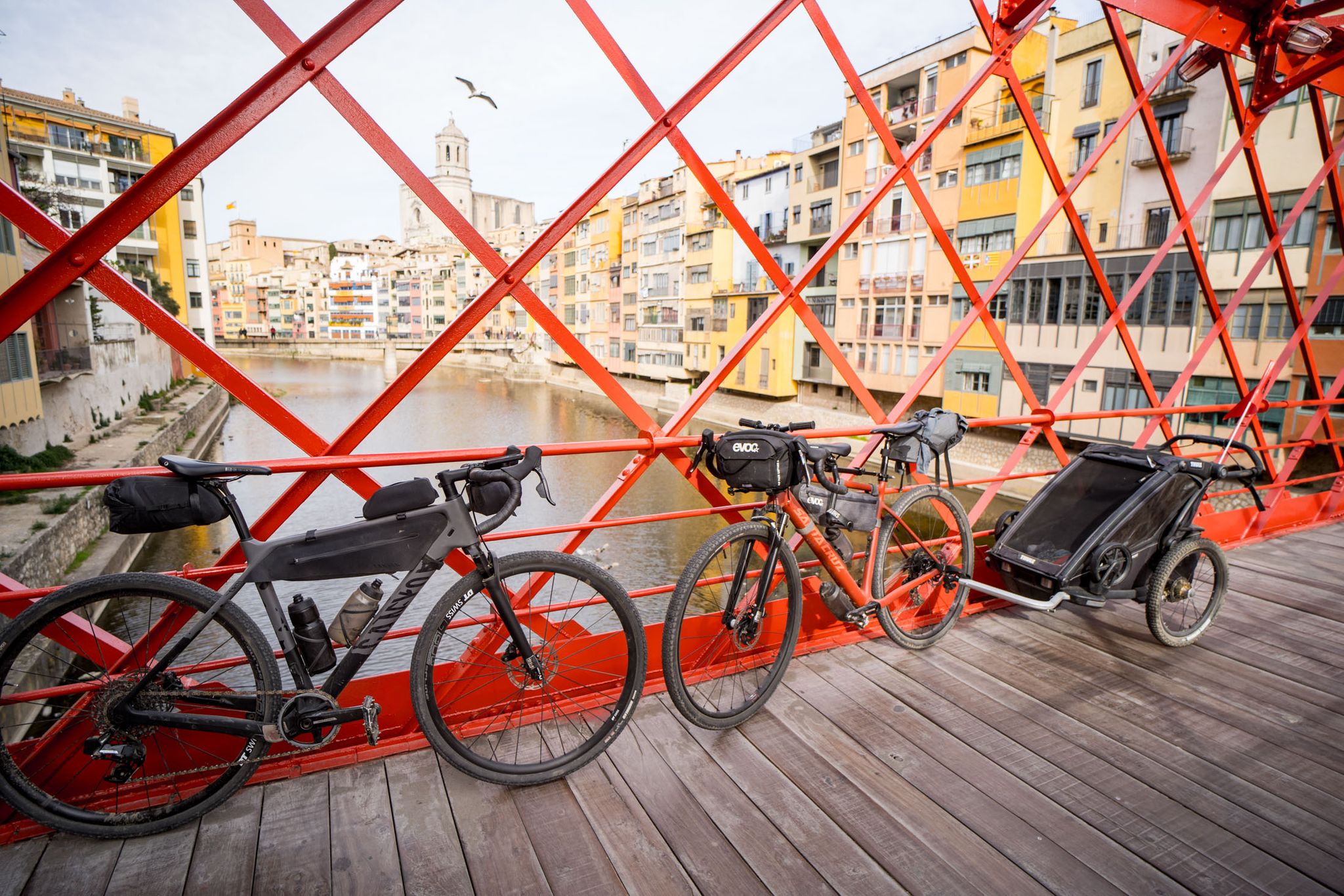
Family Bikepacking / Barcelona-Girona
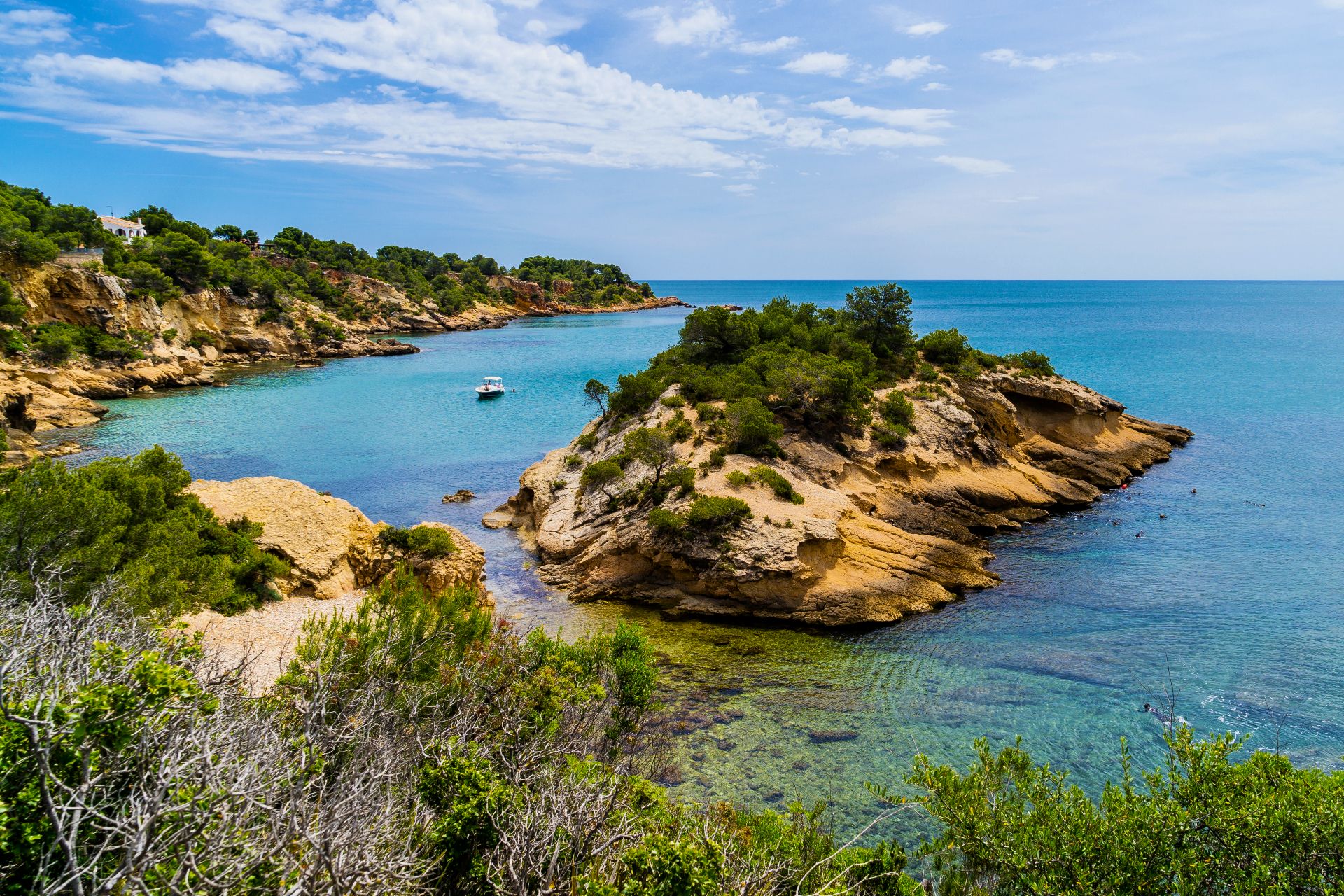
The Catalan coast on foot – Mediterranean Path (GR 92)
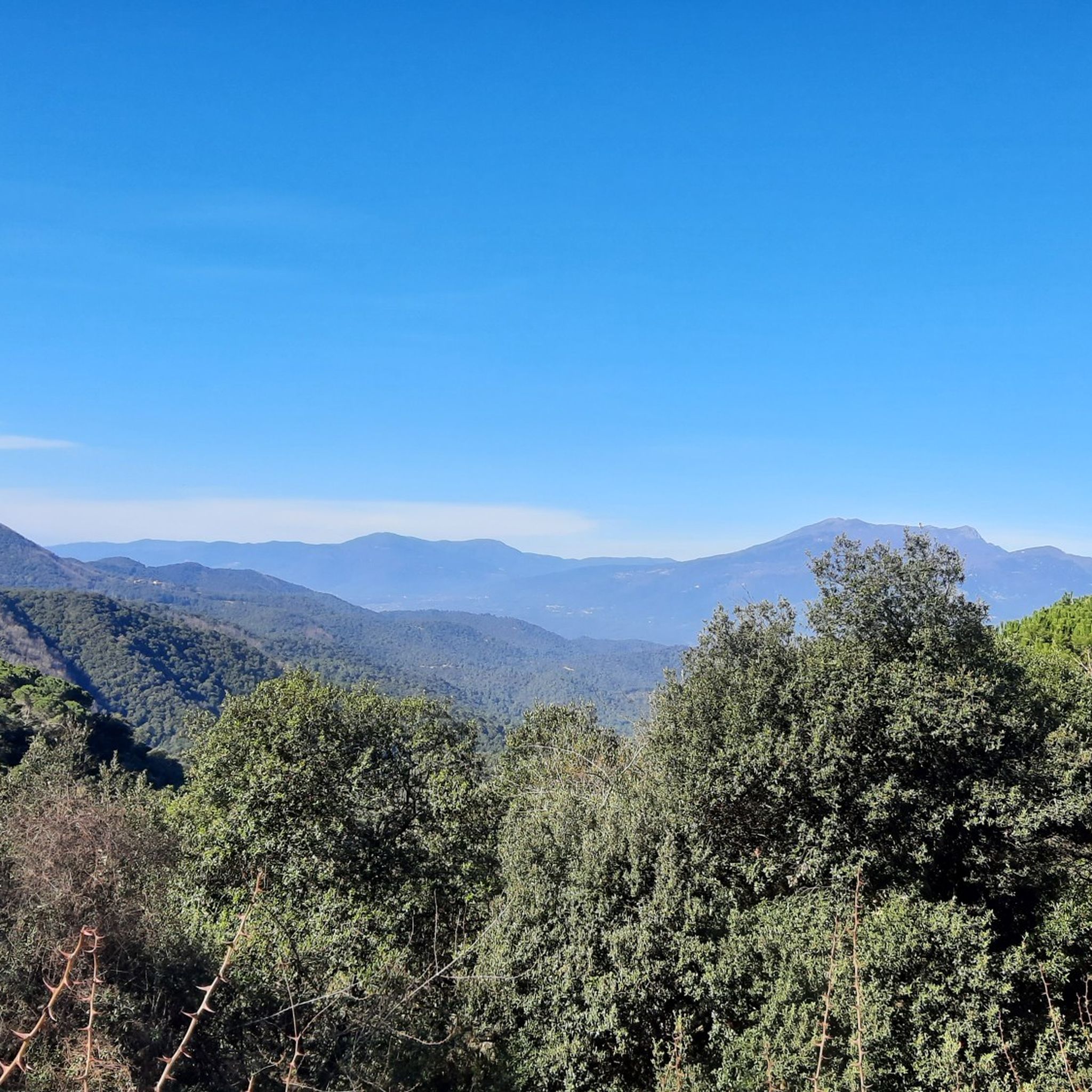
Hiking around Parc del Montnegre i el Corredor
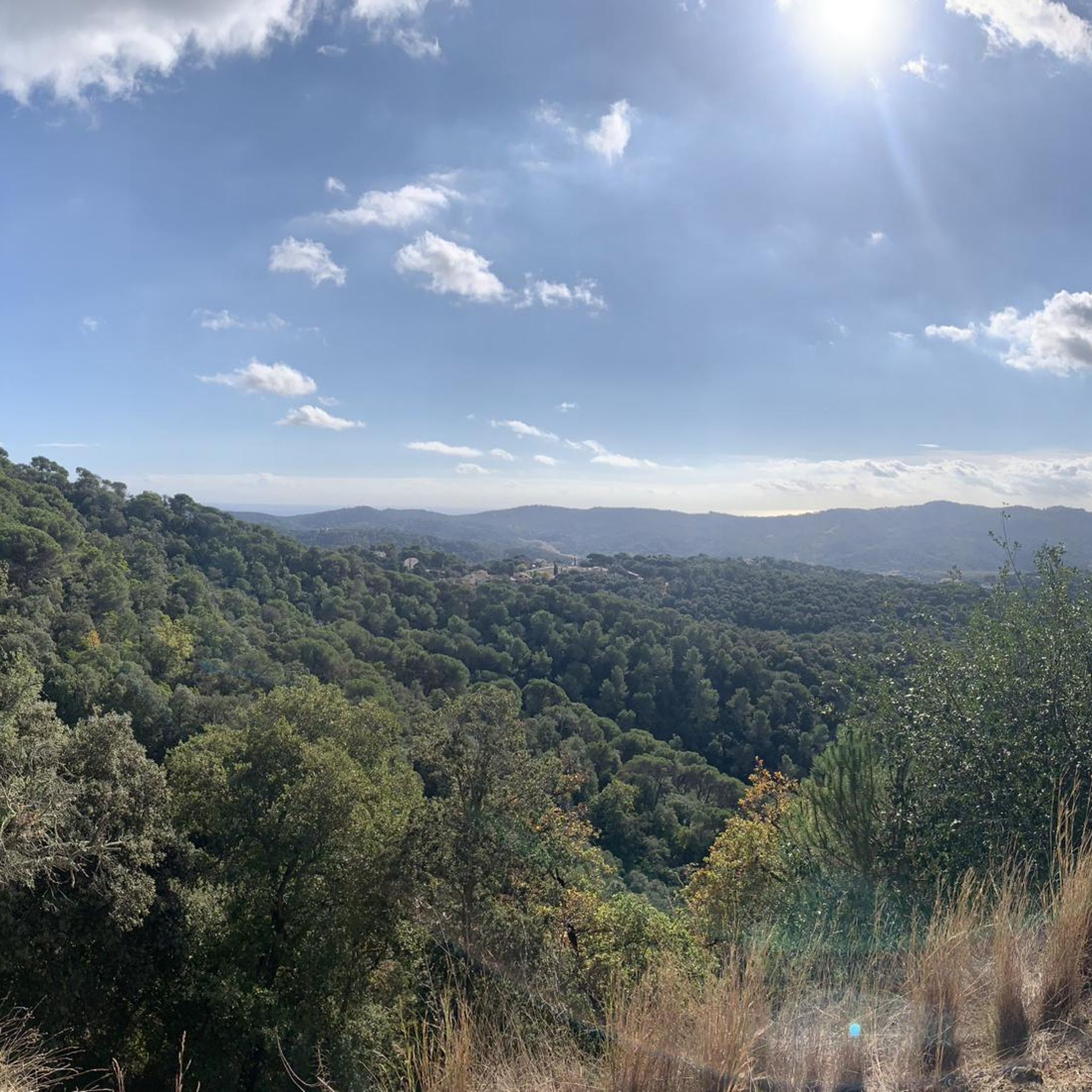
Road Cycling Routes around Parc del Montnegre i el Corredor
Cycling around Parc del Montnegre i el Corredor
MTB Trails around Parc del Montnegre i el Corredor

Gravel biking around Parc del Montnegre i el Corredor
Running Trails around Parc del Montnegre i el Corredor
Other adventures around Parc del Montnegre i el Corredor


Tips from the Community

It's a megalithic tomb, approximately 5,000 years old, discovered in 1997 and restored in 2006-2007. Located in the heart of the Montnegre i el Corredor Natural Park, it's easy to miss, but it has a history: it belonged to a Neolithic community that used it as a collective grave. Interestingly, remains of the tumulus that covered it are still preserved, which is unusual, and its orientation seems related to astronomical events, like other dolmens in the area. It's an archaeological rarity in the middle of a prime cycling area, perfect for stopping and reflecting that humans once walked this path... but without helmets.
2
0

They've now built a staircase to access the Dolmen... With this staircase, just a few meters long... It seems they'll save the site from erosion... Sometimes the conservation and environmental councils are pitiful... It seems the only ones degrading the paths... are hikers and bikers... When we're fed up with seeing how the water destroys the paths to the point where we can't pass... 🙃
0
0
After the restoration process of this space where sand and gravel were extracted... this large hole remained where the water is now stored naturally and which has formed this magnificent place that provides shelter to a good number of birds and other species. Both migratory and native.
1
0
Megalithic structure Rebuilt in 1855, Where the original structure was a 4000 year old DOLMEN, which served As a chamber tomb Simple...🧐
1
0

It belongs to the Montnegre Park and almost all the paths can be done either on foot or by bike (the dolmen path is quite broken "stones")
3
0
The restoration of an old sand and gravel extraction site allowed the creation of this wetland, where you can observe a large number of birds and other living species that find a perfect refuge here.... Because it is a wide and flat track, it is also perfect for walking 👣 or cycling 🚲 for all audiences.
5
0
Bird Observatory, nowadays, and especially at this time of the year, you can very likely and relatively easily see... Kingfisher (Ardea cinerea) White tern (Egretta garzetta) Egyptian goose (Alopochen aegyptiacus) Blauet (Alcedo atthis) Moorhen (Gallinula chloropus) Common kestrel (Falco tinnunculus) Sparrowhawk (Accipiter nisus) Common buzzard (Buteo buteo) Green woodpecker (Picus viridis) Upupa epops Cornelian crow (Corvus corone) Motacilla cinerea (Motacilla cinerea) Hedge Sparrow (Prunella modularis) Common chilli (Saxicola torquata) Smoked car (Phoenicurus ochruros) Common thrush (Turdus philomelos) Repicatalons (Emberiza schoeniclus) ...and a multitude of typical riverside species and agricultural areas. https://www.google.com/url?sa=i&url=https%3A%2F%2Fsantceloni.cat%2F9203&psig=AOvVaw1m8-tBmRbvJQa1D6HQTWS7&ust=1679049247506000&source=images&cd=vfe&ved=0CA8QjRxqFwoTCJCVmYGg4P0CFQAAAAAdAAAAABAE
6
0

It is a large granite block located between Turó de Montalt (596 m) and Turó del Mig (550 m), a hill where the municipal limits of Arenys de Munt, Dosrius and Sant Vicenç de Montalt meet. Of the two stones, the smaller one has an engraving that seems to represent a horseshoe, although the meaning is unknown. It could be, for example, a mark to delimit the old parishes. Granite is a hard rock, with a granular texture, which in the Maresme has been used for construction. Fresh granite is known as "snake's eye" as it is made up of a black mica which, in contrast to the other components, is reminiscent of a snake's eye. In this environment and during the next section of the route, we will find small accumulations of granite blocks, disordered, heterometric and rounded, which accumulate in a horizontal or slightly inclined relief. These capricious formations have their origin in weathering. Later, the rainwater dissolves the feldspar and the large initial rock cracks and gives rise to rounded shapes and a kind of sand, called "sauló" in Catalan.
1
0
Frequently Asked Questions
What natural features define Parc del Montnegre i el Corredor?
The park is characterized by its diverse forest ecosystems, including extensive pine, holm oak, and cork oak forests. Notably, it features unique beech groves at higher elevations, some of Catalonia's southernmost. Its varied topography also creates numerous spectacular viewpoints offering panoramic vistas of the Maresme coast and surrounding landscapes.
Are there historical natural monuments to explore in the park?
Yes, the park is home to ancient megalithic structures that blend natural and historical significance. You can visit the Dolmen de Pedra Gentil, a collective grave estimated to be around 5,000 years old, and the Dolmen de Ca l'Arenes, another megalithic tomb discovered in 1997.
What kind of outdoor activities can I do near the natural monuments?
The park offers extensive opportunities for outdoor activities. You can find numerous routes for hiking, such as those in the Waterfall hikes around Parc del Montnegre i el Corredor guide, or enjoy cycling and mountain biking. For cycling, explore options in the Cycling around Parc del Montnegre i el Corredor guide, which includes routes like the Sant Marti de Montnegre circular gravel path.
Are there family-friendly natural monuments in Parc del Montnegre i el Corredor?
Yes, the Les Llobateres Bird Observatory is considered family-friendly. This wetland, created from a restored gravel pit, offers an exceptional riverside landscape and is a great spot for observing aquatic flora and fauna. Its wide, flat tracks are perfect for walking or cycling with all ages.
Where can I find panoramic views within the park?
The park's hilly terrain provides many opportunities for breathtaking panoramic views. The Montalt summit offers magnificent views of the entire Maresme coast. Additionally, the park's massifs create a natural barrier, contributing to varied and extensive vistas across the region.
What is the highest point in the Montnegre massif?
The highest point in the Montnegre massif is Turó Gros, standing at 766 meters. While its summit is forested, it is a significant natural landmark that contributes to the park's diverse climate and vegetation.
What makes the forests of Parc del Montnegre i el Corredor unique?
The forests are unique due to their diversity and proximity to the Mediterranean. They include splendid pine forests on coastal slopes, holm oak, oak, and cork forests in the interior. The presence of beech groves at 700 meters altitude, just 10 km from the sea, is particularly remarkable, offering a unique Central European forest ambiance and supporting rich biodiversity.
What do visitors enjoy the most about the natural monuments in the park?
Visitors appreciate the blend of natural beauty and historical significance. Many enjoy the tranquility and the opportunity to observe diverse wildlife, especially at wetlands like Les Llobateres. The ancient dolmens offer a glimpse into the region's past, while summits like Montalt provide rewarding views. The park's status as Spain's first Urban Quiet Park is also a draw for those seeking natural silence.
Are there any unique geological formations in the park?
Yes, the Horseshoe Stone is a notable geological feature. It's a large granite block with unique engravings, located amidst smaller, rounded granite accumulations. These formations are the result of weathering and offer insight into the region's geological processes.
Are there any birdwatching opportunities near the natural monuments?
Absolutely. The Les Llobateres Bird Observatory is an excellent spot for birdwatching. This wetland provides a favorable habitat for many water birds, including mallard ducks, kingfishers, coots, and moorhens, among others. It's a great place to observe various species, especially during certain times of the year.
What is the best time of year to visit the natural monuments in Parc del Montnegre i el Corredor?
The park's diverse ecosystems can be enjoyed year-round. Spring and autumn generally offer pleasant temperatures for hiking and exploring the forests. The unique beech groves are particularly beautiful in autumn with their changing colors. For birdwatching, specific seasons might be better depending on migratory patterns.
Can I visit the natural monuments with my dog?
Parc del Montnegre i el Corredor is generally dog-friendly, with many trails suitable for walks with your pet. However, it's always advisable to keep dogs on a leash to protect the local wildlife and ensure a pleasant experience for all visitors. Check specific regulations for sensitive areas if planning to visit.
Most popular routes around Parc del Montnegre i el Corredor
Most popular attractions around Parc del Montnegre i el Corredor

Get inspired with the komoot mobile app


Explore more
Extend your search for the best caves by checking out these guides of the top ones around Parc del Montnegre i el Corredor:
