Top 11 Natural Monuments around Parc del Garraf
Natural monuments around Parc del Garraf showcase a unique karstic landscape, covering over 12,000 hectares. This terrain, dominated by limestone rock, features a variety of geological formations including caves, potholes, and sinkholes. The park offers opportunities for geological exploration, hiking, and observing adapted flora and fauna. Its combination of mountain and sea views makes it a distinct natural area.
Best natural monuments around Parc del Garraf
- The most popular natural monuments is La Morella Summit, a summit that stands…
Last updated: June 26, 2026
La Morella Summit
Highlight • Summit
Translated by Google •
Tip by

Puig de la Mola summit (534 m)
Highlight • Summit
Translated by Google •
Tip by

Sign up now to discover places like this
Get recommendations on the best single tracks, peaks, & plenty of other exciting outdoor places.
Sign up for free
Fita dels Tres Termes
Highlight • Summit
Translated by Google •
Tip by

Avenc del Llamp
Highlight • Cave
Well-known chasm of 73 m. of depth in the Pla de Querol (Garraf)
After passing through the small mouth, it penetrates into a well of 40 meters …
Translated by Google •
Tip by
Sitges Viewpoint
Highlight • Viewpoint
Translated by Google •
Tip by

Sign up for free to discover even more natural monuments around Parc del Garraf.
Sign up for free
Already have an account?
Start today with a free account
Your next adventure awaits.
Login or Signup

Other adventures around Parc del Garraf

Tips from the Community

Hape Kerkeling, a well-known entertainer in the German-speaking world, wrote down some thoughts about a mystical experience (encounter with God) while traveling through Spain, which I would also like to offer to the viewer of this small sacred monument: "To encounter God, one must first extend an invitation to him, for he will not come uninvited. It is also a form of good manners. We have free choice. He builds an individual relationship with each person. Only someone who truly loves is capable of this." (Hape Kerkeling in "Ich bin dann mal weg")
1
0

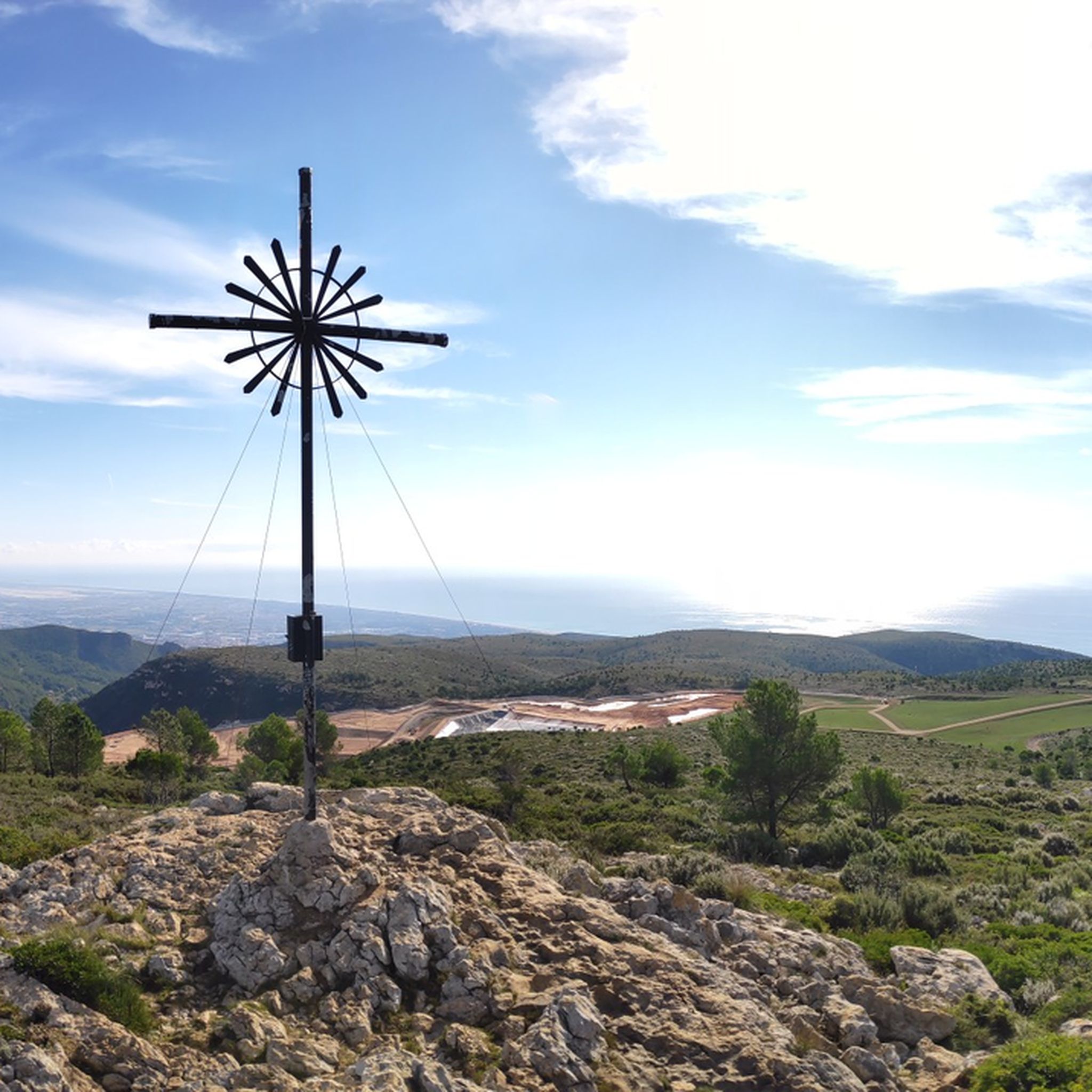
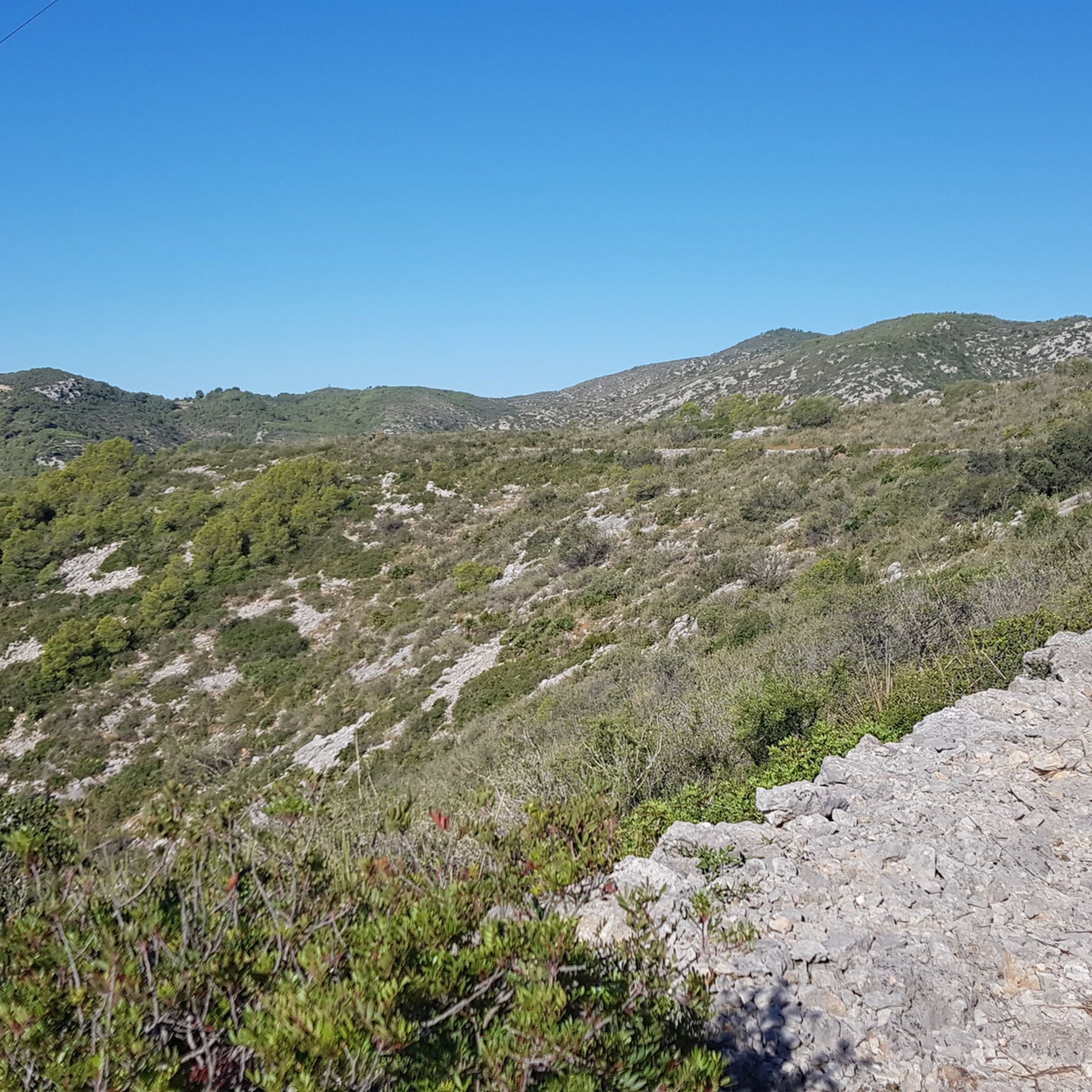
La Morella is the second highest peak in the Garraf Massif after Montau (658 m), at 593.6 meters. It is located in the municipality of Begues, in the Baix Llobregat region. Its surroundings contain several chasms. There is also the tail of the old Garraf landfill, currently being restored. At the summit, we can find a geodesic vertex. The peak is included in the FEEC's list of the 100 peaks. A long-distance trail (GR 92 Mediterranean Trail) passes through this mountain peak, on its 21st stage from Bruguers to Garraf. It meets the local short-distance trail (SL-C 99), which is 6.1 km long, running from the Cal Ganxo Environmental Activities Center (Castelldefels) to La Morella. If we follow the GR 92 towards the town of Garraf, 3.5 km away we reach the La Pleta Information Centre in Garraf Park.
11
0

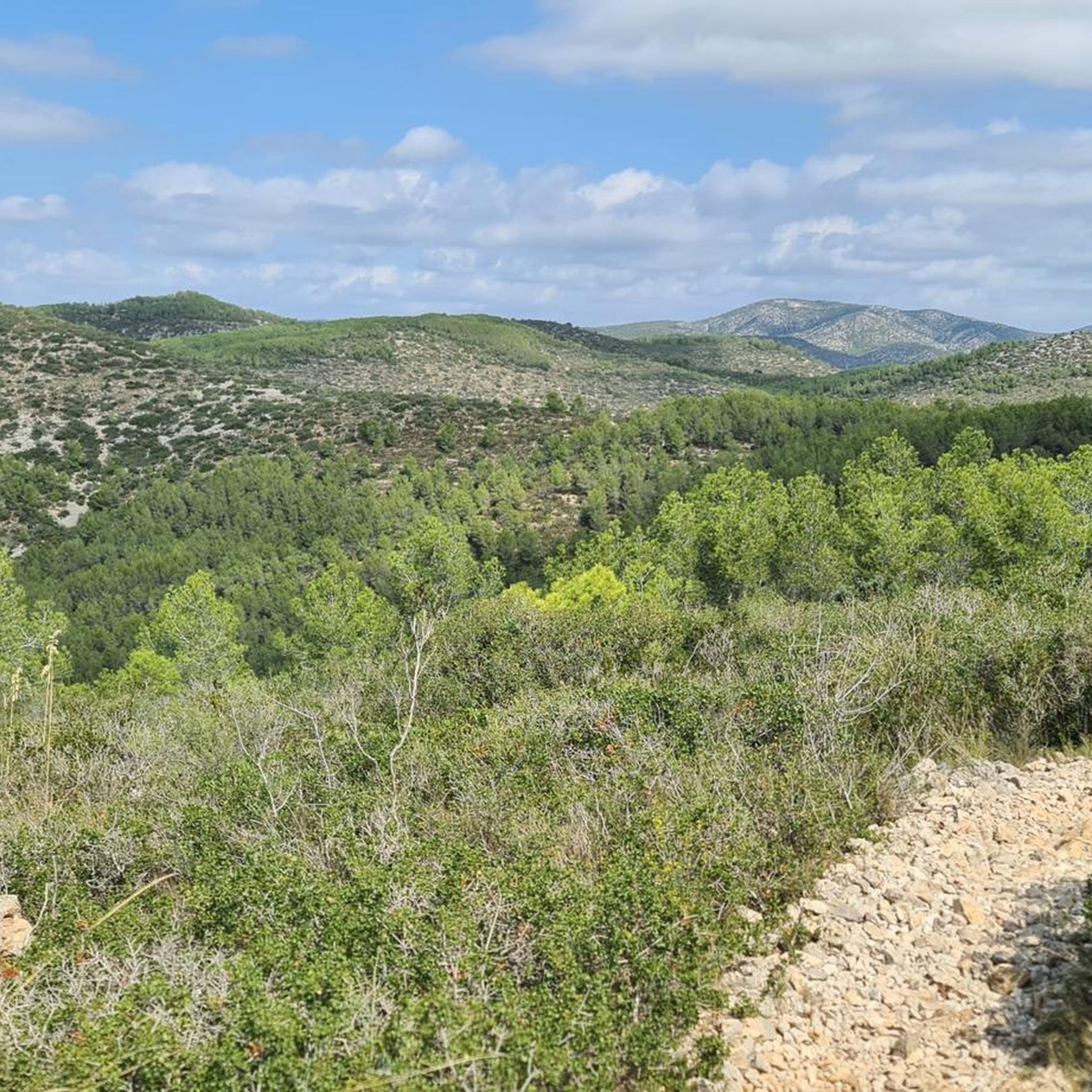
Beautiful hike and a great view of Vilanova i la Geltrú and the sea.
8
0

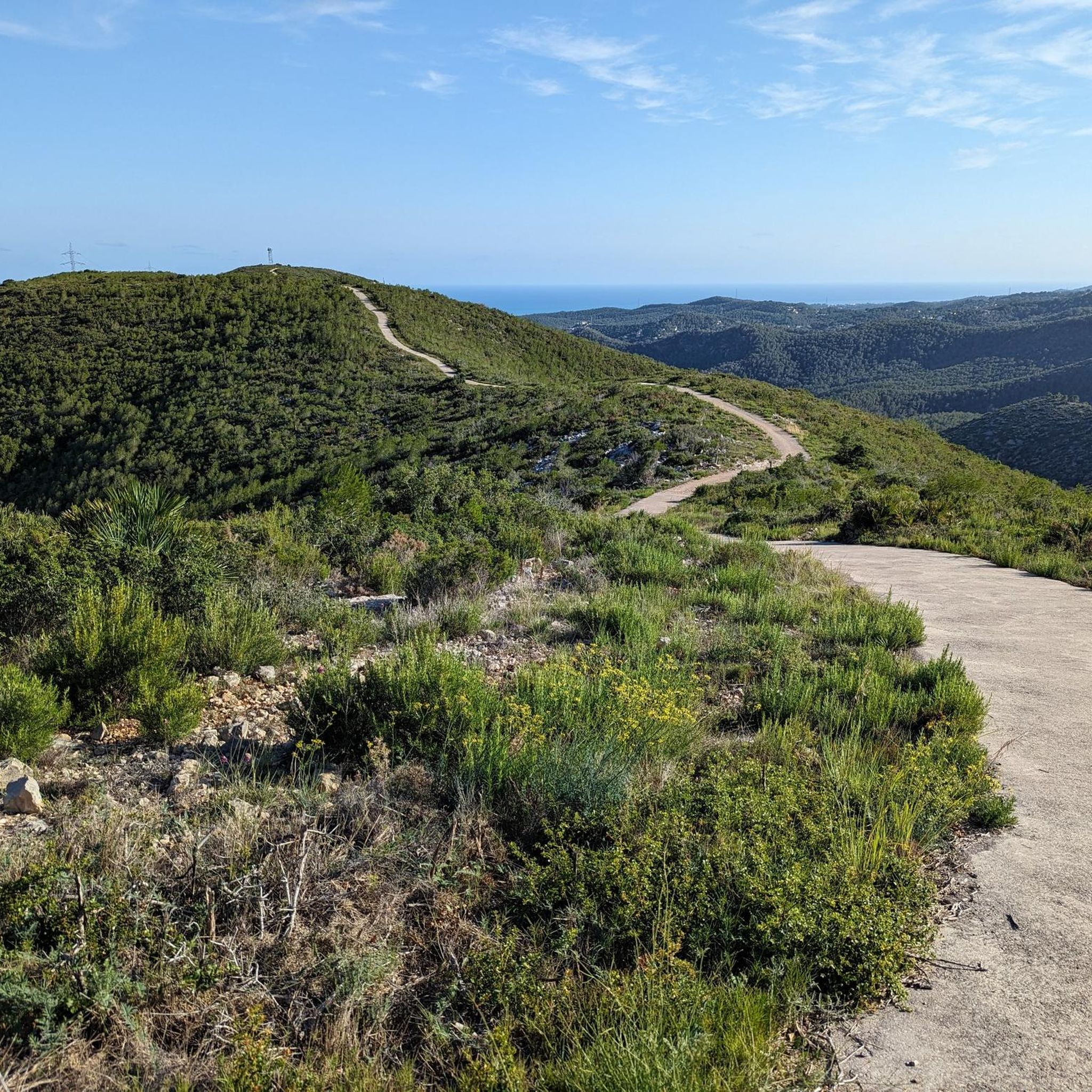
To get to the top, I went along the Ratpenat road until a detour that goes there. The entire route is accessible by bike except for going up to the peak of the mountain, where you have to go downhill and push it along a complicated path, especially at the highest part. The views are worth it!!
5
0

Highest point of Garraf. Peak with a lot of wind. But with 360 degree views
0
0
Highest point of Garraf.
0
0

La Fita dels Tres Termes is a mountain 234 meters high located in the Garraf massif, at the confluence of the municipalities of Vilanova and la Geltrú, Castellet and la Gornal and Cubelles. In its highest part, next to the forest surveillance tower, there is a cairn of mortar, right at the apex of the three municipal boundaries.
5
0
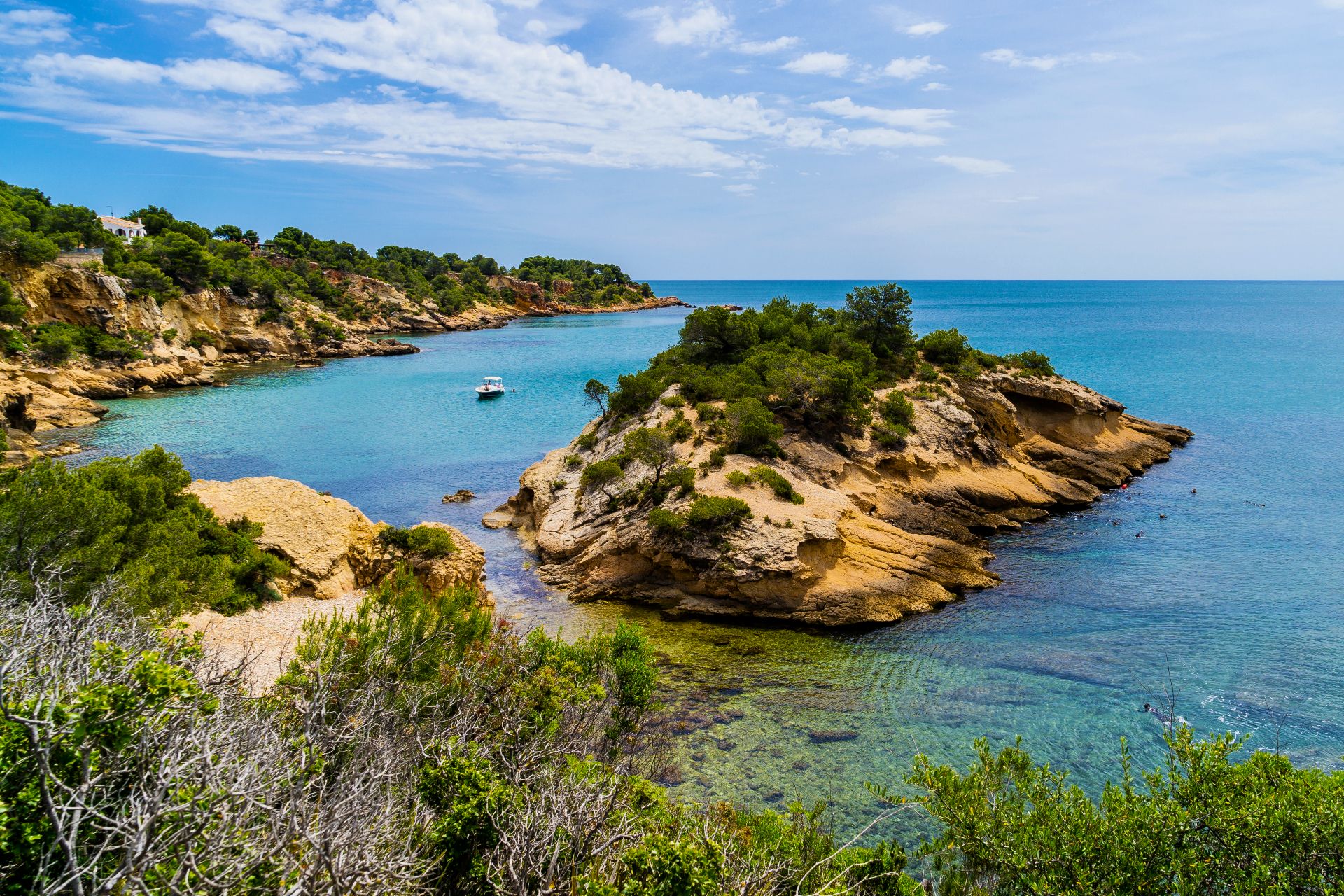
This natural viewpoint allows you to contemplate the sea and Sitges from the track that connects this town with the Parc del Garraf. Located between two small peaks, Puig de Barbeta and Sivina, it is located 191 meters above sea level, just above the bottom of Mariner.
1
0
Frequently Asked Questions
What unique natural features define Parc del Garraf?
Parc del Garraf is renowned for its distinctive karstic landscape, shaped by limestone rock. You'll encounter impressive geological formations such as caves, potholes, sinkholes, and extensive limestone pavements. A notable example is the l'Esquerrà chasm, which plunges to a depth of 336 meters, showcasing the park's underground wonders.
Are there any prominent viewpoints or summits to visit in Parc del Garraf?
Yes, the park offers several summits with panoramic views. The most popular is La Morella Summit, standing at 593.6 meters, which provides incredible vistas of the arid interior and the sea. Another significant peak is Puig de la Mola summit (534 m), offering views across surrounding municipalities and featuring a geodesic vertex and watchtower. For coastal views, the Sitges Viewpoint is an excellent spot to contemplate the sea and the town of Sitges.
What kind of flora and fauna can I observe in Parc del Garraf?
Despite its arid climate, Parc del Garraf supports unique Mediterranean scrubland vegetation. The most characteristic and protected species is the dwarf fan palm (margalló). Other flora includes rosemary, thyme, Aleppo pine trees, and holm oaks. The park is also home to diverse wildlife, including the majestic Bonelli's eagle and the Mediterranean tortoise, making it a great spot for birdwatching with sightings of black wheatears and blue rock thrushes.
Are there any challenging natural monuments to explore for experienced hikers?
For those seeking a challenge, the park's karstic formations offer unique opportunities. The Avenc del Llamp is a well-known chasm with a depth of 73 meters, featuring a 40-meter vertical drop. This site is recommended for experienced cavers due to its challenging nature and potential for hypoxia. Additionally, some routes to summits like Puig de la Mola can be quite demanding, especially on its cliff-sided southern slope.
What outdoor activities can I do near these natural monuments?
Parc del Garraf offers a variety of outdoor activities. You can find numerous routes for cycling, gravel biking, and running. For instance, there are cycling routes like the 'Castelldefels Beach – Gavà Beach loop' and gravel biking adventures such as 'The heart of the Garraf park in gravel'. Runners can enjoy trails like the 'Monte de la Mola y Castillo de la Olivella — circular por el Parque Natural del Garraf'. You can explore more options in our guides for Cycling around Parc del Garraf, Gravel biking around Parc del Garraf, and Running Trails around Parc del Garraf.
Are there any natural monuments that are particularly good for families?
While the park's terrain can be rugged, many areas offer accessible paths suitable for families. Exploring the general Mediterranean scrubland and enjoying the coastal views can be a pleasant family activity. For specific easy walks, look for trails that lead to less strenuous viewpoints or areas where children can safely observe the unique flora like the dwarf fan palm.
What is the best time of year to visit Parc del Garraf's natural monuments?
The best time to visit Parc del Garraf is typically during spring (March to May) and autumn (September to November). During these seasons, the temperatures are milder, making hiking and exploration more comfortable. The Mediterranean scrubland is vibrant in spring, and the autumn colors can also be beautiful. Summers can be very hot and dry, while winters are generally mild but can have occasional rain.
How accessible are the natural monuments by public transport?
Access to Parc del Garraf by public transport is possible, though it often requires some planning. The park is situated near coastal towns like Sitges and inland villages. For detailed information on public transport options and routes into the park, it's advisable to check local transport schedules or consult resources like Wikivoyage's Parc del Garraf guide or the official Visit Sitges page on Garraf Park for up-to-date information on getting there.
Can I bring my dog to the natural monuments in Parc del Garraf?
Parc del Garraf is generally dog-friendly, allowing pets on many trails. However, it's crucial to keep dogs on a leash to protect the local wildlife, especially ground-nesting birds and the Mediterranean tortoise, and to respect other visitors. Always ensure you carry enough water for your dog, especially during warmer months, as water sources can be scarce in the arid landscape.
What should I bring for a hike to the natural monuments in Parc del Garraf?
When hiking in Parc del Garraf, it's essential to be prepared for its arid and rocky terrain. We recommend bringing plenty of water, sun protection (hat, sunscreen), sturdy hiking shoes, and appropriate clothing for the weather. A map or GPS device is also advisable, as some trails can be less marked. If exploring caves or chasms, specialized equipment and experience are necessary.
Are there any lesser-known natural monuments or 'hidden gems' in the park?
Beyond the popular summits, the park's extensive karstic system holds many lesser-known chasms and caves that appeal to speleology enthusiasts. While specific 'hidden gems' are often discovered through local exploration, the overall geological uniqueness of the park, with its countless sinkholes and limestone formations, offers a sense of discovery around every corner. The sheer scale of the karstic landscape itself can feel like a hidden wonder.
What makes the Fita dels Tres Termes a notable natural monument?
Fita dels Tres Termes is a 234-meter high summit within the Garraf massif. It's notable not only for its views of Vilanova i la Geltrú and the sea but also for its unique geographical significance: it marks the confluence of three municipal boundaries (Vilanova i la Geltrú, Castellet i la Gornal, and Cubelles), symbolized by a cairn next to a forest surveillance tower at its highest point.
Most popular routes around Parc del Garraf
Most popular attractions around Parc del Garraf

Get inspired with the komoot mobile app


Explore more
Extend your search for the best caves by checking out these guides of the top ones around Parc del Garraf:
