Top 10 Natural Monuments around Nacionalni park Sutjeska
Best natural monuments around Nacionalni park Sutjeska include diverse ecosystems and significant geographical features. As the oldest national park in Bosnia and Herzegovina, it encompasses rugged mountains, ancient forests, and deep river canyons. The park is characterized by high peaks, dense primeval forests, and glacial lakes, offering varied natural landscapes. These natural monuments provide opportunities to explore the park's unique geology and biodiversity.
Best natural monuments around Nacionalni park Sutjeska
- The most popular natural monuments is Maglić Peak, a…
Last updated: July 10, 2026
Maglić Peak
Highlight • Summit
Translated by Google •
Tip by

Sutjeska National Park
Highlight (Segment) • Natural Monument
Tip by

Sign up now to discover places like this
Get recommendations on the best single tracks, peaks, & plenty of other exciting outdoor places.
Sign up for free
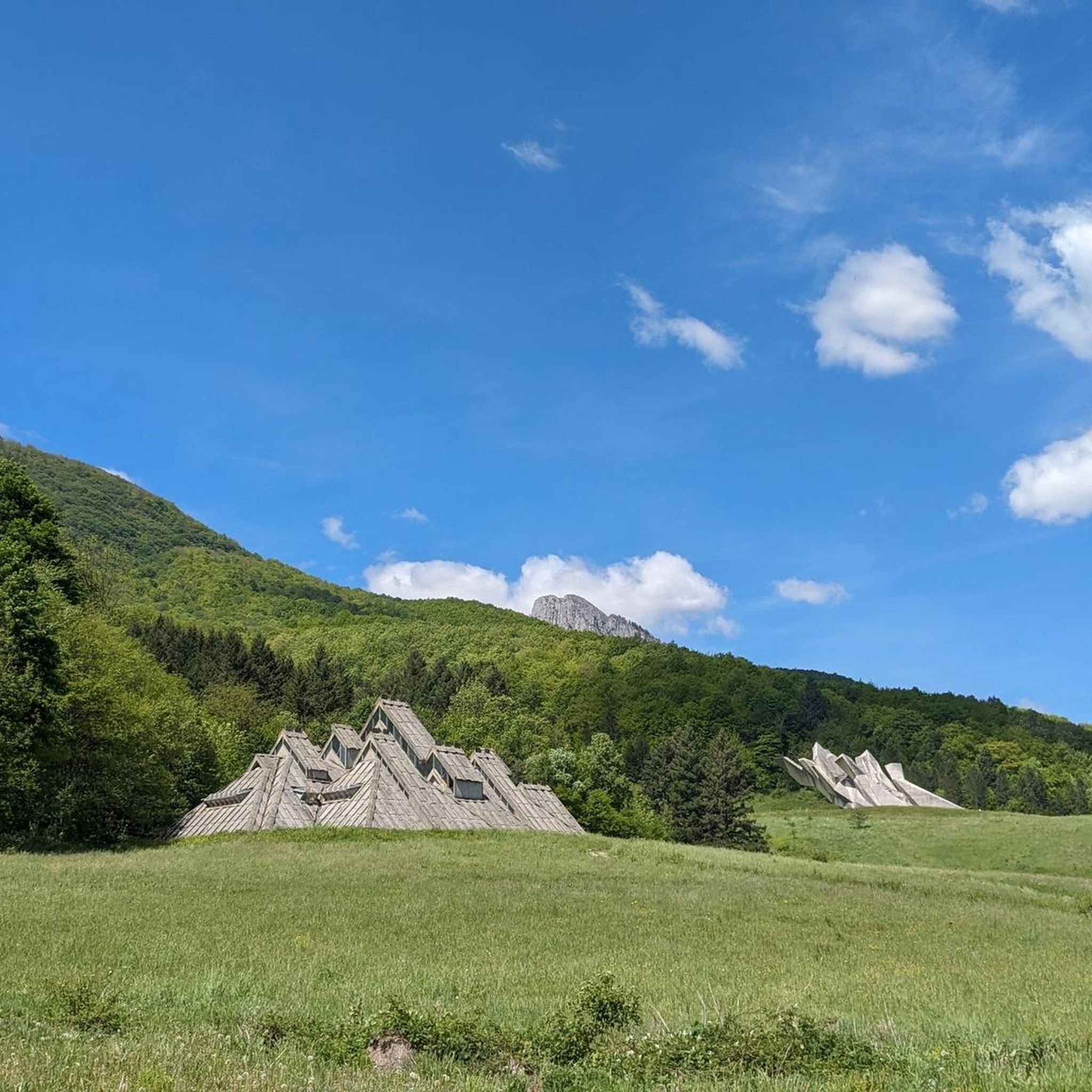
Battle of Sutjeska Memorial, Valley of Heroes
Highlight • Monument
Tip by

Perućica Primeval Forest
Highlight • Forest
Translated by Google •
Tip by

Valley of the Heroes Monument
Highlight • Monument
Translated by Google •
Tip by

Sign up for free to discover even more natural monuments around Nacionalni park Sutjeska.
Sign up for free
Already have an account?
Start today with a free account
Your next adventure awaits.
Login or Signup
Popular around Nacionalni park Sutjeska
Tips from the Community

Hike to the waterfall only allowed with a guide!
1
0

Beautiful national park with a great diversity of flora and fauna. The Zelengora Mountains and the Perucica primeval forest, which you can only enter with a ranger, are highly recommended.
0
0

There are several routes to the summit. One comes from Prijevor and is quite steep and not so safe. You can also get to the summit from Montenegro. The route is not so strenuous there. Of course you can do both routes - there and back, as in my case. The view from Maglić is very beautiful. There are also quite a few people on the way.
6
0

Meet Bosnia Tours from Sarajevo offers guided and self guided hiking tours
1
0


This memorial (with a small museum) commemorates the Battle of Sutjeska (Bitka na Sutjesci). This was codenamed Fall Schwarz by the Germans. The battle lasted from May 15 to June 16, 1943 and aimed to destroy Josib Broz Tito's Partisan army. The Germans deployed 127,000 soldiers from Germany, Italy, Bulgaria, the NDH and Greek SS, along with 300 aircraft. The Partisans had 18,000 men. After heavy fighting, the Partisans managed to break out of the encirclement with the majority of the men. All those left behind, including an entire hospital, were murdered by the Axis armies. A total of 6391 Partisans and 2000 civilians were killed. Since most of the Partisans were able to escape together with Josib Broz Tito, the Fall Schwarz operation had failed. This battle is therefore seen as the turning point of the battle in Yugoslavia in World War II. (Source: Tracesofwar.nl)
0
0

The memorial is an exceptional work by Zivkovic and one of the best sculptural memorials in the Yugoslav space. It was erected in memory of the fighters killed in the battle of the Sutjeska when the Partisans suffered a terrible death toll as they broke out of the enemy encirclement in the 5th Nazi offensive in 1943 (https://architectuul.com/architecture/memorial-complex-to-the-battle-of-sutjeska).
0
2

Sutjeska is the oldest of Bosnia Herzegovina’s national parks. Established in 1962 around the village of Tjentište, it displays wild kilometers of beauty, adventure, and history. Here, nature knows no boundaries and humanity has been pushed to its very limits. The highest peak in the country is also found here: the awe-inspiring mt Maglić (2,386 m), straddling the border with Montenegro. Also mt. Zelengora arises here. It might not be as imponent as mt Maglić, but it certainly competes in the beauty stakes, hiding seven magnificent glacial lakes within its plateaus and valleys. In Sutjeska we also find Perućica reserve, the largest preserved rainforest reserve in Europe. This dense and verdant landscape is home to a wonderfully diverse collection of flora and fauna.
3
0
Frequently Asked Questions
What are some of the most notable natural monuments to visit in Nacionalni park Sutjeska?
Nacionalni park Sutjeska is home to several impressive natural monuments. Among them is Maglić Peak, the highest peak in Bosnia and Herzegovina, offering expansive views. The Perućica Primeval Forest is another must-see, recognized as one of Europe's last remaining primeval forests. You can also find the powerful Skakavac Waterfall within Perućica, and the serene Trnovačko Lake nestled in the mountains.
What kind of terrain can I expect when exploring the natural monuments in Sutjeska National Park?
The park offers diverse terrain. Areas like Maglić Peak present rugged, challenging mountain landscapes. In contrast, Zelengora Mountain features softer, alpine plateaus with glacial lakes. The park also encompasses deep river canyons, such as the Tara River Canyon and the Sutjeska River basin, which can be quite dramatic.
What is unique about the Perućica Primeval Forest?
The Perućica Primeval Forest is one of Europe's last remaining primeval forests, having grown for an astonishing 20,000 years. It's a UNESCO World Heritage site, boasting trees over 300 years old and some reaching over 60 meters in height. This dense, verdant landscape is home to a wonderfully diverse collection of flora and fauna, including 2,600 plant species.
Where can I see waterfalls in Nacionalni park Sutjeska?
The most prominent waterfall is Skakavac Waterfall, located deep within the Perućica Primeval Forest. It plunges approximately 75-81 meters and is best viewed from the Dragoš Sedlo viewpoint. Additionally, the tributaries of the Sutjeska River, such as Hrčavka and Jabučnica, feature numerous cascades and smaller waterfalls within their untouched deep canyons.
Are there any notable lakes among the natural monuments?
Yes, the park is known for its beautiful lakes. Trnovačko Lake is a mesmerizing turquoise lake tucked away in the rugged mountains. Zelengora Mountain, often called the 'mountain eyes,' is dotted with magnificent glacial lakes across its alpine plateaus, with Orlovačko Lake being one of the most accessible.
What is the highest peak in Nacionalni park Sutjeska and what does it offer?
Maglić Peak, standing at 2,386 meters, is the highest peak in Bosnia and Herzegovina. It offers a challenging yet rewarding experience for hikers, with ascents typically taking 6-8 hours. From its summit, visitors are treated to expansive views across Montenegro and the surrounding Dinaric mountains, providing a complete mountain experience.
Are there family-friendly natural monuments or activities in Nacionalni park Sutjeska?
While some areas are challenging, there are family-friendly options. The View of the Valley of Heroes (Dolina Heroja) offers panoramic views and is easily accessible. There are also easy hiking trails available, such as those mentioned in the Easy hikes around Nacionalni park Sutjeska guide, which can lead to various natural features without extreme difficulty.
When is the best time to visit the natural monuments in Nacionalni park Sutjeska?
The best time to visit is generally from late spring to early autumn (May to October) when the weather is milder and trails are more accessible. Summer offers the warmest temperatures for hiking and exploring, while spring and autumn provide beautiful scenery with fewer crowds. Winter can be challenging due to snow and ice, making many high-altitude areas inaccessible.
Do I need permits or a guide to visit certain natural monuments?
Yes, entry into the Perućica Primeval Forest itself typically requires a licensed guide and special permission. However, you can explore it from official viewpoints above the canyon, such as Dragoš Sedlo, to witness its untouched expanse and the magnificent Skakavac waterfall without a guide.
What outdoor activities can I do near the natural monuments in Nacionalni park Sutjeska?
The park offers a wide range of outdoor activities. Hiking is very popular, with routes ranging from easy to difficult, as detailed in guides like Hiking around Nacionalni park Sutjeska. The Tara River Canyon is famous for white-water rafting, and the Hrčavka Canyon offers adventurous canyoning experiences, including swimming, scrambling, and rappelling.
Are there good viewpoints to observe the natural beauty of the park?
Absolutely. The summit of Maglić Peak provides expansive panoramic views. Dragoš Sedlo offers stunning vistas of the Skakavac Waterfall and the dense Perućica Primeval Forest. Additionally, the View of the Valley of Heroes (Dolina Heroja) provides a broad perspective on the park's natural beauty and surrounding mountains.
Can I spot wildlife near the natural monuments in Sutjeska National Park?
Sutjeska National Park is a haven for diverse flora and fauna. It's one of the last remaining habitats for brown bears, wolves, and the rare Balkan lynx in Europe. While sightings of larger animals can be rare, the park's dense forests and varied ecosystems provide excellent opportunities for birdwatching and observing other smaller wildlife in their natural habitat.
What river canyons are notable natural monuments in the park?
The park is defined by its impressive river canyons. The Tara River Canyon, forming one of the park's boundaries, is renowned for its crystal-clear waters and exhilarating rapids. The Sutjeska River itself carves an impressive canyon up to 1,200 meters deep through the middle of the park, and its tributaries, particularly the Hrčavka Canyon, are notable for their almost untouched deep formations.
Most popular routes around Nacionalni park Sutjeska
Most popular attractions around Nacionalni park Sutjeska

Get inspired with the komoot mobile app


Explore more
Extend your search for the best caves by checking out these guides of the top ones around Nacionalni park Sutjeska:
