Top 15 Lakes around Marly
Best lakes around Marly are found in the Fribourg region of Switzerland, an area characterized by its diverse aquatic landscapes. This region features a mix of natural and artificial lakes, often set against a backdrop of the Swiss Pre-Alps. Visitors can explore significant bodies of water, historical sites, and nature reserves. The area offers opportunities to observe wildlife and appreciate engineering marvels like dams.
Best lakes around Marly
- The most popular lakes is Greyerzersee Dam, a man-made monument that…
Last updated: July 1, 2026
Düdinger Moos Nature Reserve
Highlight • Lake
Translated by Google •
Tip by

Ogoz Island
Highlight • Historical Site
Translated by Google •
Tip by

Sign up now to discover places like this
Get recommendations on the best single tracks, peaks, & plenty of other exciting outdoor places.
Sign up for free
Passage to Île d'Ogoz
Highlight • Trail
Translated by Google •
Tip by
Greyerzersee Dam
Highlight (Segment) • Monument
Translated by Google •
Tip by

Lake Gruyère (east shore)
Highlight • Lake
Translated by Google •
Tip by
Sign up for free to discover even more lakes around Marly.
Sign up for free
Already have an account?
Start today with a free account
Your next adventure awaits.
Login or Signup
Other adventures around Marly

Tips from the Community

If the water level is below 668 m above sea level, you can walk all the way to the island. This usually happens in March, but you can always check the status and forecast: https://www.groupe-e.ch/de/ueber-groupe-e/wasserstand-seen/gruyere
0
0

Mega beautiful..... for a walk with the dog
0
0

A super highlight is the Düdinger Moos
0
0


Access on foot on the île d'Ogoz below 668 m above sea level. Usually it’s in March. Also island accessible also on boat: https://ogoz.ch/ile-ogoz/flotte-electro-solaire/
0
0
Access on foot on the île d'Ogoz below 668 m above sea level. Usually it’s in March. Also island accessible on boat: https://ogoz.ch/ile-ogoz/flotte-electro-solaire/
0
0

The Düdingen Möser were subject to numerous disturbances in the 20th century. The peat of this Möser, which took several thousand years to form, was intensively mined during the Second World War to counteract the lack of coal. This resulted in several bodies of water and the habitat began to be colonized by trees and bushes. The use of part of the Möser as a waste pit and for fish farming, as well as the construction of the A12 motorway, had a major impact on this habitat in the 1970s.
6
0

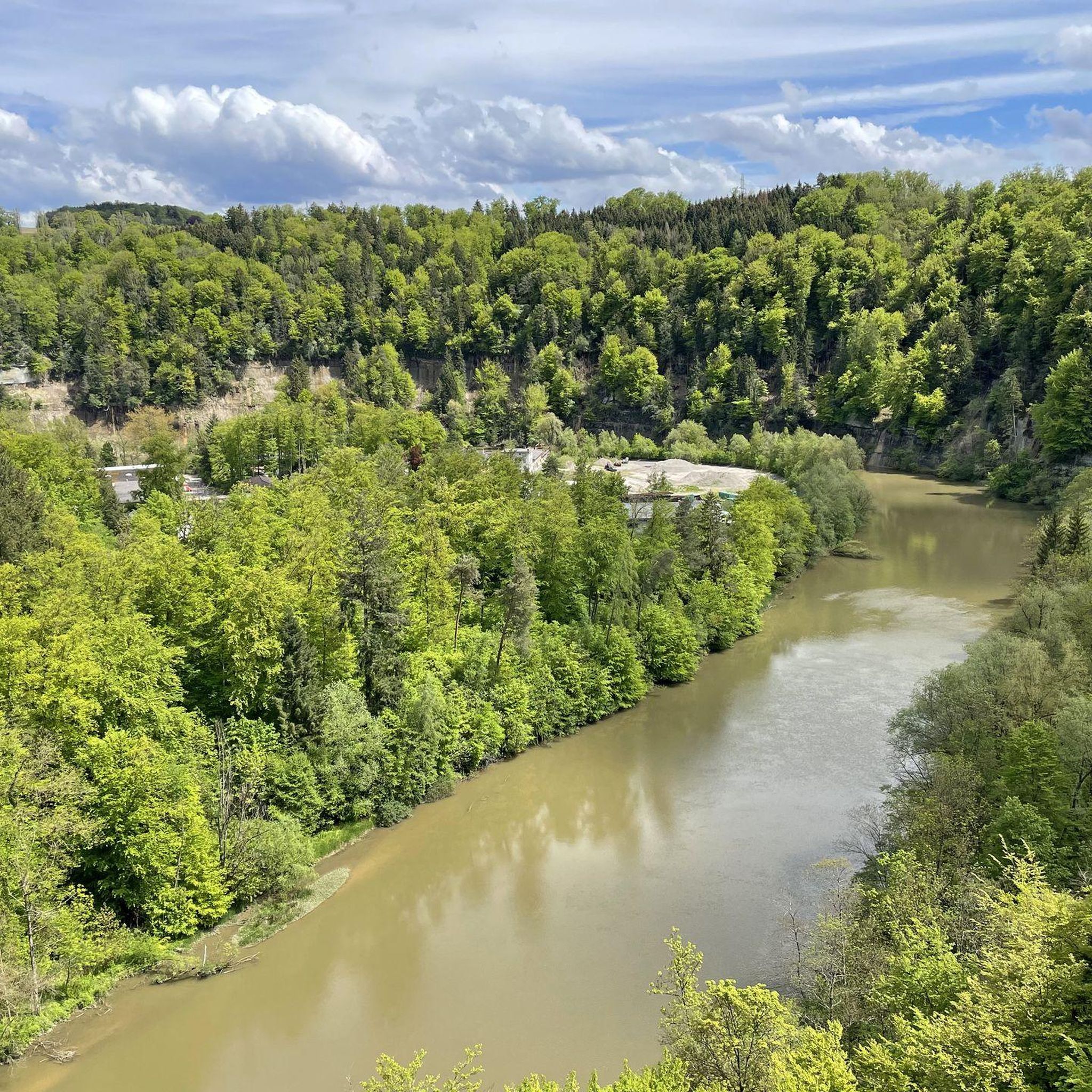
wild, jagged bank, with a view of the Intyamon
1
0
Frequently Asked Questions
What kind of lakes can I expect to find around Marly?
The Marly region, specifically in the Fribourg canton of Switzerland, is characterized by a diverse mix of natural and artificial lakes. You'll find large reservoirs, historical sites integrated with water bodies, and protected moorlands. These range from the imposing Greyerzersee Dam, which forms Switzerland's third-largest reservoir, to natural gems like Düdinger Moos Nature Reserve.
Are there historical sites or unique landmarks near the lakes?
Yes, the region boasts several historical landmarks. For instance, Ogoz Island on Lake Gruyère features ruins of two medieval castles and a chapel. Another significant site is the Maigrauge Dam, which was Europe's first concrete dam, built in 1872, and can be crossed on foot or by bike.
What outdoor activities can I do near the lakes around Marly?
The area around Marly offers a variety of outdoor activities. You can explore numerous hiking trails, such as the 'Marly Ice Rink – Trail Along the Gérine loop', or enjoy mountain biking on routes like the 'Poffetsmühle – View of the Fribourg Alps loop'. For more options, you can check out the hiking guide or the MTB trails guide for Marly.
Are there any family-friendly lakes or activities in the area?
Absolutely. The Maigrauge Dam is considered family-friendly, offering a unique historical experience that can be explored on foot or by bike. Additionally, the region's lakes provide opportunities for peaceful walks and observing wildlife, which can be enjoyable for families. Many trails around the lakes are suitable for various ages.
Can I bring my dog to the lakes around Marly?
Yes, some areas are dog-friendly. For example, Ogoz Island is noted as being dog-friendly, allowing you to explore its historical ruins and natural surroundings with your canine companion.
What kind of natural features and wildlife can I observe?
The lakes and surrounding areas are rich in natural beauty. You can find diverse flora and fauna, especially along the east shore of Lake Gruyère, which offers views of the Pre-Alps and turquoise waters. The Düdinger Moos Nature Reserve is a protected moorland where you can observe unique wetland ecosystems and various species.
Are there accessible trails for people with mobility challenges?
Yes, the Düdinger Moos Nature Reserve is listed as wheelchair accessible, providing an opportunity for everyone to enjoy the natural beauty of the moorland and its surroundings.
What is the best time to visit the lakes around Marly?
While specific seasonal recommendations for all lakes aren't provided, the Fribourg region's lakes, fed by alpine snowmelt, offer crystal-clear waters and stunning views, making them appealing during warmer months for swimming and sunbathing, such as at Schwarzsee. Spring and autumn are also excellent for hiking and enjoying the changing landscapes.
Are there opportunities for swimming in the lakes?
Yes, some lakes in the Fribourg region are suitable for swimming. Schwarzsee, a picturesque mountain lake, is particularly popular for swimming and sunbathing on warm days, known for its clear waters.
What makes Lake Gruyère a notable destination?
Lake Gruyère is an artificial lake created by the Rossens dam. Its east shore offers unique views of the Pre-Alps and is known for its rich flora, fauna, and heritage of the Gruyère region. It also hosts Ogoz Island, a historical site with medieval castle ruins.
Are there any other significant lakes in the broader Fribourg region?
Beyond the immediate vicinity of Marly, the Fribourg region is home to other magnificent bodies of water. These include Lake Neuchâtel, the largest lake entirely within Swiss territory, and Lake Murten (Lac de Morat), which holds historical significance with UNESCO World Heritage pile dwellings along its shores.
What do visitors enjoy most about the lakes around Marly?
Visitors appreciate the harmonious and impressive natural landscapes, particularly around the dam walls like Greyerzersee Dam. The opportunity to discover beautiful areas like the Düdinger Moos Nature Reserve and experience Swiss culture and nature while getting exercise, such as on Ogoz Island, are frequently highlighted.
Most popular attractions around Marly

Get inspired with the komoot mobile app


Explore more
Still not found your perfect lake around Marly? Check out the guides of these regions to see even more beautiful places.
