Top 10 Natural Monuments around Maladers
Best natural monuments around Maladers are found within the Graubünden region of Switzerland, offering diverse natural attractions. The area is characterized by alpine landscapes, majestic peaks, and varied ecosystems. These locations provide opportunities for hiking, enjoying scenic views, and experiencing the natural environment. The region around Maladers is known for its mountainous terrain and historical natural landmarks.
Best natural monuments around Maladers
- The most popular natural monuments is Weisshorn Summit (2,653 m), a summit that offers panoramic views from…
Last updated: April 28, 2026
Dreibündenstein Monument
Highlight • Monument
Translated by Google •
Tip by

Weisshorn Summit (2,653 m)
Highlight • Summit
Translated by Google •
Tip by

Sign up now to discover places like this
Get recommendations on the best single tracks, peaks, & plenty of other exciting outdoor places.
Sign up for free
Pflüda Natural Forest Reserve
Highlight • Forest
The forest area of the "Pflida" natural forest reserve lies on the southern flank of the Calanda massif. The northern boundary is formed by the upper …
Translated by Google •
Tip by

St. Luzi Chapel
Highlight • Religious Site
Translated by Google •
Tip by

Glattwangseeli (2265 m)
Highlight • Lake
The Glattwangseeli is a small mountain lake in the municipality of Jenaz in the canton of Graubünden. It is located at 2260 meters above sea level …
Translated by Google •
Tip by
Sign up for free to discover even more natural monuments around Maladers.
Sign up for free
Already have an account?
Start today with a free account
Your next adventure awaits.
Login or Signup

Tips from the Community

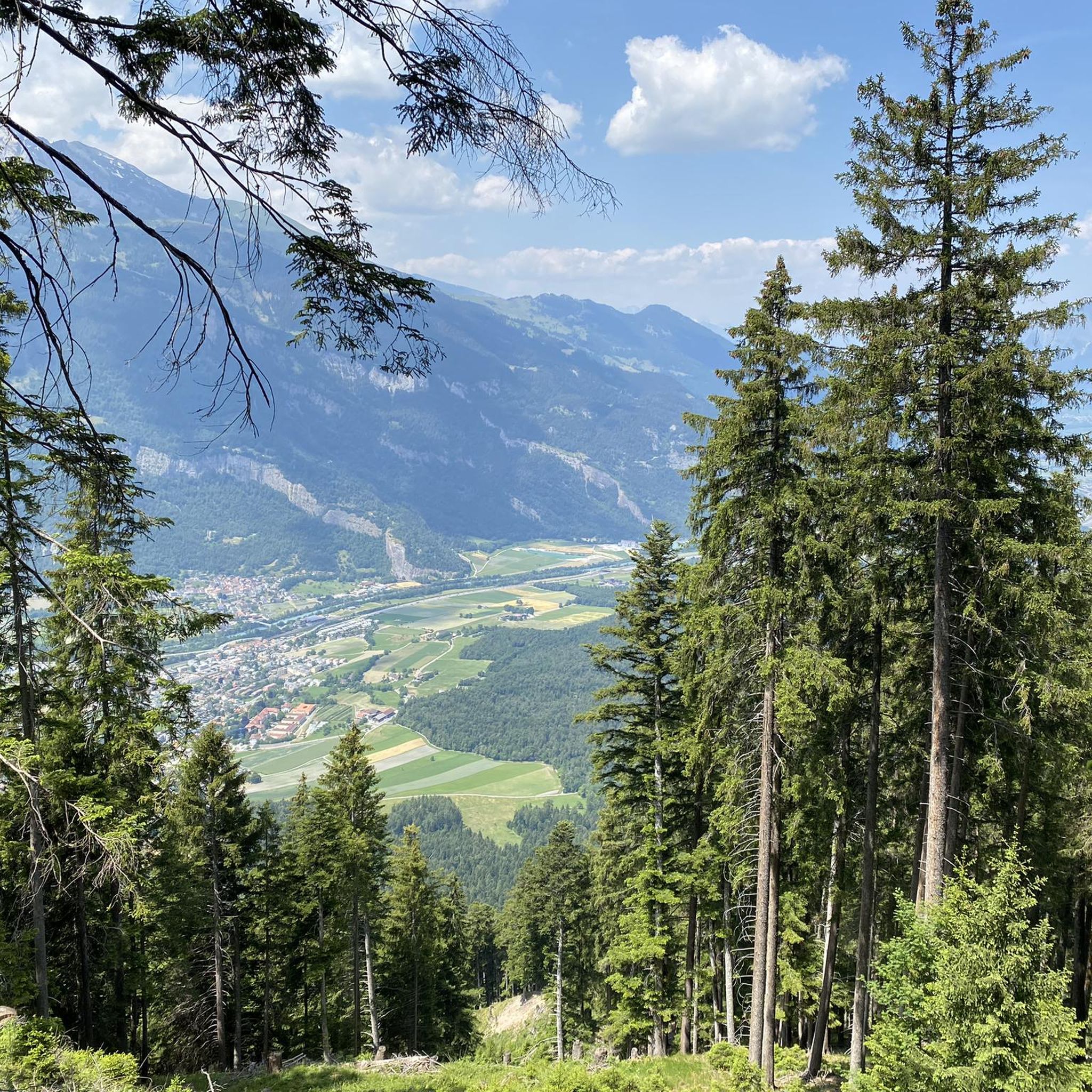
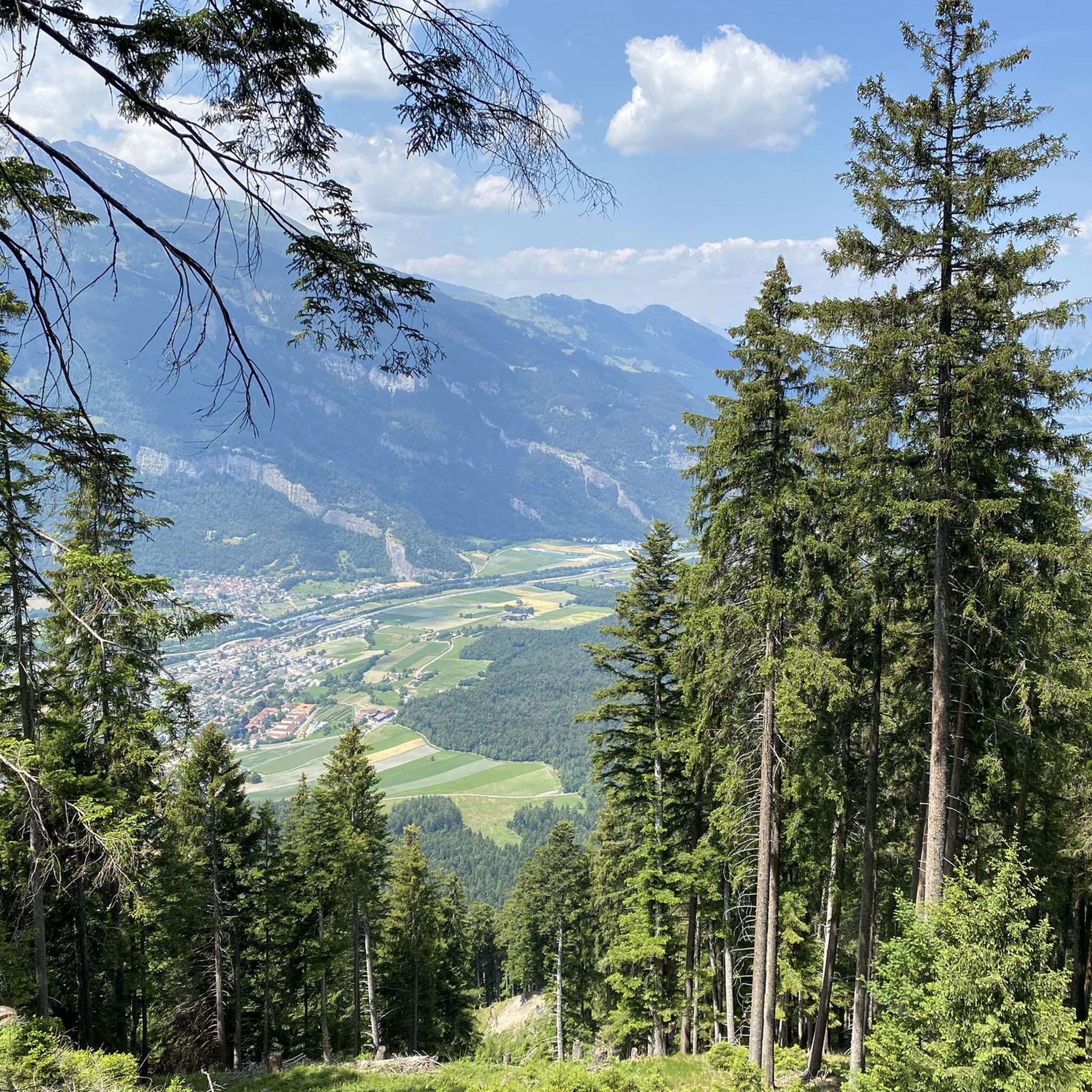
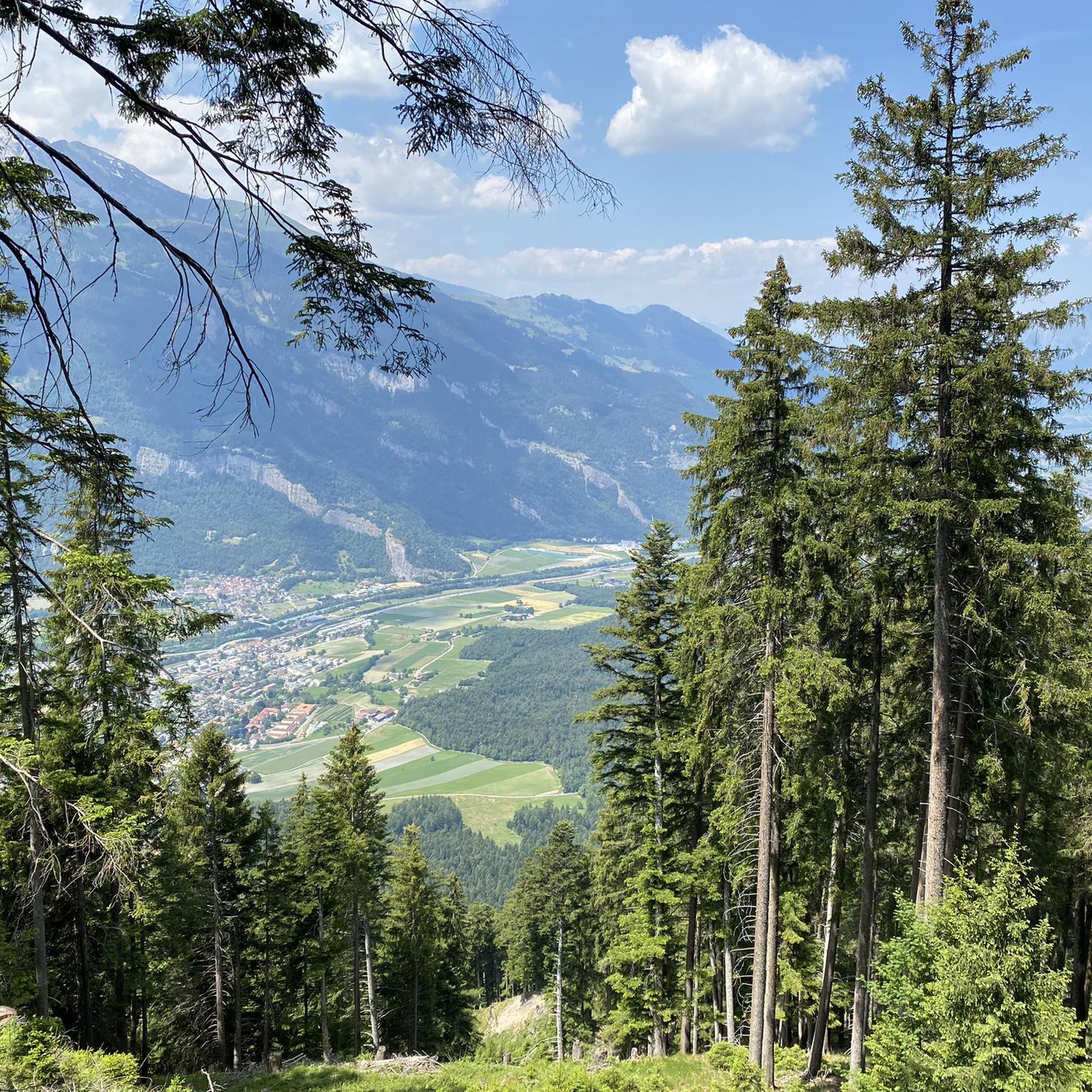
Prepare for a long, exhausting but amazing 2000 descent!
0
0

Pflida Natural Forest Reserve The forest area of the "Pflida" natural forest reserve lies on the southern flank of the Calanda massif. The northern boundary is formed by the upper edge of the rocky slope at the transition to the Taminser Älpli. To the east, the reserve borders the Adlachöpf on Felsberg soil. To the west, the rocky peak between Foppachopf and Foppa-Stein forms the boundary. To the south, there is no natural boundary, but rather a management boundary. 1. Size and Proportion of Forest The reserve covers an area of 114 hectares. According to the stand mapping, around 80 hectares of this is productive high forest. 1. Accessibility / Access The reserve can be reached on foot via the Walderweg, from Felsberg via Zaldei and Tschingels Goldgruoben in approximately 1.5 minutes, and from Tamins via Benis Boden to Buochenen Boden in approximately 60 minutes. 2 Objectives of the Natural Forest Reserve The objectives of the Natural Forest Reserve are: − To allow natural forest development on special dry sites in the montane zone by avoiding management. − To protect and promote rare plant and animal species, especially those that benefit from undisturbed, natural forest development. − To allow a high proportion of old and dead wood (standing and lying), thus protecting the habitat of many rare xylobionts (wood-feeding insects), fungi, and lichens living in the forest. − Create a demonstration of natural forest dynamics for research and permit scientific work in the natural forest reserve. − Provide the public with appropriate on-site information. Text / Source: Canton of Graubünden, Office for Forests and Natural Hazards https://www.gr.ch/DE/institutionen/verwaltung/diem/awn/dokumente_oeko/nwr_23_Pflida.pdf
16
0

A true highlight on this route is the St. Luzi Chapel. It invites you to pause and take a break. Several benches are set up outside. The chapel is apparently open during the day.
1
0

Top view into the distance and of Arosa
0
0

This small chapel, which is nestled in a rock niche, is a wonderful "power place". There are benches for resting and, for the brave, a path up to the front to enjoy the view from the rocks. The diverse geological traces in the rock above and behind the chapel are particularly fascinating!
0
0

An idyllic place that is easy to reach on the way from Chur to the Mittenberg.
0
0

You can reach the 2,653-meter-high summit of the Weisshorn either by taking a strenuous but very worthwhile hike, or by taking the cable car in a very relaxed manner while sitting down. A fantastic view in all directions awaits you at the top.
2
0

The Dreibündenstein in Graubünden is a hill at an altitude of 2,156 metres south of the city of Chur and the Furggabüel mountain, which is at an altitude of 2,174 metres. They are only separated by a 15-metre-high saddle and a distance of 500 metres. The point is not a mountain peak, but a historical place. It was the only triple border point of the former Free State of the Three Leagues. The original stone from 1722 is on display in the Rätschen Museum in Chur. The replacement stone from 1915 bears the three coats of arms of the Three Leagues. The Three Leagues included the Grey League with the judicial community of Rhäzüns, the Church League of Ortenstein Castle and the Ten Courts League of Churwalden.
4
0
Frequently Asked Questions
What natural monuments can I explore around Maladers?
The region around Maladers offers diverse natural attractions. You can visit the Weisshorn Summit (2,653 m) for panoramic views, the historical Dreibündenstein Monument, or the serene Pflüda Natural Forest Reserve. Other notable spots include St. Luzi Chapel, which offers views over Chur, and the mountain lake Glattwangseeli (2265 m).
What kind of views can I expect from the natural monuments near Maladers?
Many natural monuments around Maladers offer breathtaking panoramic views. From the Weisshorn Summit, you'll get extensive views in all directions. The Dreibündenstein Monument also provides fantastic vistas of the surrounding Alps. Even the St. Luzi Chapel offers a beautiful outlook over the city of Chur.
Are there any historical natural monuments in the Maladers area?
Yes, the Dreibündenstein Monument is a significant historical site. Located at 2,156 meters, it marks the former triple border of the 'Three Leagues,' which were the predecessors of the canton of Graubünden. The site features an updated stone from 1915 bearing the three coats of arms of the former leagues, connecting natural beauty with rich regional history.
What outdoor activities can I do near the natural monuments around Maladers?
The area around Maladers is ideal for various outdoor activities. You can enjoy mountain hiking, cycling, and gravel biking. For specific routes, explore the Mountain Hikes around Maladers guide, the Cycling around Maladers guide, or the Gravel biking around Maladers guide.
Are there hiking trails to reach these natural monuments?
Absolutely. Many natural monuments are accessible via hiking trails. For instance, the Weisshorn Summit can be reached by a strenuous but rewarding hike, or you can take a cable car. The Dreibündenstein Monument is also a popular hiking destination. You can find detailed routes in the Mountain Hikes around Maladers guide.
What is the best time of year to visit the natural monuments around Maladers?
The best time to visit largely depends on the activity. For hiking and enjoying the alpine scenery, late spring to early autumn (May to October) generally offers the most favorable weather conditions. During winter, some areas might be suitable for winter hiking or snowshoeing, but accessibility can vary.
Are there family-friendly natural monuments around Maladers?
While specific 'family-friendly' designations aren't always given, many natural monuments can be enjoyed by families depending on the chosen route and activity level. Areas like the Pflüda Natural Forest Reserve offer opportunities for gentle walks. For higher summits like Weisshorn, a cable car option makes it accessible for families.
What are the difficulty levels of hikes to these natural monuments?
Hikes to the natural monuments around Maladers vary in difficulty. For example, reaching the Weisshorn Summit can be a strenuous hike, while other trails might be moderate or easy. Always check the specific route details and elevation profiles before setting out. The Mountain Hikes around Maladers guide provides difficulty ratings for various routes.
Are there any natural forest reserves to visit near Maladers?
Yes, the Pflüda Natural Forest Reserve is a notable natural forest area. It lies on the southern flank of the Calanda massif and is dedicated to allowing natural forest development, protecting rare plant and animal species, and providing a demonstration of natural forest dynamics. It's accessible on foot from Felsberg or Tamins.
Can I find any mountain lakes among the natural monuments?
Yes, the Glattwangseeli (2265 m) is a small mountain lake located at 2260 meters above sea level on the northern flank of the Glattwang mountain. It offers a picturesque spot and can be reached by hiking from the Fideriser Heuberg.
What do visitors particularly enjoy about the natural monuments around Maladers?
Visitors frequently praise the stunning panoramic views from summits like Weisshorn and the historical significance of sites like the Dreibündenstein Monument. The opportunity to pause and enjoy the scenery, as well as the diverse hiking experiences, are also highly valued by the komoot community.
Most popular attractions around Maladers

Get inspired with the komoot mobile app


Explore more
Extend your search for the best caves by checking out these guides of the top ones around Maladers:
