Top 20 Natural Monuments around Thunersee
Natural monuments around Thunersee offer a diverse landscape characterized by its prominent lake, surrounding mountains, and geological formations. The region features a mix of subterranean cave systems, high-altitude peaks, and unique rock structures. These natural features provide opportunities for exploration and observation of the area's geology and ecology.
Best natural monuments around Thunersee
- The most popular natural monuments is St. Beatus Caves, a cave system that features illuminated paths through stalactite formations and wide halls. According to legend, Saint…
Last updated: June 26, 2026
Burgfeldstand Summit
Highlight • Summit
Highest peak of the so-called "Güggisgrat", which extends south of the Justistal over the Niederhorn to the Gemmenalphorn. Legend has it that this peak represents the ruins …
Translated by Google •
Tip by

Gemmenalphorn
Highlight • Summit
Translated by Google •
Tip by
Sign up now to discover places like this
Get recommendations on the best single tracks, peaks, & plenty of other exciting outdoor places.
Sign up for free
Chrindi Middle Station (Stockhornbahn)
Highlight • Rest Area
Translated by Google •
Tip by
St. Beatus Caves
Highlight • Cave
Translated by Google •
Tip by

Waterfall in front of the Beatus Caves
Highlight • Waterfall
Translated by Google •
Tip by

Sign up for free to discover even more natural monuments around Thunersee.
Sign up for free
Already have an account?
Start today with a free account
Your next adventure awaits.
Login or Signup

Tips from the Community

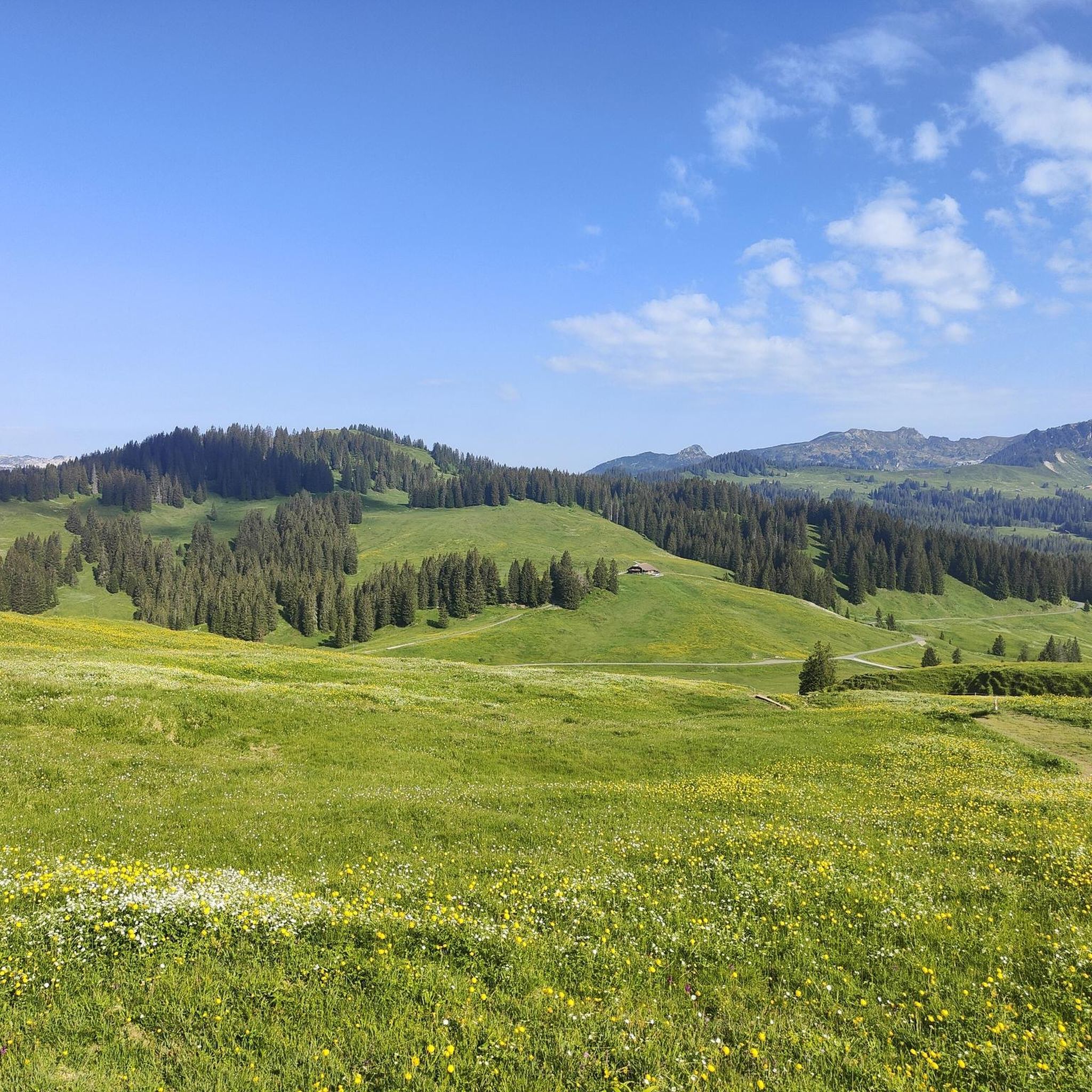
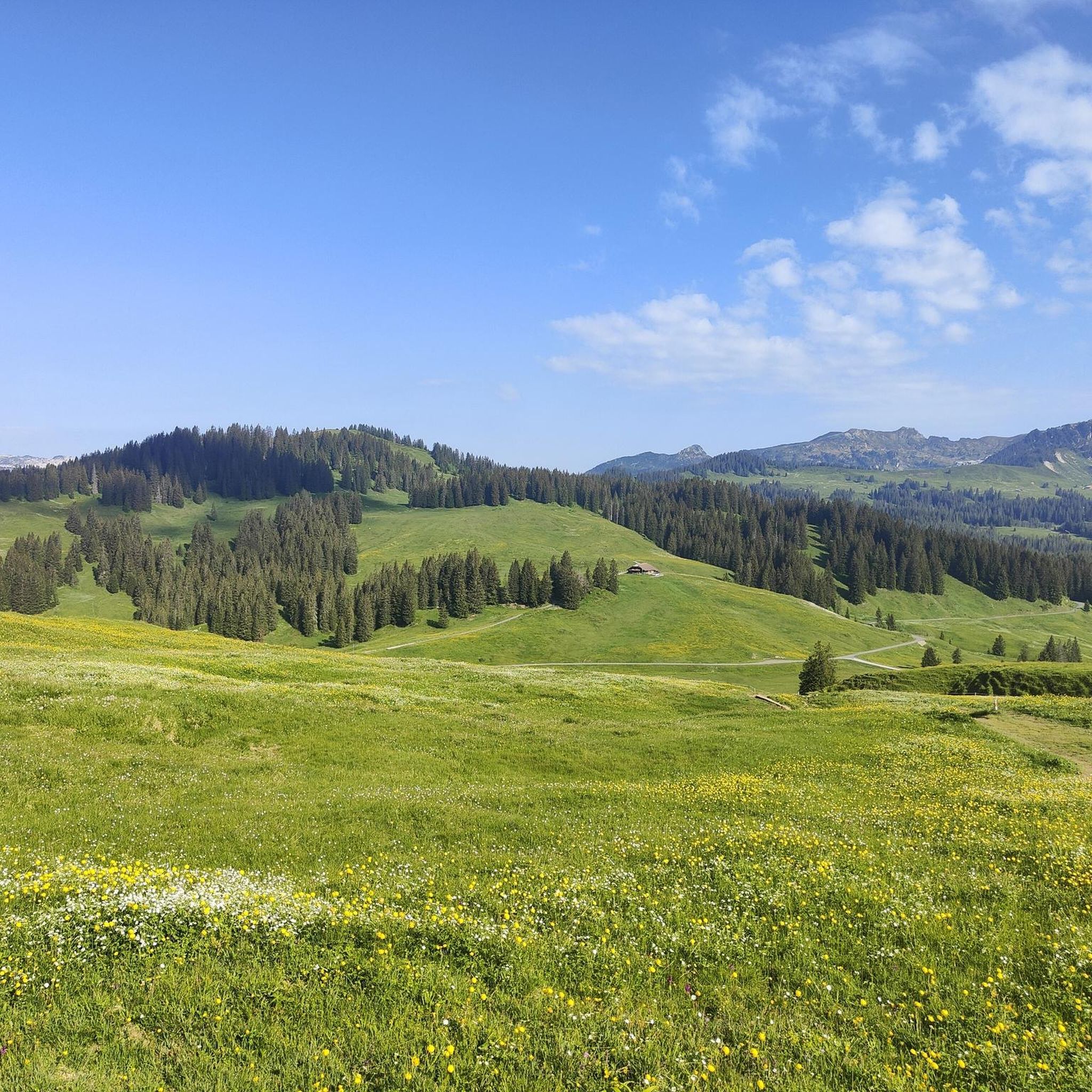
The Gemmenalphorn is a scenic summit above Lake Thun and part of the Niederhorn chain. The distinctive grassy mountain reaches an altitude of 2061 meters and offers an impressive panorama of the Eiger, Mönch, and Jungfrau, as well as the deep blue Lake Thun. The hike from the Niederhorn via the scenic ridge path is particularly popular. In summer, ibex often graze in the area, which is why the region is also highly valued by wildlife observers. Despite its height, the Gemmenalphorn is technically quite easy to reach and ideal for pleasure hikers.
2
0
The ascent from the east can be very tricky in spring, as there may still be snow in exposed places.
2
0

Great ascent aid for snowshoe hikes🥰
1
0

🚡 Chrindi middle station - the gateway to adventure on the Stockhorn 🏔️✨ The Chrindi middle station is the perfect starting point for unforgettable experiences around the Stockhorn: 🌊 Hinterstockensee: Can be reached in just a few minutes - ideal for swimming, fishing or simply relaxing by the water. 🥾 Hiking paradise: Start varied hikes here with breathtaking views of the Simmental and the Bernese Alps. 🚠 Onward journey: Take the Stockhorn cable car to the summit station for a 360° panorama.
0
1
Wonderful vantage point. Can be reached on snowshoes from the Niederhorn mountain station in about an hour.
2
0
starting point for beautiful snowshoe tours
11
2
The signpost at the Burgfeldstand is impossible to miss
6
0
Frequently Asked Questions
What unique geological features can I explore around Thunersee?
The Thunersee region is rich in diverse geological formations. You can explore impressive subterranean cave systems like the St. Beatus Caves, which feature illuminated paths through stalactite formations and wide halls. Additionally, you'll find fascinating Karst Rock Formations, characterized by rugged limestone eroded by weathering, creating cracks, crevices, and gullies.
Which natural monuments offer the most spectacular panoramic views of Lake Thun and the Alps?
For breathtaking panoramic views, consider visiting the Niesen, often called the 'Swiss Pyramid,' which offers unforgettable 360-degree vistas from its summit. The Niederhorn, accessible by cable car, also provides spectacular views of Lake Thun and the Bernese Alps. From the Burgfeldstand Summit and Gemmenalphorn, you can also enjoy magnificent outlooks over the region.
Are there family-friendly natural monuments suitable for children around Thunersee?
Yes, several natural monuments are great for families. The St. Beatus Caves offer an exciting underground adventure with a playground and dragon slide for children. The Niesen features a 'Gschichtefahrt' (story trip) and a playground at the summit. The Niederhorn also provides a range of activities suitable for families, including wildlife observation tours.
What outdoor activities can I do near these natural monuments?
The region around Thunersee offers a variety of outdoor activities. Near the natural monuments, you can find numerous hiking trails, from easy walks to more challenging mountain hikes. For example, the Stockhorn is ideal for hiking around its picturesque lakes, and the Niederhorn offers well-maintained trails and scooter bike descents in summer. You can also find excellent hiking routes, running trails, and gravel biking tours throughout the Thunersee area.
What are the accessibility options for reaching the mountain peaks and other natural monuments?
Many of the prominent natural monuments are easily accessible. The Niesen can be reached by a historic funicular railway. The Niederhorn is accessible via cable car from Beatenbucht, and the Stockhorn has a cable car from Erlenbach. The St. Beatus Caves are also easily accessible with well-maintained paths.
What is the best time of year to visit the natural monuments around Thunersee?
The best time to visit depends on the activities you're interested in. Spring and summer are ideal for hiking, exploring caves, and enjoying the lush landscapes. Wildlife observation tours on the Niederhorn are particularly good from July to September. Autumn offers beautiful colors, especially around the Giessbach Falls. In winter, areas like the Niederhorn and Stockhorn transform into snowshoeing and small ski areas, offering a different kind of natural beauty.
Are there any natural monuments that are particularly good for wildlife observation?
Yes, the Niederhorn region is known for its rich wildlife. Visitors might spot ibex, chamois, marmots, and golden eagles in their natural habitat. Wildlife observation tours are available, offering a chance to see ibex colonies up close, particularly from July to September. Additionally, smaller nature reserves like Gwatt and Neuhaus-Weissenau, with their reed beds, are excellent for birdwatching.
Can I find food and drink options near the natural monuments?
Yes, several natural monuments offer dining facilities. The St. Beatus Caves have the 'Stein & Sein' restaurant with panoramic views over Lake Thun. At the summit of the Niesen, the Berghaus Niesen Kulm offers culinary delights. The Chrindi Middle Station (Stockhornbahn) also has a restaurant at 1,642 meters altitude, providing snacks and simple meals.
Are there any natural monuments with historical significance?
The St. Beatus Caves hold significant historical and legendary importance. According to legend, Saint Beatus lived here after expelling a fire-breathing dragon in the sixth century. The caves also feature a museum providing insights into their history, including prehistoric finds. The historic funicular railway to the Niesen summit dates back to 1910, adding to its historical charm.
Beyond the main attractions, are there any quieter natural spots for birdwatching or tranquil walks?
Yes, for those seeking tranquility and birdwatching opportunities, the smaller nature reserves at Gwatt and Neuhaus-Weissenau are excellent choices. These areas are characterized by reed beds and picturesque paths, offering ideal conditions for observing local birdlife and enjoying peaceful walks with views of the Niesen and Niederhorn. They are particularly quiet in winter but no less spectacular.
What is special about the Giessbach Falls, even though they are not directly on Lake Thun?
While located on the adjacent Lake Brienz, the Giessbach Falls are a significant natural spectacle in the broader region. These impressive falls plunge 400 meters in 14 tiers past the historic Grandhotel Giessbach. You can explore various trails, including a section that leads behind one of the cascades, offering a unique and immersive experience. The falls are also spectacularly illuminated at night and can be reached by a historic funicular from the Lake Brienz boat station.
What do visitors enjoy most about the natural monuments around Thunersee?
Visitors frequently praise the diverse experiences offered by the natural monuments. Many appreciate the unique underground adventure of the St. Beatus Caves and the stunning panoramic views from mountain summits like the Niesen and Niederhorn. The opportunity for various outdoor activities, from hiking to snowshoeing, and the family-friendly amenities also receive high acclaim. The geological formations and the rich natural beauty of the region are consistently highlighted as major draws.
Most popular routes around Thunersee
Most popular attractions around Thunersee

Get inspired with the komoot mobile app


Explore more
Extend your search for the best caves by checking out these guides of the top ones around Thunersee:
