Top 7 Natural Monuments in the Tianmu Mountains
Best natural monuments in the Tianmu Mountains are characterized by diverse natural features, including ancient forests, unique peaks, and varied rock formations. This UNESCO Biosphere Reserve, located west of Hangzhou, is recognized for its ecological significance and rich biodiversity. The region is home to a wide array of plant species and offers numerous natural monuments for exploration.
Best natural monuments in the Tianmu Mountains
- The most popular natural monuments is Guest-Greeting Pine (Ying Ke Song), a natural monument that…
Last updated: June 26, 2026
Guest-Greeting Pine (Ying Ke Song)
Highlight • Natural Monument
The pine is the more than 800-year-old Guest Greeting Pine that grows on the Jade Screen Peak of Yellow …
Translated by Google •
Tip by

Xihai Grand Canyon, Huangshan
Highlight (Segment) • Canyon
Descent or ascent from the Grand Canyon of Huangshan
china-tour.cn/Huangshan/Xihai-Grand-Canyon.htm
The Xihai Grand Canyon, briefly called the Fascinating Scenic Area, is a …
Translated by Google •
Tip by
Sign up now to discover places like this
Get recommendations on the best single tracks, peaks, & plenty of other exciting outdoor places.
Sign up for free
One Hundred Ladders, Huangshan
Highlight • Climb
Translated by Google •
Tip by
Celestial Capital Peak (Tiandu Peak)
Highlight • Summit
Showing Translation
Tip by
Buxian Bridge (Bridge of the Immortals)
Highlight • Bridge
It has several names: Fairyland Bridge or Buxian Bridge or
the Bridge of the Immortals,
This bridge passes …
Translated by Google •
Tip by
Carp's Backbone (Jiyu Bei), Mount Huangshan
Highlight • Climb
Tip by
Jiuhuashan Panorama Trail
Highlight • Trail
Translated by Google •
Tip by

Start today with a free account
Your next adventure awaits.
Login or Signup
Popular around Tianmu Mountains
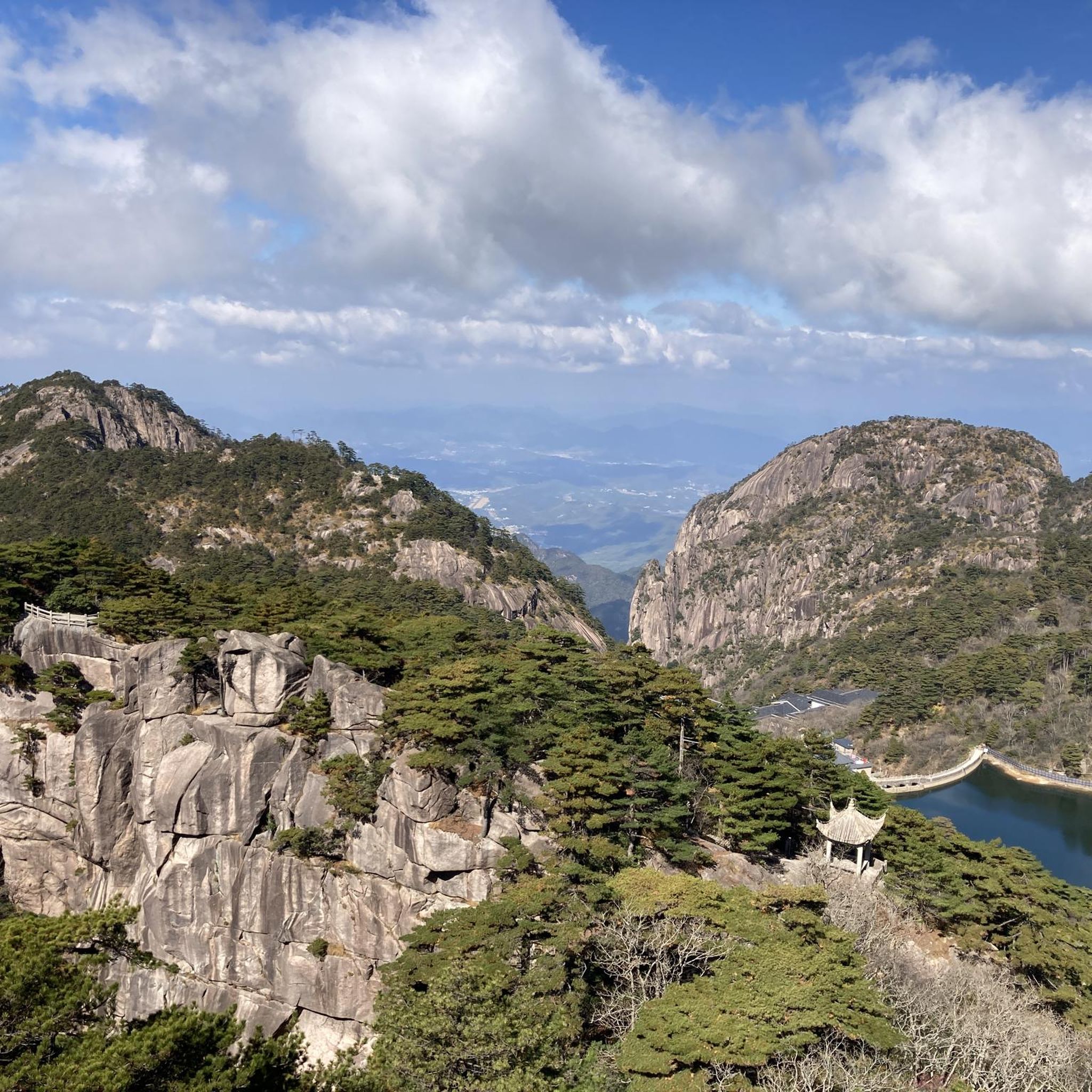
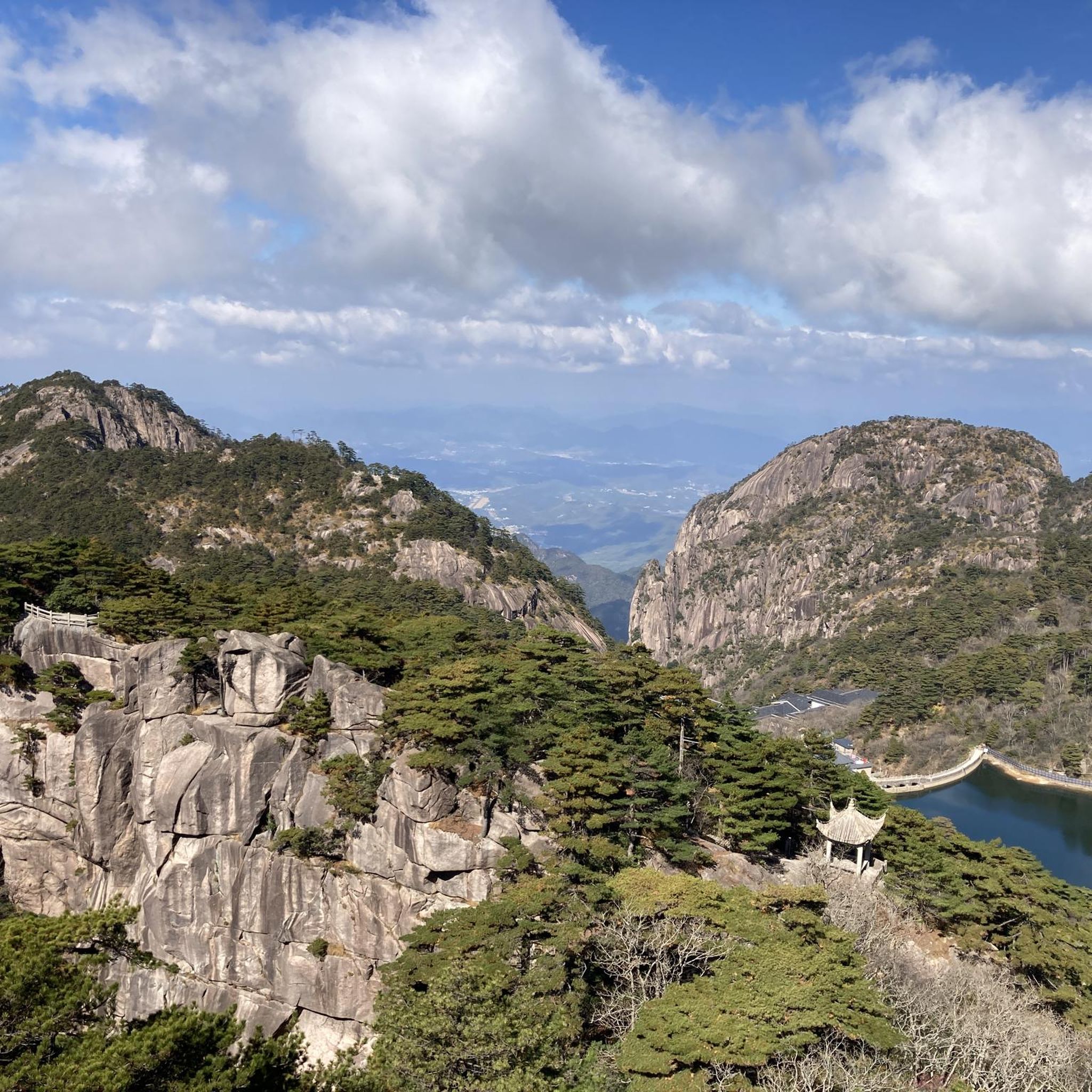
Tips from the Community

Please note that last admission is until 3pm. After that, you cannot go up.
0
0

The view from this panoramic trail is very impressive. The trail itself is also worth seeing. We took the circular route around the mountain back to the cable car. The granite steps aren't for everyone. I'd rather do the panoramic trail twice. In addition to the 160 RMB entrance fee, there are also costs for the bus ride and the cable car.
0
0

A very beautiful climb between two rocks. This was my first highlight on TV, which made me visit Haungshan.
0
0
The most spectacular part of the Huangshan Mountains, Descent or ascent from the Grand Canyon of Huangshan http://www.china-tour.cn/Huangshan/Xihai-Grand-Canyon.htm The Xihai Grand Canyon, briefly called the Fascinating Scenic Area, is a new scenic area that only opened on May 1, 2001. It covers the highlights of the Xihai Area (the western part of the Huangshan Scenic Area), starting at the Cloud Shedding Pavilion, linking the White Cloud Area to the Buxian Bridge and creating a magnificent all-round sightseeing route. Its 25 square kilometers feature many unique rock formations, such as the Upside-Down Boat, the Lady Playing Piano, the Dog Watching the Sky, the Man Walking on a Stilt, and fantastic peaks. Archway Peak, Nine Dragon Peak, Double Bamboo Shoot Peak, Stone Bed Peak, Stone Pillar Peak, and Pine Forest Peak, to name a few. The area is home to many lush pine trees, and the great historical ones have names. You'll be immersed in your surroundings and find yourself in an amazing painting. The scenery is constantly changing as you walk on steep steps that usually cling to precipices. Every step reveals a breathtaking view, allowing you to simply point your camera and take a perfect photo almost anywhere along the way. No wonder it's called the Fascinating Scenic Area. A 4.5km downhill walk takes you deeper and deeper into the gorge, with cliffs and peaks getting higher and higher, reaching the Buxian Bridge. It's a true Grand Canyon! Ahead of you from the Buxian Bridge, the 3km long steps lead you through the White Cloud Area into the Tianhai Area. It's truly a difficult climb, but you'll be rewarded with impressive views. This very remote and fantastically scenic area, known as the Grand Canyon of the West Sea, is becoming increasingly popular. It is a must-see for the near future. !!! Addendum !!! After my visit in 2007, the cable car in the Xihai Gorge (West Sea Grand Canyon) of the Huangshan Mountains was built. It was completed and put into operation in June 2013. Construction itself began in April 2011 and took 26 months.
0
0
One of the top highlights of the Huangshan Mountains is this bridge. It has several names: Fairyland Bridge or Buxian Bridge or the Bridge of the Immortals, This bridge passes through two tunnels carved out of the rock of two neighboring mountains and hangs over a narrow gorge. This stone bridge is richly carved. There are many steps and steep cliffs before you reach this bridge. Whether you come up from the valley or fight your way down from above, it is a strenuous task, especially since you have to go back up on foot. Nevertheless, anyone who has reached the Bridge of the Immortals or Fairyland Bridge is rewarded with an unparalleled view of the surroundings. If you are granted the view, which was not the case for me, but the mystical mist-covered surroundings make up for it.
0
0
The Guest Greeting Pine is the most famous tree of Huangshan. The pine is the more than 800-year-old Guest Greeting Pine that grows on the Jade Screen Peak of Yellow Mountain at almost 1,700 meters above sea level. The tree got its name because of two large branches that were about halfway up its trunk, giving the appearance of greeting someone with open arms.
0
0
The Celestial Capital Peak is one of the three highest peaks of Huangshan. It has a height of 1,810 meters. Other maps show 1,829 meters. A strenuous hike brings one to the summit. For me, the most beautiful but also the steepest peak. I could not visit the highest peak, Lotus Peak, as one of the two peaks is/was closed for years alternately for renovation/restoration. Fortunately, the Celestial Capital Peak was free for me. My Chinese tour guide did not want to go with me and I had to sign that I was undertaking the tour at my own risk. The reason is that without absolute freedom from vertigo, one should not walk this airy path. As a Dolomite hiker and light via ferrata climber, I didn't see it that way 😉
1
0
Carps Backbone of Mount Huangshan is a cliff (also called JiYu Bei) It,is on the way to the top of Celestial capital peak. (Tiandu Feng) one of the three main peaks of Huangshan and also the steepest way.
0
0
Frequently Asked Questions
What unique natural features can I explore in the Tianmu Mountains?
The Tianmu Mountains, a UNESCO Biosphere Reserve, are renowned for their diverse natural features. You can discover ancient and diverse arboreal species, unique peaks with summit ponds, picturesque waterfalls, deep canyons, and distinctive rock formations. The region is often called the 'Kingdom of Big Trees' due to its exceptional forest resources.
Are there ancient trees or significant botanical sites in the Tianmu Mountains?
Yes, the Tianmu Mountains are a botanical treasure. They are home to the world's only remaining truly wild population of ginkgo trees, considered living fossils. You can also find the 'Giant Tree King,' a massive Japanese cedar, and the world's tallest golden larch specimens. The critically endangered Tianmu Ironwood, with only five known wild specimens globally, also resides here.
What kind of peaks and viewpoints can I find in the Tianmu Mountains?
The Tianmu Mountains are characterized by their distinctive peaks. The East and West Tianmu Peaks, reaching over 1,480 meters, each feature a permanent pond near their summits. For breathtaking panoramic views, including potential glimpses of the Qiantang River and Huangshan Mountain on clear days, visit Tianmu Immortal Peak (Xianren Peak), known for its grotesque rock formations and frequent clouds and mist.
Are there waterfalls or canyons to visit in the Tianmu Mountains?
Yes, the Tianmu Mountains feature numerous waterfalls and deep canyons. The East Fall Grand Canyon in East Tianmu Mountain is a 1.2 km long canyon with luxuriant plants, showcasing excellent primitive ecological environments, waterfalls, and unique rock formations. Smaller, scattered 'General Waterfalls' can also be found throughout the mountainsides, contributing to the tranquil atmosphere.
What are some of the most popular natural monuments recommended by visitors in the broader region?
Visitors frequently highlight several impressive natural monuments. Among them is the Guest-Greeting Pine (Ying Ke Song), an over 800-year-old pine tree known for its welcoming branches. The Xihai Grand Canyon is also popular for its unique rock formations and lush pine trees, offering constantly changing scenery and impressive views from steep steps.
What are some challenging natural monuments for experienced hikers?
For those seeking a challenge, the Celestial Capital Peak (Tiandu Peak) offers a strenuous hike to its summit, known for being one of the steepest and most beautiful peaks in the broader region. Another challenging ascent is One Hundred Ladders, a scenic climb between two rocks that provides a unique and demanding experience.
What kind of unique rock formations can be found in the Tianmu Mountains?
Beyond specific peaks, the Tianmu Mountains are known for various 'odd-shaped rocks.' Notable formations include Lion Rock, described as a crouching tiger with a cave resembling a lion's mouth, and Four-sided Peak, which offers views of deep valleys, sharp cliffs, and ancient pines coiling from rock cracks, creating an awe-inspiring vista.
Are there hiking trails near these natural monuments?
Yes, there are numerous hiking opportunities. You can find a variety of routes, from easy to difficult, that allow you to explore the natural beauty of the region. For detailed hiking routes, including options like the 'Cliffside Pathway – Qingyun Pavilion loop,' you can explore the Hiking in the Tianmu Mountains guide.
What is the best time to visit the Tianmu Mountains for natural monuments?
While specific seasonal tips for the Tianmu Mountains are not detailed, generally, spring and autumn offer pleasant weather for exploring natural monuments, with comfortable temperatures and vibrant foliage. Summer can be lush but also bring more rain, while winter offers a different, often serene, snowy landscape.
What other outdoor activities can I do near the natural monuments in the Tianmu Mountains?
Besides hiking, the broader Tianmu Mountains region offers opportunities for road cycling. You can find various routes, from moderate to difficult, that take you through scenic landscapes. For more information on cycling adventures, check out the Road Cycling Routes in the Tianmu Mountains guide.
Are there any easy hiking trails suitable for families near the natural monuments?
Yes, there are easy hiking trails available that are suitable for a more relaxed experience. For example, the 'Cliffside Pathway – Qingyun Pavilion loop from 狮子峰' is an easy 4.1 km route. You can find more options for gentle walks in the Easy hikes in the Tianmu Mountains guide.
What is the significance of the Tianmu Mountains as a natural heritage site?
The Tianmu Mountains hold significant natural heritage status, designated as a UNESCO Biosphere Reserve in 1996 and expanded in 2024. This recognition highlights its importance as a 'genetic treasure trove of rare species' and its role in conserving diverse flora and fauna, including endangered species like the black muntjac and Chinese pangolin, alongside its stunning geological features and ancient forests.
Most popular routes in the Tianmu Mountains
Most popular attractions in the Tianmu Mountains

Get inspired with the komoot mobile app


Explore more
Extend your search for the best caves by checking out these guides of the top ones in the Tianmu Mountains:
