Top 17 Natural Monuments in Kolding
Best natural monuments in Kolding include diverse landscapes shaped by the last Ice Age, featuring hills, forests, and fjords. The region offers areas of historical significance and rich biodiversity. These natural spaces provide opportunities for outdoor activities and exploration of geological features. Kolding's natural monuments provide insight into the area's unique natural and cultural heritage.
Best natural monuments in Kolding
- The most popular natural monuments is Skamlingsbanken Obelisk, a natural monument that is the highest point in South Jutland, offering panoramic views. It is also a site of historical significance, commemorating Danish culture and language.
- Another must-see spot is Klebæk Høje Burial Mounds and Viking Ship Setting, a historical site and natural monument featuring Bronze Age burial mounds and a Viking Age ship setting. Visitors can explore ancient archaeological sites and a rune stone.
- Visitors also love Geographical Garden (Geografisk Have) Kolding, a 14-hectare adventure park and botanical garden with more than 2,000 different trees, bushes, and perennials. It is special for its diverse plant collections from around the world and an award-winning rose garden.
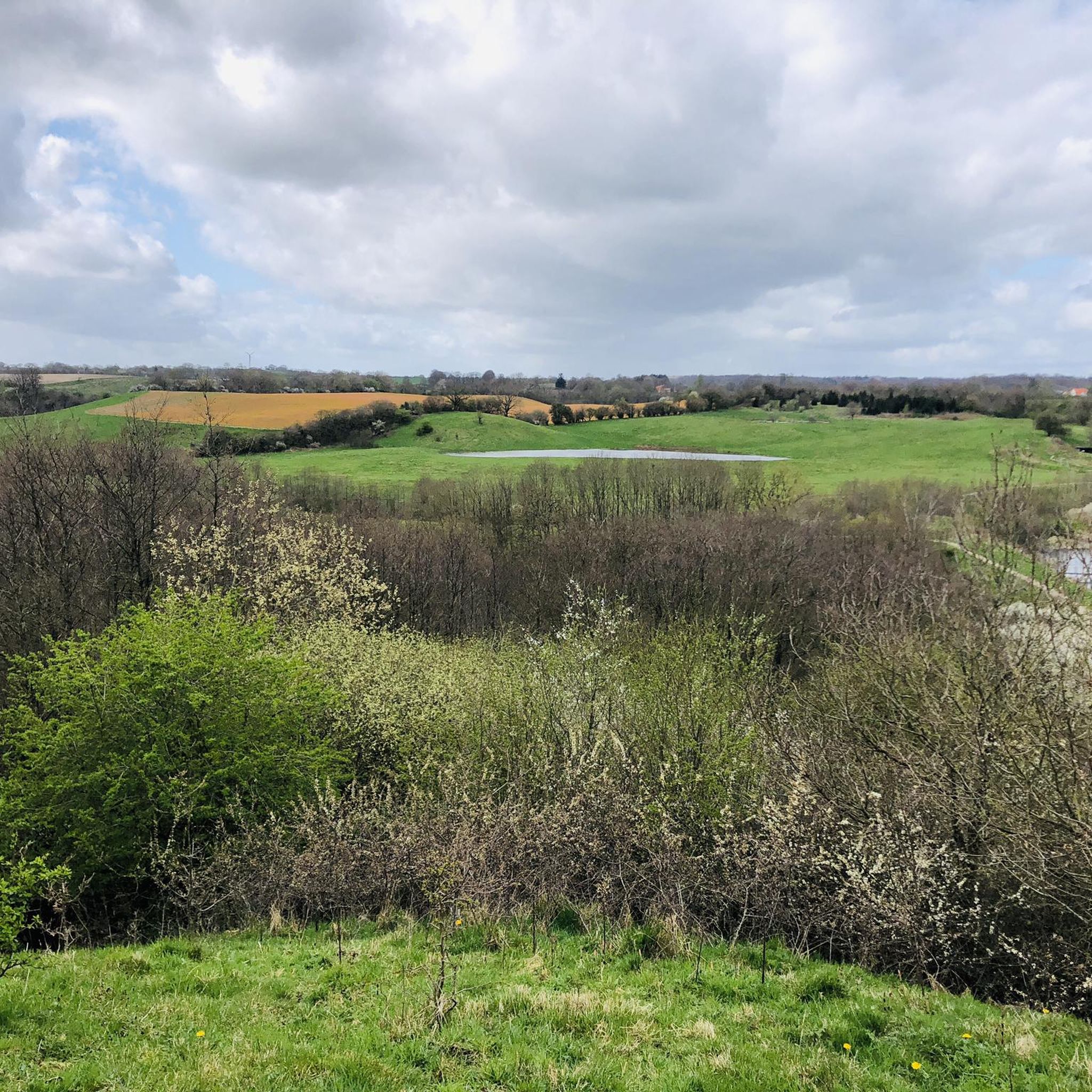
- Kolding is known for its varied natural monuments, including glacial formations, urban forests, and fjord landscapes. The region offers a variety of natural monuments to see and explore, from high viewpoints to ancient historical sites.
- The natural monuments in Kolding are appreciated by the komoot community, with 85 upvotes and 78 photos shared across 7 highlights.
Last updated: May 14, 2026
Skamlingsbanken Obelisk
Highlight • Monument
built by Prof. Meldahl from 25 Swedish granite blocks. In 1863 he was with the
Inscription ”In memory of the pioneers of the
niche thing in Schleswig ”and the name of 18
striking personalities completed. Because of the
Inaugural season did not take place, and
the war of 1864 began soon after. The area around
Skamling was occupied, and on March 21. blew up
Prussian soldiers the granite column. The stones were
the confiscated and released for auction. The
Skamlingsbanken company sent two Danish
like-minded men from the area to auction
to auction the stones. The stones were removed and later the Skamlingsbanken company
transfer. In 1866 the column rose again
their foundation - now as a strong symbol
with broken corners and edges after the pre-
ßic assault.
Translated by Google •
Tip by

Klebæk Høje Burial Mounds and Viking Ship Setting
Highlight • Historical Site
Translated by Google •
Tip by

Sign up now to discover places like this
Get recommendations on the best single tracks, peaks, & plenty of other exciting outdoor places.
Sign up for free
Geographical Garden (Geografisk Have) Kolding
Highlight • Natural Monument
The Geographical Garden is a 14 hectare adventure park and botanical garden with more than 2,000 different trees, bushes and perennials and an animal enclosure.
The garden is more than 100 years old and offers beautiful old trees, sculptural shrubs and a variety of perennials, herbs and last but not least roses.
An award-winning rose garden awaits you with over 500 roses, including historical and wild roses. Some of the rose species and varieties were introduced by Aksel Olsen, the garden's founder. Little discoveries await you in the 'Siebental' (Syvdalen), such as grottos, a stream and the twittering of birds.
geografiskhave.dk/der-geografische-garten
Translated by Google •
Tip by

Refsgårde Overdrev and the Tørskind Gravel Pit Sculpture Park.
Highlight • Monument
Translated by Google •
Tip by

Hamborggårdstenen
Highlight • Natural Monument
The stone is made of porphyry granite and measures approx. 4.5 x 4.5 x 3 m. It is irregular in shape and shows many cracks and chips on the top and sides. Its weight is estimated at 50 tons. Next to the large boulder are two smaller stones made of the same material.
Translated by Google •
Tip by

Sign up for free to discover even more natural monuments in Kolding.
Sign up for free
Already have an account?
Start today with a free account
Your next adventure awaits.
Login or Signup
Other adventures in Kolding

Tips from the Community

An exciting excursion into the history of the Danes, or more specifically, the Vikings.
1
0

It is very nice for a morning run
0
0

One of the rare SummitLynx Logs in this region. There are beautiful trails, including those through pastures. The perfect place for history buffs and families with children.
2
0

Impressive depiction from the Viking era
0
0

Klebæk Høje consists of two domed burial mounds from the Bronze Age, a 45 m long ship setting and a rune stone from the Viking Age.
3
0

It is a large boulder that comes from the Åland Islands and was deposited here during the Ice Age. Or was it, as the legend goes, Harald Bluetooth, who was about to have the stone brought to Jelling when he found out about his son Svend Gabelbart's uprising and then had to leave the stone lying around? The stone is made of porphyry granite and measures approx. 4.5 x 4.5 x 3 m. It is irregular in shape and shows many cracks and chips on the top and sides. Its weight is estimated at 50 tons. Next to the large boulder are two smaller stones made of the same material.
2
0

Tørskind gravel pit is a sculpture park in Vejle Ådal, near Egtved, in Denmark. Tørskind gravel pit is a former gravel pit that has been changed to a sculpture park with works made of steel, granite and wood by Robert Jacobsen and his student, the Frenchman Jean Clareboudt during a five-year period from 1986 to 1991. Source: Wikipedia More info.: https://www.vejlemuseerne.dk/besoeg-os/landskabsskulptur/
1
0
With its 113 meters above sea level, Skamlingsbanken has a beautiful view, Skamlingsbanken is the highest point in South and Southern Jutland. Skamlingsbanken is a beautiful nature area, from which there is a magnificent view of the entire area between Kolding and Christiansfeld. There is also a view over the Little Belt to Funen and to the west far into Southern Jutland. The landscape appears lush with fields, beech forests, hedges along roads and field boundaries. In the area there are plenty of opportunities for walks that go through the beautiful landscape - take for example the trip all the way down to Binderup and Grønninghoved Strand and back again. Skamlingsbanken is especially known for the folk festivals that were held in the years 1843-59 in support of the Danish cause in Southern Jutland. At Højskamlingen there is a 16 meter high support made of 25 granite blocks in memory of the defenders of the Danish cause in Schleswig. The support was erected in 1863, blown up by the Prussians in 1864 and erected again in 1866. The rebuilding was possible because people in the area had collected and stored the stones. In the vicinity of the support are six other memorial supports and a lectern of large boulders. Around the rostrum are five groups of trees that symbolize the inseparability of the five Nordic countries. The trees are: Beech (Denmark), birch (Sweden), spruce (Norway), one (Finland) and rowan (Iceland). After the liberation in 1945, a memorial grove was set up for the fallen from the South Jutland resistance movement. https://www.visitkolding.dk/kolding/planlaeg-din-tur/skamlingsbanken-smuk-unik-natur-i-kolding-gdk650666
0
0
Frequently Asked Questions
What are some of the most significant natural monuments in Kolding?
Kolding boasts several significant natural monuments. Skamlingsbanken Obelisk is the highest point in South Jutland, offering panoramic views and historical significance. Marielundskoven (Marielund Forest) is an urban forest with diverse wildlife and trails. Kolding Fjord, a glacial formation, is excellent for birdwatching and water activities. Trelde Næs, though slightly outside Kolding, is renowned for its diverse landscapes, high cliffs, and rich biodiversity.
Are there natural monuments in Kolding that are suitable for families with children?
Yes, several natural monuments in Kolding are family-friendly. The Geographical Garden (Geografisk Have) Kolding is a 14-hectare adventure park and botanical garden with animal enclosures, perfect for a day out. Marielundskoven offers gentle paths for walks and opportunities for wildlife observation. Kolding Fjord features many child-friendly beaches, and Trelde Næs has a Blue Flag beach and a nature center where you can borrow equipment for crab and shrimp fishing.
What kind of geological features can I explore in Kolding's natural monuments?
Kolding's natural monuments showcase fascinating geological features primarily shaped by the last Ice Age. Skamlingsbanken's rolling hills and steep slopes are a direct result of glacial formations. Kolding Fjord is an approximately 10-kilometer-long, funnel-shaped inlet formed by glacial erosion. You can also find large boulders like Hamborggårdstenen, a massive porphyry granite boulder deposited by glaciers from the Åland Islands.
Where can I find historical or cultural sites among the natural monuments in Kolding?
Many natural monuments in Kolding are intertwined with history. Skamlingsbanken Obelisk is not only a natural viewpoint but also a significant memorial site for Danish culture and language, especially during the period of German rule. Klebæk Høje Burial Mounds and Viking Ship Setting features Bronze Age burial mounds and a Viking Age ship setting with a rune stone, offering a glimpse into ancient archaeological sites.
What outdoor activities can I do near the natural monuments in Kolding?
The natural monuments in Kolding offer a wide range of outdoor activities. You can enjoy hiking on trails in Marielundskoven or along Kolding Fjord. For running, explore routes like the Marielundskoven loop or the Grønninghoved Beach loop near Skamlingsbanken. Gravel biking is also popular, with routes such as the Kongeådalen - Hylkedalen - Kolding - Lillebælt trail. You can find more details on these activities in the Running Trails in Kolding, Gravel biking in Kolding, and Hiking in Kolding guides.
Are there any natural monuments in Kolding that are wheelchair accessible?
While specific accessibility details for all natural monuments can vary, the Geographical Garden (Geografisk Have) Kolding is generally designed with visitor access in mind, offering paved paths and facilities. For other natural areas like Marielundskoven or Kolding Fjord, accessibility might be limited to certain sections or paths, so it's advisable to check specific trail conditions beforehand.
What is the best time of year to visit Kolding's natural monuments?
The best time to visit Kolding's natural monuments largely depends on your preferred activities. Spring and summer (April to September) are ideal for enjoying lush greenery, wildflowers, and outdoor activities like hiking, cycling, and swimming at the beaches along Kolding Fjord and Trelde Næs. Autumn offers beautiful fall foliage, especially in Marielundskoven. Winter can be peaceful for quiet walks, but some facilities or trails might have limited access.
Can I bring my dog to the natural monuments in Kolding?
Generally, dogs are welcome in many natural areas in Kolding, but usually on a leash. For example, in the Geographical Garden (Geografisk Have) Kolding, dogs are allowed everywhere on a leash, except at the petting zoo. Always check local signage for specific rules regarding dog leash requirements and restricted areas to ensure a pleasant visit for everyone.
Are there any less crowded or hidden natural monuments to discover near Kolding?
While popular spots like Skamlingsbanken attract many visitors, you can find quieter experiences. Exploring the diverse landscapes of Trelde Næs, with its extensive trail systems and varied terrain, can offer a sense of solitude, especially away from the main beach areas. The Refsgårde Overdrev and the Tørskind Gravel Pit Sculpture Park, while a bit further afield, offers a unique blend of nature and art in a less conventional setting.
What kind of wildlife can I expect to see in Kolding's natural monuments?
Kolding's natural monuments are rich in biodiversity. Marielundskoven is known for its diverse wildlife, including various bird species and small mammals, and a swamp containing rare plants and mushrooms. Kolding Fjord is a crucial site for birdwatching, supporting a rich array of flora and fauna due to its unique mix of saltwater and freshwater habitats. Trelde Næs is particularly renowned for its rich plant and animal life, including many rare species and migratory birds.
Are there any natural monuments near Kolding that are good for circular walks?
Yes, several natural areas offer excellent opportunities for circular walks. Marielundskoven has lovely routes and marked trails for walking. Trelde Næs features an extensive trail system, including a 5 km long certified Quality Trail, perfect for circular hikes. You can also find specific routes like the 'Marielundskoven Heart Path' in the Hiking in Kolding guide.
How long should I plan for a visit to Kolding's natural monuments?
The duration of your visit depends on the specific monument and your interests. For a quick visit to a viewpoint like Skamlingsbanken Obelisk, an hour or two might suffice. Exploring Marielundskoven or Kolding Fjord with a walk or picnic could take half a day. A comprehensive visit to the Geographical Garden (Geografisk Have) Kolding or a full day of hiking and beach activities at Trelde Næs could easily fill an entire day.
Most popular attractions in Kolding

Get inspired with the komoot mobile app


Explore more
Extend your search for the best caves by checking out these guides of the top ones in Kolding:
