Top 5 Castles around Grad Pazin
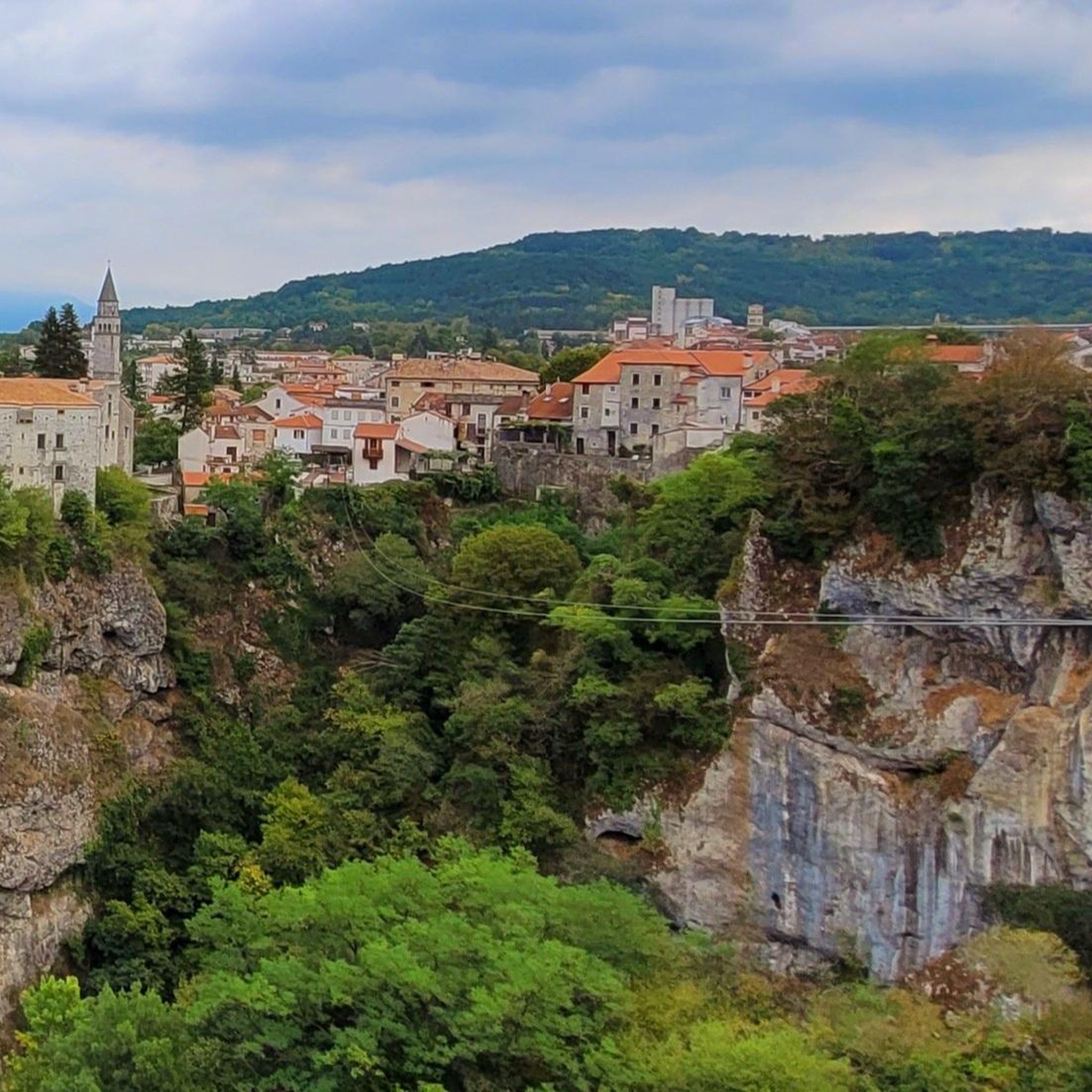
Best castles around Grad Pazin are found in a region characterized by its dramatic karst landscape and rich history. Grad Pazin, located in central Istria, is known for its prominent Pazin Castle, perched above the deep gorge of the Pazinčica river abyss. This area combines significant historical sites with natural geological wonders, offering insights into Istrian heritage and unique natural features. The region's castles provide a glimpse into its past, from medieval fortresses to ruins.
Best castles around Grad Pazin
…Last updated: July 1, 2026
Pazin Castle
Highlight • Castle
Translated by Google •
Tip by

Montecuccoli Castle
Highlight • Castle
Translated by Google •
Tip by

Sign up now to discover places like this
Get recommendations on the best single tracks, peaks, & plenty of other exciting outdoor places.
Sign up for free
Zelengrad Castle Ruins
Highlight • Castle
Translated by Google •
Tip by

Pazin/Pisino d'Istria
Highlight • Settlement
Its history begins in 983, when …
Translated by Google •
Tip by
Lindar/Lindaro
Highlight • Historical Site
Translated by Google •
Tip by
Start today with a free account
Your next adventure awaits.
Login or Signup

Tips from the Community

In front of the castle there are numerous information boards.
0
0

Pazin Castle is a well-protected fortress located on the edge of the Pazinčica River ravine, and is also the largest and best-preserved fortress in Istria. It is first mentioned in 983, in the deed of gift by which King Otto II granted the castle to the Bishop of Poreč. Over the next two centuries, the castle changed hands frequently; the daughter of Meinhard von Schwarzenburg, the castle's owner, brought the building as a dowry to the Counts of Gorizia, who owned it until 1374. In the same year, the castle was taken over by the Habsburgs, who, from behind its mighty walls, governed the entire Istrian hinterland, or the County of Pazin. The castle's glory and strength are also evidenced by the fact that it was not conquered during the war against Venice. The inhabitants of Pazin enjoyed considerable autonomy and freedom at that time, unlike the peasants who lived in the surrounding territories. In the 17th century, the castle was purchased by the Marquis Montecuccoli of Modena. The fiefdom remained his property until the mid-19th century, while the fortress remained his until 1945. During World War II, in September-October 1943 and again in April-May 1945, Montecuccoli Castle served as the headquarters of the OZNA (Tito's secret police) and the "People's Tribunals." It also served as a trial site, a place of imprisonment and torture for Istrian Italians. They were then eliminated by being thrown into the sinkhole (foiba) or, more simply, thrown into the ravine of the Foiba stream from the castle windows or the parapets of the square. The remains of the bodies—already battered by the impact with the rock faces and the branches of the vegetation growing on the cliffs—resurfaced a long distance after their underground passage through the Foiba, reaching the sea between Rovinj and Vrsar.
0
0
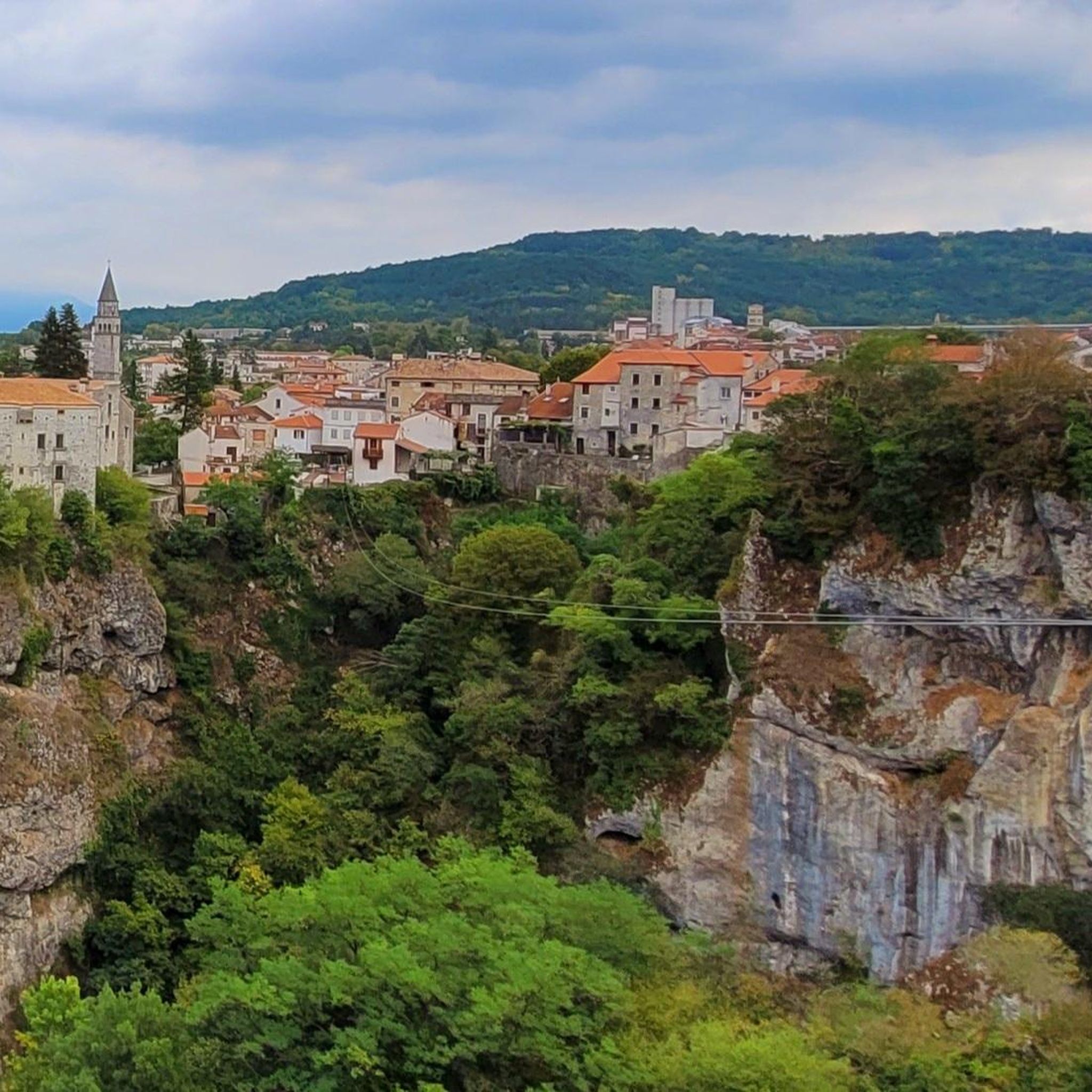
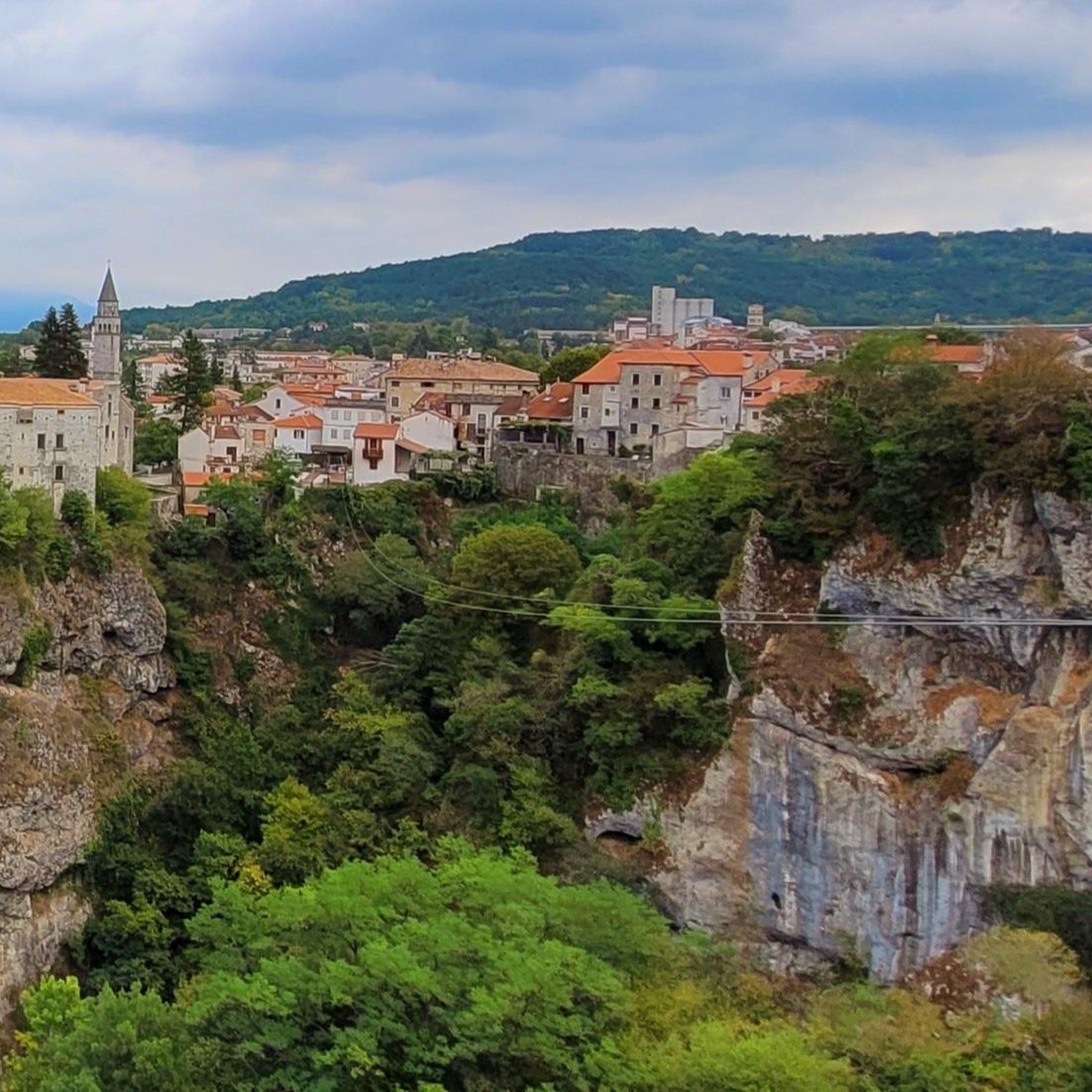
Located in central Istria, Pazin (Pisino in Italian) is a town of ancient charm, known for its imposing castle overlooking the spectacular karst chasm. Its history begins in 983, when it is mentioned as Castrum Pisinum. The village grew up around the castle, which over the centuries became the seat of the County of Pazin, an important bastion of the Holy Roman Empire. Unlike much of Istria, under Venetian rule, Pazin remained tied to the Austrian Habsburgs for a long time (from 1374 to 1918). After the First World War, it passed to the Kingdom of Italy, then to Yugoslavia in 1945, and finally, since 1991, to independent Croatia. Today, Pazin is considered the historical capital of the Istrian hinterland, also famous thanks to Jules Verne, who set some scenes of his novel Mathias Sandorf here.
0
0
The toponym is likely of Celtic origin. Its strategic location made it one of the defensive centers in the Pazin belt, becoming first the property of the bishops of Pedena, then of the Counts of Istria until 1511, when it was briefly conquered by the Venetians. It then remained under the control of the Habsburgs—except for a brief period of French rule—until the end of the First World War, when it was ceded to the Kingdom of Italy. After the Second World War, it was annexed by Yugoslavia. According to the testimony of Father Francesco Dapiran, at least 30 political opponents of the Yugoslav communist regime were killed in the Lindar bauxite quarry after 1945. In 1813, Istria rose up against French rule, led by Captain Giuseppe Lazzarich, who managed to capture soldiers from a battalion of Napoleon's army in Vermo, heading toward Fiume, with the aim of defeating the Austrian General Laval Nugent, who had occupied the capital of Carnaro. A commemoration of this episode is the sawn-off barrel of a falconet, protruding from a loophole in a castle bastion.
0
0

At the foot of the northern ramparts of Pazin Castle there is an extremely valuable sequence of residential buildings in the late Gothic and Renaissance styles. These were the houses of the officials of the Pazin and Istria County who performed their duties within the castle itself, and therefore these buildings should be considered an integral part of Pazin Castle and treated accordingly. These buildings were built within the former walled suburb of the castle, and the remains of the ramparts are hidden within the structures of the eastern row of buildings. The architectural elements visible today were mostly built in the 16th century, but closer analysis would certainly reveal older structures given the earlier construction of the suburban ramparts. Some of the buildings were also rebuilt several times in later centuries.
0
0


Since this is a museum, you can only see a little of the castle
2
0

The fort houses a local museum with 4 permanent exhibitions. Some descriptions are also in German. The entrance fee of €3.32 per adult can only be paid in cash. One may have doubts as to whether this is justified.
1
0
Frequently Asked Questions
What makes Pazin Castle a must-visit historical site?
The Pazin Castle is the largest and best-preserved medieval fortress in Istria, with a history dating back to 983. It served as the administrative seat of the County of Pazin for centuries. Today, it houses the Ethnographic Museum of Istria and the Pazin Town Museum, offering deep insights into the region's heritage. Its dramatic location above the Pazinčica river abyss also famously inspired Jules Verne's novel *Mathias Sandorf*.
Are there other notable castles or ruins to explore near Grad Pazin?
Beyond the prominent Pazin Castle, you can visit the Zelengrad Castle Ruins, where a small part of the castle wall remains, offering good views. Another significant site is Montecuccoli Castle, also known as Pazin Castle, which is a well-protected fortress on the edge of the Pazinčica River ravine, with a rich history under various rulers including the Habsburgs.
What natural attractions are near the castles in Grad Pazin?
Directly beneath Pazin Castle lies the spectacular Pazin Abyss, where the Pazinčica Foiba river disappears into a deep limestone pit, forming the Pazin Cave. An educational trail leads to the Piramida viewpoint, and for the adventurous, a zip-line offers breathtaking views over the canyon and castle.
What kind of outdoor activities can I do near the castles?
The area around Grad Pazin offers various outdoor activities. You can find numerous running trails, such as the 'Running loop from Kringa' or 'Motovun Old Town – Historic steps up to Motovun loop'. For mountain biking, consider routes like 'Zarečki Krov Waterfall – View of Pazinčica Gorge loop' or 'Pazin Castle – Pazin Waterfall loop'. Road cycling enthusiasts can explore routes like 'Poreč Waterfront – Scenic country road with stone walls loop'. You can find more details on these routes in the Running Trails around Grad Pazin, MTB Trails around Grad Pazin, and Road Cycling Routes around Grad Pazin guides.
Are there family-friendly options when visiting castles in Grad Pazin?
Yes, the town of Pazin/Pisino d'Istria itself is considered family-friendly, offering a historical setting that can be enjoyed by all ages. The museums within Pazin Castle provide an educational experience, and the natural attractions like the Pazin Abyss and its educational trail can be engaging for families.
What is the best time of year to visit the castles and surrounding area?
While the castles can be visited year-round, spring and autumn generally offer the most pleasant weather for exploring both the historical sites and the natural surroundings like the Pazin Abyss. These seasons provide comfortable temperatures for hiking and outdoor activities, avoiding the peak heat of summer or the colder, potentially wetter conditions of winter.
What historical significance does the town of Pazin hold?
Pazin/Pisino d'Istria, first mentioned in 983, grew around its imposing castle and became the seat of the County of Pazin. Unlike much of Istria, it remained under Austrian Habsburg rule for centuries, making it a unique historical bastion. Today, it's considered the historical capital of the Istrian hinterland, known for its rich past and connection to Jules Verne.
Can I find viewpoints near the castles for scenic photography?
Absolutely. From the terrace of Pazin Castle, you can enjoy stunning panoramic views of the surrounding landscape, including the dramatic Pazin Abyss. The Zelengrad Castle Ruins also offer a good vantage point for scenic photography.
What do visitors particularly enjoy about the castles around Grad Pazin?
Visitors frequently appreciate the historical depth and well-preserved nature of the castles, especially Pazin Castle, which is often described as one of the most beautiful in Istria. The unique combination of medieval architecture with the dramatic natural wonder of the Pazin Abyss, and the cultural insights offered by the museums, are also highly valued.
Is there public transport available to reach the castles?
Pazin is a central town in Istria, and while local buses connect various parts of the region, direct public transport to every castle ruin might be limited. Pazin Castle is located within the town of Pazin itself, making it easily accessible on foot if you are already in Pazin. For other, more remote sites like Zelengrad Castle Ruins, a car or a combination of public transport and walking might be necessary.
How long should I plan for a visit to the castles?
For Pazin Castle and its museums, you should allocate at least 2-3 hours to fully explore the exhibits and enjoy the views. If you also plan to visit the Pazin Abyss and its educational trail, allow for an additional 1-2 hours. Visiting other sites like Zelengrad Castle Ruins or Montecuccoli Castle might require separate trips, each taking 1-2 hours depending on travel time and exploration.
Are there any specific tips for visiting Pazin Castle's museum?
The museum inside Pazin Castle offers multiple permanent exhibitions. Some descriptions are available in German, in addition to Croatian and English. It's important to note that the entrance fee, which is around €3.32 per adult, can often only be paid in cash.
Most popular routes around Grad Pazin
Most popular attractions around Grad Pazin

Get inspired with the komoot mobile app


