The best MTB trails around Barromán
8
riders
4
rides
Mountain bike trails around Barromán are characterized by their open, agricultural landscapes and gently rolling terrain. Located within the Ávila province, the region offers routes that traverse wide plains and rural paths, with minimal elevation changes. This makes for accessible mountain biking, often through cultivated fields and past small villages.
Best mountain bike trails around Barromán
- The most popular mountain bike trail is Circular Route of Arévalo and Mad, a 36.4 miles (58.5 km) trail that takes 4 hours…
Last updated: June 20, 2026
2
riders
58.5km
04:34
230m
230m
Explore the Castilian countryside on this 36.4-mile (58.5 km) moderate mountain bike route connecting the historic towns of Arévalo and Madr
39.6km
02:54
160m
160m
This moderate 24.6-mile mountain biking loop near Arévalo offers varied terrain and expansive views of the Castilian plain.

Sign up for free
2
riders
42.0km
03:13
110m
110m
Moderate mountain bike ride. Good fitness required. Suitable for all skill levels.
2
riders
Moderate mountain bike ride. Good fitness required. Suitable for all skill levels.
2
riders
8.42km
00:37
20m
20m
Easy mountain bike ride. Great for any fitness level. Suitable for all skill levels.
Our route recommendations are based on thousands of hikes, rides, and runs completed by other people on komoot.
Start today with a free account
Your next adventure awaits.
Login or Signup
Popular around Barromán

Tips from the Community

Arévalo Castle, located in the town of Arévalo (province of Ávila, Castile and León), is one of the most representative examples of Castilian Mudéjar architecture. Its origins date back to the 14th century, although it was built upon earlier fortifications. It was expanded between the 15th and 16th centuries, especially during the reign of the Catholic Monarchs. It played an important role as a noble and military castle, but also as an administrative building. In the 20th century, it fell into near ruin until its restoration, beginning in 1952, by the Ministry of Agriculture, which uses it as the headquarters of a research center.
5
0
Arévalo Castle, located in the town of Arévalo (province of Ávila, Castile and León), is one of the most representative examples of Castilian Mudéjar architecture. Its origins date back to the 14th century, although it was built upon earlier fortifications. It was expanded between the 15th and 16th centuries, especially during the reign of the Catholic Monarchs. It played an important role as a noble and military castle, but also as an administrative building. In the 20th century, it fell into near ruin until it was restored starting in 1952 by the Ministry of Agriculture, which uses it as the headquarters of a research center.
5
0
Also known as the Main Parish Church of San Antolín. The original parish dates back to 1177, founded by settlers from the north (Palencia) and dedicated to Saint Antolín. In 1480, the Catholic Monarchs obtained a papal bull from Pope Sixtus IV elevating its status to a collegiate church with a free abbey. Construction of the current church began in 1502 and continued into the 18th century, with prominent architects such as Juan Gil de Hontañón, Rodrigo Gil, and the Gutiérrez brothers. It lost its collegiate church status in 1851, becoming simply the main parish church.
9
0

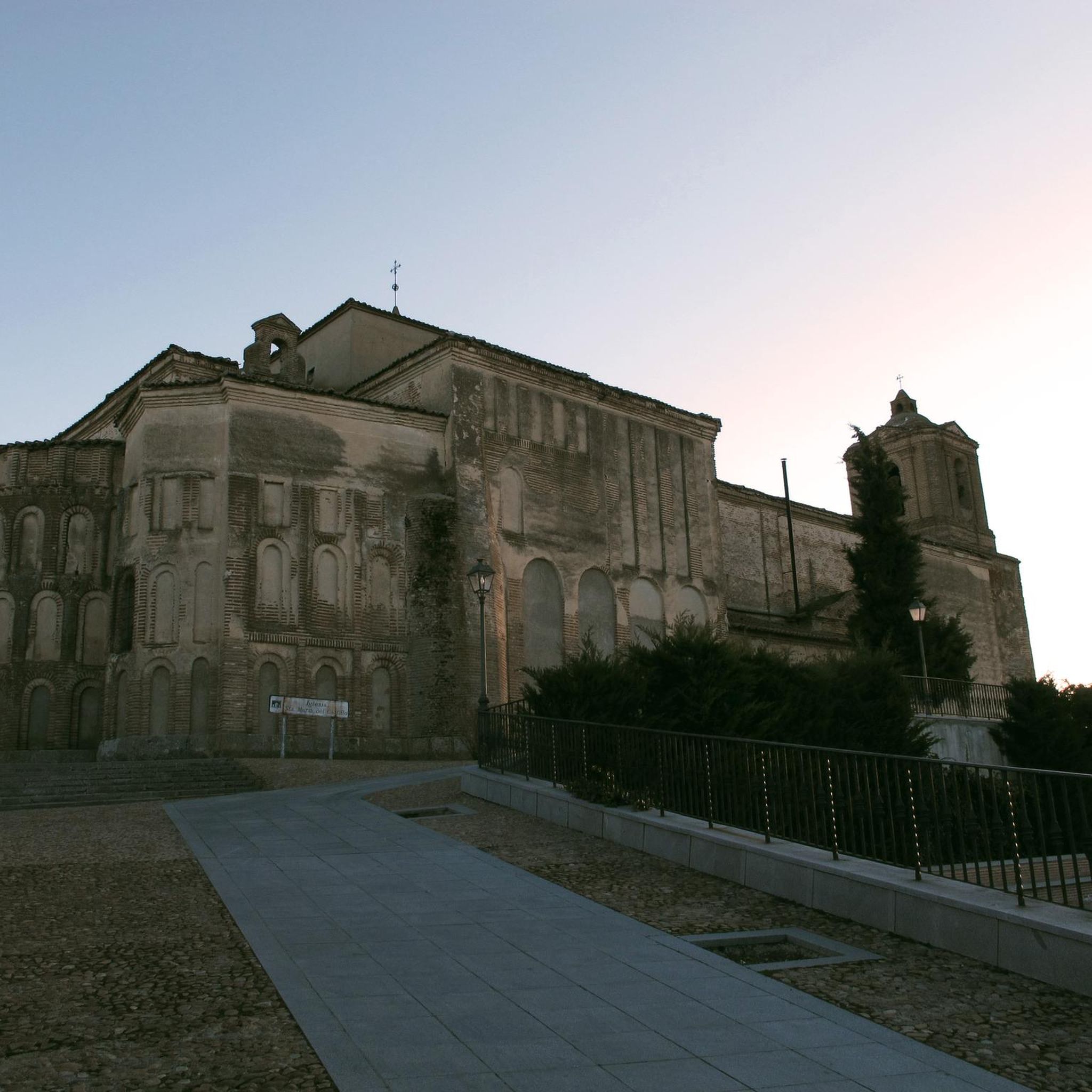
This Gothic-style building began construction in 1503, although, as is often the case with such complex structures, it wasn't completed until almost two centuries later. It is a relatively large church, notable for the balcony of the Virgin of the People and the clock tower. The main entrance dates from the 18th century, while the side entrance is from the 16th.
11
0

Pretty Castilian village in the middle of the fields
0
0

It is a historic building that stands out as one of the most emblematic cultural treasures of the city. The collegiate church is, together with the Castle of La Mota, one of the most important historical buildings in Medina del Campo. Although its main part shows characteristics of the late Gothic style, its construction is complex and covers styles from the beginning of the 16th century to the 18th century.
9
0
La Mota Castle is an impressive medieval fortress located in Medina del Campo. Built in the 14th and 15th centuries, this castle is located on a hill known as a “mota”, which allows it to dominate the town and its surroundings. The castle is famous for its reddish brick architecture, typical of the region, and has been restored to become an important tourist and educational centre. In addition to its historical value, the castle offers guided tours, underground galleries and cultural activities.
6
0
Frequently Asked Questions
What kind of mountain biking terrain can I expect around Barromán?
The mountain bike trails around Barromán, located in the Ávila province, generally feature relatively flat terrain, characteristic of the La Moraña region. You'll find routes with gentle ascents and descents, often traversing agricultural landscapes and open fields, connecting charming villages. For example, the Circular Route of Arévalo and Madrigal has an elevation gain of around 230 meters over nearly 60 km, indicating a generally mild profile.
Are there any family-friendly mountain bike routes near Barromán?
Yes, the region offers routes suitable for families looking for an easier ride. The Langa loop from Langa is an excellent option, classified as easy with minimal elevation gain over its 8.4 km distance, making it perfect for a relaxed family outing.
What are some notable landmarks or points of interest I can see while mountain biking around Barromán?
While exploring the trails, you can encounter several historical and natural points of interest. The Circular Route of Arévalo and Madrigal and the Arévalo and La Moraña Villages Loop pass through historic towns like Arévalo and Madrigal de las Altas Torres, where you can see the Madrigal de las Altas Torres Historic Center and its ancient Walls. The Collegiate Church of San Antolín – Castle of La Mota loop also offers cultural sights.
Are there any circular mountain bike routes available?
Yes, all the mountain bike routes listed for the Barromán area are circular. This includes the Circular Route of Arévalo and Madrigal, the Arévalo and La Moraña Villages Loop, and the Langa loop from Langa, providing convenient starting and ending points.
What is the best time of year for mountain biking in the Barromán area?
The best time for mountain biking around Barromán is typically during spring (April-June) and autumn (September-October). During these seasons, the weather is generally mild and pleasant, avoiding the intense heat of summer and the colder, potentially wetter conditions of winter. This allows for comfortable rides through the open landscapes.
Are there places to park near the mountain bike trailheads?
Yes, as the routes often start and end in or near towns like Arévalo, Madrigal de las Altas Torres, and Langa, you can usually find parking in these villages. For example, the Langa loop starts directly from the town of Langa, where parking options are available.
Can I find cafes, pubs, or accommodation near the mountain bike trails?
Yes, the routes in the Barromán area connect several towns and villages in the Ávila province, such as Arévalo, Madrigal de las Altas Torres, and Langa. These towns offer various amenities including cafes, restaurants, and local accommodation options where you can refuel and rest after your ride.
How long are the mountain bike trails around Barromán?
The mountain bike trails in this area vary in length. You can find shorter, easy routes like the Langa loop from Langa, which is about 8.4 km. For longer excursions, there are moderate routes such as the Circular Route of Arévalo and Madrigal at nearly 58.5 km, or the Canatalapiedra Gate – Rasueros loop which is around 42 km.
Are there any specific permits required for mountain biking in this region?
Generally, no specific permits are required for mountain biking on the established trails and rural roads around Barromán in the Ávila province. However, it's always advisable to respect private property and any local signage regarding access.
What is the difficulty level of mountain bike trails near Barromán?
The trails around Barromán cater to various skill levels. You'll find easy routes, such as the Langa loop from Langa, which is suitable for beginners. Most of the other routes, like the Arévalo and La Moraña Villages Loop, are classified as moderate, offering a good challenge for intermediate riders without being overly technical or steep.
Can I access mountain bike trails near Barromán using public transport?
While Barromán itself is a small locality, the larger towns that serve as starting points for many routes, such as Arévalo and Madrigal de las Altas Torres, are typically accessible by regional bus services or trains from larger cities in the Ávila province. It's recommended to check local transport schedules and bike carriage policies in advance.
Most popular routes around Barromán
Most popular attractions around Barromán

Get inspired with the komoot mobile app


Explore more
Browse the best MTB trails in other regions.
