The best gravel rides around Gallur
4.5
(3)
33
riders
8
rides
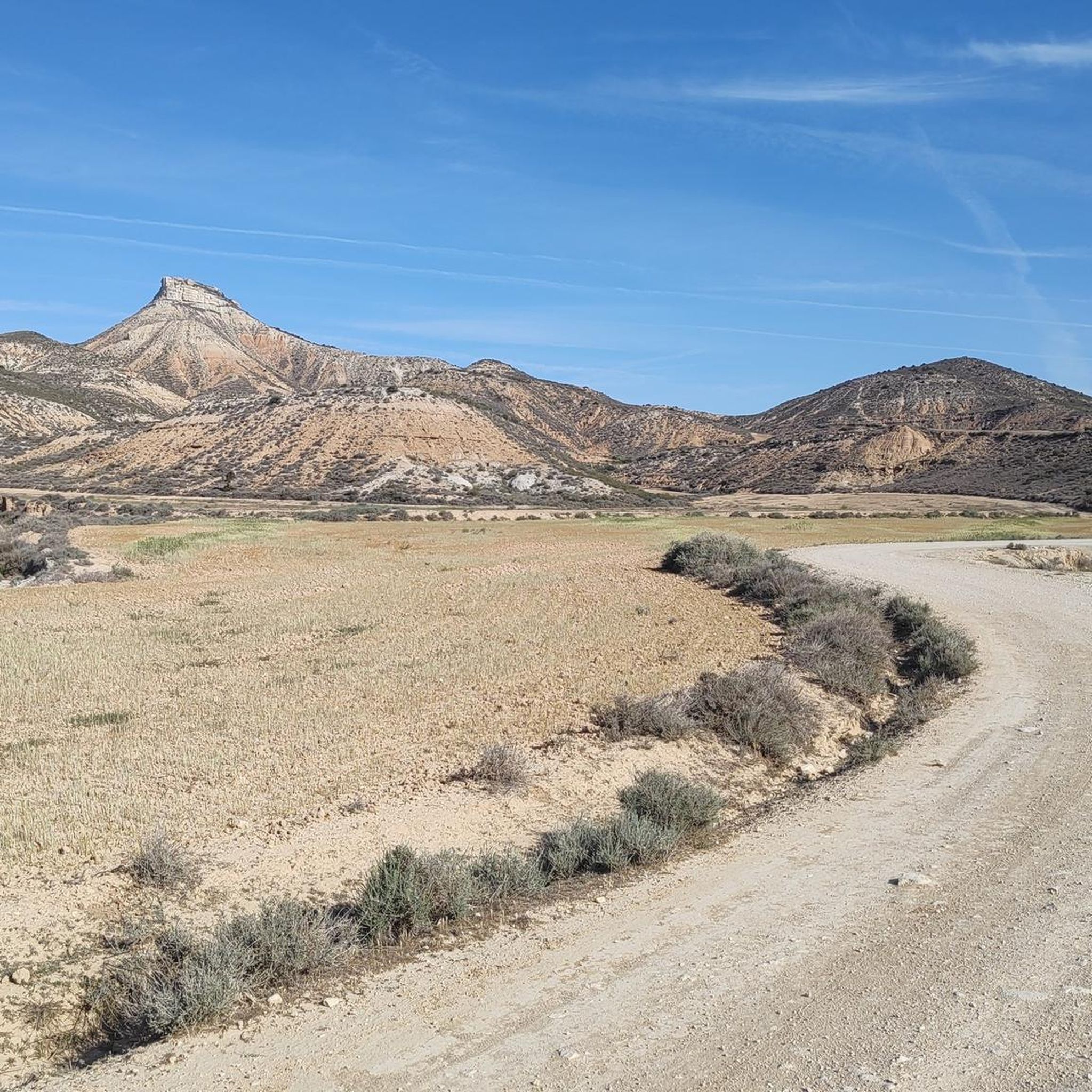
Gravel biking around Gallur, located in the Aragon region of Spain, offers diverse terrain for cyclists. The area is characterized by its position on the Ebro River within a fertile plain, providing varied landscapes. Routes often incorporate the historic Canal Imperial de Aragón and an extensive network of back roads and unpaved sections. This combination makes the region particularly suitable for gravel biking enthusiasts seeking both moderate and challenging expeditions.
Best gravel bike trails around Gallur
- The most popular gravel…
Last updated: November 3, 2026
2
riders
53.5km
03:31
380m
380m
Moderate gravel ride. Good fitness required. Mostly paved surfaces.
2
riders
34.5km
02:15
100m
100m
Moderate gravel ride. Good fitness required. Mostly paved surfaces.

4.0
(2)
19
riders
145km
09:35
220m
220m
Hard gravel ride. Very good fitness required. Mostly paved surfaces.
1
riders
60.1km
04:15
520m
520m
Hard gravel ride. Very good fitness required. Mostly paved surfaces.
1
riders
58.1km
04:22
350m
350m
Moderate gravel ride. Good fitness required. Mostly paved surfaces.
Get access to more routes and recommendations from other explorers.
Already have an account?
Our route recommendations are based on thousands of hikes, rides, and runs completed by other people on komoot.
Start today with a free account
Your next adventure awaits.

Other adventures around Gallur

Tips from the Community


La Balsa de Larralde (also called balsa de Torre Medina) is an artificial wetland of high ecological value protected as a "Singular Wetland" by the Government of Aragon. It is located next to the Torre Medina neighborhood, in the rural district of Garrapinillos, within the municipality of Zaragoza, 🛠️ Origin and history Old quarry: It originated more than 200 years ago as a clay extraction site for building the nearby Imperial Canal of Aragon. Humidal birth: When the subsoil was perforated, the water table was reached and the excavation was permanently flooded with water. Environmental recovery: After decades of abandonment serving as an uncontrolled landfill, it was recovered from 1995 thanks to the Hydrographic Confederation of the Ebro (CHE) and the Naturalist Association of Aragon (ANSAR). 🌿 Ecological characteristics Extension: It has a protected area of about 4 hectares. Inverted water cycle: Being mainly fed by groundwater influenced by the irrigation of the Imperial Canal, it has more water in summer and spring than in winter, unlike most Mediterranean wetlands. Biodiversity refuge: It is surrounded by abundant riparian vegetation (reeds, cattails, poplars, and elms) that serves as a habitat and breeding ground for about 100 species of aquatic birds such as coots, moorhens, and ducks. 🚶 Visit and equipment It is a space open to the public, ideal for hiking and environmental education. The surroundings have: A perimeter path with wooden planks and walkways. A covered viewpoint-observatory for spotting birds without disturbing them. Interpretive panels explaining the local fauna and flora. (Note: As a local curiosity, it stands out for being the only protected wetland in Zaragoza that can be reached directly by public bus)
0
0

This castle was once a border fortress of the Kingdom of Navarre and today stands out as an elegant neo-Gothic palace, with a crenellated tower and a large walled enclosure that still retains its historical character. Inside, you can see original furnishings and a remarkable collection of paintings, while the former orchard, now a park, offers a peaceful stroll among dozens of plant species. It's a great place to stop, explore the courtyard, and enjoy the landscaped surroundings.
0
0

The Larralde raft is worth seeing, but not the rest.
0
0


Architecturally, it's stunning, but we couldn't find a way to follow the canal without getting our feet wet. In the end, we crossed the Jalón River under the canal and then rejoined it. The question remains whether we could have crossed the canal walls on foot. On the left side, there was an open metal gate (we were already on the right side), but on the other side of the Jalón River, we saw another metal gate locked with a padlock.
0
0

The Bocal area is perfect for enjoying a stroll in the fresh air, surrounded by nature, with the opportunity to visit other points of interest such as the Palace of Charles V and the Casa de las Compuertas.
2
0

Super friendly welcome, I was helped out during a bike trip.
0
0
Frequently Asked Questions
How many gravel bike trails are available around Gallur?
There are 8 gravel bike trails available around Gallur, offering a variety of experiences for different skill levels.
What is the typical terrain like for gravel biking in Gallur?
The terrain around Gallur is quite varied, ranging from the flat plains of the Ebro Valley to more diverse regional topographies. You'll find an extensive network of back roads and trails, with many routes featuring a mix of paved, unpaved, and gravel sections, making it ideal for gravel biking. The Ebro River and the historic Canal Imperial de Aragón also provide scenic routes.
What are the difficulty levels of gravel bike trails in Gallur?
The trails around Gallur cater to various fitness levels. You'll find 5 moderate routes and 3 more challenging routes that require very good fitness, ensuring there's something for everyone from intermediate to advanced riders.
What do other gravel bikers say about the trails in Gallur?
The gravel biking routes around Gallur are highly regarded by the komoot community, with an average rating of 4.7 out of 5 stars based on 3 reviews. Riders often praise the diverse landscapes and the mix of surfaces that make for engaging rides.
Are there any challenging gravel bike routes for experienced riders?
Yes, for experienced riders seeking a challenge, consider routes like the El Bocal Dam and Canal Path – Third Millennium Bridge loop from Luceni, which covers over 176 km with nearly 300 meters of elevation gain. Another demanding option is the Canal de Tauste – Paridera de los Hermanos loop from Gallur, offering over 520 meters of ascent over 59 km.
Can I find longer gravel biking expeditions in the area?
Absolutely. For longer expeditions, routes such as the El Bocal Dam and Canal Path – Third Millennium Bridge loop from Luceni stretches for over 176 km. Another significant option is the El Bocal Dam and Canal Path – Balsa de Larralde loop from Pedrola, which is approximately 144 km long.
Are there any circular gravel bike routes around Gallur?
Yes, all the gravel bike routes listed for Gallur are designed as loops, allowing you to start and finish at the same point. This includes routes like the Canal de Tauste – Gallur loop from Cortes de Navarra and the Third Millennium Bridge – Ebro River loop from Boquiñeni.
What is the best time of year for gravel biking in Gallur?
The Aragon region, where Gallur is located, generally experiences hot summers. Therefore, the best times for gravel biking are typically spring (April-May) and autumn (September-October) when temperatures are milder and more comfortable for longer rides. Winter can also be suitable, but be prepared for cooler conditions.
Are there any interesting landmarks or viewpoints along the gravel bike routes?
Yes, the routes often pass by interesting points. You might encounter the Alcalá de Ebro Viewpoint offering scenic vistas, or historical sites like the Castle of Cortes. The routes also frequently follow the Ebro River and the Canal Imperial de Aragón, providing picturesque natural scenery.
Are there any family-friendly gravel biking options in Gallur?
While many routes around Gallur feature mixed terrain and can be quite long, some sections along the Canal Imperial de Aragón or the Ebro River might offer flatter, less technical riding suitable for families. For specific family-friendly routes, look for shorter, less elevated options, though none are explicitly categorized as 'easy' in this selection.
Where can I find parking for gravel bike trails in Gallur?
As many routes start from or pass through towns like Gallur, Luceni, Pedrola, or Boquiñeni, you can typically find public parking within these settlements. It's advisable to check local parking regulations upon arrival.
Most popular attractions around Gallur

Get inspired with the komoot mobile app


Explore more
Browse the best Gravel rides in other regions.
