The best walks and hikes around gmina Słupia
4.3
(7)
110
hikers
10
hikes
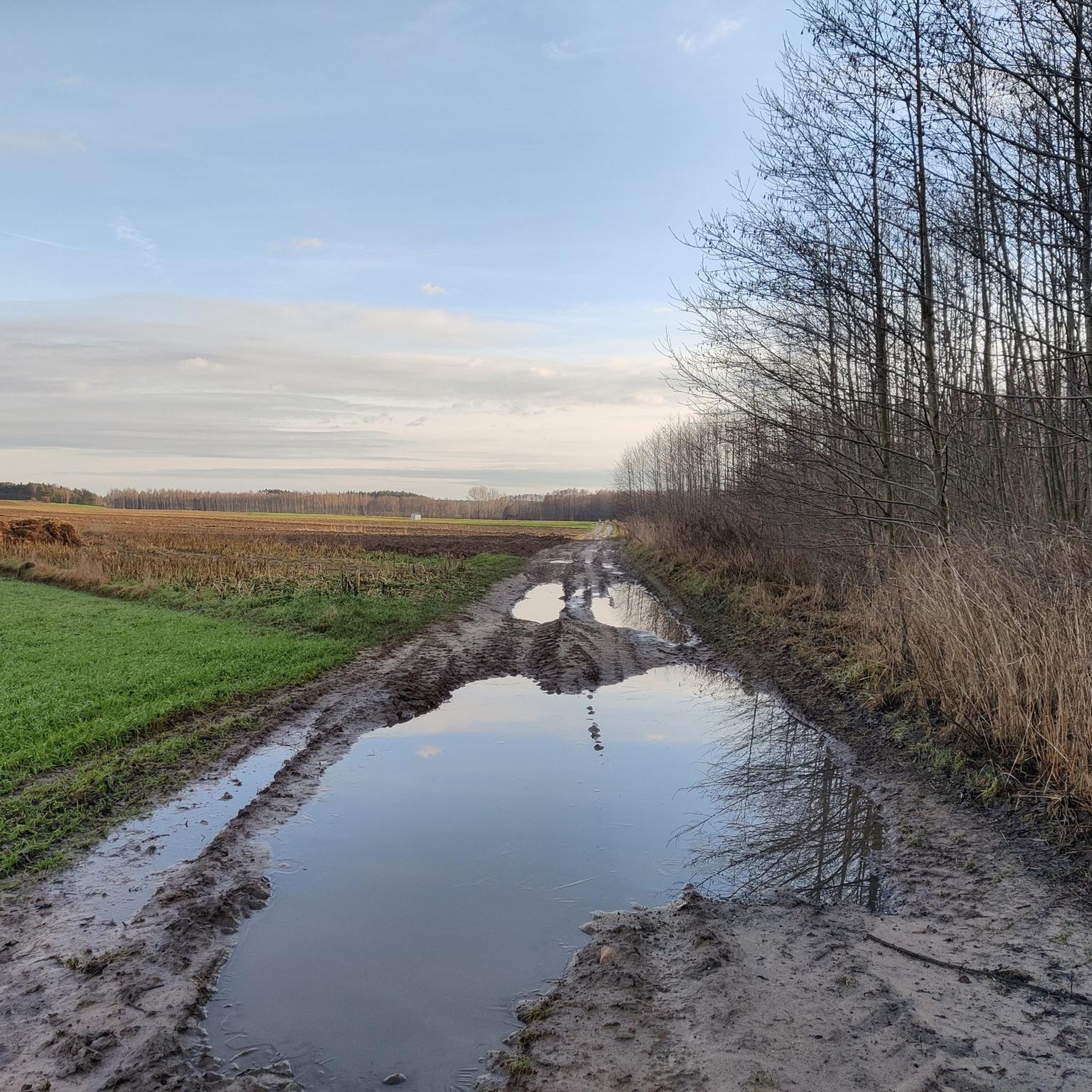
Hiking trails around gmina Słupia feature gentle terrain, primarily centered around the Rogów Arboretum. The landscape is characterized by woodlands and cultivated gardens, offering accessible paths for outdoor activities. These routes are predominantly flat, making them suitable for casual walks and circular walks. The region's low elevation gain contributes to its accessibility for various fitness levels.
Best hiking trails around gmina Słupia
- The most popular hiking route is Rogów Arboretum (SGGW) loop from Rogów, a 3.3 miles (5.3 km)…
Last updated: July 2, 2026
5.0
(4)
87
hikers
5.26km
01:20
20m
20m
Easy hike. Great for any fitness level. Easily-accessible paths. Suitable for all skill levels.
3
hikers
4.41km
01:08
20m
20m
Easy hike. Great for any fitness level. Easily-accessible paths. Suitable for all skill levels.

Sign up for free
2
hikers
4.06km
01:03
20m
20m
Easy hike. Great for any fitness level. Easily-accessible paths. Suitable for all skill levels.
3.0
(1)
3
hikers
4.47km
01:08
10m
10m
Easy hike. Great for any fitness level. Easily-accessible paths. Suitable for all skill levels.
2
hikers
3.50km
00:54
10m
10m
Easy hike. Great for any fitness level. Easily-accessible paths. Suitable for all skill levels.
Get access to more routes and recommendations from other explorers.
Sign up for free
Already have an account?
Our route recommendations are based on thousands of hikes, rides, and runs completed by other people on komoot.
Start today with a free account
Your next adventure awaits.
Login or Signup
Popular around gmina Słupia

Tips from the Community

A must-see and worth seeing.
0
0

Narrow-gauge steam locomotive Px48-1253 transferred by the Narrow-Gauge Railway Museum in Sochaczew as a deposit to the Władysław St. Reymont Regional Museum in Lipce Reymontowskie. The agreement between the two museums is valid until 2030. The locomotive, manufactured in 1955 in FABLOK in Chrzanów, has been exhibited on the premises of the open-air museum in Sochaczew since 1991. Previously, it had worked for many years on the tracks of the Bieszczady Forest Railway.
0
0
The first wooden church of the Holy Cross was founded around 1350 by the metropolitan archbishop of Gniezno, Jarosław Bogoria Skotnicki. In the second half of the 14th century, a parish was established next to it. The construction of the church, which serves the faithful to this day, began in 1865 thanks to the efforts of the then parish priest, Fr. Józef Marmo, and was finally completed in 1870. It was built of brick and field stone. In 1930, under the supervision of Fr. Józef Kostrzewski, the church was expanded, which took on the shape of a cross: a presbytery, two chapels and two sacristies were added. It was consecrated by the metropolitan archbishop of Gniezno and Warsaw, Stefan Cardinal Wyszyński, the primate of Poland, in 1967. The church is maintained in the Vistula Gothic style, and has four altars. The main altar, in the neo-Gothic style, wall-mounted, three-axis, with two niches on the sides. In its center is a Baroque crucifix. In the side altar there is a painting of Our Lady of the Scapular from 1794, with dresses in the Regency style, and two Rococo sculptures: St. Adalbert and St. Stanislaus. The second side altar is dedicated to the Sacred Heart of the Lord Jesus. Opposite is an altar with an image of St. Roch. The organs in the temple are modern. The pulpit from the first half of the 20th century is worthy of attention.
0
0
Cemetery Chapel of St. Joseph in Lipce Reymontowskie. The historic chapel built in 1860 is located on the grounds of the historic cemetery on Reymonta Street. The building was entered into the register of monuments on April 8, 1950. The chapel is of log construction, oriented, built of larch wood. Inside there is a choir supported by two wooden columns, a 17th-century organ and a main altar in the Rococo style. For the first 10 years, the wooden chapel served as a parish church. At the same time, construction of a new brick temple of the Finding of the Holy Cross began.
0
0
The Arboretum of the Warsaw University of Life Sciences is one of the largest gardens of this type in Poland. It is an organizational unit of the Forest Experimental Station in Rogów, which also includes the Nature and Forest Education Center, the Rogów Forest District and a nursery farm. It is located in a former forest habitat and has the character of a forest park. It contains some of the richest and most interesting collections of trees and shrubs in Central and Eastern Europe. The whole is complemented by forest experimental areas with foreign species of forest trees and an alpine garden.
1
0

A place worth visiting at any time of the year.
0
0

Type Px48, narrow gauge.
0
0
Of St. Josaphat / St. Józefat (Józefat Kuncewicz), 18th / 19th century.
0
0
Frequently Asked Questions
How many hiking trails are available in gmina Słupia?
There are 7 hiking trails recorded in gmina Słupia on komoot, primarily centered around the Rogów Arboretum. These routes offer a variety of experiences within the region's woodlands and cultivated gardens.
What kind of terrain can I expect on hikes in gmina Słupia?
The terrain in gmina Słupia is characterized by woodlands and cultivated gardens, with predominantly flat and accessible paths. This makes the area suitable for casual walks and easy hikes.
Are there easy hiking options in gmina Słupia?
Yes, gmina Słupia is ideal for easy hikes. Out of the 7 available routes, 5 are classified as easy, featuring gentle terrain and accessible paths. An example is the Rogów Arboretum (SGGW) loop from Rogów, which is 3.3 miles (5.3 km) long.
Are there any moderate or challenging hikes in gmina Słupia?
While most routes are easy, there are 2 moderate hiking options available in gmina Słupia. There are no difficult trails recorded in this area, maintaining its reputation for accessible and gentle outdoor activities.
Are there circular walks in gmina Słupia?
Yes, circular walks are a prominent feature of hiking in gmina Słupia, especially within the Rogów Arboretum. Many routes are designed as loops, such as the Rogów Arboretum (SGGW) loop from Rezerwat Zimna Woda, offering convenient starting and ending points.
Are the hiking trails in gmina Słupia suitable for families?
Absolutely. The trails in gmina Słupia are predominantly flat and accessible, making them very suitable for families with children. The focus on easy routes and the pleasant environment of the Rogów Arboretum provide a great setting for family outings.
What are the typical lengths and durations of hikes in gmina Słupia?
Hikes in gmina Słupia generally range from 2.3 miles (3.7 km) to 3.3 miles (5.3 km). These routes typically take between 55 minutes to 1 hour 20 minutes to complete, making them perfect for shorter excursions.
What can I see along the hiking trails in gmina Słupia?
The main attraction along the trails is the Rogów Arboretum (SGGW), known for its diverse plant collections. You might also encounter historical sites like the Rogów Narrow-Gauge Railway or charming watermills such as the Praga Water Mill on the Mroga River.
What do other hikers enjoy the most about hiking in gmina Słupia?
The area is highly rated by the komoot community, with an average score of 4.5 stars from over 5 reviews. Hikers often praise the well-maintained paths, the peaceful atmosphere of the arboretum, and the accessibility of the trails for all skill levels.
Are there any specific points of interest or landmarks to look out for?
Beyond the arboretum itself, notable landmarks include the Church of All Saints and Saint Dorothy, offering a glimpse into local architecture, and the historical Dąbrówka Mała Watermill.
Is there parking available near the hiking trails in gmina Słupia?
Given that many routes start from locations like Rogów and Marianów Rogowski, it is generally possible to find parking facilities nearby, especially around the Rogów Arboretum. It's advisable to check specific starting points for detailed parking information.
What is the best time of year to hike in gmina Słupia?
The Rogów Arboretum, being a botanical garden, is particularly beautiful in spring and autumn when plants are in bloom or displaying vibrant fall colors. However, the accessible paths make it enjoyable for walks throughout the warmer months.
Most popular routes around gmina Słupia
Most popular attractions around gmina Słupia

Get inspired with the komoot mobile app


Explore more
Browse the best Hikes in other regions.
