The best gravel rides around Lac Du Cebron
9
riders
3
rides
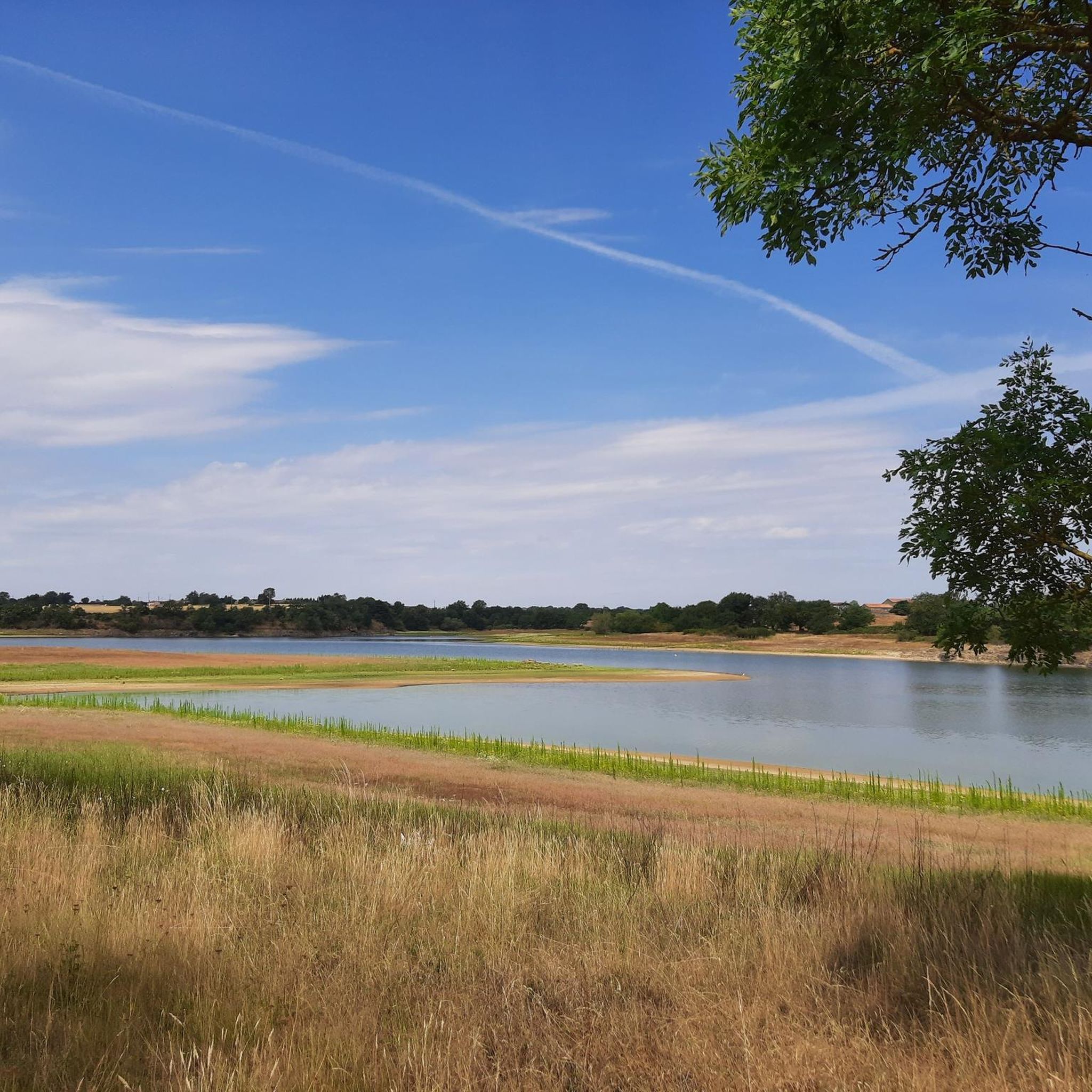
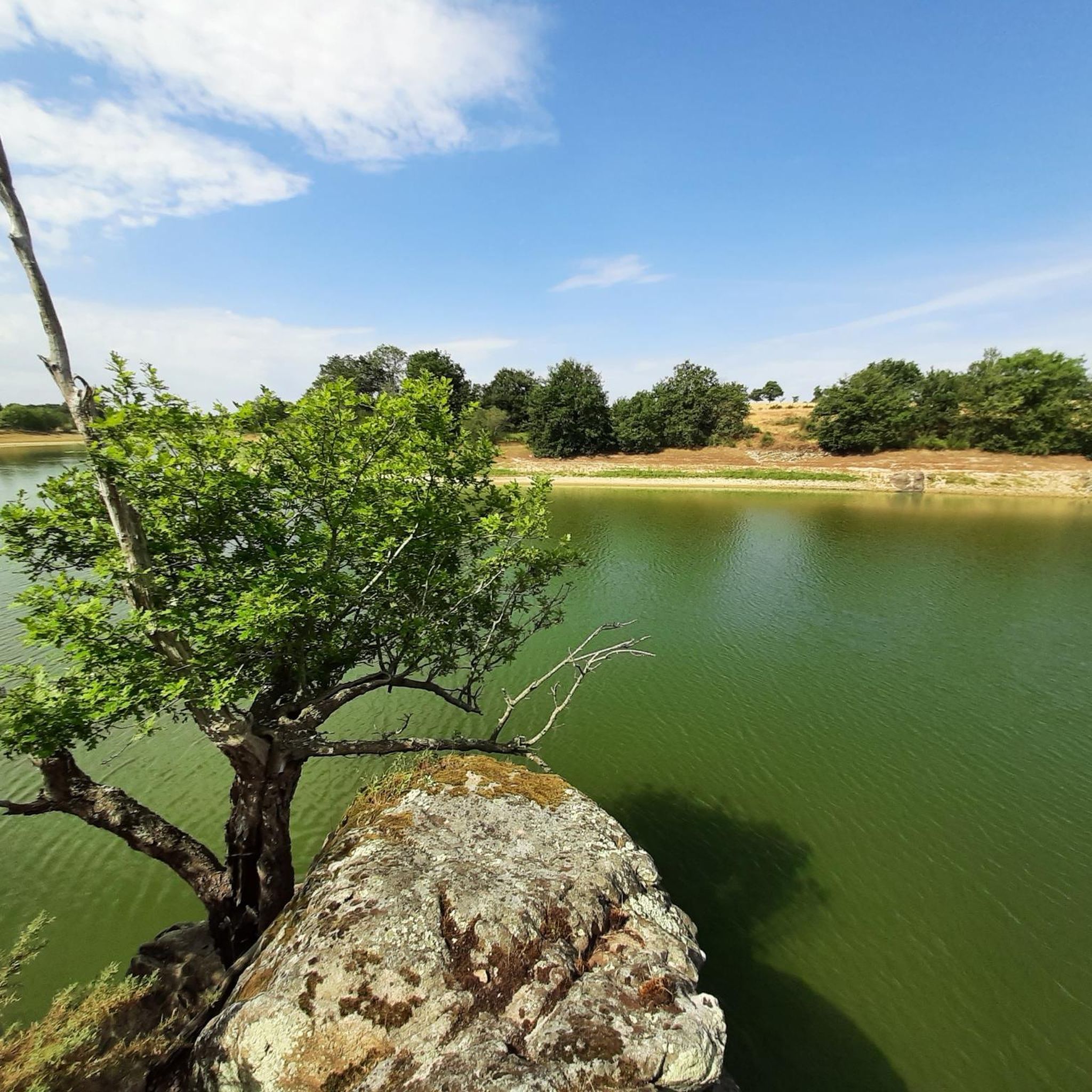
Gravel biking around Lac Du Cebron offers routes through a tranquil setting in the Deux-Sèvres department. The area features a green landscape of forests, fields, and rural paths, providing diverse terrain for exploration. As a Sensitive Natural Space, the region maintains rich biodiversity, with many routes featuring unpaved segments suitable for gravel bikes. The paths are generally flat, offering a quiet atmosphere for cyclists.
Best gravel bike trails around Lac Du Cebron
- The most popular gravel bike trail is Saint-Loup-Lamairé…
Last updated: June 27, 2026
1
riders
74.8km
04:31
460m
460m
Hard gravel ride. Very good fitness required. Mostly paved surfaces. Suitable for all skill levels.
2
riders
10.5km
00:47
120m
120m
Easy gravel ride. Great for any fitness level. Mostly paved surfaces. Suitable for all skill levels.

Sign up for free
1
riders
26.6km
01:45
190m
190m
Moderate gravel ride. Good fitness required. Mostly paved surfaces. Suitable for all skill levels.
3
riders
69.2km
03:58
500m
500m
Hard gravel ride. Very good fitness required. You may need to push your bike for some segments of this route.
2
riders
80.2km
05:13
530m
530m
Hard gravel ride. Very good fitness required. Mostly paved surfaces. Suitable for all skill levels.
Our route recommendations are based on thousands of hikes, rides, and runs completed by other people on komoot.
Start today with a free account
Your next adventure awaits.
Login or Signup



Tips from the Community

A church dedicated to Saint Peter is documented in the 9th century in the village. A Romanesque church was then built in the 11th century on the site of the current Saint-Honoré church, but with a different orientation. Initially dedicated to Saint Mathias, it was renamed Saint Honoré in the 15th century, a martyr from the Thénezay area, and houses the relic of his skull. The church was remodeled several times, notably in 1685, 1753, and 1784. The church was closed from 1791 to 1802. Its poor condition forced its complete demolition at the end of the 19th century. It was rebuilt between 1901 and 1903 in the neo-Romanesque style with a tall bell tower, according to plans by the architect Girard de Niort. It was consecrated on October 17, 1903, by Bishop Pelgé. It has three naves lit by richly colored stained-glass windows. The choir stalls, dating from the 18th century, were purchased in 1825 by Abbot de la Roche, parish priest; they came from the deconsecrated Cistercian abbey of Pin de Béruges. They were replaced in the current church in 1903. Two years later, the church was confiscated by law from the diocese and became the property of the municipality, which is now responsible for its maintenance. The white marble high altar with columns, donated in 1903 by the Countess of Talhouët-Roy, was sold in the 1970s and replaced with a wooden table facing the people. The stained-glass windows in the choir come from the Touan house in Paris and depict medallions depicting the life of Jesus. In 2003, the main bell collapsed; A new bell was recast from the old one by the Bollée d'Orléans firm and financed by subscription. The Bishop of Poitiers blessed it on October 11, 2003. Today, the parish of Thénezay no longer exists, and its former territory is part of the parish group of Saint-Jacques-en-Gâtine (comprising about sixty bell towers). Sunday Mass is now celebrated only occasionally in this village of nearly 1,400 inhabitants. The church is open for weddings and funerals.
0
0

The old Clécé train station marks a stop on the old railway line converted into a greenway. The disused building, with its simple lines and exposed timbers, is a perfect resting spot for a break.
1
0

The Church of Saint-Généroux is a site well worth a visit during a hike. It dates back to the 10th century and is considered one of the oldest churches in France, as it features pre-Romanesque architecture found nowhere else. The church is located on the banks of the Thouet River. You can also admire the Romanesque bridge (13th century).
0
0
The Château de la Roche-Faton, located in Lhoumois (Deux-Sèvres) in Nouvelle-Aquitaine, is an elegant castle listed as a Historic Monument, dating from the medieval period and enriched during the Renaissance. 🏰 History & Architecture Mentioned as early as 1179, burned down in 1417, it was rebuilt starting in 1544 by Mathurin Pidoux. It comprises three buildings around a courtyard, round towers, a gatehouse with drawbridges (now lost), and outbuildings built in the 17th century. The fortified entrance is flanked by machicolations, while the central building includes a 15th-16th-century main building, crowned by an authentic spiral staircase. 🖼️ Interiors & Decor Several intact fireplaces from the 15th and 18th centuries, as well as a large living room decorated with 18th-century stucco. The Saint-Nicolas Chapel contains the tombstones of Charles-Marie-Auguste de Beaumont, Marquis d'Autichamp, and his wife. 🌳 Gardens & Park An English-style landscaped park and French gardens – designed in the 17th century by the Lords of Vassé – surround the château. A pond from the former moat also remains. 🛡️ Protection & Visits Listed as a Historic Monument: facades and roofs of the main building registered in 1973, wings of the outbuildings in 1993. A private property belonging to the du Dresnay family, the château is open for guided tours of the exterior and for events such as European Heritage Days.
2
0
Things to See & Do Ramparts: With approximately 30 semicircular towers, the granite walls symbolize medieval urban robustness. Ruined Castle: All that remains of the castle is a round tower (perhaps the keep) and sections of walls restored since the 1980s. Panoramic Walk: The rampart path offers splendid views of the Thouet Valley and the Saint-Paul district.
1
0
History & Architecture Medieval Construction: Built in the early 13th century under the aegis of John Lackland, the citadel rests on a natural promontory reinforced by three defensive walls, towers, and ramparts. Castle and Bastion: Its original, isolated castle included towers such as the Powder Tower and the Harcourt Tower. In the 15th century, Arthur de Richemont added the bastille and an artillery boulevard. Citadel Gate (or Clock Gate): The gatehouse is flanked by two almond-shaped towers and topped with a clock tower. A granite staircase provides access to the guardroom and the patrol path.
1
0
The citadel of Parthenay, nicknamed the "little Carcassonne of the West", is one of the city's heritage jewels, perched on a rocky spur overlooking the bend of the Thouet River.
1
0

Better equipped than many campsites! The restrooms are super clean, and they even provide toilet paper and soap. The shower costs €1 (coin-operated) and runs for 8 minutes. Bike washing (including cleaner) is free. There's also a garage for bike parking, which you can lock if you have a lock with you. We loved it!
0
1
Frequently Asked Questions
What kind of terrain can I expect on gravel bike trails around Lac Du Cebron?
The gravel bike trails around Lac Du Cebron feature a diverse green landscape of forests, fields, and rural paths. You'll find many unpaved segments that are ideal for gravel bikes, alongside generally flat paths. The area is a Sensitive Natural Space, so you can expect a quiet, natural environment.
Are there any family-friendly gravel biking options near Lac Du Cebron?
Yes, the area around Lac Du Cebron is quite family-friendly. The paths are generally accessible, and the southern end of the lake has recreational areas with beaches, lawns, and playgrounds. While specific family-designated gravel routes aren't listed, the generally flat terrain and accessible paths make many sections suitable for families. For a moderate option, consider the Gourgé bridge – La Roche-Faton Castle loop from Champ-Rond, which is 15.5 miles (25.0 km) long.
Can I bring my dog on the gravel bike trails around Lac Du Cebron?
The region around Lac Du Cebron is a Sensitive Natural Space, emphasizing its rich biodiversity. While specific regulations for dogs on gravel bike trails are not detailed, it's generally advisable to keep dogs on a leash to protect local wildlife and ensure a pleasant experience for all visitors. Always check local signage for any specific restrictions.
What are the typical lengths and durations of gravel bike routes in the area?
Gravel bike routes around Lac Du Cebron vary in length and duration. For example, the Gourgé bridge – La Roche-Faton Castle loop from Champ-Rond is about 15.5 miles (25.0 km) and takes roughly 1 hour 47 minutes. Longer, more challenging routes like the Saint-Médard Church of Thouars – Airvault loop from Boussais can be up to 68.3 miles (109.9 km) and take over 7 hours.
Are there any easy gravel bike trails for beginners near Lac Du Cebron?
While there are no routes specifically classified as 'easy' in the guide data, many of the paths around Lac Du Cebron are generally flat, making them accessible for beginners. Moderate routes like the Gourgé bridge – Bourg de Gourgé loop from Le Chillou (16.5 miles / 26.6 km) offer a good starting point with varied terrain that isn't overly strenuous.
What is the best time of year for gravel biking around Lac Du Cebron?
Lac Du Cebron's landscapes change throughout the seasons, offering different experiences. Spring and autumn are generally ideal for gravel biking, with pleasant temperatures and vibrant scenery. Summer can also be enjoyable, especially around the lake's recreational areas. Winter conditions are not specifically detailed, but the region's rural nature suggests trails might be muddy or less accessible during colder, wetter months.
Are there any circular gravel bike routes available?
Yes, many of the gravel bike routes around Lac Du Cebron are designed as loops, allowing you to start and end at the same point. Examples include the popular Saint-Loup-Lamairé – Gourgé bridge loop from Puy-Terrier and the Gourgé bridge – La Roche-Faton Castle loop from Champ-Rond.
Where can I find parking for my gravel bike ride near Lac Du Cebron?
The region around Lac Du Cebron is well-equipped for visitors. While specific parking locations for each route aren't listed, the presence of recreational areas and trailheads suggests ample parking. Many routes, being loops, often start from villages or designated parking spots. For example, the Saint-Loup-Lamairé – Gourgé bridge loop starts from Puy-Terrier, which would typically have parking facilities.
What points of interest can I see while gravel biking around Lac Du Cebron?
Beyond the natural beauty of the lake and its surrounding forests and fields, you can encounter various points of interest. Routes like the Gourgé bridge – La Roche-Faton Castle loop from Champ-Rond pass by historical sites such as La Roche-Faton Castle. The area also features charming villages and the tranquil Lac du Cébron itself, which is a hub for water sports and nature observation.
Are there any cafes or accommodation options near the gravel bike trails?
The region includes villages like Saint-Loup-Lamairé and Airvault, which are likely to offer amenities such as cafes, pubs, and accommodation. These villages often serve as starting points or pass-throughs for longer routes, providing opportunities for refreshments or overnight stays. The recreational area at the southern end of Lac du Cébron also has facilities.
What do other gravel bikers enjoy most about the trails in Lac Du Cebron?
The gravel biking experience in Lac Du Cebron is highly rated by the komoot community, with an average score of 5.0 stars. Reviewers often praise the tranquil and picturesque setting, the diverse terrain with unpaved segments, and the quiet, rural atmosphere. The blend of natural beauty and varied routes for different skill levels is a common highlight.
Are there any advanced or difficult gravel bike trails in the area?
Yes, for experienced gravel bikers seeking a challenge, there are more difficult routes available. The Saint-Médard Church of Thouars – Airvault loop from Boussais is a difficult 68.3 miles (109.9 km) path with significant elevation gain, passing through multiple villages. Another challenging option is the Parthenay Old Town – Old Clécé station loop from Parthenay, which is 42.6 miles (68.6 km) long and also classified as difficult.
Most popular routes around Lac Du Cebron

Get inspired with the komoot mobile app


Explore more
Browse the best Gravel rides in other regions.
