Top 3 Caves around Trevi Nel Lazio
Best caves around Trevi Nel Lazio are found within the Monti Simbruini Park, a region characterized by rocky calcareous terrain conducive to numerous karst phenomena. This area offers access to several intriguing natural cave formations and historical underground sites. Visitors can explore a variety of geological features, from extensive underground rivers to impressive sinkholes. The vicinity provides opportunities to discover both natural wonders and sites of spiritual significance.
Best caves around Trevi Nel Lazio
- The most popular caves is Monastery…
Last updated: November 1, 2026
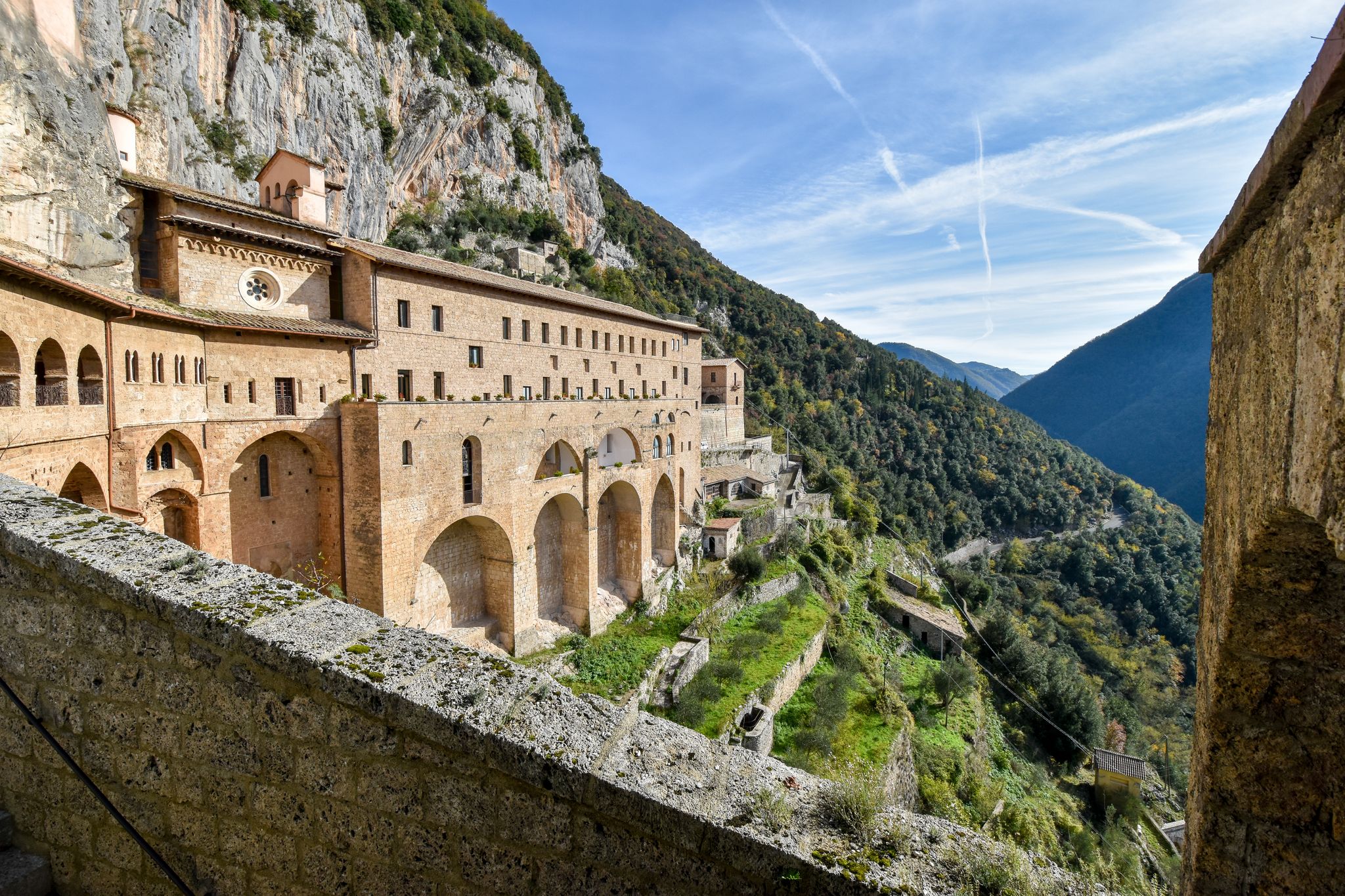
Monastery of Saint Benedict and Sacred Cave
Highlight • Religious Site
Translated by Google •
Tip by

Pozzo D'Antullo
Highlight • Natural Monument
Translated by Google •
Tip by
Sign up now to discover places like this
Get recommendations on the best single tracks, peaks, & plenty of other exciting outdoor places.
Hermitage of Blessed Lorenzo Loricato
Highlight • Religious Site
Translated by Google •
Tip by

Sanctuary of Madonna delle Cese
Highlight • Religious Site
Translated by Google •
Tip by

Snow Pit
Highlight • Cave
Showing Translation
Tip by
Sign up for free to discover even more caves around Trevi Nel Lazio.
Already have an account?
Start today with a free account
Your next adventure awaits.



Other adventures around Trevi Nel Lazio

Tips from the Community

It is a natural cavity with perennial ice where the temperature remains around one degree. It is one of the very few places in the Apennines where there is still perennial ice. For centuries, until the mid-twentieth century, the ice was harvested and sold. It is in the Fondi di Jenne area, along the road to Monte Livata. Unfortunately, to descend, one would need to be equipped with ropes.
0
0
This place is linked to the figure of the blessed Lorenzo Loricato, a hermit who lived between the 12th and 13th centuries, known for his life of penance and contemplation. After a pilgrimage to Santiago de Compostela and leaving his family, Lorenzo chose to retreat to this area, living in an inhospitable and isolated cave, where he devoted himself to fasting, prayer and penance, feeding on wild herbs. The hermitage consists of some cells dug into the rock, which still today bear witness to the presence of hermits and the desire for spiritual isolation. Over time, the place has become a destination for pilgrimages and of great interest for those who love the spirituality and nature of the Simbruini. The position of the hermitage, overlooking a rocky spur that dominates the Aniene valley, offers a suggestive panorama and an atmosphere of meditation. The hermitage can be reached via hiking trails that cross woods and landscapes typical of the Lazio Apennines.
0
0

From the Certosa di Trisulti a small road descends which, in just over a kilometer, leads to this small sanctuary nestled in the mountain wall. The setting is very suggestive but the sanctuary, as of May 2025, is closed due to the danger of falling rocks! g
3
0

Absolutely worth seeing and listening to!
0
0

In the penumbra generated by the La Monna and Rotonaria mountains, the Antullo well emerges majestically, an extraordinary sinkhole of natural origins. This phenomenon is the result of the collapse of the ceiling of a vast cave, resulting in a chasm of imposing proportions: with an upper diameter of 140 meters, a perimeter of 370 meters and a depth of 60 meters. The Antullo well establishes itself as one of the largest examples of a sinkhole formed by collapse in the world, exceeding in size even the famous gouffre de Padirac in France. Walking along the path that surrounds it, visitors will be able to admire this karst chasm, with its walls adorned with suggestive stalactites and its bottom covered with rich tree vegetation.
1
0
The Monastery of San Benedetto is an important spiritual place, built almost a thousand years ago to guard the cave where the young Benedetto da Norcia spent his hermit life before dedicating himself to the cenobitic life. Even today, the Sacro Speco emanates the intense and courageous spiritual choice of the young Benedict, inspiring visitors.
2
2
from web: ... originally it was a simple cave, set in a large rock, immersed in the greenery of the Ernici mountains, chosen by a hermit, to better live in prayer and solitary meditation.
0
0

This monastery was built about 1000 years ago, with the aim of guarding the cave in which Benedict of Norcia lived a hermit's life.
1
0
Frequently Asked Questions
What are some of the most significant caves or underground sites near Trevi Nel Lazio?
The region around Trevi Nel Lazio offers a variety of intriguing underground sites. Notable natural formations include the Pozzo D'Antullo, an impressive natural doline near Collepardo, and the Risorgenza della Foce, known for its extensive underground river. For historical and spiritual interest, the Monastery of Saint Benedict and Sacred Cave in Subiaco is where Saint Benedict lived as a hermit. Other fascinating sites include the Grotte dei Bambocci with their unique stalactites, the complex Grotte dell'Inferniglio, and the extensive Falvaterra Caves further afield.
Are there any family-friendly caves or accessible underground attractions in the area?
While some caves require specialized equipment, sites like the Pozzo D'Antullo offer accessible paths around its perimeter, allowing families to admire the impressive sinkhole from different angles. The Falvaterra Caves also provide accessible routes for casual tourists, alongside more advanced caving experiences. Always check specific access requirements before visiting.
What kind of geological features can I expect to see in the caves around Trevi Nel Lazio?
The region's calcareous terrain from the Cretaceous period leads to diverse karst phenomena. You can observe impressive sinkholes like the Pozzo D'Antullo, extensive underground river systems such as the Risorgenza della Foce and Falvaterra Caves, and intricate stalactite and stalagmite formations in places like the Grotte dei Bambocci and Grotte dell'Inferniglio. The Snow Pit even features perennial ice.
Are there historical or spiritual sites related to caves in this region?
Yes, the area is rich in historical and spiritual cave sites. The Monastery of Saint Benedict and Sacred Cave in Subiaco is built around the grotto where Saint Benedict lived. The Hermitage of Blessed Lorenzo Loricato consists of cells dug into the rock, reflecting a life of penance and contemplation. Additionally, the Sanctuary of Madonna delle Cese was originally a simple cave chosen for solitary meditation.
What outdoor activities can I combine with a visit to the caves?
The Monti Simbruini Park, which encompasses Trevi Nel Lazio, is ideal for various outdoor activities. You can find numerous hiking trails that lead to or near some of these caves, offering scenic views of the Lazio Apennines. There are also running routes and traffic-free bike rides in the vicinity, allowing you to explore the natural beauty of the region.
What is the best time of year to visit the caves around Trevi Nel Lazio?
The best time to visit depends on the specific cave and your planned activities. For underground caves, temperatures are generally stable year-round. However, for sites that involve hiking or surface exploration, spring and autumn offer pleasant weather with mild temperatures and vibrant natural scenery. Summer can be warm, while winter might bring colder conditions, especially at higher elevations.
Are there any caves that are particularly challenging or require special equipment?
Some caves in the region, such as the Grotte dell'Inferniglio and the Falvaterra Caves (for advanced routes), involve complex systems and may require caving experience and specialized equipment. The Snow Pit, for instance, requires ropes to descend. Always inquire about the difficulty and necessary gear for specific cave explorations, and consider guided visits for more challenging routes.
Can I find cafes or restaurants near the cave attractions?
Trevi Nel Lazio and nearby villages like Collepardo and Subiaco offer various cafes and restaurants where you can enjoy local cuisine. While not directly adjacent to every cave entrance, these towns are typically a short drive away and provide convenient options for refreshments and meals before or after your exploration.
What should I wear or bring when visiting caves in this area?
For most cave visits, especially those involving walking or light exploration, wear comfortable clothing that you don't mind getting a bit dirty. Sturdy, closed-toe shoes with good grip are essential. Even in summer, a light jacket or sweater is advisable as cave temperatures are consistently cool. For more adventurous caving, specialized gear like helmets, headlamps, and appropriate protective clothing will be necessary.
Are there any dog-friendly options for exploring caves or nearby trails?
While direct access for dogs into enclosed cave systems can be restricted for safety and preservation reasons, many of the surrounding hiking trails in the Monti Simbruini Park are dog-friendly. You can enjoy walks and explore the natural beauty of the area with your dog, often leading to viewpoints or the exterior of cave entrances. Always keep your dog on a leash and respect local regulations.
How long does it typically take to explore the caves?
The duration of a visit varies significantly by cave. A site like the Pozzo D'Antullo might take an hour or two to walk around and admire. More extensive systems like the Falvaterra Caves or the Grotte dell'Inferniglio can involve tours lasting several hours, especially if you opt for guided explorations. Historical sites like the Monastery of Saint Benedict and Sacred Cave can also take a couple of hours to fully appreciate the spiritual and architectural aspects.
Is public transport available to reach the caves or nearby towns?
Public transport options to reach the more remote cave sites can be limited. Trevi Nel Lazio and larger towns like Subiaco are generally accessible by bus, but reaching specific cave entrances often requires a car. For places like Collepardo, where the Pozzo D'Antullo and Grotte dei Bambocci are located, driving is usually the most convenient option. Planning your journey in advance is recommended.
Most popular routes around Trevi Nel Lazio
Most popular attractions around Trevi Nel Lazio

Get inspired with the komoot mobile app


