Top 3 Castles around Dargelin
Best castles around Dargelin are located within the wider Mecklenburg-Vorpommern region, an area characterized by its historical estates and natural settings. Dargelin itself is a municipality in the Vorpommern-Greifswald district, offering access to various cultural landmarks. This guide highlights 3 castles in the vicinity, providing insights into the region's architectural heritage.
Best castles around Dargelin
- The most popular castles is Griebenow Castle, a castle that is a fully preserved Baroque palace complex. It is considered an architectural masterpiece with…
Last updated: August 22, 2026
Griebenow Castle
Highlight • Castle
Translated by Google •
Tip by

Behrenhoff Manor Ruins
Highlight • Historical Site
Translated by Google •
Tip by

Sign up now to discover places like this
Get recommendations on the best single tracks, peaks, & plenty of other exciting outdoor places.
Sign up for free
Schmarsow Castle
Highlight • Castle
Translated by Google •
Tip by

Schloss Wieck
Highlight • Castle
Translated by Google •
Tip by

Gützkow Castle Hill (Schlossberg) and Slavic Settlement Site
Highlight • Historical Site
Translated by Google •
Tip by
Start today with a free account
Your next adventure awaits.
Login or Signup

Tips from the Community

Wieck Castle is a former manor house in the Wieck district of the town of Gützkow, built between 1793 and 1797 on the site of a previous building. In 1931, the town of Gützkow purchased the castle, park, and chapel and established a school. It has been used as a high school since 1991.
0
0

Unfortunately, there is nothing left to see of the castle.
0
0

Gützkow Castle (Slavic Chozcho), first mentioned in documents in 1140, was the political and economic center of a region of the Slavic tribe of the Lutizians. The seat of Prince Mizlaw was the site of a new, large pagan temple. In 1163 and 1177, King Waldemar I of Denmark destroyed Chozcho on his campaigns. At the foot of the hill, the remains of a Slavic settlement with wooden buildings and many valuable finds were discovered. Around 1230, Jaczo, Vogt of Salzwedel, was granted the county. His sons founded the family of the Counts of Gützkow. A castle was built on the castle hill in the 13th century. A deep ditch was dug between the castle hill and the town, and the castle hill was raised with the excavated material. In 1392, the cities of Stralsund and Greifswald destroyed the castle.
0
0
Construction of a manor house/castle in the Tudor style, but unfortunately this is no longer recognizable due to the demolitions in 1955/60. This type of building is rarely found in Western Pomerania in this size and design. The park with the neo-Gothic chapel as an ensemble, as well as the extensive farmyard in the construction phases 1825-1850 and 1880-1890 are also worth mentioning.
0
0

Behrenhoff was called Busdorf until 1804 and had belonged to the von Behr family since the 14th century. On behalf of Carl Felix Georg von Behr, a two-story, late classicist manor house was built in the 1830s to replace the previous baroque manor house. The architect was possibly Friedrich Hitzig. His widow Louise Wilhelmine Gustava von Heyden had a landscape park created in the 1840s based on the plan of Peter Joseph Lenné.[2] Mechthild Countess von Behr, the last noble owner, was granted lifelong usufruct after her husband's death. She was against the National Socialists. Approached by Albrecht Schönherr, from 1936/1937 it offered accommodation on the estate for Confessing Church events. Bible studies and lectures took place during the so-called free periods. In addition to Schönherr, Eberhard Bethge, Günter Jacob, Volkmar Herntrich and Ernst Lohmeyer, among others, gave lectures. It is unclear whether Dietrich Bonhoeffer actually took part in events in Behrenhoff, as stated several times. On May 8, 1945, the mansion burned down. The ruins were later dismantled to produce building materials for new farms. https://de.wikipedia.org/wiki/Landschaftspark_Behrenhoff#Schloss_Behrenhoff
0
0

The castle was built around 1830 instead of a manor house. In May 1945 the castle burned down. The park is now part of a listed landscape park.
0
0

Manor house or castle, built 1702–1706. Currently 2020 renovation work
0
0

The fully preserved Baroque palace complex is considered an architectural masterpiece of high cultural and historical value, especially for our Swedish past. It is one of the most beautiful castles in Western Pomerania. Founded by the Cistercian monastery Eldena in 1219, the place Griebenow 1248 first documented as a Slavic village in connection with the confirmation of the extensive monastery property by the Pomeranian Duke Wartislaw III. mentioned. In the 14th century until the middle of the 17th century Griebenow becomes property of the knightly family of Rausche. The buildings from this period have not been preserved. With the occupation of Pomerania after the end of the Thirty Years' War in 1630 by the Swedish troops Griebenow was under Swedish rule until 1815. The achieved successes of Gerd Anton Keffenbrink as Oberfeldkämmerer (his ancestors had emigrated and come from Rheine / Westphalia) rewarded the Swedish Queen Christina with the noble title Rehnschiöld and the goods Griebenow, Kreutzmannshagen, Willershusen u.a as a fief. From then on, Gert Antoniison Rehnschiöld resided as chamber president (finance minister) of Western Pomerania and Mecklenburg, as well as a government councilor in Pomerania and curator of the Greifswald University. 1653/54 he had the unique castle chapel built as a 15eckigen central building, where he, as well as his closest relatives in the local family tomb 1658 found their final resting place. During an inventory of the Griebenower buildings the poor condition was determined. Thus Carl Gustav Rehnschiöld left as general, field marshal military adviser of the Schwedenkänigs Karl's of the XII. and Imperial Count acted to renew the inherited estate. The newly created pleasure garden with the essential Baroque parts, the Lindenallee as a trained main axis and the rectangular island in the castle pond, was first mentioned in 1706. 1707-1709, the ailing walls could be broken off and replaced by a representative palace, one of the largest not royal castles. Nicodemius Tessin d.J., one of the most famous architects of the Swedish Baroque, probably also worked in Griebenow. Today, the Griebenower castle is one of the most important architectural history of the Swedish time in northern Germany. With changes in the first half of the 19th century, the staircase, some rooms and the facade with ornamental elements of classicism were redesigned. From this time come the court of honor with its four-row chestnut alley, the farm building and the stables. The result of a renovation in 1910 was a redevelopment of the estate as the center of the estate, with the castle and the farm building were integrated into the park. Thus, the Gutsanlage could be used privately until 1935. After that the park started to grow wild and the property was used by the UNI Greifswald as a maternity ward and maternity home. Until 1958, a branch office of the University of Greifswald was set up for tuberculosis and epidemics in Griebenow. In 1958 the Grimmen district took over the facility and set up a district nursing home for elderly care and disabled children. The maintenance efforts left much to be desired and a reconstruction was planned in 1989 after the castle was cleared in 1988. This was no longer possible. It was not until 1992/93 that the district invested DM 1 million in the roof and window renovation. With pride one can say that with the establishment of the association "baroque castle to Griebenow e.V." on 1.5.2003, which also became owner of the lock, again life in the castle pulled. Since then, it has become a visitor magnet and cultural center in the region. The stylish preservation of the historical testimony of Swedish past is the highest concern of the association. Source: http://www.schloss-griebenow.de/historie/
2
1
Frequently Asked Questions
What kind of castles can I expect to find near Dargelin?
While Dargelin itself is a small municipality, the broader region of Western Pomerania in Mecklenburg-Vorpommern is home to a variety of historical sites. You can find well-preserved Baroque palaces, manor house ruins, and sites of former castles with significant historical importance. These range from grand estates like Griebenow Castle to the remnants of ancient Slavic settlements.
Are there any well-preserved castles or ruins to visit near Dargelin?
Yes, you can visit several notable sites. Griebenow Castle is a fully preserved Baroque palace complex, considered an architectural masterpiece and one of the most beautiful castles in Western Pomerania. For ruins, the Behrenhoff Manor Ruins offer a glimpse into a former estate, now part of a listed landscape park. The Gützkow Castle Hill (Schlossberg) is a significant historical site of a former Slavic settlement and medieval castle, though the castle itself is no longer standing.
What is the historical significance of castles in the Dargelin region?
The castles and manor houses in the region reflect a rich history, often influenced by Swedish rule and local noble families. For example, Griebenow Castle has a strong connection to its Swedish past, while the Gützkow Castle Hill marks the site of a crucial Slavic settlement and princely seat from the 12th century. These sites offer insights into the architectural, cultural, and political developments of Western Pomerania over centuries.
Are there family-friendly castles to visit near Dargelin?
Yes, several castles and historical sites are suitable for families. Griebenow Castle is listed as family-friendly, offering a chance to explore a well-preserved Baroque palace. The Behrenhoff Manor Ruins, set within a landscape park, can also be an interesting spot for families to explore history and nature together.
What outdoor activities can I do near these castles?
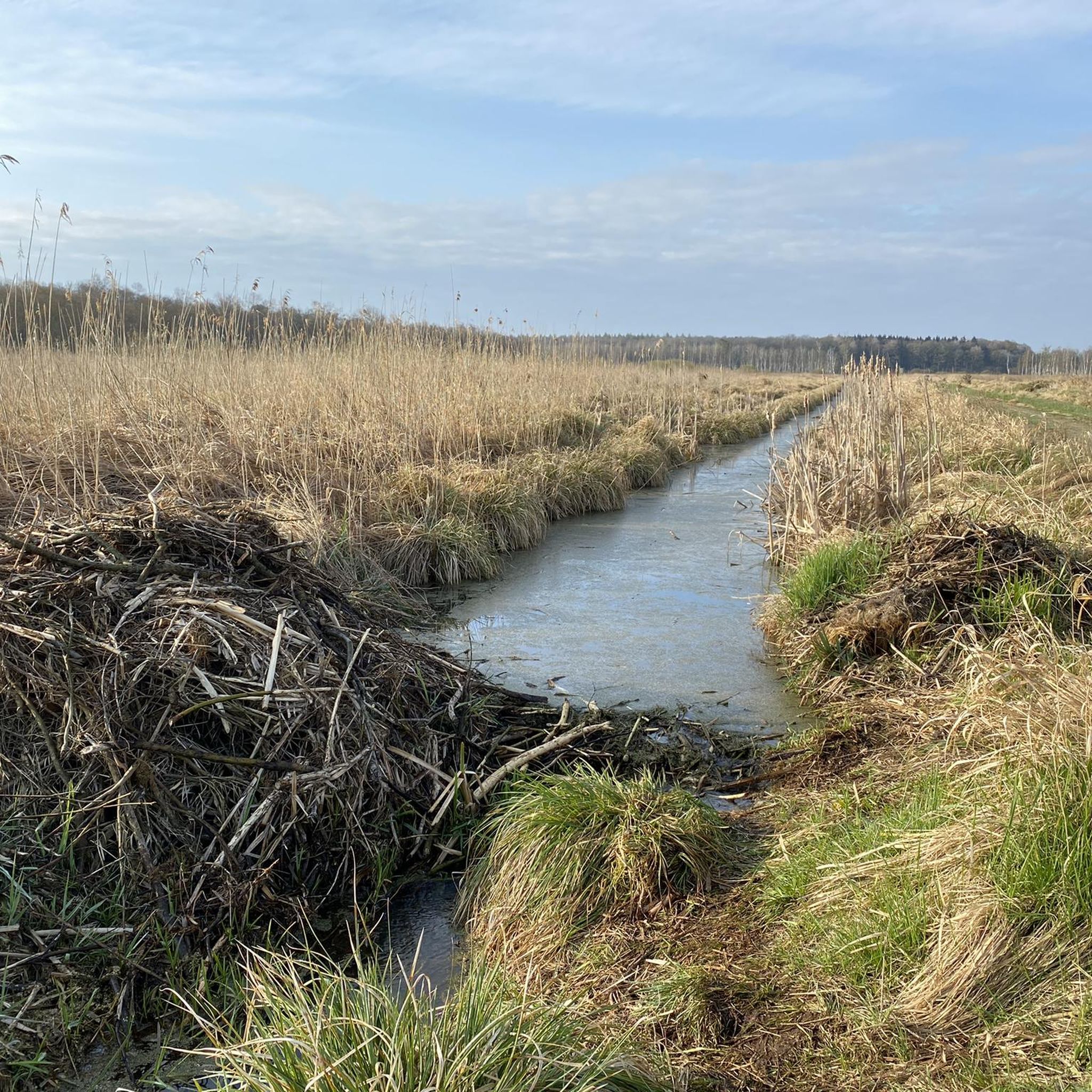
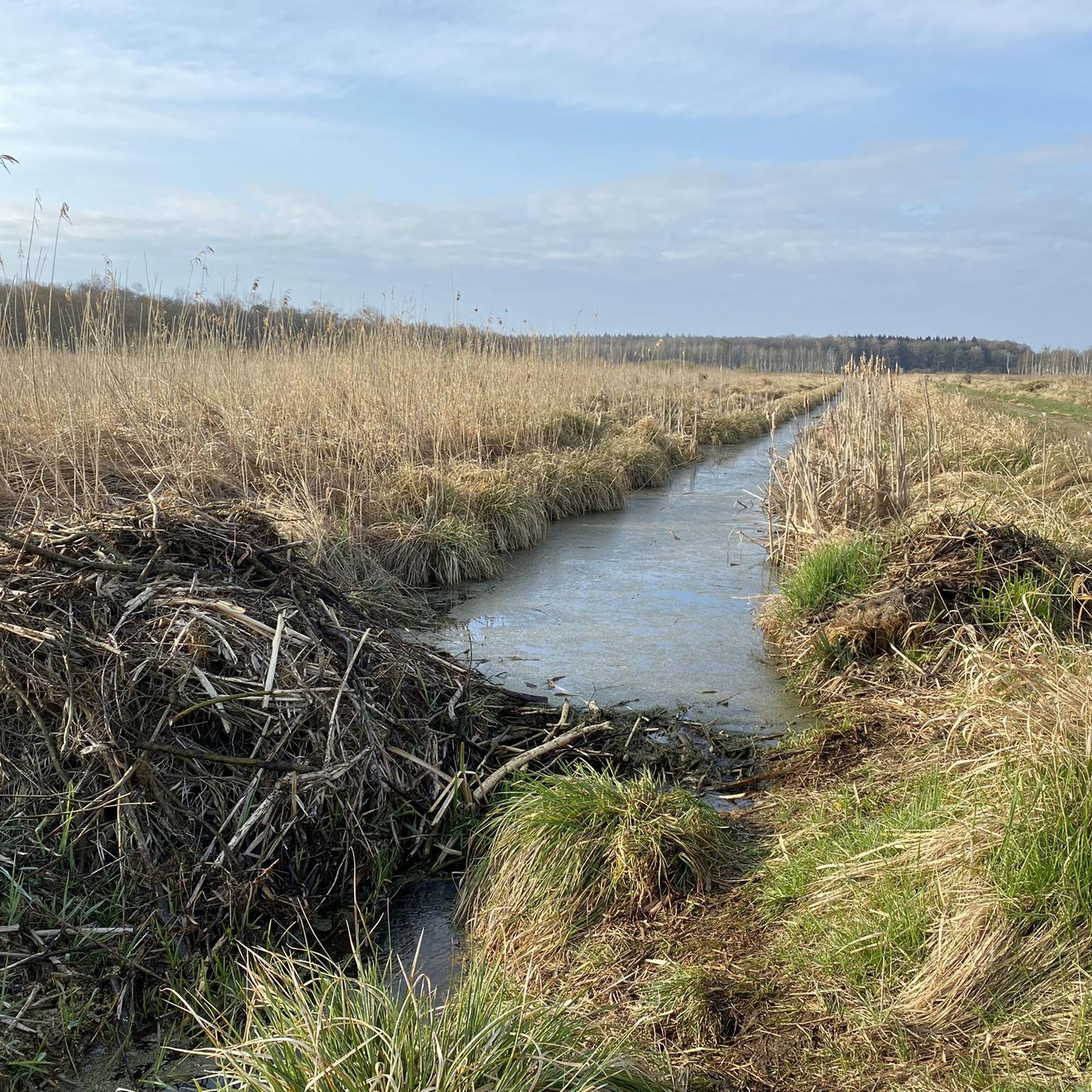
The area around Dargelin and its castles offers various outdoor activities. You can find numerous hiking and gravel biking routes. For instance, near Behrenhoff, there are easy hiking loops like the "Path Along the Canal – Beaver Dam loop." For more extensive cycling, routes like the "Wrangelsburg Castle – Pappelallee loop" are available. You can explore more options in the Hiking around Dargelin and Gravel biking around Dargelin guides.
Are there hiking trails near the castles?
Yes, there are hiking trails that can be combined with castle visits. For example, you can find hiking routes near Behrenhoff, such as the "Path Along the Canal – Beaver Dam loop." While Griebenow Castle is part of a longer, more difficult hiking loop, many easy trails are available in the wider Dargelin area. Check out the Hiking around Dargelin guide for detailed routes.
What is the best time of year to visit castles in the Dargelin region?
The best time to visit castles in Western Pomerania, including those near Dargelin, is typically from spring to early autumn (April to October). During these months, the weather is generally pleasant for exploring castle grounds, parks, and nearby outdoor trails.
Are there any castles near Dargelin that are currently used for other purposes?
Yes, Schloss Wieck, a former manor house built between 1793 and 1797, has been used as a high school since 1991. This demonstrates how historical buildings in the region have been adapted for modern community use.
Can I find accommodation or places to eat near the castles?
While specific cafes or pubs directly adjacent to every castle are not detailed, the towns and villages surrounding these historical sites, such as Dargelin, Griebenow, and Behrenhoff, offer various local amenities. For more comprehensive information on accommodation and dining options in the broader Mecklenburg-Vorpommern region, you might find resources on the official tourism website helpful.
What are some unique features of the castles around Dargelin?
Griebenow Castle is unique for its fully preserved Baroque architecture and significant cultural ties to its Swedish past, including a 15-sided central chapel. Schmarsow Castle, despite demolitions, was originally built in a rare Tudor style for the region and features a park with a neo-Gothic chapel. The Gützkow Castle Hill stands out as an archaeological site, revealing the remains of a significant Slavic settlement.
Most popular attractions around Dargelin

Get inspired with the komoot mobile app


Explore more
Looking for the best castles somewhere else? Discover other guides around Dargelin:
