Top 5 Caves around Schnorbach
Best caves around Schnorbach are primarily old mining tunnels and historical slate mines, reflecting the region's industrial heritage. Schnorbach, located in the Hunsrück and Soonwald regions, is characterized by its picturesque landscapes and outdoor activities. While natural caves are not prominent, the area offers unique underground exploration opportunities within its man-made structures. These sites provide a glimpse into the geological formations and historical mining practices of the Hunsrück.
Best caves around Schnorbach
- The most popular caves is Brühlbach tunnel,…
Last updated: May 1, 2026
Ore mine (barred)
Highlight • Cave
The tunnel entrance is very low and secured with a padlock.
Translated by Google •
Tip by

Schinderhannes Cave
Highlight • Cave
To the …
Translated by Google •
Tip by
Sign up now to discover places like this
Get recommendations on the best single tracks, peaks, & plenty of other exciting outdoor places.
Sign up for free
Brühlbach tunnel
Highlight • Cave
Translated by Google •
Tip by
Kahlenberg Mine
Highlight • Cave
Translated by Google •
Tip by
Two studs
Highlight • Cave
Translated by Google •
Tip by
Start today with a free account
Your next adventure awaits.
Login or Signup
Tips from the Community

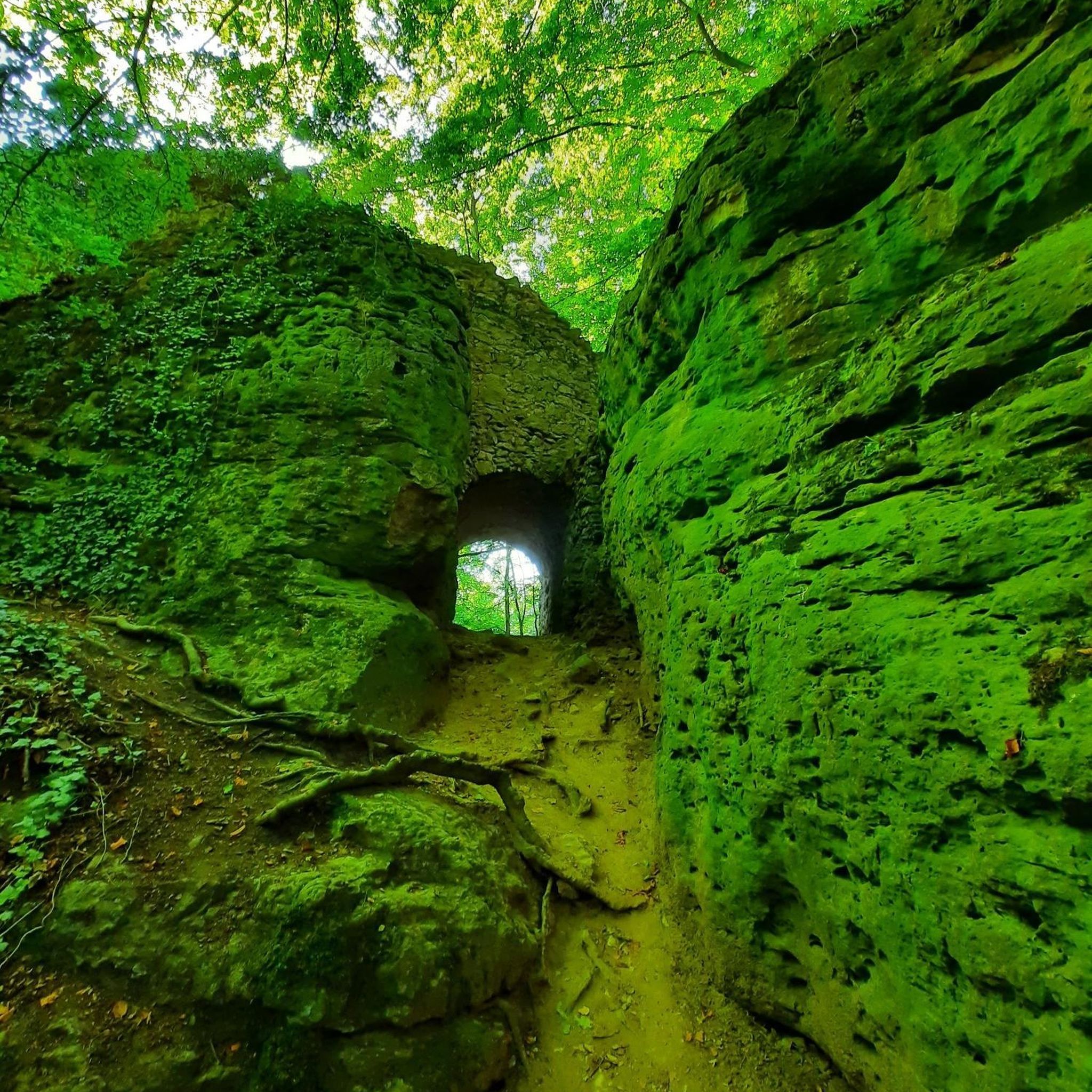
At the foot of the rock wall rising north of the town center, behind the restaurant (formerly Pizzeria La Bella), there are two tunnel mouths, each of which initially leads a few meters into the mountain. Both are connected by a cross tunnel, from which another tunnel leads a few meters into the mountain.
0
0
Above the district of Layenkaul (= digging for stones) there is a former pit with 2 tunnels on the slope of the Kahlenberg. Above the large heap of rubble there are still a few foundation walls of the mine buildings.
1
0
From the paved bike path you can see the entrance to the tunnel, which you can easily reach through a ford a little further down the stream. The tunnel leads about 60 meters into the mountain.
1
0

So with these masses of unknown flying objects, we skipped further inspection.
1
0

no chance, the vampires were in the majority and the way to the cave was quite adventurous and overgrown
0
0
The slate tunnel (it is unclear whether only slate or also ore was mined) leads about 10 m deep into the mountain at the foot of the slope. To the left, there appears to be another tunnel at the end, but this is completely filled with clay and slate rubble. Above the tunnel there is a small slate quarry, the rubble heap of which can be seen from the pond.
4
0

Unfortunately, I can't judge how deep the tunnel leads in, because during our visit it was not accessible due to overcrowding with "mosquitoes".
1
0

The tunnel goes in almost 50 meters, and shortly before the end a shaft goes down but it doesn't go any further.
2
0
Frequently Asked Questions
What kind of caves can I expect to find around Schnorbach?
The caves around Schnorbach are primarily old mining tunnels and historical slate mines, reflecting the region's industrial heritage. You won't find natural karst caves here, but rather man-made structures that offer a unique glimpse into the area's geological formations and historical mining practices.
Are there any caves suitable for beginners or those new to underground exploration?
Yes, the Brühlbach tunnel is a good option. It's easily accessible from a paved bike path and leads about 60 meters into the mountain, offering a straightforward exploration experience.
What are some of the historical mining sites I can visit near Schnorbach?
Beyond the highlights, the broader region features several historical mining sites. The Steeg Slate Mine offers tunnels you can walk through, and the Mönchholzkopf Slate Mine, though barred to protect bats, has a large quarry nearby with remains of old buildings and tools. An Old Slate Mine near Bacharach also showcases the region's slate extraction history.
Are there any caves that offer a more challenging exploration experience?
The Ore mine (barred) offers a more adventurous experience. While the entrance is low and secured, the passage opens up inside, allowing exploration 60 meters into the mountain. It features a small mining chamber and a vertical shaft about 10 meters deep, requiring caution.
Can I visit the caves with children or as a family activity?
While many of the sites are historical mines, some are more accessible than others. The Brühlbach tunnel, with its easy access from a paved path, might be suitable for families looking for a gentle introduction to underground exploration. Always assess the specific conditions and safety for your family before entering.
What kind of outdoor activities can I combine with a visit to the caves?
The Schnorbach area, situated in the Hunsrück and Soonwald regions, is excellent for various outdoor activities. You can find numerous hiking trails, such as those around the Simmersee, or explore road cycling and mountain biking routes. For more details, check out the Hiking around Schnorbach, Road Cycling Routes around Schnorbach, and MTB Trails around Schnorbach guides.
What should I wear when exploring the mining tunnels?
When exploring mining tunnels, it's advisable to wear sturdy, closed-toe shoes with good grip, as surfaces can be uneven or wet. Dress in layers, as temperatures underground can be cooler than outside. A headlamp or flashlight is essential, even in tunnels described as 'easy' or 'accessible'.
Are there any caves with unique formations or multiple passages?
Yes, Two studs is a notable site. It features two tunnel mouths that lead a few meters into the mountain and are connected by a cross tunnel, from which another tunnel branches off, creating an interesting layout for exploration.
Do I need a permit to visit these old mining tunnels?
Generally, public access to these historical mining sites does not require a specific permit. However, some tunnels, like the Mönchholzkopf Slate Mine, are barred for preservation or safety reasons, often to protect bat populations. Always respect any closures or signage you encounter.
What is the best time of year to visit the caves and the Schnorbach region?
The Schnorbach region is picturesque year-round. For exploring the mining tunnels, spring and autumn offer pleasant temperatures for outdoor activities before or after your underground visit. During winter, some entrances might be less accessible due to weather, and summer can be a good time to escape the heat underground.
Are there any facilities like parking or cafes near the cave sites?
Information on specific parking or cafe facilities directly at each cave site is limited. However, Schnorbach and nearby towns in the Hunsrück region offer various amenities, including accommodation and dining options. It's recommended to plan your visit and check for facilities in the closest villages.
What makes the <a href="https://www.komoot.com/highlight/3124205" target="_blank" rel="noopener">Schinderhannes Cave</a> interesting?
The Schinderhannes Cave is an old slate tunnel that leads about 10 meters deep into the mountain. While its full depth can sometimes be inaccessible due to conditions, it's an interesting historical site with a small slate quarry above it, offering insights into the region's past mining activities.
Can I bring my dog to the caves?
While the outdoor areas and hiking trails around Schnorbach are generally dog-friendly, access to the interior of mining tunnels can be restricted or unsafe for pets. It's best to keep dogs on a leash and consider their safety and the potential for narrow, dark, or wet conditions before bringing them into any underground passages.
Most popular routes around Schnorbach
Most popular attractions around Schnorbach

Get inspired with the komoot mobile app


Explore more
Extend your search for the best caves by checking out these guides of the top ones around Schnorbach:
