Top 4 Castles around Kandel
Best castles around Kandel are found in the surrounding Rhineland-Palatinate region, an area rich in historical fortresses and palaces. Kandel itself features historical attractions such as its Baroque Town Hall and the St. Georgskirche, with parts dating back to 1468. The region offers a diverse landscape with forests and hills, providing settings for various historical sites. This area provides opportunities to explore historical architecture and cultural landmarks.
Best castles around Kandel
- The most popular castles is Bad Bergzabern Castle,…
Last updated: May 15, 2026
Bad Bergzabern Castle
Highlight • Castle
Translated by Google •
Tip by

Affelderle Castle
Highlight • Historical Site
wochenblatt-reporter.de/woerth-am-rhein/c-lokales/ein-huegel-der-einst-eine-wehrhaft-burg-war_a357890
Translated by Google •
Tip by

Sign up now to discover places like this
Get recommendations on the best single tracks, peaks, & plenty of other exciting outdoor places.
Sign up for free
Ochsensteiner Schloss
Highlight • Castle
The castle, surrounded by trees, is …
Translated by Google •
Tip by
Tour des Bouchers (Metzgerturm) Lauterbourg
Highlight • Historical Site
Translated by Google •
Tip by

Start today with a free account
Your next adventure awaits.
Login or Signup
Tips from the Community

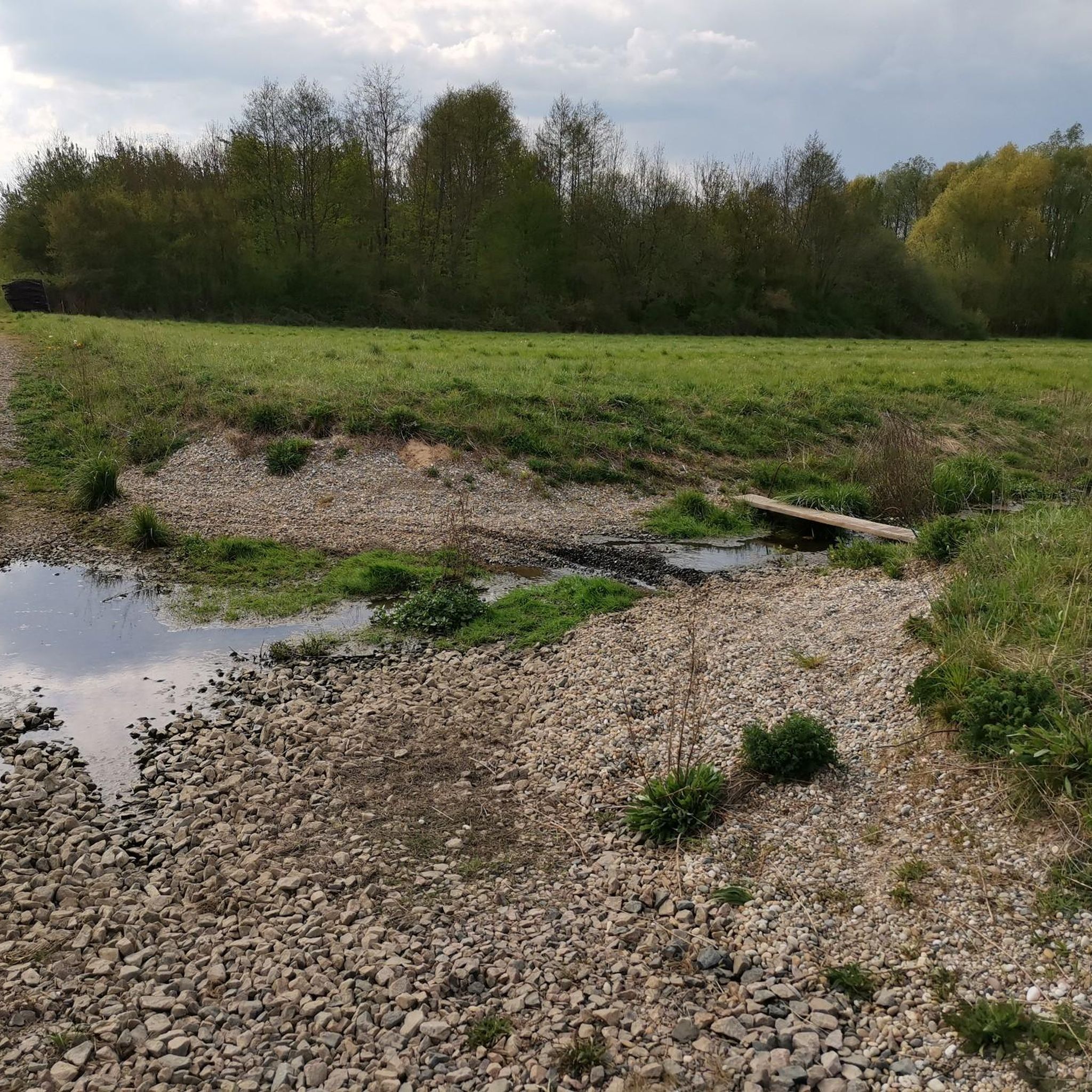
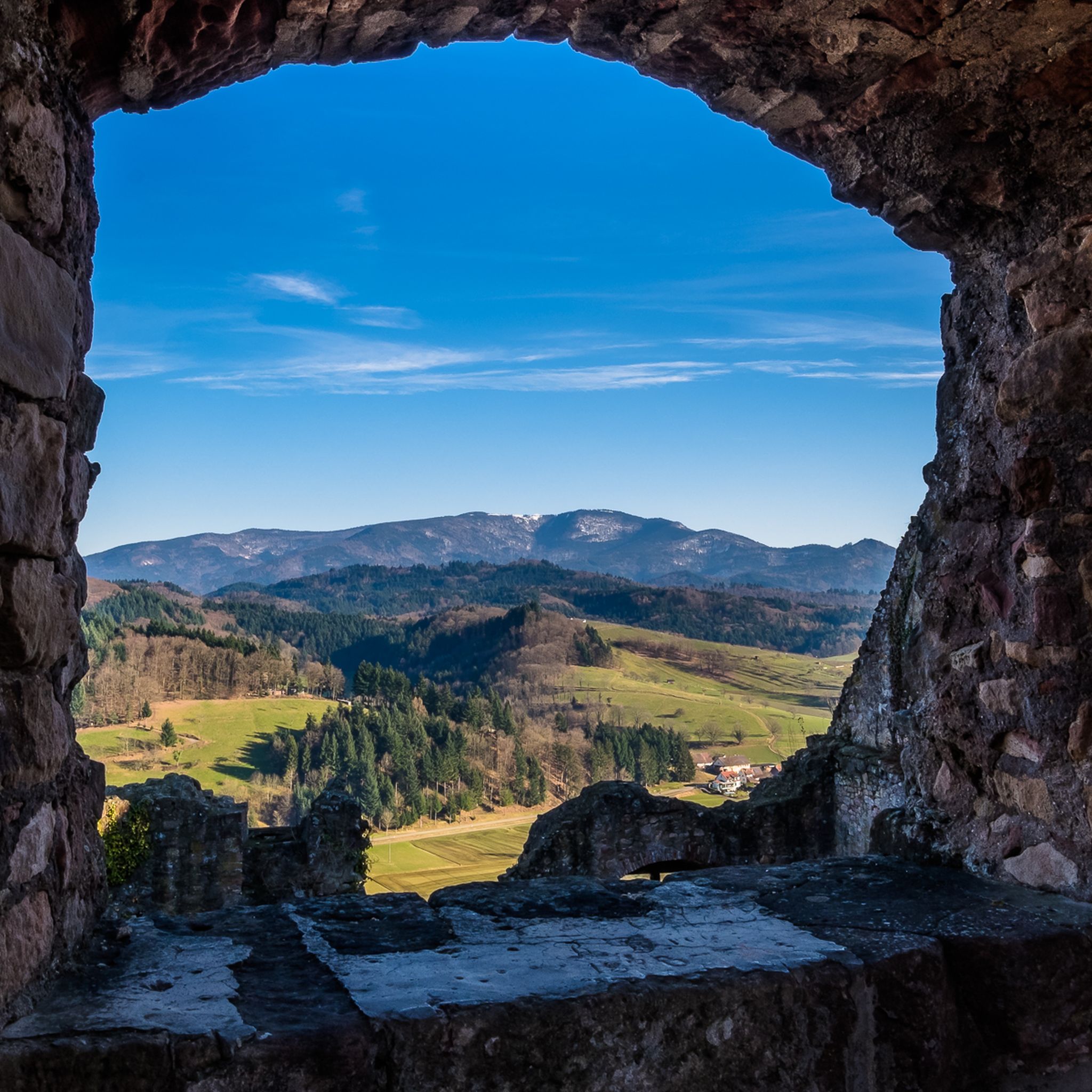
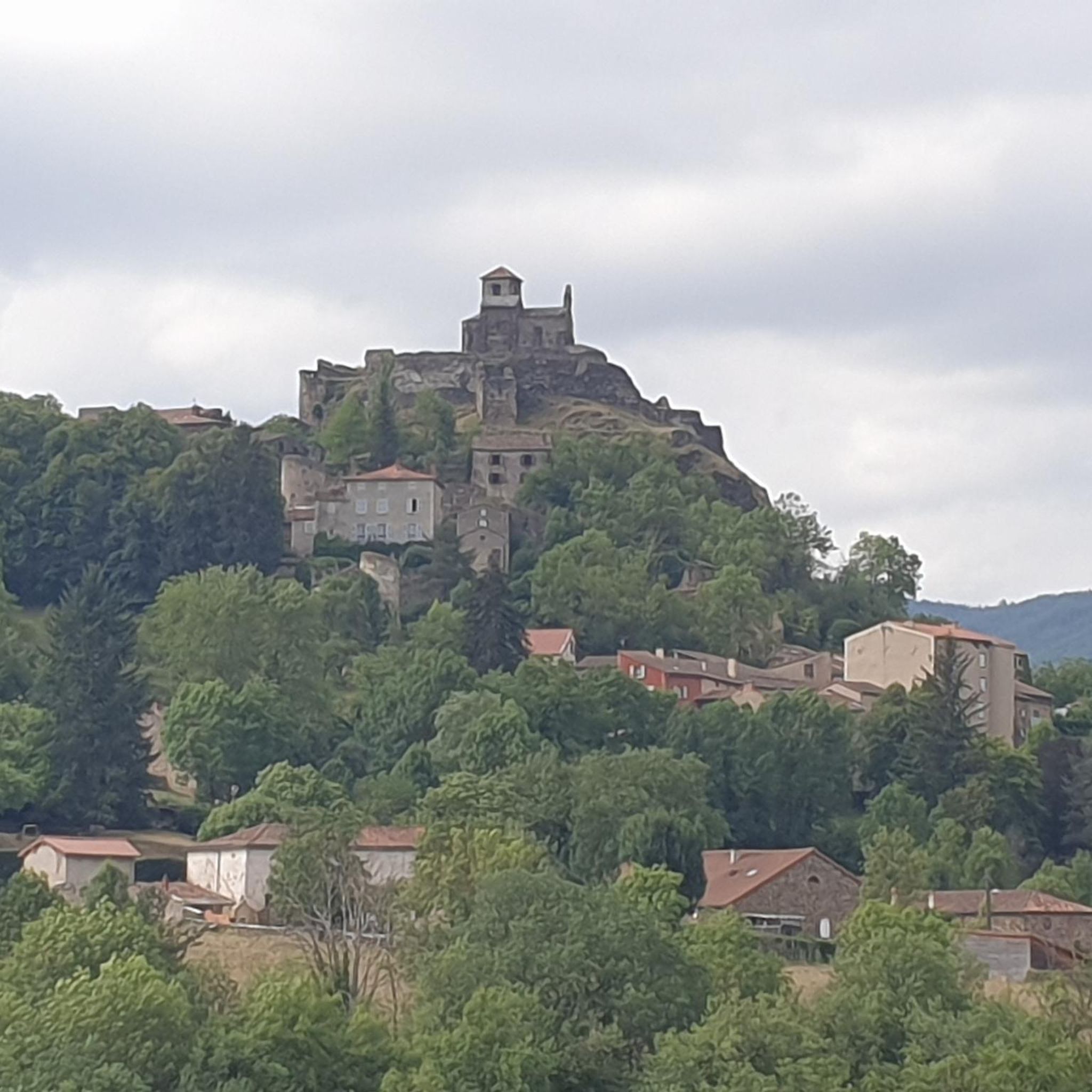
Little is known today about the building that bears the name "Affelderle" – derived from the Middle High German word "Affalter" for apple tree. It is a "lost castle", a "lost place", where there is not much left to see, and about which not much can be said with certainty anymore. The castle was once also called "Streitstein" or "Schloss Streithberg" (mentioned as such in 1574), and it was probably built in the 10th century by the Weißenburg Abbey to defend the Rhine crossing at Pfortz (Maximiliansau) – Knielingen and to protect against raids by the Normans and Hungarians. The castle was originally built only of wood and earth; it was not until the 11th or 12th century that the stone structure is said to have been built: a motte-and-bailey castle with a strong ring wall and a drawbridge over the moat. Such castles are known from France, where they are called "Motte" ("clod of earth", "mound"). An early medieval castle type, built primarily of wood, whose main feature is an artificially created earth mound with a usually tower-shaped building.
1
0

impressive gate system
0
2

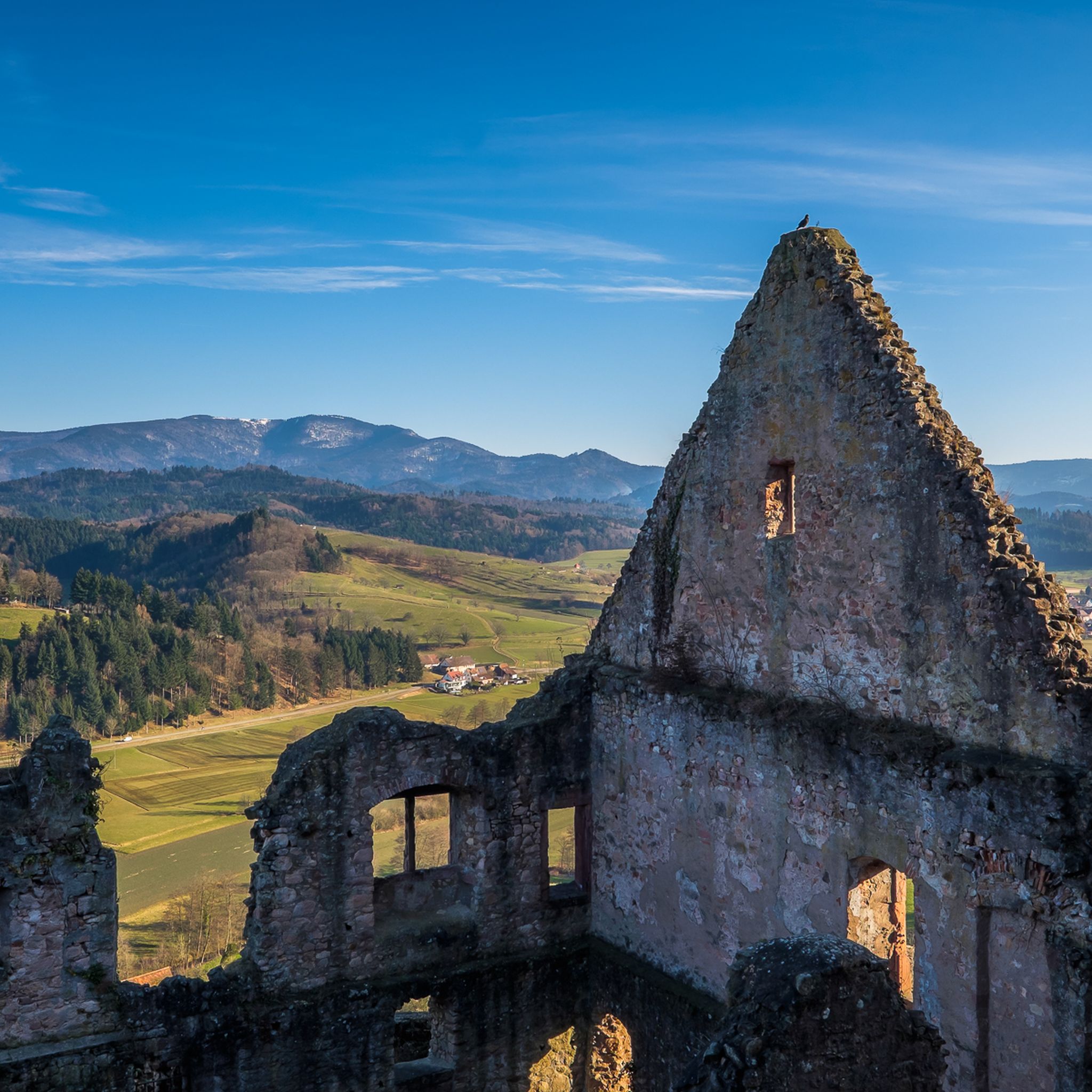
In the Peasants' War of 1525, the castle in Bergzabern, which was first mentioned in 1333, was plundered and burned down. In the years up to 1532, the destroyed castle was rebuilt as a fortified palace on the same site. The south building was built first, founded on oak piles because of the swampy ground: called the Ludwigsbau after its builder, Ludwig the Black of Palatinate-Zweibrücken. The two round towers in the west and east served to house cannons, and the living and utility rooms were on the two upper floors. The complex was protected by a moat; a connection to the city wall is likely, but cannot be reconstructed today. The Wolfgangsbau was built between 1561 and 1579, a three-wing extension that adjoined the Ludwigsbau to the north. Begun under Duke Wolfgang, the Wolfgangsbau was completed under his son Johann I. The outstanding architectural feature is the giant gate in the Renaissance style. The castle was plundered during the Thirty Years' War. On February 20, 1676, French raiding parties from the Philippsburg fortress burned down the castle and destroyed parts of the town. In 1704, the building had no roof, and the cellars under the Ludwigsbau and the east wing of the Wolfgangsbau were used primarily. From 1720 to 1725, the castle was rebuilt under the direction of the Swedish-Zweibrücken chief building director Jonas Ericson Sundahl and inventory for the living quarters was purchased. In 1728, the castle was habitable again. A high point in the history of the town and castle of Bergzabern was the years 1744 to 1774, when the widow of Christian III, Duchess Caroline of Palatinate-Zweibrücken, had her widow's residence in the castle. The castle suffered damage during the French Revolution as a symbol of the defeat of feudal rule. It was confiscated as national property and subsequently sold on to private individuals in sections. In 1909, the castle burned down completely. The roof structure and interior furnishings in particular were destroyed. Damage occurred again in the Second World War, especially to the giant gate. The building was completely renovated in 1982-1984, and the Bad Bergzabern municipality moved its administrative offices into the castle. Source: https://www.vg-bad-bergzabern.de/slider/schloss/
8
1

It's hard to believe that this was once a castle with a moat and defensive walls. Definitely a gem in this city.
6
1

The 'Tour des Bouchers' - Butcher's Tower is one of the 15 towers that were built at the end of the 13th century as part of a fortress wall. The tower is called the "Butcher's Tower" because the butcher's guild was responsible for it. When the fortress was demolished in 1706, the Butcher's Tower remained with a few other towers. The tower was used as a prison until the middle of the 18th century. In 2017-2020, the exterior of the Butcher's Tower was restored. https://de.wikipedia.org/wiki/Metzgerturm_(Lauterbourg)
1
0

Definitely worth a visit
1
1

Church of Sainte-Trinity Lauterbourg The church's choir, built in the Gothic style, was built in 1467 during the term of Speyer's Bishop Matthias von Rammung. The roof structure and organ of the church burned in the great city fire of 1678, after which the church was restored and re-consecrated in 1683. In 1711 the church was too small for the growing population, so it was demolished except for the choir and replaced by a new building in its current form, which was completed in 1716 and consecrated in 1719. In 1779 an organ was purchased from Ferdinand Stieffell in Rastatt. During the French Revolution the church was temporarily secularized. A complete renovation took place in 1878. The church was damaged in the Second World War. Jean Gaudin from Paris created today's church windows in 1950. In the 1970s and 1980s the church was renovated inside and out. Source and more: https://de.wikipedia.org/wiki/Dreifaltigkeitskirche_(Lauterbourg)
0
1

The castle is the landmark of the town of Bad Bergzabern. The Dukes of Palatinate-Zweibrücken once resided there. Today, the castle houses the administration of the Bad Bergzabern municipal association. In the 12th and 13th centuries, the Counts of Saarbrücken probably built a moated castle on the site of the present castle. This was first mentioned in 1333 as "Feste Zabern by Lantecken." In 1385, it fell to the Electorate of the Palatinate and, by inheritance, became the property of Palatinate-Zweibrücken in 1410. In 1525, rebellious Lorraine peasants who had taken over the town destroyed the castle complex. Ludwig II of Palatinate-Zweibrücken rebuilt the complex, this time in the form of a castle palace, a mixture of a defensive structure and an unfortified castle. In 1532, the south wing was completed, still striking today due to its two round towers, which served as gun turrets at the time. The castle was still protected by a moat at that time. In 1676, it was largely destroyed by fire after an attack by French troops, but was subsequently rebuilt (1720-1725) by the Swedish-Zweibrücken building director. In 1794, the French captured the castle, which was auctioned off as national property in 1803. Around this time, the surrounding moat was also filled in. The castle became the property of the town of Bergzabern, suffered considerable damage in a fire in 1909, and was then used as a school until, after extensive renovations in 1984, it became the seat of the Bad Bergzabern municipal administration. https://www.suedlicheweinstrasse.de/entdecken/gehenswuerdigkeiten/burgen-und-schloesser/infosystem/Schloss-Bad-Bergzabern_Bad-Bergzabern/infosystem.html
12
2
Frequently Asked Questions
What are some of the most popular castles to visit near Kandel?
While Kandel itself has historical sites like its Baroque Town Hall, the surrounding Rhineland-Palatinate region offers several impressive castles. Highly recommended are Bad Bergzabern Castle, a restored moated castle now serving as a town hall, and the historical site of Tour des Bouchers (Metzgerturm) Lauterbourg, a remnant of a medieval fortification. Further afield, you can explore the fairytale-like Eltz Castle, the imposing Reichsburg Cochem, or the historically significant Hambach Castle.
Are there any family-friendly castles or historical sites near Kandel?
Yes, several sites are suitable for families. The Tour des Bouchers (Metzgerturm) Lauterbourg, a medieval tower, is listed as family-friendly. The wider region offers castles like Reichsburg Cochem, which hosts special guided tours and events like knight's banquets that can be very engaging for children. Eltz Castle also offers a captivating experience for all ages with its picturesque setting and rich history.
What kind of historical significance do the castles near Kandel hold?
The castles in the Rhineland-Palatinate region boast diverse historical significance. Bad Bergzabern Castle, for instance, was originally a 12th-century moated castle rebuilt in the 16th century. Hambach Castle is famously known as the 'Symbol of Democracy' due to the 1832 Hambach Festival. Eltz Castle is remarkable for remaining in the same family for over 850 years, while Reichsburg Cochem showcases a blend of medieval origins and 19th-century neo-Gothic reconstruction.
Can I find hiking trails near these castles?
Absolutely. The region around Kandel and its castles is excellent for hiking. Eltz Castle, for example, is nestled in the scenic Elz valley with numerous hiking trails offering various perspectives of the castle and the romantic river landscape. For general outdoor activities, you can find many options in the area, including easy hikes around Kandel. Explore more hiking routes in the region on the Easy hikes around Kandel guide.
What is the best time of year to visit the castles around Kandel?
The Rhineland-Palatinate region, where these castles are located, is beautiful throughout much of the year. Spring and autumn offer pleasant temperatures for exploring and hiking, with autumn providing stunning foliage around castles like Eltz. Summer is also popular, though it can be warmer. Checking individual castle opening hours, especially outside peak season, is always recommended.
Are there any castles that are still inhabited or offer a very authentic medieval experience?
Yes, Berwartstein Castle, located in the Wasgau region of the southern Palatinate Forest, is one of the few rock castles in the Palatinate that is still inhabited today. Its remote and idyllic setting provides a captivating and authentic medieval experience, allowing visitors to step back in time.
Are there any viewpoints to see castles or the surrounding landscape?
Yes, the region offers scenic viewpoints. For example, the View of Klingenmünster, Landeck Castle, and the Palatinate Forest provides a great panorama over vineyards, Landeck Castle, and the expansive Palatinate Forest. Hambach Castle also offers magnificent views from its grounds.
What kind of outdoor activities can I do near the castles around Kandel?
Beyond castle exploration, the Kandel area offers a variety of outdoor activities. You can find numerous road cycling routes, such as the 'Bienwald Road – Bienwaldmühle loop from Kandel,' or explore running trails like the 'Naturfreundehaus Kandel loop.' For more details on routes, refer to the Road Cycling Routes around Kandel and Running Trails around Kandel guides.
Are there any lesser-known or 'hidden gem' historical sites near Kandel?
While not a fully preserved castle, Affelderle Castle is a historical site that was once a fortified castle, presumably built by the Weissenburg Monastery to protect a Rhine crossing. Today, only the hill and a ditch-like cut remain, offering a glimpse into a past era and a more understated historical experience.
What are visitors saying about the castles and historical sites in the Kandel region?
The castles and historical sites around Kandel are highly appreciated by the komoot community, with over 1000 upvotes and more than 300 photos shared by visitors. People particularly enjoy the historical insights, the scenic views, and the opportunities for combining visits with outdoor activities like hiking.
Is there a castle near Kandel that has Renaissance architectural elements?
Yes, Ochsensteiner Schloss, also known as Pleisweiler Castle, is a former moated castle built in the 15th century. Its windows are stylistically assigned to the Renaissance, and it features an angular hipped roof building with a corner tower added in 1605, showcasing elements of Renaissance architecture.
Where can I find more information about castles in the Rhineland-Palatinate region?
For broader information on castles and palaces throughout the Rhineland-Palatinate region, you can visit the official tourism website: rlp-tourismus.com. This resource provides additional context and stories about the region's rich historical sites.
Most popular routes around Kandel
Most popular attractions around Kandel

Get inspired with the komoot mobile app


Explore more
Looking for the best castles somewhere else? Discover other guides around Kandel:
