Top 7 Castles around Celorico Da Beira
Castles around Celorico Da Beira are located in a region of Portugal known for its historical significance and varied landscape. The municipality is situated in the Beira Interior, characterized by granite outcrops and views towards the Serra da Estrela. This area has been strategically important throughout history, serving as a frontier and defense point. Its terrain has shaped the architecture of its historical sites.
Best castles around Celorico Da Beira
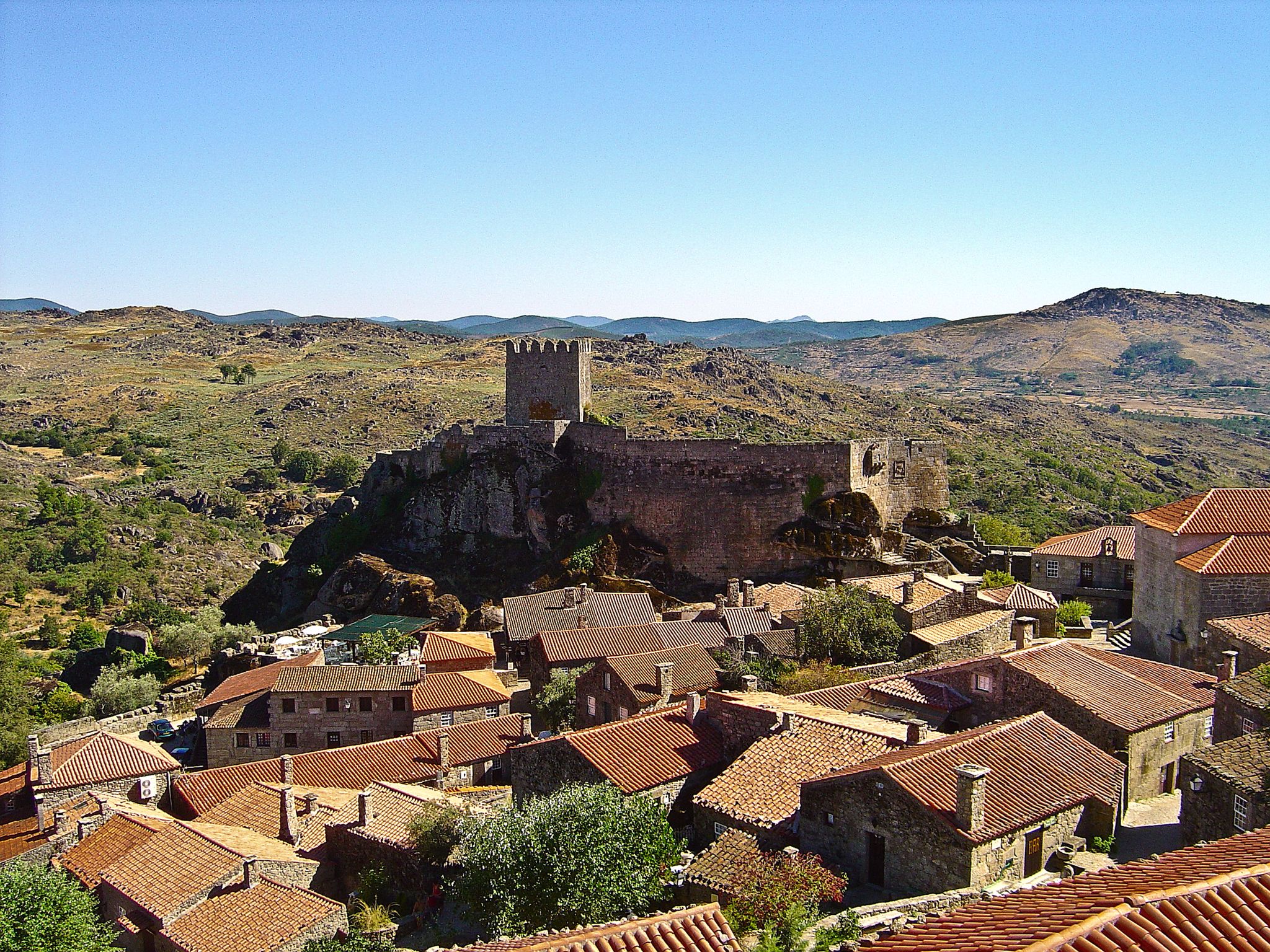
- The most popular castles is Aldeia Histórica de Linhares da Beira, a settlement that is steeped in centuries of history, founded as early as the 6th century BC. It is one of the 12 Historic Villages of Portugal, where every stone tells a piece of the past.
- Another must-see spot is Castle Walls of Trancoso, a castle featuring towers and characteristic walls inclined to the tower of Moorish connotations. Visitors can explore the walls of this castle, built between the 10th and 13th centuries.
- Visitors also love Historic Village of Trancoso, a historical site with an ancient castle that contrasts with the fears and experiences of people from yesteryear. It was a border town, the scene of many important battles and struggles for the formation and independence of the kingdom.
- Celorico Da Beira is known for its medieval military architecture, including Romano-Gothic and Romanesque-Gothic castles. Visitors can see a variety of defensive structures, from keeps and towers to fortified walls and unique gate designs.
- The castles around Celorico Da Beira are appreciated by the komoot community, with 8 upvotes and 19 photos shared by visitors.
Last updated: May 13, 2026
Aldeia Histórica de Linhares da Beira
Highlight • Settlement
Over time, it welcomed Jews, resisted invasions, and lost its municipality in 1842, but never its soul. Today, it is proud to be one of the 12 Historic Villages of Portugal, where every stone tells a piece of the past.
Translated by Google •
Tip by

Castle Walls of Trancoso
Highlight • Castle
Translated by Google •
Tip by

Sign up now to discover places like this
Get recommendations on the best single tracks, peaks, & plenty of other exciting outdoor places.
Sign up for free
Historic Village of Trancoso
Highlight • Historical Site
Translated by Google •
Tip by

King's Gate
Highlight • Castle
It is a castle build in between the 10th and 13th centuries, featuring towers and the characteristic walls inclined to the tower of Moorish connotations.
From the primitive castle appears the walled fortress with five towers and an homage one, the walls featuring several gates as well. Among these, the Porta do Rei stands out the most for being flanked by two towers.
Tip by
Keep Tower of Guarda Castle
Highlight • Castle
Translated by Google •
Tip by

Sign up for free to discover even more castles around Celorico Da Beira.
Sign up for free
Already have an account?
Start today with a free account
Your next adventure awaits.
Login or Signup
Other adventures around Celorico Da Beira

Tips from the Community

A historic village of undeniable beauty. Thank you for sharing the photos.👍🥾🚲
0
0

The imposing castle of Guarda was built in 1199 by King D. Sancho I. The only remaining parts are fragments of the city walls, known as the Gothic-style Torre dos Ferreiros, and the Torre de Menagem (Homage Tower), which houses Guarda's local history museum.
1
0

Linhares da Beira is steeped in centuries of history. Founded, apparently, in the 6th century BC by the Turduli, it saw the passage of the Lusitanians, Romans, and Visigoths, who made it the seat of their diocese. It was the scene of Moorish legends, recovered by the kings of León and later by Afonso Henriques, who granted it a charter in 1169 and integrated it into the region's defensive line. Over time, it welcomed Jews, resisted invasions, and lost its municipality in 1842, but never its soul. Today, it is proud to be one of the 12 Historic Villages of Portugal, where every stone tells a piece of the past.
3
0

Its ancient castle contrasts with the fears and fears experienced by the people of yesteryear. It was a border town, the scene of many important battles and struggles for the formation and independence of the kingdom. It received important privileges. D. Afonso Henriques granted it a charter and D. Afonso III the charter of Feira. D. Dinis ordered the construction of the walls that still protect a village where Christians and Jews lived together. The ring of walls that still surround the old medieval town, as well as the vast civil and religious architectural heritage, give the Historic Centre a unique image.
3
0
The Castle of Trancoso is erected atop a hill in the North-Easternmost extreme of the city of Trancoso, within the district of Guarda, Portugal. It is a castle build in between the 10th and 13th centuries, featuring towers and the characteristic walls inclined to the tower of Moorish connotations. From the primitive castle appears the walled fortress with five towers and an homage one, the walls featuring several gates as well. Among these, the Porta do Rei stands out the most for being flanked by two towers.
2
0
The Castle of Trancoso is erected atop a hill in the North-Easternmost extreme of the city of Trancoso, within the district of Guarda, Portugal. It is a castle build in between the 10th and 13th centuries, featuring towers and the characteristic walls inclined to the tower of Moorish connotations. From the primitive castle appears the walled fortress with five towers and an homage one, the walls featuring several gates as well. Among these, the Porta do Rei stands out the most for being flanked by two towers.
2
0
The Castle of Trancoso is erected atop a hill in the North-Easternmost extreme of the city of Trancoso, within the district of Guarda, Portugal. It is a castle build in between the 10th and 13th centuries, featuring towers and the characteristic walls inclined to the tower of Moorish connotations. From the primitive castle appears the walled fortress with five towers and an homage one, the walls featuring several gates as well. Among these, the Porta do Rei stands out the most for being flanked by two towers.
4
0

Trancoso is one of the 12 historic villages in Portugal with a castle, city wall, Jewish quarter and a small, picturesque old town. In this place was the marriage of Dom Dinis and Saint Elizabeth of Portugal (Isabel de Aragon, also called Rainha Santa Isabel).
4
0
Frequently Asked Questions
Which castles are most significant in the Celorico da Beira region?
The region is home to several historically significant castles. The Castle of Celorico da Beira, a National Monument, stands on a rocky outcrop offering panoramic views. Another key site is the Castle of Linhares da Beira, also a National Monument, located within the charming Aldeia Histórica de Linhares da Beira. Both showcase distinct medieval military architecture.
What historical features can I expect to see at the Castle of Celorico da Beira?
The Castle of Celorico da Beira features an irregular layout adapted to the terrain, robust granite walls, and a bent-axis gate for defense. You can also see remains of its keep and other towers, along with a blend of Romanesque and Gothic architectural styles. Machicolations on the keep are also notable.
What makes the Castle of Linhares da Beira unique?
The Castle of Linhares da Beira, located at 820 meters altitude, is known for its Romano-Gothic style and two walled enclosures. It features two prominent towers: the rectangular keep, possibly built by the Knights Templar, and a later clock tower. The castle also has four distinct gates, including the notable 'Traitors' Gate'.
Are there other notable historical sites or castles to visit in the area?
Yes, the region also features the historic village of Trancoso. You can explore the Castle Walls of Trancoso, which include towers and characteristic walls with Moorish influences. The Historic Village of Trancoso itself is a significant site, once a border town crucial in the formation of the kingdom.
What kind of views can I expect from the castles in Celorico da Beira?
Many castles in the region offer impressive viewpoints. From the Castle of Celorico da Beira, you get panoramic views of the urban landscape, fertile valleys, and the distant Serra da Estrela. The Castle of Linhares da Beira also commands vast views over the surrounding valleys due to its strategic elevated location. The village of Folgosinho, with its medieval castle, is also known for spectacular views.
Are there family-friendly castle attractions in the Celorico da Beira region?
While specific family activities vary by site, exploring the walls and towers of castles like the King's Gate within Trancoso Castle can be an engaging experience for families. The historical villages themselves, with their ancient streets and stories, offer an immersive educational outing for all ages.
What outdoor activities can I do near these castles?
The region around Celorico da Beira offers various outdoor activities. You can find numerous cycling routes, including difficult and moderate options like the 'Folgosinho – Folgosinho loop' or 'Bike loop from Celorico da Beira'. For mountain biking, there are trails such as the 'Folgosinho and Videmonte Loop'. Hiking enthusiasts can explore routes like the 'Mondego Walkways Trail' or an 'easy hiking loop from Linhares'. You can find more details on these activities in the Cycling around Celorico Da Beira, MTB Trails around Celorico Da Beira, and Hiking around Celorico Da Beira guides.
What is the best time of year to visit the castles in Celorico da Beira?
The castles in Celorico da Beira can be visited year-round. Spring and autumn generally offer pleasant weather for exploring, with milder temperatures. Summer can be warm but is popular for tourism. Winter visits are possible, but check local conditions, especially if planning to combine with activities in the nearby Serra da Estrela.
How long should I plan for a visit to a castle in this region?
For a comprehensive visit to a major castle like Celorico da Beira or Linhares da Beira, including exploring the walls, towers, and surrounding village, plan for 1.5 to 3 hours. If you combine it with a meal or exploring the wider historic village, a half-day or full-day trip is recommended.
What do visitors particularly enjoy about the castles and historic villages here?
Visitors appreciate the deep sense of history, with every stone telling a piece of the past, especially in places like Aldeia Histórica de Linhares da Beira. The well-preserved structures, strategic locations, and panoramic views are frequently highlighted. The contrast between ancient castles and the stories of past inhabitants, as seen in the Historic Village of Trancoso, also resonates with many.
Are there any legends associated with the castles in Celorico da Beira?
Yes, the Castle of Celorico da Beira has a famous legend. During a siege by Afonso III, its commander, Fernão Rodrigues Pacheco, tricked the besieging forces into believing the castle was well-supplied by sending them a trout and bread, leading Afonso III to lift the siege. This event is commemorated on the town's coat of arms.
Most popular routes around Celorico Da Beira
Most popular attractions around Celorico Da Beira

Get inspired with the komoot mobile app


Explore more
Looking for the best castles somewhere else? Discover other guides around Celorico Da Beira:
