Top 5 Caves around La Chapelle-Aubareil
Best caves around La Chapelle-Aubareil are found within the Périgord Noir region, a significant area for prehistoric and geological sites. This charming village serves as a central point for exploring the Vézère Valley, known for its concentration of Paleolithic sites and natural rock formations. The landscape features limestone cliffs and river valleys, which have historically provided shelter and artistic canvases for early humans. The region offers a blend of natural beauty and deep historical importance, making it a notable destination…
Last updated: June 25, 2026
La Roque Saint-Christophe
Highlight • Historical Site
Translated by Google •
Tip by

Lascaux International Centre for Cave Art
Highlight • Historical Site
Translated by Google •
Tip by

Sign up now to discover places like this
Get recommendations on the best single tracks, peaks, & plenty of other exciting outdoor places.
Sign up for free
Maison Forte de Reignac
Highlight • Castle
Source Wikipedia en.m.wikipedia.org/wiki/Tursac
Translated by Google •
Tip by

Commarque Castle
Highlight • Cave
Translated by Google •
Tip by

The Rock Shelters of the Vézère Valley
Highlight • Cave
Translated by Google •
Tip by

Start today with a free account
Your next adventure awaits.
Login or Signup
Tips from the Community


A worthwhile visit, even if it's not the original cave. But the replica is very well done, and the self-guided tour with the audio guide, also in German, explains everything in a very interesting way.
1
0

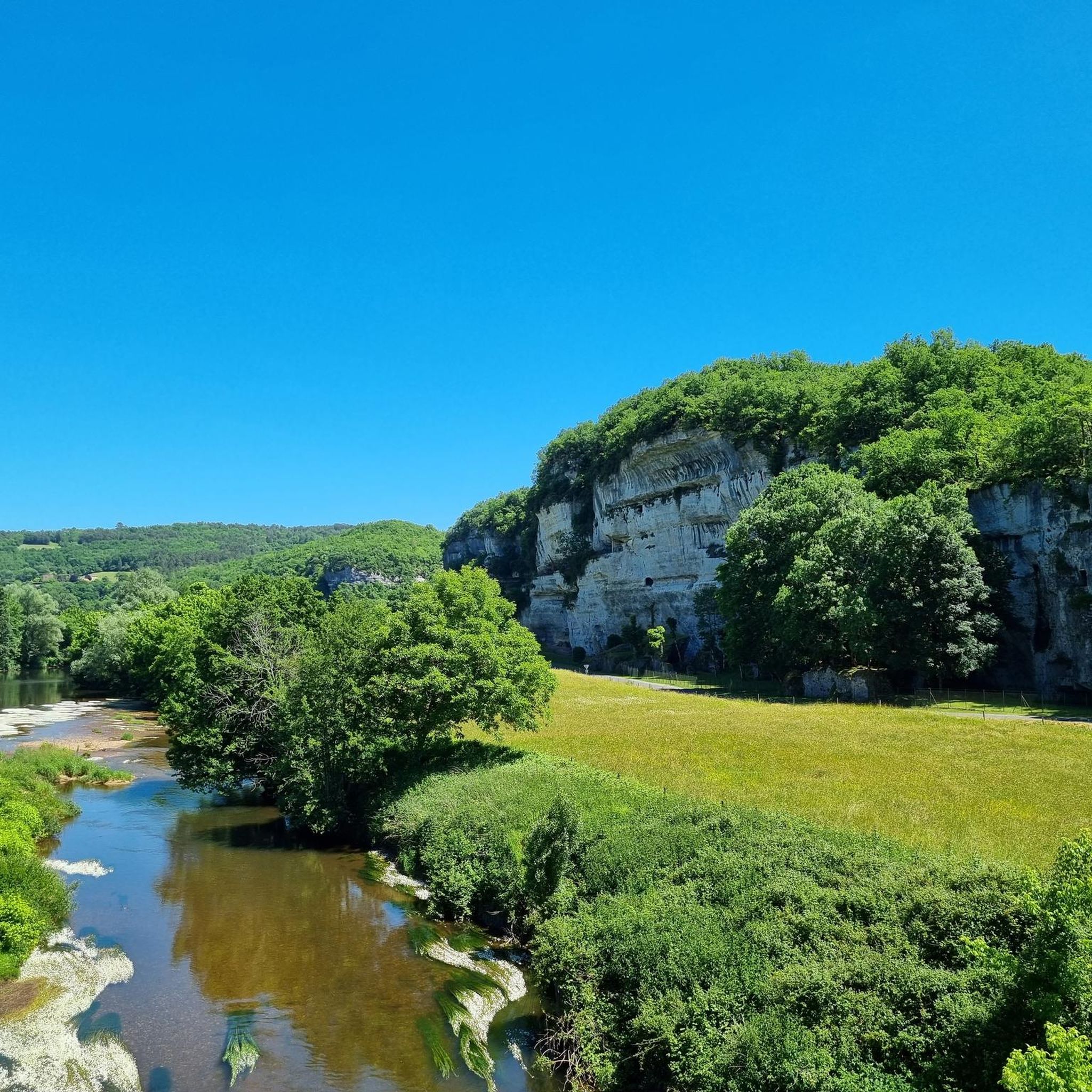
This real limestone wall, one kilometer long and eighty meters high, constantly undermined by the river and the frost, has been hollowed out with a hundred rock shelters and long aerial terraces; these natural cavities were occupied by prehistoric man and then modified to become a fort and a city from the Middle Ages until the beginning of the Renaissance.
2
0

The forgotten fortress: a millefeuille of stones where dungeons and fortified castles, troglodytes and prehistoric caves overlap in a preserved landscape
0
0

This excursion takes visitors far back into prehistoric times. And the place - like the Vézère valley in the French Périgord - is not only marked as one (of many) highlights in the komoot system: UNESCO has also recognized the surprisingly well-preserved, ancient rock paintings and - quite rightly - awarded them the coveted title of World Heritage Site. The German-language television series "Treasures of the World - Heritage of Humanity" documents these special places from all eras and continents in quarter-hour contributions. If you are interested, see: => https://www.ardmediathek.de/video/schaetze-der-welt/vezere-frankreich-folge-227/swr/Y3JpZDovL3N3ci5kZS82OTg1MTQ2
1
0

located in the wild Grande Beune valley, is a historical and archaeological site in Périgord. It offers a journey into the past, with its medieval remains and picturesque landscapes. A must-visit for history and nature lovers.
0
0

¡Lascaux4 is “Brutalism in architecture”!
2
0

Said to be the last intact rock castle in France.
0
0
Frequently Asked Questions
What types of caves can I explore near La Chapelle-Aubareil?
The region offers a diverse range of caves, from those showcasing incredible prehistoric art to geological wonders. You can visit sites like Lascaux International Centre for Cave Art, a faithful replica of the original Lascaux Cave with stunning Paleolithic paintings, or the Grotte du Grand Roc, known for its exceptional geological crystallizations. There are also historical rock shelters like La Roque Saint-Christophe, which were inhabited in prehistoric times and later fortified.
Are there caves with original prehistoric art accessible to the public?
Yes, the Font-de-Gaume Cave is one of the last original prehistoric caves in the world where polychrome (multi-colored) paintings are still accessible. It offers a rare and intimate glimpse into authentic Magdalenian art, featuring remarkably preserved paintings of bison, horses, and mammoths.
Which caves are known for their engravings?
Les Combarelles Cave is celebrated for its more than 600 engravings, predominantly depicting animals, created between 12,000 and 15,000 years ago. It also uniquely contains rare human figures among its detailed animal representations, providing a fascinating insight into Paleolithic engravers' mastery.
Are there any family-friendly cave experiences?
Absolutely. The Rouffignac Cave, known as the 'Cave of the Hundred Mammoths,' offers a unique experience where visitors explore the extensive underground galleries via an electric train. This makes it particularly engaging for families, allowing them to discover a vast collection of Paleolithic art, especially mammoths.
What is the best time of year to visit the caves around La Chapelle-Aubareil?
The caves maintain a consistent cool temperature year-round, making them suitable for visits in any season. However, to avoid peak crowds, consider visiting during the shoulder seasons (spring or autumn). Summer is popular, but booking tickets in advance is highly recommended due to high demand.
What should I wear for cave exploration?
Caves typically have a constant cool temperature, often around 13-14°C (55-57°F), regardless of the outside weather. It's advisable to wear comfortable walking shoes and bring a light jacket or sweater, even in summer, to stay comfortable during your visit.
Are there any geological caves with unique formations?
Yes, the Grotte du Grand Roc is a geological cave renowned for its exceptional density and variety of crystallizations. You can marvel at a 'mineral forest' of delicate stalactites, impressive stalagmites, and unique eccentric formations that defy gravity.
What historical sites, beyond caves, can I find in the area?
Beyond the caves, the region is rich in history. You can visit Maison Forte de Reignac, a fortified house built directly under a cliff and now a museum, or Commarque Castle, a historical and archaeological site with medieval remains set in the Grande Beune valley.
Do I need to book cave tours in advance?
For many popular caves, especially those with limited daily visitor numbers like Font-de-Gaume, booking your tickets well in advance is highly recommended, particularly during peak season or school holidays, to secure your preferred time slot.
What outdoor activities can I do near these caves?
The area around La Chapelle-Aubareil offers various outdoor activities. You can find numerous hiking trails, including moderate loops like the 'Wanderung nach Montignac' or longer routes. There are also cycling routes, such as the 'Les Eyzies-de-Tayac – Montignac / Lascaux loop,' and running trails to explore the scenic Vézère Valley.
Are there any caves that are UNESCO World Heritage sites?
Yes, several caves in the vicinity are recognized as UNESCO World Heritage sites. These include the Grotte du Grand Roc, Font-de-Gaume Cave, and Les Combarelles Cave, all part of the 'Prehistoric Sites and Decorated Caves of the Vézère Valley' designation. The original Lascaux Cave, replicated at Lascaux International Centre for Cave Art, is also a UNESCO site.
What do visitors enjoy most about the caves around La Chapelle-Aubareil?
Visitors frequently appreciate the immersive historical experience, the stunning preservation of prehistoric art, and the unique geological formations. The educational aspects, especially at sites like Lascaux IV, and the opportunity to connect with ancient human history are often highlighted. The area's natural beauty and the variety of sites also contribute to a memorable visit.
Most popular routes around La Chapelle-Aubareil
Most popular attractions around La Chapelle-Aubareil

Get inspired with the komoot mobile app


Explore more
Extend your search for the best caves by checking out these guides of the top ones around La Chapelle-Aubareil:
