Top 3 Castles around Mérey-Vieilley
Best castles around Mérey-Vieilley are found in the surrounding region, offering a glimpse into diverse historical periods. While Mérey-Vieilley itself does not host prominent castles, the nearby commune of Vieilley features the historic Château de Vieilley, with origins dating back to the 13th century. Further afield, the area includes significant landmarks like the Citadel of Besançon, a UNESCO World Heritage site. These sites provide varied historical and architectural experiences for visitors exploring the region.
Best castles around Mérey-Vieilley
- The most…
Last updated: June 24, 2026
Citadel of Besançon
Highlight • Viewpoint
Construction of the Citadelle began in 1668 under the direction of the …
Translated by Google •
Tip by

View of the Besançon citadel from the greenway
Highlight • Viewpoint
Translated by Google •
Tip by

Sign up now to discover places like this
Get recommendations on the best single tracks, peaks, & plenty of other exciting outdoor places.
Sign up for free
Tour de la Pelote
Highlight • Historical Site
Translated by Google •
Tip by
Fort Griffon
Highlight • Historical Site
Today, …
Translated by Google •
Tip by

Start today with a free account
Your next adventure awaits.
Login or Signup
Tips from the Community

Imposing complex which is worth a visit.
0
0

UNESCO World Heritage, what more can be said except that the Doubs Valley and the splendid ruins of old medieval castles from the top of wild cliffs have watched over the valley for centuries?
0
0

I have cycled this cycle path several times (different years) and each time I have passed these horrible looking factory ruins on the opposite bank - a very poor reception from Besançon - a real shame.
1
0

The Tour de la Pelote is a medieval cannon tower that was integrated into the fortification program created by Vauban in the 17th century. The original roof structure from the Vauban era was destroyed in a fire in 2013, but the building was extensively restored in 2016. The tower can be visited as part of city tours, for example. https://www.besancon-tourisme.com/
3
0
Fort Griffon in Besançon is a 17th century military monument that has been included in the UNESCO World Heritage List as part of the "Network of Major Vauban Sites". Today, the buildings are used by the French University for teacher training, but the structural adaptations were carried out while maintaining the original 17th century walls.
2
0

In 1475, under the reign of Duke Charles the Bold (1433-1477), sovereign of the Burgundian state, this tower was built at the foot of the Battant bastion, where the Mouillère stream flows into the Doubs. . The name of this tower comes from Pierre Pillot, lord of Chenecey, and co-governor of Besançon, from whom the land for the building was purchased, for the construction of this building. https://fr.wikipedia.org/wiki/Tour_de_la_Pelote
3
0

Beautiful to see how the Citadel of Bresançon (VAUBAN, UNESCO World Heritage Site) dominates its surroundings. If you continue towards Besançon you can soon cycle through a tunnel under the citadel. The Voie Verte you are on is part of the EuroVélo 6 that connects the Atlantic Ocean in France with the Black Sea in Romania.
4
2
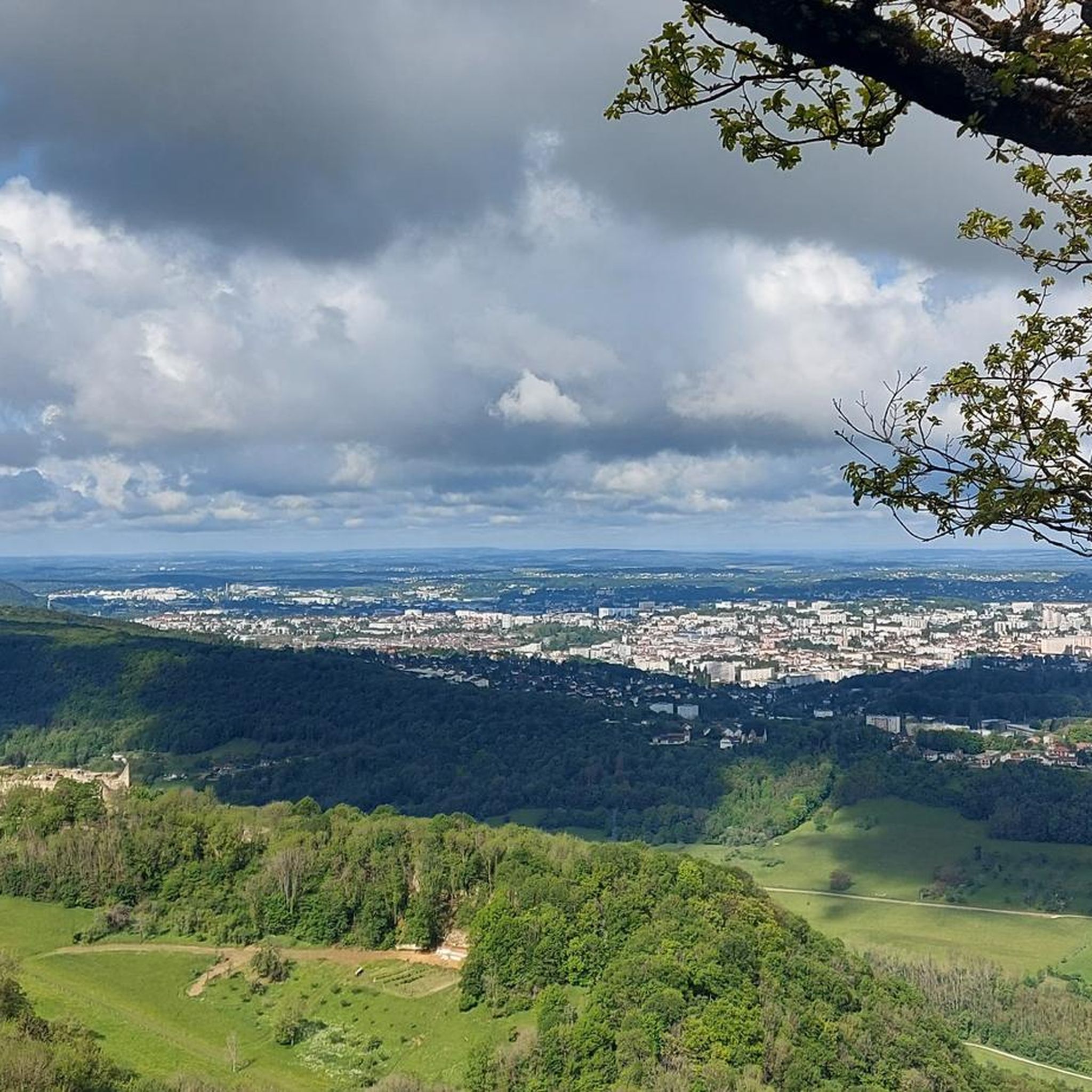
The Citadelle de Besançon is an impressive fortress located on Mont Saint-Étienne, high above the city of Besançon. Construction of the Citadelle began in 1668 under the direction of the French military engineer Vauban, known for his defense works. The fortress served as an important military stronghold and played a crucial role in the defense of France's eastern borders. The Citadelle is a masterpiece of military architecture, with bastions, ramparts, underground tunnels and other defenses. The design reflects Vauban's innovative approaches at the time. UNESCO World Heritage Site: The Citadelle de Besançon is part of the "Fortifications of Vauban", recognized as a World Heritage Site by UNESCO in 2008. This group of fortifications spread across France testifies to Vauban's military designs. Within the Citadelle there are several museums and attractions, including the Museum of French Resistance and Deportation, the Comtois Museum which highlights regional history, and the Besançon Zoo, one of the oldest zoos in France. The Citadelle offers breathtaking views over the city of Besançon and the surrounding valley. It is a popular destination for tourists due to its historical importance, architectural splendor and panoramic views.
11
0
Frequently Asked Questions
What historical castles can I visit near Mérey-Vieilley?
While Mérey-Vieilley itself doesn't host prominent castles, the region offers significant historical sites. The most notable is the Citadel of Besançon, a UNESCO World Heritage site and a masterpiece by Vauban. You can also explore the historic Château de Vieilley in the neighboring commune of Vieilley, which dates back to the 13th century, though it is now private property. Additionally, the Tour de la Pelote, a 15th-century tower, is integrated into Besançon's historical defenses.
Is the Château de Vieilley open to the public?
The Château de Vieilley, located in the commune of Vieilley, has a rich history dating back to the 13th century. However, it is currently a private property and not open for public visits. Its historical significance lies in its evolution from a fortified house to an archiepiscopal residence.
What is the significance of the Citadel of Besançon?
The Citadel of Besançon is a UNESCO World Heritage site and a prime example of military architecture by Sébastien Le Prestre de Vauban. It served as a crucial military stronghold and offers breathtaking panoramic views over the city of Besançon and the Doubs valley. Inside, you'll find several museums, including the Museum of French Resistance and Deportation, the Comtois Museum, and the Besançon Zoo.
Are there family-friendly activities at the castles near Mérey-Vieilley?
Yes, the Citadel of Besançon is very family-friendly. It hosts several museums, including a zoo, making it an engaging destination for all ages. The expansive grounds and historical exhibits provide educational and entertaining experiences for families.
What kind of views can I expect from the historical sites?
The region offers superb viewpoints. From the greenway along the Doubs, you can get a magnificent perspective of the Citadel of Besançon. The Citadel itself provides panoramic vistas over the city and the surrounding valley, showcasing its strategic location.
What outdoor activities can I do near these castles?
The area around Mérey-Vieilley and its historical sites is excellent for outdoor activities. You can find various MTB trails, road cycling routes, and running trails. Many routes offer scenic views and pass by historical landmarks, allowing you to combine physical activity with cultural exploration.
What is 'Le Château de Céry' and is it a traditional castle?
Located in Mérey-sous-Montrond, 'Le Château de Céry' is not a traditional medieval or early modern fortified castle. It was constructed between 1840 and 1862 and initially served as a significant coaching inn. While it holds historical interest, particularly its connection to the French Revolution, it represents a different aspect of local heritage compared to older fortified structures.
Are there any other notable historical structures besides the main castles?
Yes, in Besançon, you can visit the Tour de la Pelote, a remarkable 15th-century tower that was integrated into Vauban's defensive design. Also, Fort Griffon, a 17th-century military monument and part of the UNESCO World Heritage list, is nearby, though its buildings are primarily used by a university today.
What do visitors enjoy most about the castles in the region?
Visitors frequently praise the historical significance and architectural splendor of the Citadel of Besançon, often highlighting its UNESCO World Heritage status and the breathtaking views it offers. The combination of history, museums, and panoramic scenery makes it a popular destination, with over 540 upvotes and 40 photos shared by the komoot community.
What is the best time to visit the castles around Mérey-Vieilley?
The best time to visit the castles and historical sites in the region is generally during spring, summer, and early autumn. These seasons offer pleasant weather for exploring the outdoor grounds of sites like the Citadel of Besançon and enjoying the scenic viewpoints. During these months, you can comfortably combine your visits with hiking or cycling on nearby trails.
Are there dining options or cafes near these historical sites?
Yes, particularly in Besançon, you will find various dining options and cafes near the Citadel. The Tour de la Pelote, for instance, even houses a restaurant. For the Château de Vieilley, which is private, you would need to look for establishments in the nearby commune of Vieilley.
Most popular routes around Mérey-Vieilley
Most popular attractions around Mérey-Vieilley

Get inspired with the komoot mobile app


Explore more
Looking for the best castles somewhere else? Discover other guides around Mérey-Vieilley:
