Top 3 Castles around Saint-Amant-De-Montmoreau
A visit to a castle — whether you stumble over one during a hike outdoors or walk your way around the grounds with a guide — is always something special, and you’ve got 3
beautiful castles to choose from around Saint-Amant-De-Montmoreau. Just browse our list to find your top castle , and add some history to your next adventure!
Last updated: October 22, 2026
Château de la Mercerie
Highlight • Castle
Translated by Google •
Tip by

Château de la Léotardie
Highlight • Castle
Translated by Google •
Tip by

Sign up now to discover places like this
Get recommendations on the best single tracks, peaks, & plenty of other exciting outdoor places.
Château de Villebois-Lavalette
Highlight • Castle
Translated by Google •
Tip by
Montmoreau Castle
Highlight • Castle
Montmoreau is a new French commune located in the Charente department, in the Nouvelle-Aquitaine region. It was created on …
Translated by Google •
Tip by

Villebois-Lavalette Castle
Highlight • Castle
It is an ancient citadel. Many activities are offered all year round. You can also visit the castle to discover more about its history.
Translated by Google •
Tip by

Start today with a free account
Your next adventure awaits.

Tips from the Community

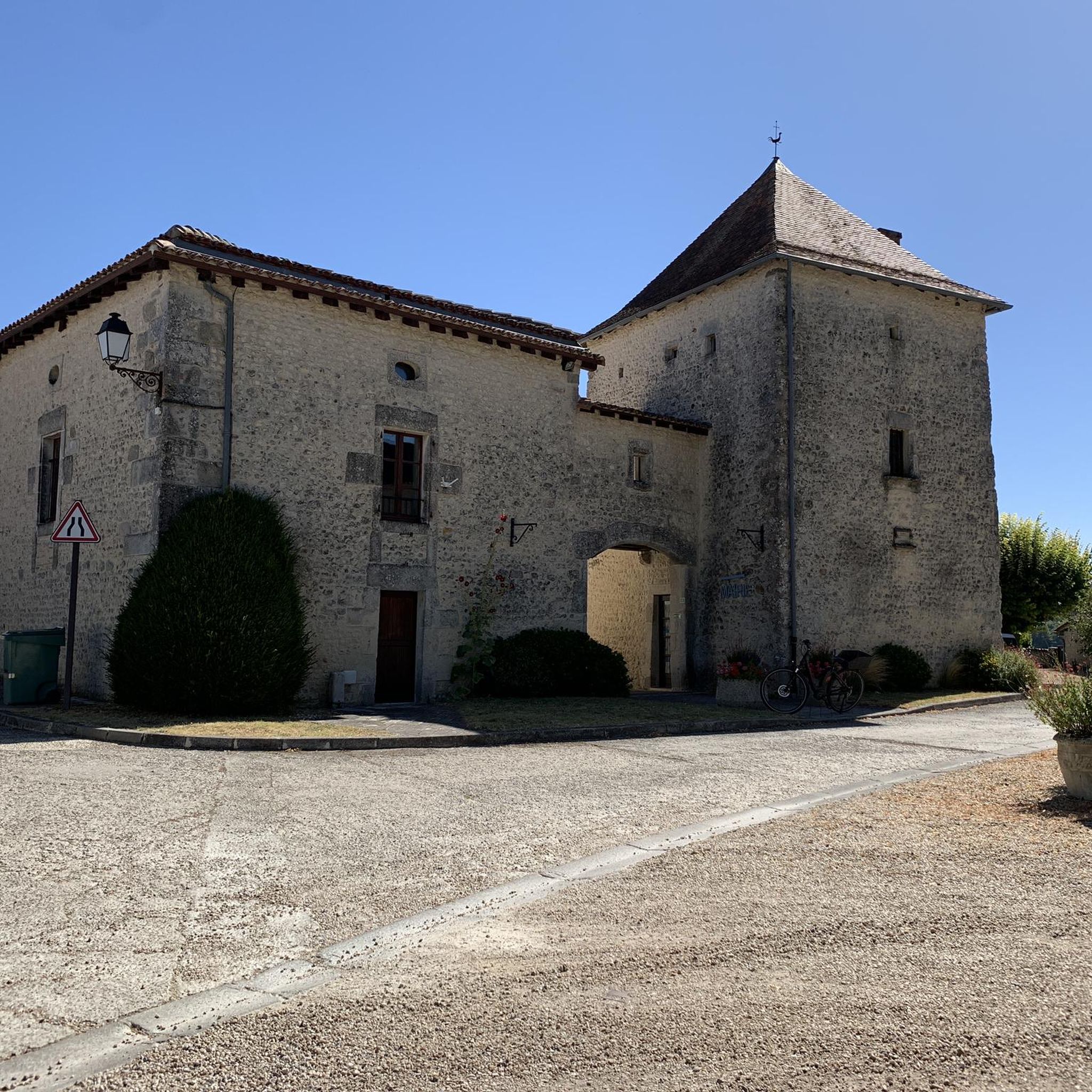
Château de La Léotardie in Nonac, in Charente, not in Dordogne. Listed as a Historic Monument, Château de la Léotardie in Nonac was originally the property of Hélie Léotard, then Archdeacon of Bourges. Part country house, part monastery, this former fortified castle was largely rebuilt in the 14th century and then renovated in the 15th. Visitors can discover a vaulted room and an ogival doorway on the ground floor. It is also possible to admire a medieval triple-nave barn a few hundred meters away. https://www.france-voyage.com/villes-villages/nonac-2918/chateau-leotardie-12663.htm
0
0
Montmoreau Castle is in the new commune of Montmoreau in Charente Montmoreau is a new French commune located in the Charente department, in the Nouvelle-Aquitaine region. It was created on January 1, 2017 from the merger of Montmoreau-Saint-Cybard, Saint-Amant, Saint-Eutrope, Saint-Laurent-de-Belzagot and Aignes and Puypéroux. Montmoreau Castle stands at the top of a natural hill overlooking the Tude Valley. In the centuries of instability and disorder that followed the collapse of Roman Gaul, the invasion of the Arabs from Spain around 700 and the Viking raids in 844 added to the anxiety of the populations of our region. Then the disintegration of the Carolingian empire led to a dispersion of the centers of power from which feudalism would be born. This is why the 10th and 11th centuries were a time when a large number of fortified entrenchments or camps were established, often built on "castral mounds", which are at the origin of many of today's "castles". The hill of Montmoreau offered in a way a perfect natural mound for the construction of what was probably at first a simple fortified camp and became a feudal castle in the 11th century. It occupied the platform and was provided with a double fortified enclosure. The two round towers of the current building belonged to the feudal castle. Likewise the porch chapel, Notre-Dame chapel, which was located in the first enclosure. But excavations would surely reveal traces of other remains. The current castle was built on this same site in the middle of the 15th century, perhaps by Guy de Mareuil, lord of Montmoreau, Villebois and Mareuil. With the exception of the two feudal towers, the entire building is partly Gothic and partly Renaissance. It is a perfect witness to this pivotal period between a world that was ending and a world that was beginning. Over the centuries, it seems that the various lords and then owners of the castle never had enough money to add buildings from different periods to the building, as can be seen in so many other castles. Preserved almost intact since its construction, the castle of Montmoreau therefore offers an architectural heritage of exceptional purity. The renovations carried out by the current owner aim, by reinforcing the solidity of the buildings, to restore the original aspects under the few modifications that have been made. Towards the east, overlooking the Tude valley, the castle displays a façade that looks great with its high main building flanked by the two round feudal towers and its sloping roofs of flat tiles from which the chimneys emerge. On the side of the north tower, about halfway up, we can make out an old door that opened onto the castle's patrol path. The Gothic gables of the central body bristle with stone plant crosiers. Their bases are seated on two sculptures of "intimidating lions", one opening its mouth to the north, the other to the south, and they are crowned by a finial. To the north and south, a pavilion leans against the gable. The southern one has just regained its original three-sided roof. Towards the west, the façade that faces the park also mixes eras. The mullioned Renaissance windows retain civil Gothic motifs. The hexagonal tower of the staircase projects from the façade. It has a very beautiful door in flamboyant Gothic style, with a tympanum sculpted with prismatic ribs and intertwined foliage practically erased by the erosion of time. But if you look closely, you can make out a bird in profile among the foliage on the right side. Perhaps the signature of the stonemason artist. In the corner of this tower and the façade, stands a watchtower with a pointed bell tower made of chestnut essentes (a type of shingle) whose base in a "cul-de-lampe" is completely in the Renaissance style. Source: https://montmoreau.fr/index-module-orki-page-view-id-116.html#:~:text=L'%C3%A9difice%20a%20%C3%A9t%C3%A9%20class%C3%A9,%C3%A9difice%20par%20la%20nef%20porche. https://fr.wikipedia.org/wiki/Ch%C3%A2teau_de_Montmoreau https://monumentum.fr/monument-histoire/pa00104431/montmoreau-chateau
0
0

Why Visit Château de la Léotardie? For its enchanting setting: Nestled in the heart of the Périgord countryside, the château is a haven of peace where you can recharge your batteries while admiring a magnificent example of Renaissance architecture. For its history: This place full of history allows you to discover a part of the rich past of the Périgord, with architecture that reflects the art of living and elegance of yesteryear. For its role in social and event life: The château offers a perfect setting for private events or receptions, with beautifully designed indoor and outdoor spaces. Château de la Léotardie is a hidden gem in the Dordogne, combining history, elegance and nature. It is a place to discover for those looking to explore an authentic corner of Périgord heritage.
1
0
Park and Gardens: Exceptional Natural Setting: Surrounded by vast meadows, woods and gardens, the château offers an idyllic natural setting. Visitors can enjoy quiet strolls in the shaded paths, among century-old trees, or relax while observing the local wildlife. French Gardens: Some of the château's gardens are laid out in a classic "à la française" style, with geometric flowerbeds and boxwood-lined paths, adding to the charm of the place. Intimate and Historical Atmosphere: Venue for Receptions and Events: The Château de la Léotardie is often used for private receptions, weddings and other events, making it a choice venue for those wishing to celebrate in a historic and romantic setting. Authentic Atmosphere: Despite its prestigious past, the château retains an intimate and tranquil atmosphere, offering visitors a true immersion in the history of the Périgord. Proximity to Tourist Sites: Périgord Noir Region: Located close to the famous tourist sites of the Dordogne, such as Sarlat, the caves of Lascaux and the castles of Beynac and Castelnaud, the Château de la Léotardie is an ideal base for exploring the region. Cultural and Natural Heritage: The castle is surrounded by magnificent landscapes, dense forests and rivers, typical of the Dordogne, offering many opportunities for nature lovers, whether it be hiking, canoeing or visiting picturesque villages.
1
0
Château de la Léotardie is a magnificent château located in the Dordogne region of Nouvelle-Aquitaine. Nestled in the heart of the Périgord countryside, it embodies the elegance and history of the region, while offering a peaceful and green setting. Although it is less well-known than some of the great châteaux of the Dordogne, it has a particular charm, particularly due to its architecture and its environment. Points of Interest at Château de la Léotardie: Renaissance Architecture: Périgourdine Elegance: Château de la Léotardie, dating from the Renaissance, is distinguished by its refined architecture. It has features typical of manor houses of this period, with stone facades, sloping roofs covered with tiles and beautiful stone fireplaces. Historical Details: Certain architectural elements bear witness to the history of the château, such as mullioned windows and circular towers which give the whole an appearance that is both defensive and elegant.
1
0

This thousand-year-old castle overlooks the surrounding plains. From its heights, beautiful panoramas pass before our eyes. It is an ancient citadel. Many activities are offered all year round. You can also visit the castle to discover more about its history. More information on https://www.chateaudevilleboislavalette.com/.
0
0

The extraordinary history of this grandiose residence began in 1924, in the heart of a small 19th century manor (to the left of the current façade): the troubadour castel of La Mercerie was then acquired by Alphonse and Raymond Réthoré. From then on, the two brothers, dreaming of the great Versailles, devoted all their resources to enlarging and embellishing the building. The work undertaken is commensurate with the ambition that drives it. Outside, colonnades and balusters in white stone soon extend the first building. the cut stone increases the gigantism and the rigor of a facade with a perfect rhythm. Inside, nothing is too beautiful for La Mercerie, Raymond brings back from his travels furniture and paintings, chandeliers and precious woods, marbles from Italy, azulejos from Portugal etc. He returns from Italy with a painter sculptor who will carry out on the spot the most monumental decorations with the assistance of the inhabitants of the country. The treasures are piling up, but 30 years of work will not be enough to complete the colossal project. The collections are dispersed during auctions in June 1987. When the two brothers died, the castle fell into oblivion, until the mobilization of the inhabitants of the town, who decided to found an association to safeguard this unique and prestigious heritage. The Béruges room, the central living room, the Vernet living room, the vestibule, the mahogany gallery and the large Azulejos gallery, each more impressive than the last, now fully conquers the visitor eager for cultural discoveries. A short tour of the belvedere of the castle allows you to admire it from the height. In the park of the castle, the rose garden and the arboretum can be visited by little train. The little train is random due to the health context and will be reserved for people with reduced mobility and children, and mainly on Sundays.
0
0

This romantic castle was built in the 13th century, rebuilt in the 14th century and renovated in the 15th century. This castle was not only a house, but also a monastery for some time.
4
0
Most popular routes around Saint-Amant-De-Montmoreau
Most popular attractions around Saint-Amant-De-Montmoreau

Get inspired with the komoot mobile app


Explore more
Looking for the best castles somewhere else? Discover other guides around Saint-Amant-De-Montmoreau:
