Top 3 Castles around Jauldes
Best castles around Jauldes are found in the surrounding region of Charente, offering a blend of historical ruins and well-preserved architectural examples. This area is characterized by its river valleys, such as the Tardoire and Charente, which often feature prominently in the settings of these historical sites. The region provides opportunities to explore centuries of architectural evolution, from medieval fortifications to Renaissance dwellings.
Best castles around Jauldes
- The most popular castles is La Rochefoucauld Castle, a castle that provides…
Last updated: October 8, 2026
La Rochefoucauld Castle Bridge
Highlight • Castle
Translated by Google •
Tip by

La Rochefoucauld Castle
Highlight • Castle
Translated by Google •
Tip by

Sign up now to discover places like this
Get recommendations on the best single tracks, peaks, & plenty of other exciting outdoor places.
Château de La Rochette
Highlight • Castle
Translated by Google •
Tip by
Keep of Montignac-Charente
Highlight • Castle
It is built on a terrace overlooking the Charente.
Of the enclosure, there …
Translated by Google •
Tip by
Sigogne Manor in Coulgens
Highlight • Castle
Translated by Google •
Tip by
Start today with a free account
Your next adventure awaits.


Tips from the Community


15th century stone bridge known as that of the Château de la Rochefoucauld. From the building, there is a superb view of the imposing castle and the waters of the Tardoire. It has been listed as a Historic Monument since 1935. The castle, renowned for being one of the most beautiful and oldest in Charente, can be visited all year round. It is the only castle in France that has been inhabited by the same family for more than 1,000 years. Do not miss !
2
0

In the heart of Charente, the Château de la Rochefoucauld stands like a page of history mixed with an enchanted tale. Built around the 16th century on the site of an 11th century fortress, this gem has been cherished by the same family since its earliest days. And that’s something! Strolling through its rooms or admiring the landscape from its towers, you feel the weight of history. It's as if the castle whispers to us both history lessons and stories of adventure.
0
0

This magical 16th century Renaissance castle is built on an 11th century fortress whose towers have been preserved. The castle and its gardens have been classified as a historical monument since 1955. Definitely worth the short detour!
0
0

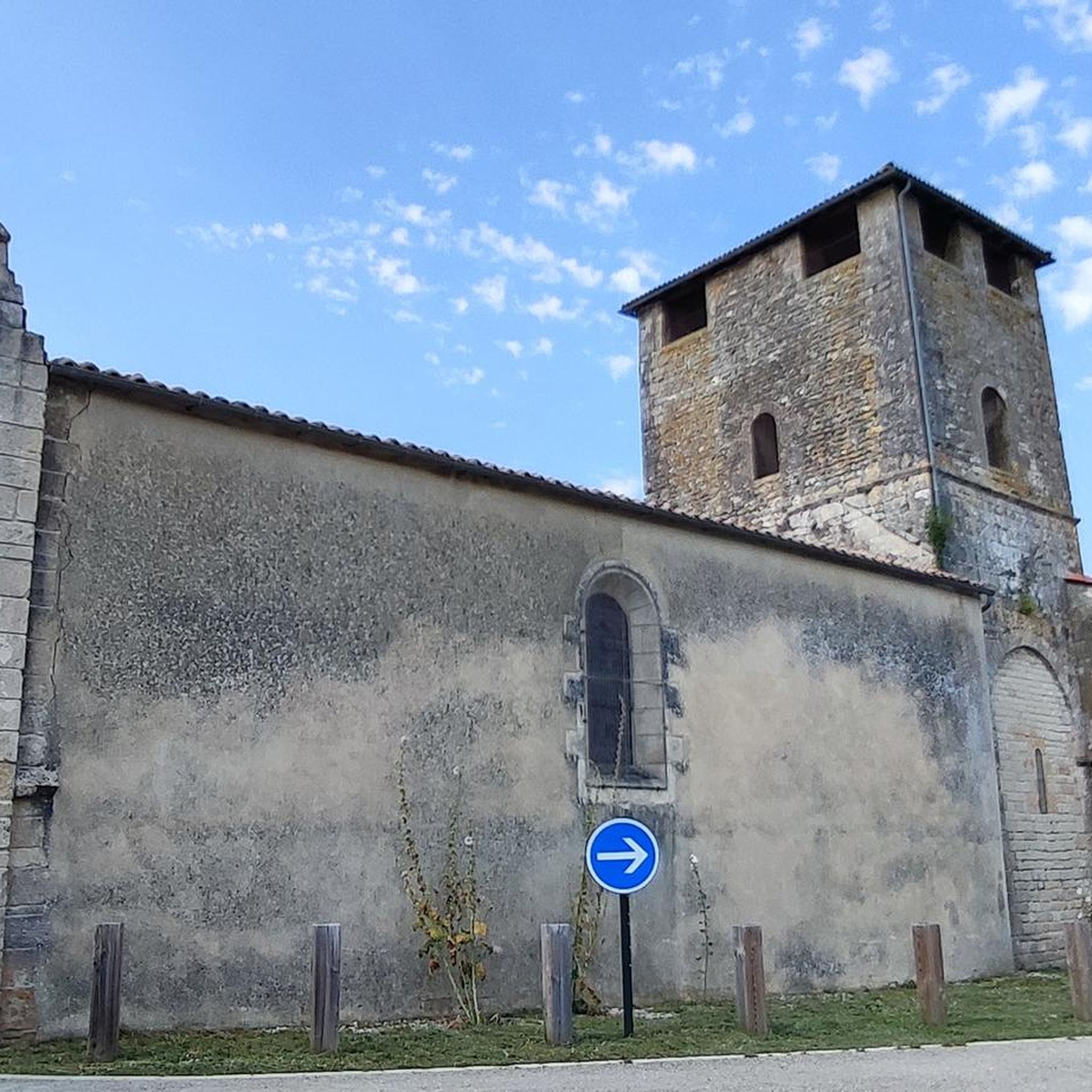
A first lord is attested with certainty in 1463. After the Revolution, the building is sold as national property and divided into 25 lots. It still had important remains from the 13th and 14th century during the 20th century. It was a set of square or rectangular plan of which there remains only the tower which surmounted the entrance and underground rooms. This postern would have been built in the 15th century. On either side of this entrance, a rampart led to a cylindrical corner tower. In the second half of the 18th century, residential buildings were probably built around the postern. They were demolished in the second half of the 20th century. The postern tower is pierced at its base with a vaulted passageway. It is flanked by a hexagonal turret containing a spiral staircase whose access is to the west, on the courtyard side, by a rectangular opening door surmounted by a semicircular tympanum with three hammered coats of arms.
2
0
Appearing in 1019 with Foucauld, lord of La Roche, the La Rochefoucauld family has long been considered a branch of the Lusignan, due to the similarity of their arms. It seems, in reality, that Foucauld was a close relative of the Viscount of Limoges, descendant of a Grand of the court of Charlemagne. Only four other families in France (including that of the Capetians) can claim such seniority. The history of the castle is inseparable from the history of the La Rochefoucauld family which, itself, is part of the political life of its time, century after century. The castle of La Rochefoucauld provides a remarkable illustration of the interweaving of politics and architecture through the life of a family which has continuously owned the castle since Fucaldus laid the first fortification around 980. With the history of the La Rochefoucauld family, the use of architecture for social and political purposes finds one of its most spectacular manifestations. This earned it the justified title of “pearl of Angoumois”. The castle is an anthology of seven centuries of architecture and the home of the La Rochefoucauld family, still present for over a thousand years. To see: the monumental Renaissance staircase (108 steps!), the boudoir of Marguerite de Valois, the kitchens dug into the karst, the state rooms, guards, the 18th century libraries, the main courtyard and its galleries from the 16th.
3
0
Logis built around 1580 within the walls of an older castle. The old buildings were demolished during the sale to the municipality in 1946. The latter restored the house and created a glazed room and a concrete staircase. This Renaissance dwelling was remodeled in 1617. Large windows were opened in the 18th century. The castle is square in plan, confined by four corbelled corner turrets, on molded consoles.
0
0
Logis built around 1580 within the walls of an older castle. The old buildings were demolished during the sale to the municipality in 1946. The latter restored the house and created a glazed room and a concrete staircase. This Renaissance dwelling was remodeled in 1617. Large windows were opened in the 18th century. The castle is square in plan, confined by four corbelled corner turrets, on molded consoles.
2
0
Frequently Asked Questions
Which castles near Jauldes offer the most historical insight?
For a deep dive into history, the Château de La Rochefoucauld is unparalleled. It has been continuously owned by the same family for over a thousand years, offering a remarkable illustration of political and architectural evolution across seven centuries. You can explore its monumental Renaissance staircase, Marguerite de Valois' boudoir, and 18th-century libraries. The Château de La Rochette also provides insight into Renaissance domestic architecture, with its logis built around 1580 within older castle walls.
Are there any family-friendly castles to visit near Jauldes?
Yes, both the Château de La Rochefoucauld and the Château de La Rochette are considered family-friendly. The Château de La Rochefoucauld, with its rich history and grand interiors, can spark the imagination of all ages. The Château de La Rochette, while smaller, offers a glimpse into historical architecture that can be enjoyed by families.
What outdoor activities can I do near these castles?
The region around Jauldes offers various outdoor activities. You can find numerous hiking trails, such as the easy 'Brie loop from Brie' or the moderate 'Argence loop from Argence'. For mountain biking enthusiasts, there are trails like the 'Remarkable Tree – Saint Martin's Church, Mornac loop from Brie'. Runners can explore routes like the 'Lac Noir – Observatoire du Gros Fayant loop from Brie'. You can find more details on these and other routes in the hiking guide, MTB guide, and running guide for Jauldes.
Where can I find medieval castle remnants near Jauldes?
For medieval remnants, visit the Keep of Montignac-Charente. Of the original castle, only the keep remains, situated on a terrace overlooking the Charente River. You can still see the gate with a portcullis, flanked by two round towers, and parts of the western enclosure, offering a glimpse into medieval defensive architecture.
Are there any castles with notable viewpoints or scenic settings?
The La Rochefoucauld Castle Bridge offers a superb view of the imposing Château de La Rochefoucauld and the waters of the Tardoire River. The castle itself is magnificently set overlooking the river. Additionally, the Keep of Montignac-Charente is built on a terrace overlooking the Charente, providing a scenic backdrop.
What is the best time of year to visit castles around Jauldes?
While specific opening hours vary by castle, visiting during spring or autumn often provides pleasant weather for exploring both the castles and the surrounding natural beauty. The region's castles, like Château de La Rochefoucauld, are generally open year-round, but checking individual castle websites for seasonal hours is recommended.
Are there any ruins or less preserved historical sites to explore?
Yes, in Jauldes itself, you can visit the Ruines du Château de Fayolle. While largely in ruins with only a portion of the west face remaining, it offers a glimpse into a grand past and the legend of its splendor from the 15th century. It's a site for those interested in exploring historical remnants rather than fully preserved structures.
What kind of architectural features can I expect to see at these castles?
The castles in the region showcase a range of architectural styles. The Château de La Rochefoucauld is renowned for its stunning Renaissance style and monumental staircase. The Château de La Rochette features a distinctive square plan with four corbelled corner turrets, reflecting Renaissance modifications. The Keep of Montignac-Charente provides examples of medieval defensive architecture, including a gate with a portcullis and round towers.
Is there a 'hidden gem' castle or a lesser-known historical site worth visiting?
While not a castle in the traditional sense, the Sigogne Manor in Coulgens is a lesser-known historical site. It features a tower that once surmounted the entrance of a larger complex, with underground rooms and a hexagonal turret containing a spiral staircase. It offers a unique look at a site with origins dating back to the 13th and 14th centuries, though much of its residential buildings were demolished in the 20th century.
What do visitors enjoy most about the castles around Jauldes?
Visitors frequently appreciate the rich history and architectural grandeur of the castles. The Château de La Rochefoucauld, in particular, is praised for its well-preserved interiors and the unique fact that it has been inhabited by the same family for over 1,000 years, making visitors feel the 'weight of history' and 'stories of adventure' within its walls.
Most popular routes around Jauldes
Most popular attractions around Jauldes

Get inspired with the komoot mobile app


Explore more
Looking for the best castles somewhere else? Discover other guides around Jauldes:
